The Day You Find Out Your Body Is Not a Machine
Have you ever wondered how your body survives more than three million collisions with the Earth every year—just from walking?
The average person takes about ten thousand steps a day. Every step is a small collision between your body and the ground. Multiply that by 365 days in a year, and you get about 3.6 million impacts every year. By the time you are 30 years old, your body has handled more than 100 million of these impacts.
And yet, for most of your life, your bones do not break with every step. Your joints do not crumble. Your spine does not collapse.
Why?
According to Dr. James Stoxen, the reason is simple and also amazing: your body is not built like a stiff machine made of rigid parts. It is built as a living spring system.
This idea is called the human spring model and the human spring approach. It is based on spring-based biomechanics, also known as the integrated spring-mass model, which looks at the body as a spring system instead of a system of stiff levers.
In this way of thinking, movement is not just pushing and pulling. It is about spring mechanics in human movement, where the body gently absorbs force, stores it for a moment, and then releases it again. Scientists often call this the stretch-shortening cycle biomechanics, and it is closely connected to elastic energy storage in the body and energy recycling in human motion.
In simple words, your body does not just crash into the ground and take the damage. It acts more like a springy, flexible system that spreads the force out, softens it, and sends some of that energy back into your next step.
This is a big part of shock absorption biomechanics and why we have what can be called biological springs in the body.
Your Body Is Built Like a Suspension System
Think about a car driving down a rough road. If the car had no suspension system, every bump would shake it apart. But because it has springs and shock absorbers, the bumps are spread out and softened before they reach the passengers.
Your body works in a very similar way. Dr. Stoxen describes this as suspension-based anatomy. Your joints, muscles, tendons, fascia, and even the shape of your bones work together to help with joint decompression mechanics and to protect important spaces, including what he calls tunnel mechanics for nerves and blood vessels.
Instead of force going straight into one spot, the body uses biomechanical load distribution to spread that force across many structures. This is why the balance between spring stiffness vs compliance is so important. If something is too stiff, it does not absorb shock well. If it is too loose, it does not control movement well.
Inside your joints, there are twisting and bending actions that work like torsional spring mechanics in joints. In your spine, the curves and discs behave like compression springs in the spine. In your feet, the arch works as a powerful foot arch spring mechanism.
All of this is connected by what Dr. Stoxen describes as a fascial spring network, which helps move force through the body as a kinetic chain spring transfer instead of letting it crash into one joint or one bone.
This is also how the body handles impact attenuation biomechanics, meaning how it reduces and spreads out impact forces from walking, running, and daily life.
What Happens When the Spring System Wears Down?
Over time, or after injuries, surgeries, stress, or long periods of poor movement habits, this spring system can start to lose some of its natural ability to work well. Dr. Stoxen describes this process as spring failure and chronic pain.
When the body loses its spring-like behavior, it starts to move more like stiff parts pushing on each other. This is what many older models of movement are based on, often called the lever model vs spring model way of thinking.
In a lever-based way of thinking, the body is treated more like a machine with hinges and sticks. But in real life, the body is much more alive and adaptable than that.
When the spring system is not working as well as it could, the body may become less efficient. This affects biomechanical energy efficiency and can change how the nervous system controls movement, something Dr. Stoxen describes as neuromechanical spring control.
This is one reason why many modern approaches now focus on spring-based injury prevention and on restoring human spring function instead of only strengthening or stretching isolated muscles.
A Different Way to Think About Care and Self-Care
Dr. Stoxen’s work fits into what he calls applied clinical biomechanics. This does not mean making promises or guarantees. It means helping people understand how their bodies are designed to move and how daily habits, posture, movement choices, and self-care tools can support more comfortable and more efficient movement.
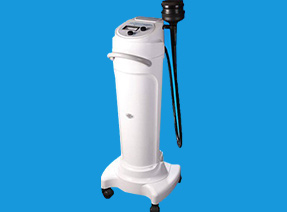
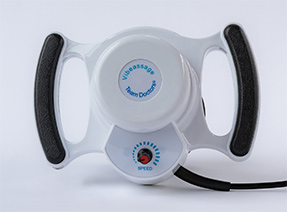
One of the tools he often uses in his clinics and also makes available for home use is based on vibration and spring restoration. This is where devices like the Vibeassage Pro and Vibeassage Sport come in.
These tools are not presented as cures or medical treatments. They are presented as self-care tools that people can use to help their muscles relax, to improve local circulation, and to support comfort and movement quality in their daily lives, especially when combined with education and better movement habits.
In Dr. Stoxen’s model, the goal is not to “force” the body to change. The goal is to help the body remember how to move and load like a spring again, as part of restoring human spring function.
Why This Matters When People Talk About Joint Surgery
Many people today are told they need procedures like Knee replacement surgery, Total knee replacement, Partial knee replacement, Knee arthroplasty, or Knee joint replacement. Some are offered newer options like Robotic knee replacement. These are serious medical decisions that should always be discussed carefully with qualified surgeons.
After surgery, people often go through Knee replacement recovery and Knee replacement rehabilitation, and they may worry about Knee replacement complications, Knee replacement pain, or the Knee implant lifespan. Some people compare Knee replacement vs physical therapy or look for Alternatives to knee replacement or even Non-surgical knee replacement options.
Others may face Post-surgical knee stiffness, Knee replacement failure, or need a Revision knee replacement. Doctors also discuss Knee replacement risks and Knee replacement success rate, especially for people with Knee osteoarthritis surgery decisions to make.
The same kinds of questions come up with the hip. People hear about Hip replacement surgery, Total hip replacement, Partial hip replacement, Hip arthroplasty, Hip joint replacement, or Anterior hip replacement.
Then come concerns about Hip replacement recovery, Hip replacement rehabilitation, Hip replacement complications, Hip replacement pain, and Hip implant lifespan. People compare Hip replacement vs physical therapy, look at Alternatives to hip replacement, or search for Non-surgical hip replacement options.
Some worry about Post-surgical hip stiffness, Hip replacement failure, Revision hip replacement, Hip replacement risks, and Hip replacement success rate, especially in cases involving Hip osteoarthritis surgery.
Dr. Stoxen does not position the Human Spring Approach as a replacement for medical care or surgery. Instead, he helps people understand something very important:
No matter what path someone chooses, their body still works as a spring system.
And learning how to move, load, and care for that spring system can be valuable before surgery, after surgery, or even when someone is simply trying to take better care of their body.
The Big Idea So Far
The most important idea to understand is this:
Your body is not just a stack of parts.
It is a living, moving, adapting spring system.
When that system is respected and supported, movement tends to feel easier and more efficient. When that system is ignored or overloaded for long periods of time, the body often starts to move more stiffly and less comfortably.
In the next part, we will look more closely at how the spring system works in everyday life, what daily habits slowly change it over time, and why so many people slowly lose this springiness without realizing it.
How the Human Spring System Slowly Changes Over Time
Most people do not wake up one day and suddenly lose the natural spring in their body.
It usually happens slowly.
Very slowly.
So slowly that you often do not notice it while it is happening.
When you are young, your body naturally uses spring mechanics in human movement almost all the time. You walk, run, jump, and move with a kind of lightness. Your muscles, joints, and connective tissues work together to absorb force, store it for a moment, and release it again.
This is the stretch-shortening cycle biomechanics and the reason the body is so good at elastic energy storage in the body and energy recycling in human motion.
This is also why your body is so good at shock absorption biomechanics when you are young and active.
But over many years, small changes start to add up.
How Daily Life Changes the Spring System
Modern life is not very friendly to the body’s spring system.
We sit a lot. We wear stiff shoes. We move in straight lines instead of in many directions. We stare at screens. We get tired. We get stressed. Sometimes we get injured. Sometimes we have surgeries. Sometimes we just stop using our bodies in playful ways.
Little by little, the parts of the body that once acted like biological springs in the body start to behave more like stiff parts.
The body still tries to protect itself using biomechanical load distribution, but when some areas stop moving well, other areas have to work harder. Over time, this changes the balance between spring stiffness vs compliance. Some tissues become too stiff. Others become too loose. Neither of these is ideal for a healthy spring system.
Inside the joints, the smooth twisting and bending actions that should act like torsional spring mechanics in joints can become more limited. In the spine, the natural curves and discs that should behave like compression springs in the spine may start to lose some of their easy movement.
In the feet, the foot arch spring mechanism often becomes weaker or less active, especially when people spend years in shoes that do not let the foot move naturally.
All of these changes affect the fascial spring network, which is the body-wide web of connective tissue that helps transfer force. When this network does not glide and stretch the way it used to, the kinetic chain spring transfer from foot to leg to hip to spine to shoulder becomes less smooth.
This makes it harder for the body to handle impact attenuation biomechanics in a gentle and efficient way.
From a Spring System to a Stiff System
Dr. Stoxen often explains that when the body loses some of its spring behavior, it slowly starts to move more like a machine made of stiff parts. This is the shift from the human spring model toward the older lever model vs spring model way of moving.
In a lever-like body, forces are not spread out as well. They tend to concentrate in certain joints or areas. The body still tries to protect itself using joint decompression mechanics and suspension-based anatomy, but if too many areas are stiff at the same time, this becomes harder.
This can also affect tunnel mechanics for nerves and blood vessels, because the spaces that normally stay open and flexible during movement may not adapt as well when the surrounding tissues are stiff or overloaded.
None of this happens overnight.
It happens step by step, year by year.
This is one reason why people are often surprised when discomfort or stiffness seems to “come out of nowhere,” even though the changes have been building for a long time.
The Nervous System and the Spring System
Movement is not controlled by muscles alone. The brain and nervous system are always involved. Dr. Stoxen describes this as neuromechanical spring control.
When the body is moving well, the nervous system naturally coordinates muscles so they load and unload like springs. This supports biomechanical energy efficiency, meaning you can move with less effort and less strain.
But when certain areas become stiff or sensitive, the nervous system may start to protect those areas by tightening muscles around them. This protection is not “wrong.” It is the body trying to stay safe.
However, over time, this extra tension can further reduce spring-like movement. This is one of the ways spring failure and chronic pain patterns can slowly develop, even without any single big injury.
This is also why many modern approaches focus on spring-based injury prevention instead of only strengthening muscles or stretching isolated parts.
Where Vibration and Gentle Input Fit In
In Dr. Stoxen’s work, one of the tools used to support comfort and movement awareness is based on vibration and spring restoration.
Again, this is not about “fixing” or “curing” anything.
Tools like the Vibeassage Pro and Vibeassage Sport are presented as self-care tools that can help people relax tight muscles, improve local circulation, and become more aware of how their bodies feel and move.
From the human spring approach, the idea is that gentle, rhythmic input can sometimes help the nervous system allow tissues to soften and move more easily. This can support the larger goal of restoring human spring function over time, especially when combined with better movement habits and education.
This fits into Dr. Stoxen’s work in applied clinical biomechanics, where the focus is on how the body actually behaves in real life, not just how it looks on paper.
Why Many People Start Thinking About Joints
As the spring system becomes less active and the body becomes more stiff in certain areas, some joints begin to take more stress than they were designed to handle.
This is often when people start hearing words like Knee replacement surgery, Total knee replacement, Partial knee replacement, or Knee arthroplasty. Some hear about Knee joint replacement or Robotic knee replacement.
Dr. Stoxen’s work does not tell people what medical choices they should make. Instead, it offers a different way to understand what is happening in the body leading up to these decisions.
The Quiet Change That Most People Miss
The biggest problem is not that people age.
The biggest problem is that people slowly stop moving like springs.
And they usually do not notice it until something starts to feel wrong.
By the time discomfort or stiffness becomes a daily issue, the spring system has often been changing for many years.
In the next part, we will look more closely at how the Human Spring Approach is used in real life, how people can begin to think differently about their bodies, and how simple daily habits can either support or slowly weaken the body’s natural spring system.
How the Human Spring System Slowly Changes Over Time
Most people do not wake up one day and suddenly lose the natural spring in their body.
It usually happens slowly.
Very slowly.
So slowly that you often do not notice it while it is happening.
When you are young, your body naturally uses spring mechanics in human movement almost all the time. You walk, run, jump, and move with a kind of lightness. Your muscles, joints, and connective tissues work together to absorb force, store it for a moment, and release it again. This is the stretch-shortening cycle biomechanics and the reason the body is so good at elastic energy storage in the body and energy recycling in human motion.
This is also why your body is so good at shock absorption biomechanics when you are young and active.
But over many years, small changes start to add up.
How Daily Life Changes the Spring System
Modern life is not very friendly to the body’s spring system.
We sit a lot. We wear stiff shoes. We move in straight lines instead of in many directions. We stare at screens. We get tired. We get stressed. Sometimes we get injured. Sometimes we have surgeries. Sometimes we just stop using our bodies in playful ways.
Little by little, the parts of the body that once acted like biological springs in the body start to behave more like stiff parts.
The body still tries to protect itself using biomechanical load distribution, but when some areas stop moving well, other areas have to work harder. Over time, this changes the balance between spring stiffness vs compliance. Some tissues become too stiff. Others become too loose. Neither of these is ideal for a healthy spring system.
Inside the joints, the smooth twisting and bending actions that should act like torsional spring mechanics in joints can become more limited. In the spine, the natural curves and discs that should behave like compression springs in the spine may start to lose some of their easy movement.
In the feet, the foot arch spring mechanism often becomes weaker or less active, especially when people spend years in shoes that do not let the foot move naturally.
All of these changes affect the fascial spring network, which is the body-wide web of connective tissue that helps transfer force. When this network does not glide and stretch the way it used to, the kinetic chain spring transfer from foot to leg to hip to spine to shoulder becomes less smooth.
This makes it harder for the body to handle impact attenuation biomechanics in a gentle and efficient way.
From a Spring System to a Stiff System
Dr. Stoxen often explains that when the body loses some of its spring behavior, it slowly starts to move more like a machine made of stiff parts. This is the shift from the human spring model toward the older lever model vs spring model way of moving.
In a lever-like body, forces are not spread out as well. They tend to concentrate in certain joints or areas. The body still tries to protect itself using joint decompression mechanics and suspension-based anatomy, but if too many areas are stiff at the same time, this becomes harder.
This can also affect tunnel mechanics for nerves and blood vessels, because the spaces that normally stay open and flexible during movement may not adapt as well when the surrounding tissues are stiff or overloaded.
None of this happens overnight.
It happens step by step, year by year.
This is one reason why people are often surprised when discomfort or stiffness seems to “come out of nowhere,” even though the changes have been building for a long time.
The Nervous System and the Spring System
Movement is not controlled by muscles alone. The brain and nervous system are always involved. Dr. Stoxen describes this as neuromechanical spring control.
When the body is moving well, the nervous system naturally coordinates muscles so they load and unload like springs. This supports biomechanical energy efficiency, meaning you can move with less effort and less strain.
But when certain areas become stiff or sensitive, the nervous system may start to protect those areas by tightening muscles around them. This protection is not “wrong.” It is the body trying to stay safe.
However, over time, this extra tension can further reduce spring-like movement. This is one of the ways spring failure and chronic pain patterns can slowly develop, even without any single big injury.
This is also why many modern approaches focus on spring-based injury prevention instead of only strengthening muscles or stretching isolated parts.
Where Vibration and Gentle Input Fit In
In Dr. Stoxen’s work, one of the tools used to support comfort and movement awareness is based on vibration and spring restoration.
Again, this is not about “fixing” or “curing” anything.
Tools like the Vibeassage Pro and Vibeassage Sport are presented as self-care tools that can help people relax tight muscles, improve local circulation, and become more aware of how their bodies feel and move.
From the human spring approach, the idea is that gentle, rhythmic input can sometimes help the nervous system allow tissues to soften and move more easily. This can support the larger goal of restoring human spring function over time, especially when combined with better movement habits and education.
This fits into Dr. Stoxen’s work in applied clinical biomechanics, where the focus is on how the body actually behaves in real life, not just how it looks on paper.
Why Many People Start Thinking About Joints
As the spring system becomes less active and the body becomes more stiff in certain areas, some joints begin to take more stress than they were designed to handle.
Dr. Stoxen’s work does not tell people what medical choices they should make. Instead, it offers a different way to understand what is happening in the body leading up to these decisions.
The Quiet Change That Most People Miss
The biggest problem is not that people age.
The biggest problem is that people slowly stop moving like springs.
And they usually do not notice it until something starts to feel wrong.
By the time discomfort or stiffness becomes a daily issue, the spring system has often been changing for many years.
In the next part, we will look more closely at how the Human Spring Approach is used in real life, how people can begin to think differently about their bodies, and how simple daily habits can either support or slowly weaken the body’s natural spring system.
Living Like a Spring Again — How Daily Habits Shape Your Body Over a Lifetime
By now, one idea should be very clear:
Your body is not just a collection of parts.
It is a living system that behaves like a spring.
This is the heart of the human spring model and the human spring approach, built on spring-based biomechanics and the integrated spring-mass model. It is a way of understanding the body as a spring system that works through spring mechanics in human movement, not just through pushing and pulling like a machine.
Every step you take uses the stretch-shortening cycle biomechanics. Your body quietly uses elastic energy storage in the body and energy recycling in human motion to move more smoothly and with less effort. This is how shock absorption biomechanics works in real life, using the biological springs in the body to protect you from millions of small impacts over a lifetime.
The Body Is Always Adapting
Your body is always changing. It adapts to how you sit, how you walk, how you work, and how you rest.
It also adapts using biomechanical load distribution, joint decompression mechanics, and suspension-based anatomy to protect itself. It works to preserve important spaces using tunnel mechanics for nerves and blood vessels.
When the system is working well, there is a healthy balance between spring stiffness vs compliance. Joints twist and bend with the help of torsional spring mechanics in joints. The spine moves and supports weight using compression springs in the spine. The feet load and release energy through the foot arch spring mechanism.
All of this is connected through the fascial spring network and the kinetic chain spring transfer, which help spread force through the whole body and reduce stress on any one area. This is how the body handles impact attenuation biomechanics day after day.
How Small Habits Add Up
No one suddenly loses their spring.
It happens slowly, through years of small habits.
Sitting too much. Moving in only a few directions. Wearing stiff shoes. Avoiding movement because of fear or discomfort. Rushing through life without paying attention to how the body feels.
Over time, the body may start to move more stiffly and carefully. This is part of the process that can lead to spring failure and chronic pain patterns.
This is also why the difference between the lever model vs spring model is so important. When people think of their bodies only as machines with parts that wear out, they often feel helpless. But when they understand the body as a living spring system, they often feel more hopeful and more involved.
This is where ideas like spring-based injury prevention, neuromechanical spring control, and biomechanical energy efficiency become very practical. They are not about doing extreme workouts. They are about moving better, more often, and with more awareness.
Where Gentle Self-Care Fits In
In Dr. Stoxen’s work in applied clinical biomechanics, education and awareness always come first.
Self-care tools, including those based on vibration and spring restoration like the Vibeassage Pro and Vibeassage Sport, are presented as simple ways to help people relax tight areas, improve local circulation, and become more aware of their bodies.
They are not presented as treatments or cures.
They are presented as tools that can support comfort and movement quality when used wisely and as part of a bigger picture that includes movement, posture, and daily habits.
From the point of view of the human spring approach, anything that helps the body move more easily and feel more relaxed can support the long-term goal of restoring human spring function.
A Different Way to Think About Aging and Joints
Many people grow up believing that pain and stiffness are just a normal part of getting older.
They start hearing about Knee replacement surgery, Total knee replacement, Partial knee replacement, Knee arthroplasty, Knee joint replacement, or Robotic knee replacement. They worry about Knee replacement recovery, Knee replacement rehabilitation, Knee replacement complications, Knee replacement pain, and Knee implant lifespan. They compare Knee replacement vs physical therapy, look for Alternatives to knee replacement, or search for Non-surgical knee replacement options. Some experience Post-surgical knee stiffness, Knee replacement failure, or need Revision knee replacement, and they think about Knee replacement risks and Knee replacement success rate, especially with Knee osteoarthritis surgery.
The same fears and questions come up around the hip: Hip replacement surgery, Total hip replacement, Partial hip replacement, Hip arthroplasty, Hip joint replacement, Anterior hip replacement, Hip replacement recovery, Hip replacement rehabilitation, Hip replacement complications, Hip replacement pain, Hip implant lifespan, Hip replacement vs physical therapy, Alternatives to hip replacement, Non-surgical hip replacement options, Post-surgical hip stiffness, Hip replacement failure, Revision hip replacement, Hip replacement risks, Hip replacement success rate, and Hip osteoarthritis surgery.
The Human Spring Approach does not tell people what medical choices they should or should not make.
It simply offers a bigger picture:
No matter what medical path someone chooses, their body still works as a spring system.
And how that spring system is used, protected, and cared for over a lifetime still matters.
The Most Important Idea of All
The most important message in Dr. Stoxen’s work is not about devices, exercises, or even specific techniques.
It is about respect for how the body is designed.
You are not made of rigid parts.
You are made of living, adapting, spring-like tissues that are meant to move, absorb force, and give energy back.
When you move with that in mind, when you pay attention to your habits, and when you treat your body as something to work with instead of fight against, something important often changes.
You stop seeing your body as something that is “breaking.”
And you start seeing it as something that is always trying to protect you and support you.
Coming Full Circle
Remember the question we started with:
How does your body survive millions of impacts with the ground every year?
The answer is not strength alone.
The answer is not rigid structure.
The answer is that you are built as a spring.
The human spring model and human spring approach simply give words to something your body has been doing for you your entire life.
And when you understand that, you can start making choices—small, simple, everyday choices—that respect that design and support it for many years to come.
Team Doctors Resources
✓ Check out the Team Doctors Recovery Tools
The Vibeassage Sport and the Vibeassage Pro featuring the TDX3 soft-as-the-hand Biomimetic Applicator Pad
https://www.teamdoctors.com/
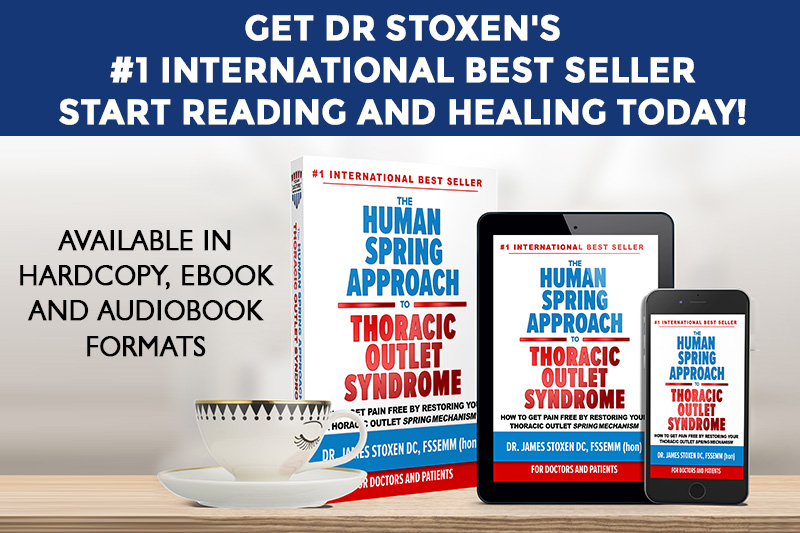
✓ Get Dr. Stoxen’s #1 International Bestselling Books
Learn how to understand, examine, and reverse your TOS—without surgery.
https://drstoxen.com/1-international-best-selling-author/
✓ Check out Team Doctors Online Courses
Step-by-step video lessons, demonstrations, and self-treatment strategies.
https://teamdoctorsacademy.com/
✓ Schedule a Free Phone Consultation With Dr. Stoxen
Speak directly with him so he can review your case and guide you on your next steps.
https://drstoxen.com/appointment/
#ThoracicOutletSyndrome #TOSSurgery #FirstRibResection #PatientEducation #NonSurgicalCare #PainTreatment #HealthDecisions #SecondOpinion #BodyHealing #PainSolutions #FunctionalMedicine

Dr James Stoxen DC., FSSEMM (hon) He is the president of Team Doctors®, Treatment and Training Center Chicago, one of the most recognized treatment centers in the world.
Dr Stoxen is a #1 International Bestselling Author of the book, The Human Spring Approach to Thoracic Outlet Syndrome. He has lectured at more than 20 medical conferences on his Human Spring Approach to Thoracic Outlet Syndrome and asked to publish his research on this approach to treating thoracic outlet syndrome in over 30 peer review medical journals.
He has been asked to submit his other research on the human spring approach to treatment, training and prevention in over 150 peer review medical journals. He serves as the Editor-in-Chief, Journal of Orthopedic Science and Research, Executive Editor or the Journal of Trauma and Acute Care, Chief Editor, Advances in Orthopedics and Sports Medicine Journal and editorial board for over 35 peer review medical journals.
He is a much sought-after speaker. He has given over 1000 live presentations and lectured at over 70 medical conferences to over 50,000 doctors in more than 20 countries. He has been invited to speak at over 300 medical conferences which includes invitations as the keynote speaker at over 50 medical conferences.
After his groundbreaking lecture on the Integrated Spring-Mass Model at the World Congress of Sports and Exercise Medicine he was presented with an Honorary Fellowship Award by a member of the royal family, the Sultan of Pahang, for his distinguished research and contributions to the advancement of Sports and Exercise Medicine on an International level. He was inducted into the National Fitness Hall of Fame in 2008 and the Personal Trainers Hall of Fame in 2012.
Dr Stoxen has a big reputation in the entertainment industry working as a doctor for over 150 tours of elite entertainers, caring for over 1000 top celebrity entertainers and their handlers. Anthony Field or the popular children’s entertainment group, The Wiggles, wrote a book, How I Got My Wiggle Back detailing his struggles with chronic pain and clinical depression he struggled with for years. Dr Stoxen is proud to be able to assist him.
Full Bio) Dr Stoxen can be reached directly at teamdoctors@aol.com