Why Thoracic Outlet Syndrome Requires Far More Treatment Than Most People Realize
In my clinical experience, one of the most misunderstood aspects of managing Thoracic Outlet Syndrome is the sheer volume of treatment required to meaningfully reduce inflammation. Many individuals receive 20- or 30-minute sessions focused on a few muscles and are later told that deep tissue “doesn’t work.” In reality, the issue is not the method—it is the dosage.
Thoracic Outlet Syndrome involves a large and complex anatomical region. Compression does not arise from a single muscle or structure. Instead, it develops from layers of inflammation, muscle guarding, and biomechanical tension spanning the neck, shoulder, chest, and upper arm. Treating only a fraction of this system cannot create lasting change.
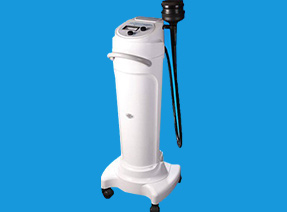
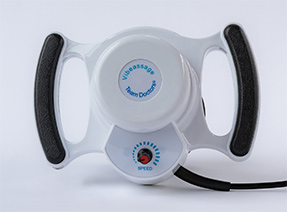
Effective work begins with circulation. My approach starts with 30 to 40 minutes of high-intensity vibration massage to generate a strong increase in local blood flow. The goal is to create what I describe as a “river of blood,” allowing inflammatory chemicals and metabolic waste to be carried out of congested tissues. Without this circulation phase, deeper work is far less effective.
Once blood flow is established, targeted deep tissue pressure is applied. This work is performed with precision rather than force. Historically, the thumb has been described as one “Chinese inch,” reflecting its use as a consistent measurement tool. Inch-by-inch decompression allows hypertonic muscles to gradually release rather than resist.
A common misconception is that Thoracic Outlet Syndrome involves only the scalene muscles and a rib. In practice, most patients present with ten to twelve muscles actively contributing to compression. These commonly include the anterior and middle scalenes, subclavius, pectoralis minor, coracobrachialis, short head of the biceps, latissimus dorsi, and often the medial triceps.
Each of these muscles can influence thoracic outlet space in different ways. Some elevate the first rib upward into the outlet. Others drag the shoulder downward, collapsing the tunnel from above. In my clinical observation, nearly ninety percent of individuals show compression occurring simultaneously in the scalene triangle and the shoulder–arm–chest region.
Muscle length matters when calculating treatment volume. On average, each of these muscles measures approximately five inches in length. When using a thumb-sized pressure point, each inch requires about two minutes to move from painful to pain-free during treatment. With ten to twelve muscles involved, this equates to roughly sixty inches of inflamed tissue.
At two minutes per inch, a single full pass of deep tissue requires approximately 120 minutes. In more severe cases, each point may require closer to three minutes, bringing the total closer to 180 minutes. This does not include time spent restoring circulation before or after deep tissue work.
When vibration massage is added both before and after decompression, a full-session treatment for severe Thoracic Outlet Syndrome may reasonably last between two and three-and-a-half hours. This is not excessive. It reflects the true scale of tissue involvement.
This explains why short sessions rarely create meaningful improvement. Even when technique is correct, insufficient time prevents inflammation from being reduced faster than it is recreated by daily activity. The body simply cannot exit the guarding cycle with fragmented, low-volume care.
Many individuals abandon deep tissue approaches prematurely because they were receiving what I describe as driveway-level work when the problem required Walmart-parking-lot–level work. If inflammation spans sixty inches of tissue, addressing only a few inches per visit cannot outpace reinflammation.
This mismatch in dosage is a major reason Thoracic Outlet Syndrome feels so stubborn. Inflammation drives muscle guarding. Guarding twists and compresses the outlet. Until inflammation is reduced in sufficient volume, the reflex loop continues to pull the body back into pain.
Understanding this helps reset expectations. The body is not resistant. It is overwhelmed. When enough time, pressure, and circulation are applied to the entire region, physiological change occurs much faster than patients expect.
When individuals finally receive the correct treatment volume, outcomes often change dramatically. Muscles soften. Posture unwinds without force. Nerve tension decreases. Blood flow improves. These changes occur not because the body suddenly cooperated, but because inflammation was finally reduced enough to allow release.
This shift in understanding often transforms a patient’s outlook. Instead of feeling that nothing works, they recognize that the work was never delivered at the scale required. The method was sound. The dosage was not.
Thoracic Outlet Syndrome demands respect for anatomy, volume, and time. When those elements align, the body responds. When they do not, progress stalls. Recognizing the true scope of treatment required allows patients to make sense of past failures and understand why high-volume, comprehensive care produces better and faster results than fragmented approaches ever could.
Team Doctors Resources
✓ Check out the Team Doctors Recovery Tools
The Vibeassage® Sport and the Vibeassage® Pro featuring the TDX3 soft-as-the-hand Biomimetic Applicator Pad
https://www.teamdoctors.com/
✓ Get Dr. Stoxen’s #1 International Bestselling Books
Learn how to understand, examine, and reverse your TOS—without surgery.
https://drstoxen.com/1-international-best-selling-author/
✓ Check out Team Doctors Online Courses
Step-by-step video lessons, demonstrations, and self-treatment strategies.
https://teamdoctorsacademy.com/
✓ Schedule a Free Phone Consultation With Dr. Stoxen
Speak directly with him so he can review your case and guide you on your next steps.
https://drstoxen.com/appointment/
#ThoracicOutletSyndrome #TOS #ChronicInflammation #MuscleGuarding #DeepTissueTherapy #Biomechanics #ChronicPain #WhatWorks #TreatmentDosage #PatientEducation #NerveCompression #VascularCompression #PostureMatters #MovementScience #HealthcareAwareness #TeamDoctors #DrStoxen #TOSRecovery #InflammationLoop #ManualTherapy
References
- Sanders, R. J., and Hammond, S. L. “Thoracic Outlet Syndrome: A Review.” Neurologic Clinics, 2009.
- Illig, K. A., et al. “Thoracic Outlet Syndrome.” Journal of Vascular Surgery, 2010.
- Lund, J. P., et al. “The Pain Adaptation Model.” Pain, 1991.
- Shacklock, M. Clinical Neurodynamics. Elsevier, 2005.

Dr James Stoxen DC., FSSEMM (hon) He is the president of Team Doctors®, Treatment and Training Center Chicago, one of the most recognized treatment centers in the world.
Dr Stoxen is a #1 International Bestselling Author of the book, The Human Spring Approach to Thoracic Outlet Syndrome. He has lectured at more than 20 medical conferences on his Human Spring Approach to Thoracic Outlet Syndrome and asked to publish his research on this approach to treating thoracic outlet syndrome in over 30 peer review medical journals.
He has been asked to submit his other research on the human spring approach to treatment, training and prevention in over 150 peer review medical journals. He serves as the Editor-in-Chief, Journal of Orthopedic Science and Research, Executive Editor or the Journal of Trauma and Acute Care, Chief Editor, Advances in Orthopedics and Sports Medicine Journal and editorial board for over 35 peer review medical journals.
He is a much sought-after speaker. He has given over 1000 live presentations and lectured at over 70 medical conferences to over 50,000 doctors in more than 20 countries. He has been invited to speak at over 300 medical conferences which includes invitations as the keynote speaker at over 50 medical conferences.
After his groundbreaking lecture on the Integrated Spring-Mass Model at the World Congress of Sports and Exercise Medicine he was presented with an Honorary Fellowship Award by a member of the royal family, the Sultan of Pahang, for his distinguished research and contributions to the advancement of Sports and Exercise Medicine on an International level. He was inducted into the National Fitness Hall of Fame in 2008 and the Personal Trainers Hall of Fame in 2012.
Dr Stoxen has a big reputation in the entertainment industry working as a doctor for over 150 tours of elite entertainers, caring for over 1000 top celebrity entertainers and their handlers. Anthony Field or the popular children’s entertainment group, The Wiggles, wrote a book, How I Got My Wiggle Back detailing his struggles with chronic pain and clinical depression he struggled with for years. Dr Stoxen is proud to be able to assist him.
Full Bio) Dr Stoxen can be reached directly at teamdoctors@aol.com