Thoracic Outlet Syndrome is commonly described as a structural condition involving bones, discs, or narrowed spaces. In clinical observation, this description is incomplete and often misleading when used alone.
Many individuals with Thoracic Outlet Syndrome arrive with extensive imaging already completed. They have undergone MRI scans, CT imaging, vascular studies, and nerve tests, yet their symptoms persist without a clear explanation.
In my clinical experience, the most important step in understanding TOS is not another machine-based test. It is identifying involuntary muscle contraction that narrows the thoracic outlet and alters normal biomechanics.
Thoracic Outlet Syndrome is not only structural. It is also a neuromuscular condition driven by inflammation, reflex guarding, and chronic muscle hypertonicity that patients cannot voluntarily relax.
The primary goals of evaluation are to identify muscle inflammation, reduce reflex splinting, restore balanced tension, and allow safe passage of nerves and blood vessels through the outlet.
Unfortunately, this step is commonly skipped. Instead, evaluations often begin and end with imaging that cannot visualize muscle tone or involuntary contraction patterns.
Patients frequently report tingling in the hands, radiating arm pain, heaviness, or weakness. When symptoms are not confirmed by a machine, additional tests are ordered to validate the complaint.
Electrodiagnostic testing such as EMG and nerve conduction studies measure signal speed but do not identify why the nerve is being irritated or compressed.
Similarly, imaging such as MRI focuses on discs, joints, and bone alignment. These tests show anatomy but not functional muscle behavior under load.
Inflamed muscles pulling the shoulder downward, lifting the rib cage upward, and compressing structures inside the outlet cannot be visualized on standard scans.
When compression exists, imaging may only reveal the end-stage consequence, such as a narrowed vein or delayed nerve signal, not the mechanism creating it.
Thoracic Outlet Syndrome often involves arterial compression, leading to cold hands, weakness, or muscle atrophy over time.
It may also involve venous compression, resulting in swelling, heaviness, and increased clot risk in the upper extremity.
Nerve compression commonly produces numbness, tingling, burning sensations, or shooting pain into the arm and hand.
Beyond these symptoms, there is another overlooked factor. The entire upper body is frequently twisted into a chronic pain pattern by sustained muscle contraction.
The neck, chest, shoulder girdle, scapulae, and upper spine are pulled out of balance, explaining why many patients experience pain well beyond the arm.
Standard diagnostic tests are not designed to evaluate muscle guarding, protective splinting, or inflammation-driven contraction patterns.
They also fail to identify which of the three thoracic outlet choke points are involved in a given case.
The first choke point is the interscalene triangle, influenced by scalene muscle tone and first rib position.
The second is the costoclavicular space between the clavicle and rib cage, affected by multiple muscles acting together.
The third is compression beneath the pectoralis minor, which is frequently overlooked despite its direct impact on vascular structures.
Identifying these requires a hands-on muscle examination, not a machine-based test.
Each muscle surrounding the thoracic outlet is examined from origin to insertion using controlled, methodical pressure.
As each muscle is assessed, patients rate tenderness on a numerical scale, allowing objective mapping of inflammation patterns.
This process reveals which muscles are contributing to compression, how the outlet is narrowed, and how the body is being mechanically distorted.
After examining hundreds of patients previously diagnosed with TOS elsewhere, a consistent pattern emerges.
Patients routinely report that no prior provider assessed muscle tenderness, tone imbalance, or guarding patterns.
Instead, evaluations often focus on identifying a narrowed vein or abnormal scan finding to justify surgical intervention.
Even more concerning, many providers lack adequate assessment of pectoralis minor compression or the costoclavicular space.
As a result, the true source of compression may remain unaddressed despite extensive testing.
At Team Doctors®, evaluation focuses on understanding how inflammation and muscle behavior influence thoracic outlet mechanics.
This includes assessing rib cage position, muscle tone symmetry, and the forces twisting the upper body into pain.
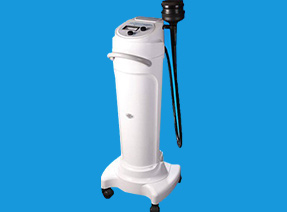
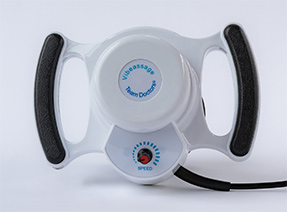
Tools such as Vibeassage®, Vibeassage® Sport, and Vibeassage® Pro featuring the TDX3 soft-as-the-hand Biomimetic Applicator Pad are used to evaluate and address soft tissue tone patterns.
The goal is not to label a structure but to understand function, movement, and load distribution across the thoracic outlet.
When involuntary muscle contraction is the primary driver, no scan will identify the cause.
If that cause is not addressed, compression and pain patterns commonly persist regardless of imaging results.
A thorough examination clarifies which choke points are involved, which muscles are responsible, and whether additional interventions are being considered appropriately.
Thoracic Outlet Syndrome is complex, and meaningful evaluation requires more than pictures of anatomy.
Understanding muscle-driven compression provides essential context for informed decision-making and realistic expectations.
Team Doctors Resources
✓ Check out the Team Doctors Recovery Tools
The Vibeassage Sport and the Vibeassage Pro featuring the TDX3 soft-as-the-hand Biomimetic Applicator Pad
https://www.teamdoctors.com/
✓ Get Dr. Stoxen’s #1 International Bestselling Books
Learn how to understand, examine, and reverse your TOS—without surgery.
https://drstoxen.com/1-international-best-selling-author/
✓ Check out Team Doctors Online Courses
Step-by-step video lessons, demonstrations, and self-treatment strategies.
https://teamdoctorsacademy.com/
✓ Schedule a Free Phone Consultation With Dr. Stoxen
Speak directly with him so he can review your case and guide you on your next steps.
https://drstoxen.com/appointment/
#ThoracicOutletSyndrome #TOSExamination #TOSDiagnosis #MuscleCompression #TOSAwareness #ThoracicOutlet #ClinicalEvaluation #Biomechanics #MuscleGuarding #InflammationPatterns #UpperBodyPain #TOSMechanics #TeamDoctors #DrStoxen #NonSurgicalCare #ThoracicOutletEngineering #NerveCompression #VascularCompression #MedicalEducation #PatientEducation
References
- Illig, Karl A., et al. “Thoracic Outlet Syndrome.” Journal of Vascular Surgery 53, no. 3 (2011): 845–852. https://doi.org/10.1016/j.jvs.2010.09.055
- Sanders, Richard J., and Neal S. Pearce. “Diagnosis of Thoracic Outlet Syndrome.” Journal of Vascular Surgery 46, no. 3 (2007): 601–604. https://doi.org/10.1016/j.jvs.2007.05.050
- Atasoy, Ergun. “Thoracic Outlet Compression Syndrome.” Orthopedic Clinics of North America 27, no. 2 (1996): 265–303.
- Povlsen, Sebastian, et al. “Treatment for Thoracic Outlet Syndrome.” Cochrane Database of Systematic Reviews (2014). https://doi.org/10.1002/14651858.CD007218

Dr James Stoxen DC., FSSEMM (hon) He is the president of Team Doctors®, Treatment and Training Center Chicago, one of the most recognized treatment centers in the world.
Dr Stoxen is a #1 International Bestselling Author of the book, The Human Spring Approach to Thoracic Outlet Syndrome. He has lectured at more than 20 medical conferences on his Human Spring Approach to Thoracic Outlet Syndrome and asked to publish his research on this approach to treating thoracic outlet syndrome in over 30 peer review medical journals.
He has been asked to submit his other research on the human spring approach to treatment, training and prevention in over 150 peer review medical journals. He serves as the Editor-in-Chief, Journal of Orthopedic Science and Research, Executive Editor or the Journal of Trauma and Acute Care, Chief Editor, Advances in Orthopedics and Sports Medicine Journal and editorial board for over 35 peer review medical journals.
He is a much sought-after speaker. He has given over 1000 live presentations and lectured at over 70 medical conferences to over 50,000 doctors in more than 20 countries. He has been invited to speak at over 300 medical conferences which includes invitations as the keynote speaker at over 50 medical conferences.
After his groundbreaking lecture on the Integrated Spring-Mass Model at the World Congress of Sports and Exercise Medicine he was presented with an Honorary Fellowship Award by a member of the royal family, the Sultan of Pahang, for his distinguished research and contributions to the advancement of Sports and Exercise Medicine on an International level. He was inducted into the National Fitness Hall of Fame in 2008 and the Personal Trainers Hall of Fame in 2012.
Dr Stoxen has a big reputation in the entertainment industry working as a doctor for over 150 tours of elite entertainers, caring for over 1000 top celebrity entertainers and their handlers. Anthony Field or the popular children’s entertainment group, The Wiggles, wrote a book, How I Got My Wiggle Back detailing his struggles with chronic pain and clinical depression he struggled with for years. Dr Stoxen is proud to be able to assist him.
Full Bio) Dr Stoxen can be reached directly at teamdoctors@aol.com