Thoracic outlet syndrome is a complex condition involving the space between the neck and shoulder where nerves and blood vessels travel.
This region contains the brachial plexus, subclavian artery, and subclavian vein, all passing through a confined anatomical corridor.
Many individuals describe confusion about imaging when symptoms persist in the neck, shoulder, arm, or hand.
Questions often arise about the role of thoracic outlet syndrome MRI in understanding these symptoms.
In my clinical experience, imaging is frequently discussed before a complete mechanical examination is performed.
This sequence can lead to misunderstanding of what imaging can and cannot provide.
Thoracic outlet syndrome is not a single structure problem but a dynamic interaction between posture, movement, and anatomy.
Static images must therefore be interpreted within a functional context.
Patients often report being sent for MRI thoracic outlet syndrome studies early in the process.
This commonly occurs without a clearly defined clinical question guiding the imaging request.
Imaging should never be ordered out of curiosity.
It should be selected to answer a specific question raised by the physical examination.
A thoracic outlet MRI does not measure movement quality or muscle coordination.
It provides anatomical detail that must be correlated with observed mechanics.
When clinicians request MRI for thoracic outlet syndrome, the purpose should already be established.
The examination should suggest what structure or region needs clarification.
Thoracic outlet syndrome involves variable compression patterns that change with arm position and posture.
Standard imaging performed in a neutral position may not capture these changes.
This is why a clearly defined Thoracic Outlet Syndrome MRI protocol matters.
Protocols determine positioning, sequences, and the structures emphasized.
MRI can visualize soft tissues such as muscles, nerves, and vessels.
It can also identify space-occupying structures that alter normal anatomy.
However, MRI cannot determine whether a muscle is functionally overactive or inhibited.
These findings come from observation, palpation, and movement testing.
In many individuals, ultrasound is also discussed as a diagnostic option.
A thoracic outlet syndrome ultrasound allows real-time visualization of vascular flow.
With thoracic outlet ultrasound, clinicians can observe positional changes during arm movement.
This dynamic capability is not available with standard MRI.
Ultrasound is often used to assess venous or arterial changes during provocative positions.
It can show compression patterns during elevation or rotation of the arm.
The broader category of thoracic outlet syndrome imaging includes MRI, X-ray, and ultrasound.
Each modality answers different questions when used appropriately.
Plain radiographs remain useful in thoracic outlet assessment.
They can reveal skeletal variations that reduce available space.
A thoracic outlet syndrome x ray view may demonstrate cervical ribs or elongated transverse processes.
These findings help explain structural contributors to compression.
Similarly, a Thoracic Outlet Syndrome Xray can identify clavicular alignment and first rib anomalies.
These features influence tunnel dimensions during movement.
MRI is particularly useful when evaluating soft tissue relationships.
A cervical rib MRI can clarify how an anomalous rib interacts with surrounding structures.
Standard radiographs may also identify these variants.
An x ray of cervical rib is often the first step in detecting this anatomy.
Radiology reports must be interpreted with clinical correlation.
This is the role of thoracic outlet syndrome radiology within a broader diagnostic process.
Images alone do not explain symptom reproduction or relief.
They must be matched to exam findings and patient-reported patterns.
Many patients search online for thoracic outlet syndrome images hoping to find answers.
Images can educate but may also mislead without proper context.
Educational thoracic outlet images are useful for understanding anatomy.
They are not diagnostic tools on their own.
Ultrasound deserves special mention for vascular assessment.
A focused thoracic ultrasound can assess flow changes during motion.
When Doppler techniques are added, Duplex Imaging becomes possible.
This allows visualization of both structure and blood flow.
Clinicians may list imaging under categories such as Diagnostic Tests – MRI.
This label does not imply priority over examination.
Similarly, Diagnostic Tests x-ray are tools, not conclusions.
They provide structural information that complements other findings.
Ultrasound may be categorized as Diagnostic – Ultrasound in reports.
Its value lies in dynamic assessment rather than static anatomy.
Clinical Perspective
If an MRI scan is ordered, there must be a clear clinical reason for doing so.
Imaging should help confirm or refine a direction already suggested by the physical examination.
An MRI should never be ordered simply to see what might appear.
This approach reflects uncertainty in examination rather than thoughtful evaluation.
The mechanical and functional exam establishes hypotheses about which structures may be involved.
Imaging then helps clarify anatomy related to those hypotheses.
Ordering an MRI without a defined question places too much weight on the image.
This can shift attention away from posture, movement, and load tolerance.
In my clinical experience, the most useful imaging occurs after careful examination.
The image supports decision-making rather than replacing it.
Integrating Imaging With Examination
Thoracic outlet syndrome symptoms often vary with position and activity.
This variability highlights the importance of observing movement.
Imaging performed in a static position captures only one moment.
The exam captures patterns across time and motion.
Patients often report normal imaging despite persistent symptoms.
This does not invalidate their experience.
It simply reflects the limits of static visualization.
Dynamic compression may not appear on routine studies.
Conversely, imaging may show anatomical variations in individuals without symptoms.
This reinforces the need for clinical correlation.
MRI findings should be interpreted cautiously.
They describe structure, not function.
Ultrasound can demonstrate flow changes but not neural irritation directly.
Each tool has strengths and limitations.
X-rays identify bone but not soft tissue behavior.
Together, these modalities form a partial picture.
The clinician’s role is to integrate all available information.
This includes history, exam, and imaging.
Thoracic outlet syndrome assessment is therefore a layered process.
No single test provides all answers.
Understanding when and why to order imaging improves clarity.
It also helps patients understand the purpose of each test.
Education reduces frustration and unrealistic expectations.
It keeps the focus on understanding patterns rather than chasing findings.
Imaging should serve the examination.
The examination should guide imaging selection.
This sequence respects both anatomy and biomechanics.
It also aligns with responsible clinical reasoning.
Team Doctors Resources
✓ Check out the Team Doctors Recovery Tools
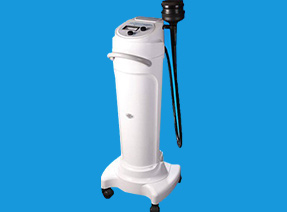
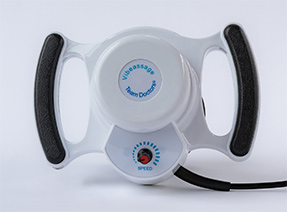
The Vibeassage Sport and the Vibeassage Pro featuring the TDX3 soft-as-the-hand Biomimetic Applicator Pad
https://www.teamdoctors.com/
✓ Get Dr. Stoxen’s #1 International Bestselling Books
Learn how to understand, examine, and reverse your TOS—without surgery.
https://drstoxen.com/1-international-best-selling-author/
✓ Check out Team Doctors Online Courses
Step-by-step video lessons, demonstrations, and self-treatment strategies.
https://teamdoctorsacademy.com/
✓ Schedule a Free Phone Consultation With Dr. Stoxen
Speak directly with him so he can review your case and guide you on your next steps.
https://drstoxen.com/appointment/
#ThoracicOutletSyndrome #TOS #TOSImaging #MRIforTOS #TOSDiagnosis #ThoracicOutletMRI #TOSUltrasound #TOSXray #BrachialPlexus #SubclavianVein #SubclavianArtery #PostureMechanics #ClinicalExamination #DiagnosticImaging #VascularCompression #NerveCompression #MusculoskeletalHealth #MedicalEducation #TeamDoctors #DrStoxen
References
- Sanders, R. J., & Hammond, S. L. “Thoracic outlet syndrome: A review.” Neurologic Clinics 26, no. 2 (2008): 459–473. https://doi.org/10.1016/j.ncl.2008.02.003
- Illig, K. A., et al. “Thoracic outlet syndrome.” Journal of Vascular Surgery 53, no. 3 (2011): 845–852. https://doi.org/10.1016/j.jvs.2010.10.098
- Demondion, X., et al. “Imaging assessment of thoracic outlet syndrome.” Radiographics 26, no. 6 (2006): 1735–1750. https://doi.org/10.1148/rg.266065517
- Povlsen, B., et al. “Treatment for thoracic outlet syndrome.” Cochrane Database of Systematic Reviews (2014). https://doi.org/10.1002/14651858.CD007218.pub3

Dr James Stoxen DC., FSSEMM (hon) He is the president of Team Doctors®, Treatment and Training Center Chicago, one of the most recognized treatment centers in the world.
Dr Stoxen is a #1 International Bestselling Author of the book, The Human Spring Approach to Thoracic Outlet Syndrome. He has lectured at more than 20 medical conferences on his Human Spring Approach to Thoracic Outlet Syndrome and asked to publish his research on this approach to treating thoracic outlet syndrome in over 30 peer review medical journals.
He has been asked to submit his other research on the human spring approach to treatment, training and prevention in over 150 peer review medical journals. He serves as the Editor-in-Chief, Journal of Orthopedic Science and Research, Executive Editor or the Journal of Trauma and Acute Care, Chief Editor, Advances in Orthopedics and Sports Medicine Journal and editorial board for over 35 peer review medical journals.
He is a much sought-after speaker. He has given over 1000 live presentations and lectured at over 70 medical conferences to over 50,000 doctors in more than 20 countries. He has been invited to speak at over 300 medical conferences which includes invitations as the keynote speaker at over 50 medical conferences.
After his groundbreaking lecture on the Integrated Spring-Mass Model at the World Congress of Sports and Exercise Medicine he was presented with an Honorary Fellowship Award by a member of the royal family, the Sultan of Pahang, for his distinguished research and contributions to the advancement of Sports and Exercise Medicine on an International level. He was inducted into the National Fitness Hall of Fame in 2008 and the Personal Trainers Hall of Fame in 2012.
Dr Stoxen has a big reputation in the entertainment industry working as a doctor for over 150 tours of elite entertainers, caring for over 1000 top celebrity entertainers and their handlers. Anthony Field or the popular children’s entertainment group, The Wiggles, wrote a book, How I Got My Wiggle Back detailing his struggles with chronic pain and clinical depression he struggled with for years. Dr Stoxen is proud to be able to assist him.
Full Bio) Dr Stoxen can be reached directly at teamdoctors@aol.com