One of our patients arrived after living with chronic pain after TOS surgery for nearly eight years. She had undergone first rib resection and scalenectomy yet continued to experience debilitating symptoms that affected every part of daily life.
In my clinical experience, individuals who seek help after surgery often describe worsening pain rather than relief. Simple activities such as caring for children, working, or supporting family members become exhausting and emotionally draining.
This patient traveled from Canada for an intensive five-day program focused on reducing post-surgical thoracic outlet inflammation. The goal was not to alter anatomy but to address involuntary muscle guarding that often follows surgery.
When muscles surrounding the thoracic outlet become inflamed, they communicate distress signals through the nervous system. This triggers a splinting and guarding reflex designed to protect injured tissue.
Once activated, this reflex causes surrounding muscles to contract continuously. Over time, the sustained contraction leads to fatigue, fiber damage, and increased inflammation, reinforcing the pain cycle.
This creates a self-perpetuating pain loop that gradually distorts rib cage and shoulder mechanics. Many individuals describe pain between the shoulder blades, neck tightness, and a sensation of restricted breathing.
As guarding intensifies, circulation through the outlet can become compromised. Reduced blood flow may contribute to weakness, numbness, tingling, or coldness in the arm and hand.
Daily activities play a significant role in maintaining this pattern. Prolonged phone use, repetitive computer work, and occupational tasks involving forward arm positioning activate key muscles repeatedly.
Muscles such as the pectoralis minor overactivation, subclavius muscle tension, coracobrachialis activation, and biceps short head involvement remain engaged far longer than intended.
The pectoralis minor attaches to the third, fourth, and fifth ribs. When it becomes chronically active, it contributes to rib cage elevation into the outlet, worsening compression from below.
Patients often report that reclining on a couch with poor posture or maintaining a forward head position dramatically increases symptoms. These positions strain the scalene muscles and twist the rib cage.
Repetitive tasks such as driving with elevated arms, hairstyling, typing, or clinical work reinforce chronic shoulder flexion stress. Over time, the rib cage becomes locked into a guarded position.
This pattern explains why Thoracic Outlet Syndrome can mimic cardiac or vascular symptoms. Chest tightness, arm heaviness, and shortness of breath frequently lead to emergency evaluations.
From a mechanical standpoint, these symptoms reflect nerve hypersensitivity and guarding, not acute pathology. The nervous system remains on high alert due to persistent inflammation.
Addressing this pattern requires careful reduction of localized inflammation and restoration of movement. In my clinical practice, vibration therapy is used alongside systematic deep tissue work.
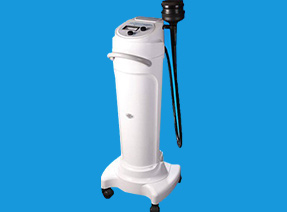
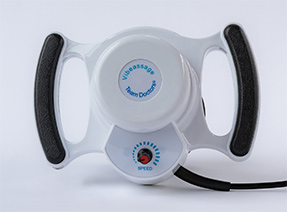
We use vibration massage with Vibeassage® Sport and Vibeassage® Pro, featuring the TDX3 soft-as-the-hand Biomimetic Applicator Pad, to enhance circulation and reduce muscle tone.
Treatment is performed inch by inch across the chest, neck, and shoulder complex. Multiple passes are often required to release deep guarding and restore rib cage mobility.
As tissue resistance decreases, range of motion improves and the guarding reflex begins to quiet. This allows the nervous system to recalibrate its protective response.
Patients are also guided through structured home programs to reinforce progress. Ongoing use of vibration tools supports long-term inflammation control and maintenance of alignment.
Many individuals describe improvements beyond pain reduction. Increased energy, better sleep, and greater confidence in daily activities are commonly reported.
This case illustrates why surgery alone does not address muscle-driven thoracic outlet compression. Removing structures does not unwind years of guarding and biomechanical distortion.
Thoracic Outlet Syndrome surgery was originally designed for acute vascular emergencies. It was not intended to resolve chronic muscular compression patterns.
When inflammation, guarding, and altered mechanics remain unaddressed, symptoms can persist despite technically successful surgery.
Education plays a crucial role in recovery. Understanding why pain continues helps patients regain a sense of control and direction.
This story highlights the importance of addressing inflammation, reflexive guarding, and musculoskeletal imbalance in chronic post-surgical TOS.
By combining education, manual therapy, and vibration-assisted care, patients are given tools to restore function and improve quality of life after failed surgical outcomes.
Team Doctors Resources
✓ Check out the Team Doctors Recovery Tools
The Vibeassage Sport and the Vibeassage Pro featuring the TDX3 soft-as-the-hand Biomimetic Applicator Pad
https://www.teamdoctors.com/
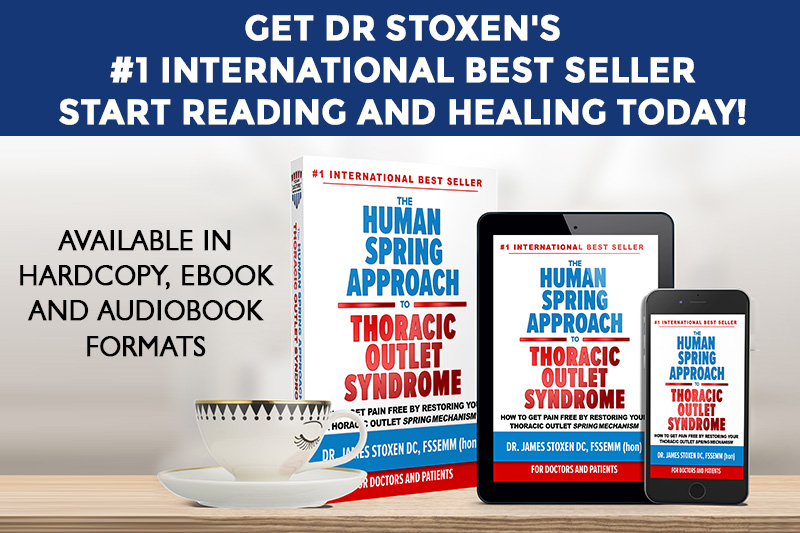
✓ Get Dr. Stoxen’s #1 International Bestselling Books
Learn how to understand, examine, and reverse your TOS—without surgery.
https://drstoxen.com/1-international-best-selling-author/
✓ Check out Team Doctors Online Courses
Step-by-step video lessons, demonstrations, and self-treatment strategies.
https://teamdoctorsacademy.com/
✓ Schedule a Free Phone Consultation With Dr. Stoxen
Speak directly with him so he can review your case and guide you on your next steps.
https://drstoxen.com/appointment/
#FailedTOSSurgery #ThoracicOutletSyndrome #ChronicPainRecovery #PostSurgicalPain #MuscleGuarding #TOSCaseStudy #RibCageMechanics #UpperBodyPain #InflammationCycle #PainEducation #VibrationTherapy #Biomechanics #NeurogenicTOS #VascularTOS #ChronicCompression #PainAwareness #MovementHealth #RehabilitationScience #PatientStories #TOSRecovery
References
- Roos, D. B. “Thoracic Outlet Syndrome Is Underdiagnosed.” Muscle & Nerve 22, no. 1 (1999): 126–129.
- Sanders, Richard J., and Neal S. Pearce. “Neurogenic Thoracic Outlet Syndrome.” Journal of Vascular Surgery 36, no. 3 (2002): 669–676.
- Urschel, Harold C., and R. B. Razzuk. “The Neurovascular Compression Syndromes of the Thoracic Outlet.” Annals of Thoracic Surgery 50, no. 3 (1990): 484–490.

Dr James Stoxen DC., FSSEMM (hon) He is the president of Team Doctors®, Treatment and Training Center Chicago, one of the most recognized treatment centers in the world.
Dr Stoxen is a #1 International Bestselling Author of the book, The Human Spring Approach to Thoracic Outlet Syndrome. He has lectured at more than 20 medical conferences on his Human Spring Approach to Thoracic Outlet Syndrome and asked to publish his research on this approach to treating thoracic outlet syndrome in over 30 peer review medical journals.
He has been asked to submit his other research on the human spring approach to treatment, training and prevention in over 150 peer review medical journals. He serves as the Editor-in-Chief, Journal of Orthopedic Science and Research, Executive Editor or the Journal of Trauma and Acute Care, Chief Editor, Advances in Orthopedics and Sports Medicine Journal and editorial board for over 35 peer review medical journals.
He is a much sought-after speaker. He has given over 1000 live presentations and lectured at over 70 medical conferences to over 50,000 doctors in more than 20 countries. He has been invited to speak at over 300 medical conferences which includes invitations as the keynote speaker at over 50 medical conferences.
After his groundbreaking lecture on the Integrated Spring-Mass Model at the World Congress of Sports and Exercise Medicine he was presented with an Honorary Fellowship Award by a member of the royal family, the Sultan of Pahang, for his distinguished research and contributions to the advancement of Sports and Exercise Medicine on an International level. He was inducted into the National Fitness Hall of Fame in 2008 and the Personal Trainers Hall of Fame in 2012.
Dr Stoxen has a big reputation in the entertainment industry working as a doctor for over 150 tours of elite entertainers, caring for over 1000 top celebrity entertainers and their handlers. Anthony Field or the popular children’s entertainment group, The Wiggles, wrote a book, How I Got My Wiggle Back detailing his struggles with chronic pain and clinical depression he struggled with for years. Dr Stoxen is proud to be able to assist him.
Full Bio) Dr Stoxen can be reached directly at teamdoctors@aol.com