Part of the problem in modern medicine is an overreliance on diagnostic testing.
Many clinicians believe advanced imaging can explain every symptom a patient reports.
This belief has shaped how thoracic outlet syndrome imaging is commonly used today.
Scans are often reviewed before a full physical examination is completed.
In my clinical experience, this sequence creates confusion rather than clarity.
Imaging should support an exam, not replace it.
One of the most commonly ordered studies is the thoracic outlet syndrome MRI.
MRI technology produces highly detailed images of bones, discs, nerves, and soft tissue.
Because MRI images look precise, they are often assumed to be definitive.
However, precision does not automatically equal relevance.
Research has shown that imaging findings frequently do not correlate with symptoms.
This mismatch is not rare; it is well documented in medical literature.
A landmark study conducted in Japan illustrates this problem clearly.
Researchers selected volunteers who reported no history of lower back pain.
MRI scans were performed on these symptom-free individuals.
Surprisingly, approximately 34 percent showed large lumbar disc herniations.
Despite these findings, none of the participants had pain.
The imaging abnormalities existed without symptoms.
Because the results were so unexpected, researchers extended the investigation.
They performed MRI scans of the cervical spine on individuals without neck pain.
Once again, about 34 percent were found to have cervical disc herniations.
Even more striking, roughly 7 percent showed disc material compressing the spinal cord.
Under typical assumptions, such compression would suggest serious neurological risk.
Yet these individuals had no weakness, numbness, or paralysis.
This research helped clarify a crucial point.
A significant portion of MRI findings are incidental.
Physicians understand that roughly 30 to 35 percent of MRI abnormalities are unrelated to symptoms.
These findings may reflect age-related changes rather than active pathology.
The danger arises when imaging is interpreted without clinical correlation.
When that happens, structural findings may be blamed incorrectly.
This problem appears frequently with MRI thoracic outlet syndrome evaluations.
The thoracic outlet is a dynamic space, not a static structure.
Static imaging often fails to capture functional compression.
Position, posture, muscle tone, and movement all influence the outlet.
An MRI for thoracic outlet syndrome is typically performed with the patient lying flat.
This position may temporarily reduce compression that occurs during upright activity.
As a result, symptoms experienced during daily life may not appear on the scan.
The absence of findings does not equal absence of dysfunction.
Some clinicians respond by ordering more imaging.
This often includes contrast studies or positional variations.
Even with advanced protocols, limitations remain.
A Thoracic Outlet Syndrome MRI protocol can improve visualization but cannot replace examination.
Another commonly used tool is the thoracic outlet syndrome x ray view.
X-rays are useful for identifying bony variations.
These include elongated transverse processes or cervical ribs.
A Thoracic Outlet Syndrome Xray may reveal such structural differences.
However, many individuals live symptom-free with these findings.
Structural presence does not guarantee compression.
A cervical rib MRI may show additional detail around surrounding tissues.
Yet the rib itself may not be the source of symptoms.
Similarly, an x ray of cervical rib often leads to assumptions.
The rib may be blamed simply because it is visible.
In my clinical experience, patients may have cervical ribs for decades without pain.
Symptoms often develop later due to soft tissue changes, not bone.
Another modality frequently used is thoracic outlet syndrome ultrasound.
Ultrasound allows real-time visualization of blood flow.
A thoracic outlet ultrasound can assess vascular changes with arm movement.
This is particularly useful in vascular presentations.
However, ultrasound is operator-dependent.
Results vary based on technique and experience.
Some facilities use thoracic ultrasound primarily for screening.
While helpful, it still cannot assess neurological compression directly.
Vascular studies often include Duplex Imaging.
This combines ultrasound with Doppler flow assessment.
Duplex studies can show changes in arterial or venous flow.
Yet altered flow does not always explain neurological symptoms.
This is why Diagnostic Tests – MRI should never stand alone.
Imaging must be interpreted within a broader clinical context.
The same applies to Diagnostic Tests x-ray.
X-rays reveal structure, not function.
Likewise, Diagnostic – Ultrasound findings must be correlated with examination.
No test can replace skilled clinical observation.
In many cases, patients undergo extensive thoracic outlet syndrome radiology workups.
Multiple imaging studies may be performed over months or years.
Despite this, symptoms persist.
The reason is often simple: the primary issue was never identified.
When imaging becomes the primary diagnostic tool, examination quality may decline.
Palpation, movement assessment, and postural analysis are overlooked.
This pattern contributes to misdiagnosis.
Patients may be told their symptoms originate from disc disease.
Surgery may be recommended based on imaging alone.
Only later does it become clear that compression occurred elsewhere.
In some patients, spinal surgery is performed unnecessarily.
The real issue may have been thoracic outlet compression all along.
This sequence highlights a critical lesson.
Imaging findings do not equal diagnosis.
Even thoracic outlet syndrome images must be interpreted cautiously.
Images show anatomy, not symptom generation.
Collections of thoracic outlet images can look impressive.
Yet they often fail to explain why symptoms occur.
This is especially true when muscle guarding is present.
Muscle tension can alter space dynamically.
Static imaging rarely captures these changes.
Compression may only occur during specific movements.
This limitation applies to both MRI and ultrasound.
Neither can fully replicate real-life conditions.
That is why a thorough physical examination is essential.
Examination identifies patterns imaging cannot.
Provocative positioning, posture analysis, and muscle assessment matter.
These elements guide interpretation of imaging findings.
In my clinical experience, imaging is most useful after examination.
The exam determines which structures deserve closer evaluation.
This approach reduces unnecessary testing.
It also reduces false assumptions.
Patients often report confusion after receiving imaging results.
They are told they have abnormalities without symptoms.
Others are told their symptoms are unexplained despite normal scans.
Both scenarios increase frustration.
Understanding the limitations of imaging helps clarify these experiences.
It restores proper perspective.
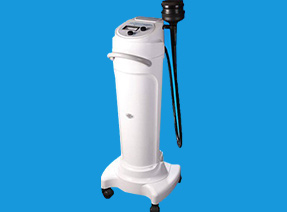
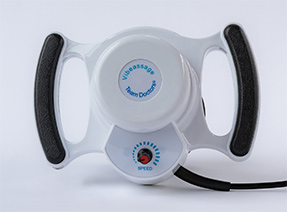
Tools like Vibeassage®, Vibeassage® Sport, and Vibeassage® Pro are often discussed in educational contexts related to muscle tension. When paired with the TDX3 soft-as-the-hand Biomimetic Applicator Pad, discussions often focus on sensory input rather than diagnosis.
Educational platforms such as Team Doctors® emphasize examination-first reasoning.
This framework helps clinicians and patients interpret imaging wisely.
Ultimately, imaging should serve the clinical picture.
It should confirm, not dictate, conclusions.
Thoracic outlet syndrome remains a diagnosis of exclusion and correlation.
No single image defines it.
When clinicians rely too heavily on scans, errors increase.
When examination leads, accuracy improves.
Understanding this balance protects patients.
It also restores the role of clinical reasoning in modern care.
Team Doctors Resources
✓ Check out the Team Doctors Recovery Tools
The Vibeassage Sport and the Vibeassage Pro featuring the TDX3 soft-as-the-hand Biomimetic Applicator Pad
https://www.teamdoctors.com/
✓ Get Dr. Stoxen’s #1 International Bestselling Books
Learn how to understand, examine, and reverse your TOS—without surgery.
https://drstoxen.com/1-international-best-selling-author/
✓ Check out Team Doctors Online Courses
Step-by-step video lessons, demonstrations, and self-treatment strategies.
https://teamdoctorsacademy.com/
✓ Schedule a Free Phone Consultation With Dr. Stoxen
Speak directly with him so he can review your case and guide you on your next steps.
https://drstoxen.com/appointment/
#ThoracicOutletSyndrome #TOS #TOSImaging #MRIForTOS #TOSMRI #ThoracicOutletMRI #TOSUltrasound #TOSXray #DiagnosticImaging #ClinicalExamination #RadiologyLimits #MedicalImaging #Biomechanics #Posture #NerveCompression #VascularCompression #MuscleGuarding #ThoracicOutlet #TOSDiagnosis #TeamDoctors
References
- Boden, Scott D., et al. “Abnormal Magnetic-Resonance Scans of the Lumbar Spine in Asymptomatic Subjects.” The Journal of Bone and Joint Surgery 72, no. 3 (1990): 403–408. https://journals.lww.com/jbjsjournal/Abstract/1990/72030/Abnormal_Magnetic_Resonance_Scans_of_the.12.aspx
- Matsumoto, Masahiko, et al. “MRI of Cervical Intervertebral Discs in Asymptomatic Subjects.” The Journal of Bone and Joint Surgery 80, no. 1 (1998): 19–24. https://journals.lww.com/jbjsjournal/Abstract/1998/01000/MRI_of_Cervical_Intervertebral_Discs_in.4.aspx
- Sanders, Richard J., and Neal S. Hammond. “Thoracic Outlet Syndrome: A Review.” Neurologic Clinics 31, no. 2 (2013): 523–538. https://www.sciencedirect.com/science/article/pii/S0733861913000100
- Demondion, Xavier, et al. “Imaging Assessment of Thoracic Outlet Syndrome.” Radiographics 26, no. 6 (2006): 1735–1750. https://pubs.rsna.org/doi/10.1148/rg.266065714

Dr James Stoxen DC., FSSEMM (hon) He is the president of Team Doctors®, Treatment and Training Center Chicago, one of the most recognized treatment centers in the world.
Dr Stoxen is a #1 International Bestselling Author of the book, The Human Spring Approach to Thoracic Outlet Syndrome. He has lectured at more than 20 medical conferences on his Human Spring Approach to Thoracic Outlet Syndrome and asked to publish his research on this approach to treating thoracic outlet syndrome in over 30 peer review medical journals.
He has been asked to submit his other research on the human spring approach to treatment, training and prevention in over 150 peer review medical journals. He serves as the Editor-in-Chief, Journal of Orthopedic Science and Research, Executive Editor or the Journal of Trauma and Acute Care, Chief Editor, Advances in Orthopedics and Sports Medicine Journal and editorial board for over 35 peer review medical journals.
He is a much sought-after speaker. He has given over 1000 live presentations and lectured at over 70 medical conferences to over 50,000 doctors in more than 20 countries. He has been invited to speak at over 300 medical conferences which includes invitations as the keynote speaker at over 50 medical conferences.
After his groundbreaking lecture on the Integrated Spring-Mass Model at the World Congress of Sports and Exercise Medicine he was presented with an Honorary Fellowship Award by a member of the royal family, the Sultan of Pahang, for his distinguished research and contributions to the advancement of Sports and Exercise Medicine on an International level. He was inducted into the National Fitness Hall of Fame in 2008 and the Personal Trainers Hall of Fame in 2012.
Dr Stoxen has a big reputation in the entertainment industry working as a doctor for over 150 tours of elite entertainers, caring for over 1000 top celebrity entertainers and their handlers. Anthony Field or the popular children’s entertainment group, The Wiggles, wrote a book, How I Got My Wiggle Back detailing his struggles with chronic pain and clinical depression he struggled with for years. Dr Stoxen is proud to be able to assist him.
Full Bio) Dr Stoxen can be reached directly at teamdoctors@aol.com