Thoracic Outlet Syndrome
Why Surgery Doesn’t Restore Normal
A Different Patient, the Same Confusion
Maria had always trusted her body.
She wasn’t an athlete in the traditional sense, but she was strong, active, and disciplined. Long hours at a computer didn’t stop her from lifting weights three days a week. Yoga on weekends. Long walks in the evenings. She believed movement was medicine, and for most of her life, it had been.
Until it wasn’t.
When Pain Has No Obvious Beginning
Maria couldn’t point to a single injury.
No car accident.
No fall.
No dramatic moment where everything changed.
What she noticed instead was subtle.
Her right hand would go numb when she worked too long at her desk. At first, she blamed posture. Then stress. Then age. She shook it out and kept going.
But the numbness didn’t stop.
It spread up her forearm. A deep ache followed—hard to describe, harder to ignore. Her shoulder began to burn after workouts, especially overhead movements. Her neck felt tight all the time, as if she were bracing for something that never arrived.
By the time she sought help, her symptoms had names—but no explanations.
The First Diagnosis That Didn’t Fit
The first doctor suspected carpal tunnel syndrome.
Splint. Rest. Anti-inflammatories.
Nothing changed.
Next came a neurologist for arm nerve pain. Nerve conduction studies were “borderline.” Not bad enough to explain her symptoms. Not normal enough to dismiss them.
Then came imaging.
She had:
- MRI thoracic outlet syndrome scans
- Thoracic outlet MRI reviews
- Thoracic outlet syndrome ultrasound
- Thoracic ultrasound
- Diagnostic Tests – MRI
- Diagnostic – Ultrasound
- Thoracic outlet syndrome imaging
- Thoracic outlet syndrome images
One radiologist mentioned “possible narrowing.” Another said it was within normal limits. One report suggested postural influence. Another suggested vascular involvement.
Maria was told she might have thoracic outlet syndrome.
“Might” became the most frustrating word in her vocabulary.
Enter the Specialists
She was referred to a thoracic outlet syndrome doctor.
Then a vascular thoracic outlet specialist.
Then an orthopedic consult.
Each had a different lens.
The vascular specialist focused on blood flow. Duplex imaging showed no clear obstruction at rest. “Probably not vascular TOS.”
The orthopedic specialist examined her shoulder and cervical spine. “Maybe cervical radiculopathy.”
The neurologist revisited the nerves. “Not classic.”
Every appointment ended the same way.
More questions.
More uncertainty.
More pain.
She searched endlessly:
- who treats thoracic outlet syndrome
- find thoracic outlet specialist
- TOS clinic near me
- where to go for TOS
- best treatment center for TOS
- expert in thoracic outlet syndrome
What she found instead was a fragmented system—each provider expert in one piece, but no one responsible for the whole picture.
When Surgery Enters the Conversation
Eventually, surgery was mentioned.
Not as a recommendation—but as a possibility.
“If this is thoracic outlet syndrome and conservative care fails, first rib resection is an option.”
Maria froze.
She wasn’t against surgery in principle. But something felt wrong.
How could they remove a rib when no one could clearly explain what was being compressed—or why her symptoms fluctuated so dramatically with posture, stress, and workload?
She asked for a thoracic outlet syndrome second opinion.
That’s when the tone changed.
Some providers welcomed it. Others didn’t.
One told her bluntly, “At some point, you have to choose.”
Maria wasn’t choosing fear.
She was choosing understanding.
The Breaking Point
Her symptoms worsened.
Typing became painful. Her arm felt heavy by midday. Her hand tingled at night. Overhead movements triggered burning pain deep in the shoulder and along the arm.
She stopped working out.
Then she stopped sleeping well.
Then anxiety entered the picture—not because she was weak, but because her body no longer made sense.
She felt unheard.
Invisible.
Like so many patients with specialist for unexplained arm pain, she began to wonder if it was “all in her head.”
That was the moment she decided to start over—not with another scan, but with a different question:
Who actually understands TOS?
Not who treats it surgically.
Not who diagnoses it by exclusion.
But who understands how compression really happens.
Her search led her somewhere unexpected.
Not a clinic advertisement.
Not a surgical center.
But an educational lecture.
The Second Opinion That Changed the Direction
Maria didn’t schedule the appointment expecting relief.
She scheduled it expecting clarity.
By this point, she had learned to manage expectations. Every new provider brought the same cycle: hope, explanation, confusion. She was no longer chasing a miracle—she was chasing understanding.
This evaluation was different from the start.
No one rushed her story.
No one interrupted to jump to conclusions.
Instead, she was asked to describe how her symptoms changed—what made them worse, what made them better, and when they appeared during the day.
That alone felt like progress.
When Symptoms Tell the Real Story
Maria described patterns no imaging study had captured.
Her arm symptoms worsened with prolonged sitting.
Overhead activity triggered burning pain.
Stress amplified everything.
Rest helped—but only temporarily.
She noticed that if she slouched, her hand tingled faster. If she stood tall and relaxed her shoulders, the symptoms eased slightly.
That detail mattered.
Because symptoms that fluctuate with posture and load are rarely caused by fixed structural blockages.
They are caused by dynamic compression.
A Functional Evaluation Instead of a Label
Instead of starting with thoracic outlet syndrome imaging, the evaluation began with observation.
How did her shoulders sit at rest?
How did her rib cage move when she breathed?
Did her neck muscles engage when she lifted her arms?
It became obvious quickly.
Her shoulders were being pulled downward and forward by chronically tight muscles. Her rib cage was stiff, limiting normal expansion. Her neck muscles were overworking to stabilize movements they shouldn’t have been responsible for.
When she raised her arm, her entire system compensated.
And when a system compensates long enough, nerves complain.
This wasn’t classic thoracic outlet syndrome.
This was functional nerve compression masquerading as TOS.
Why Imaging Didn’t Help
Maria finally understood why her MRIs, ultrasounds, and X-rays had failed her.
Imaging looks for:
- Structural narrowing
- Bone anomalies
- Vascular obstruction at rest
But her problem wasn’t static.
It appeared during movement, posture collapse, fatigue, and muscle guarding.
A thoracic outlet syndrome MRI taken while lying flat, relaxed, and supported could never recreate what happened after six hours at a desk or during overhead activity.
This is why so many patients with arm numbness and shoulder pain are misdiagnosed—or left without answers.
The Misleading Power of “Maybe”
For years, Maria had lived in the gray zone.
“Maybe TOS.”
“Possibly vascular.”
“Could be neurologic.”
Those words kept her stuck.
What she needed wasn’t another possibility.
She needed a TOS diagnosis specialist who could confidently say what was happening—and what wasn’t.
And for the first time, she heard it clearly:
“You do not need surgery.”
A Conservative Path Forward
Instead of rib removal or scalene cutting, her plan focused on restoring function.
The approach included:
- Non-surgical treatment for TOS-like symptoms
- Conservative treatment for thoracic outlet syndrome
- Physical rehabilitation for TOS
- Postural correction for TOS
- Manual therapy for TOS
- Movement-based treatment TOS
- Reduce compression without surgery
- Restore shoulder space naturally
- Relieve nerve compression naturally
The goal wasn’t to “fix” a structure.
The goal was to stop compressing nerves in the first place.
The First Signs of Relief
Within weeks, Maria noticed changes.
Her hand tingled less.
Her shoulder burned less.
Her neck felt lighter.
Not gone—but improved.
And that improvement mattered more than anything else.
Because improvement meant the diagnosis was right.
Rewriting the Narrative
Maria had spent years believing something was “wrong” with her anatomy.
What she learned instead was this:
Her body wasn’t broken.
It was overloaded.
Her nervous system had been protecting her—by tightening muscles and limiting movement. Those protective patterns had become the problem.
Once those patterns were addressed, symptoms began to unwind.
Choosing Knowledge Over Fear
Maria still had days where symptoms flared.
But she no longer panicked.
She understood what was happening.
And that understanding changed everything.
She wasn’t avoiding surgery out of fear anymore.
She was avoiding it because it wasn’t necessary.
Recovery, Confidence, and Lessons Learned on Human Spring
Maria didn’t wake up one morning suddenly healed.
What changed was more important than the absence of pain.
She finally understood why her body had been hurting.
That understanding removed fear—and fear had been silently amplifying everything.
From Fragile to Functional
As treatment progressed, Maria noticed something subtle but powerful:
her body no longer felt fragile.
Before, every sensation triggered worry. Tingling meant damage. Burning meant danger. Tightness meant collapse was imminent. That fear kept her muscles braced and her nervous system on high alert.
Now, she could interpret signals correctly.
She understood that her symptoms were not caused by broken anatomy—but by a breakdown in how her body managed load.
That shift reframed everything.
The Body Is Not a Lever
For years, Maria had been evaluated under what most medical systems still rely on: a lever-based model of the human body.
In that model:
- Bones move like rigid levers
- Muscles pull like cables
- Compression is treated as a static narrowing
- Pain is blamed on structural defects
But her recovery was built on something fundamentally different.
The human spring model.
Under the human spring approach, the body is understood as a body as a spring system, not a rigid machine. Movement is governed by spring-based biomechanics, where energy is absorbed, stored, transferred, and released across the entire kinetic chain.
This was the first model that actually matched what Maria experienced.
Why the Human Spring Model Explained Everything
Maria learned that her pain made sense once her body was evaluated through the lens of spring mechanics in human movement.
In healthy motion:
- Muscles, fascia, joints, and connective tissues act as biological springs in the body
- The stretch-shortening cycle biomechanics allows elastic energy storage in the body
- That energy is released efficiently during movement, reducing strain
- Proper shock absorption biomechanics protect nerves and blood vessels
But when spring function fails, everything changes.
Maria’s system had become stiff where it needed compliance, and overloaded where it needed distribution.
This imbalance led to:
- Loss of joint decompression mechanics
- Breakdown in suspension-based anatomy
- Collapse of tunnel mechanics for nerves and blood vessels
- Faulty biomechanical load distribution
- Excessive muscle guarding as a protective response
Her symptoms were not random.
They were the predictable outcome of spring failure and chronic pain.
The Integrated Spring-Mass Model in Action
What made the difference in Maria’s recovery was the application of the integrated spring-mass model—a framework that evaluates how mass (body weight, external load, gravity) interacts with spring elements throughout the body.
Rather than isolating her arm, shoulder, or neck, treatment addressed:
- Spring stiffness vs compliance across joints
- Torsional spring mechanics in joints, especially the shoulder and rib cage
- Compression springs in the spine, particularly in the thoracic region
- The fascial spring network of the shoulder connecting shoulder, trunk, and arm
- Kinetic chain spring transfer from the trunk into the upper limb
- Spring Suspension Mechanism of the Shoulder over the Ribcage, the Engineering of the Thoracic Tunnel
When these systems were restored, pressure was no longer forced into narrow tunnels.
Space returned—not because tissue was removed, but because function was restored.
Why Symptoms Resolved Without Surgery
Maria finally understood why surgery had never felt right.
Surgery removes anatomy.
But her problem was loss of spring function.
Cutting structures would not have restored:
- Energy recycling in human motion
- Impact attenuation biomechanics
- Neuromechanical spring control
- Biomechanical energy efficiency
In fact, surgery could have permanently disrupted systems that were already struggling to compensate.
Instead, her care focused on:
- Restoring human spring function to the Thoracic Outlet Anatomy
- Improving biomechanical energy efficiency
- Re-establishing natural load sharing
- Reducing unnecessary muscle guarding
- Allowing nerves and vessels to remain decompressed dynamically
This was applied clinical biomechanics in practice—not theory, not guesswork.
The Role of Vibration and Spring Restoration
One of the most important insights Maria gained was how vibration and spring restoration supported her recovery.
Targeted vibration helped:
- Reduce excessive spring stiffness
- Improve neuromuscular coordination
- Re-establish rhythmic spring loading
- Calm overactive protective reflexes
Rather than forcing change, it reminded her nervous system how normal movement should feel.
As spring behavior returned, symptoms faded—not because they were suppressed, but because their cause was removed.
A Different Relationship With Her Body
Today, Maria lives differently.
She works. She trains. She moves.
But most importantly, she listens—without fear.
She understands that pain is not an enemy, but information. She knows how posture, load, stress, and recovery influence spring behavior. And she knows how to intervene early, before compensation turns into chronic compression.
She no longer searches for the next diagnosis.
She understands the system.
3 Actionable Health Tips Inspired by the Human Spring Approach
- Train for Spring Compliance, Not Rigidity
Avoid treating your body like a lever system that must be forced into position. Movement that restores elastic recoil, rhythm, and compliance supports nerve decompression and long-term resilience.
- Address Load Distribution Before Symptoms Escalate
Pain often signals a failure in biomechanical load distribution, not tissue damage. Early intervention focused on restoring spring behavior can prevent chronic nerve and vascular compression.
- Restore Function Before Considering Surgery
If imaging is unclear and symptoms fluctuate with posture and movement, prioritize approaches that restore human spring function before altering anatomy. Surgery should be a last step—not a first response.
Team Doctors Resources
✓ Check out the Team Doctors Recovery Tools
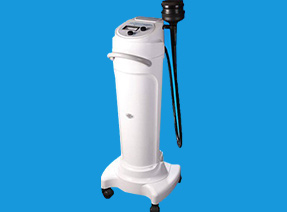
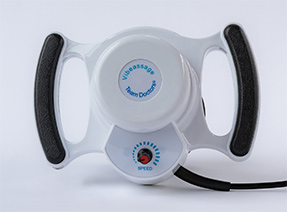
The Vibeassage Sport and the Vibeassage Pro featuring the TDX3 soft-as-the-hand Biomimetic Applicator Pad
https://www.teamdoctors.com/
✓ Get Dr. Stoxen’s #1 International Bestselling Books
Learn how to understand, examine, and reverse your TOS—without surgery.
https://drstoxen.com/1-international-best-selling-author/
✓ Check out Team Doctors Online Courses
Step-by-step video lessons, demonstrations, and self-treatment strategies.
https://teamdoctorsacademy.com/
✓ Schedule a Free Phone Consultation With Dr. Stoxen
Speak directly with him so he can review your case and guide you on your next steps.
https://drstoxen.com/appointment/
#ThoracicOutletSyndrome #FailedTOSSurgery #TOSRecovery #ChronicPainStory #VascularTOS #ArmPain #PatientAdvocacy #MedicalTrauma #SurgeryFailure #PainJourney
Medical Disclaimer
This article is provided for educational and informational purposes only. It is not intended to diagnose, treat, cure, or prevent any disease, nor is it intended to replace professional medical advice, diagnosis, or treatment.
Thoracic outlet syndrome and related nerve, vascular, and musculoskeletal conditions can present differently in each individual. Treatment decisions—including surgical and non-surgical options—must be made on a case-by-case basis in consultation with a qualified, licensed healthcare professional who is familiar with the patient’s complete medical history.
The experiences described in this article reflect individual outcomes and do not guarantee similar results for others. Surgical procedures, including thoracic outlet surgery and first rib resection, carry inherent risks, and outcomes vary based on many factors including diagnosis, timing, practitioner experience, and patient-specific anatomy and physiology.
Readers should not delay or discontinue medical care based on information contained in this article. Always seek the guidance of a qualified healthcare provider with any questions regarding symptoms, conditions, or treatment options.
Editor’s Note
This article explores a patient and family experience following thoracic outlet syndrome surgery and highlights the importance of comprehensive evaluation, informed decision-making, and second opinions when managing complex pain conditions.
The article also references the Human Spring Approach, a biomechanical evaluation and treatment framework developed by Dr James Stoxen, which emphasizes understanding the body as an integrated, dynamic spring system rather than a collection of isolated anatomical structures. The inclusion of this approach is intended to illustrate an alternative clinical perspective, not to discredit surgery or any specific medical specialty.
Mention of specific clinicians, evaluation models, or treatment philosophies does not constitute endorsement, medical advice, or a claim of superiority. Rather, it reflects the editorial goal of encouraging patients and families to seek clarity, explanation, and individualized assessment before pursuing irreversible interventions.
The editorial position of this publication is that understanding should precede intervention, especially in conditions where symptoms persist, worsen, or fail to respond to standard care.

Dr James Stoxen DC., FSSEMM (hon) He is the president of Team Doctors®, Treatment and Training Center Chicago, one of the most recognized treatment centers in the world.
Dr Stoxen is a #1 International Bestselling Author of the book, The Human Spring Approach to Thoracic Outlet Syndrome. He has lectured at more than 20 medical conferences on his Human Spring Approach to Thoracic Outlet Syndrome and asked to publish his research on this approach to treating thoracic outlet syndrome in over 30 peer review medical journals.
He has been asked to submit his other research on the human spring approach to treatment, training and prevention in over 150 peer review medical journals. He serves as the Editor-in-Chief, Journal of Orthopedic Science and Research, Executive Editor or the Journal of Trauma and Acute Care, Chief Editor, Advances in Orthopedics and Sports Medicine Journal and editorial board for over 35 peer review medical journals.
He is a much sought-after speaker. He has given over 1000 live presentations and lectured at over 70 medical conferences to over 50,000 doctors in more than 20 countries. He has been invited to speak at over 300 medical conferences which includes invitations as the keynote speaker at over 50 medical conferences.
After his groundbreaking lecture on the Integrated Spring-Mass Model at the World Congress of Sports and Exercise Medicine he was presented with an Honorary Fellowship Award by a member of the royal family, the Sultan of Pahang, for his distinguished research and contributions to the advancement of Sports and Exercise Medicine on an International level. He was inducted into the National Fitness Hall of Fame in 2008 and the Personal Trainers Hall of Fame in 2012.
Dr Stoxen has a big reputation in the entertainment industry working as a doctor for over 150 tours of elite entertainers, caring for over 1000 top celebrity entertainers and their handlers. Anthony Field or the popular children’s entertainment group, The Wiggles, wrote a book, How I Got My Wiggle Back detailing his struggles with chronic pain and clinical depression he struggled with for years. Dr Stoxen is proud to be able to assist him.
Full Bio) Dr Stoxen can be reached directly at teamdoctors@aol.com