1st Rib and Scalene Muscles Removed
Surgery Failed. Pain Intensified.
When the Diagnosis Is Right but the Engineering Is Wrong
Davids’s diagnosis was accurate.
That was the problem.
A Name Without Understanding
When David first heard the words thoracic outlet syndrome, he felt relief.
Finally, a name.
For nearly eight years, he had lived with worsening arm pain, numbness, neck tension, and an unsettling heaviness that crept into his shoulder whenever he used his arm overhead. He had been told everything from anxiety to poor posture to “just getting older.”
So when a specialist finally said, “You have thoracic outlet syndrome,” it felt like progress.
But a correct label does not guarantee a correct solution.
Imaging That Confirmed—but Didn’t Explain
Davids’s imaging supported the diagnosis.
He had:
- Thoracic outlet syndrome MRI findings showing positional narrowing
- MRI for thoracic outlet syndrome that suggested compression during arm elevation
- Thoracic outlet ultrasound indicating altered flow with provocative testing
- Duplex imaging consistent with positional compromise
- Thoracic outlet syndrome X-ray views revealing postural rib elevation
On paper, it made sense.
Symptoms plus imaging plus diagnosis.
Yet something didn’t add up.
The Escalation Path
Once the diagnosis was accepted, the path forward became narrow.
Conservative care was attempted—but it was generic. Stretching. Light strengthening. Postural cues. Nothing addressed why his system collapsed under load.
When symptoms persisted, the tone shifted.
“You’ve done conservative care.”
“Surgery is the next step.”
“First rib resection has good outcomes—for the right patients.”
David asked the question few people ask:
“What makes someone the right patient?”
The answers were vague.
Because the model guiding those answers was incomplete.
The Static Model Trap
Most thoracic outlet syndrome treatment decisions are based on a static structural model.
In that model:
- Compression is caused by bones or tight anatomical spaces
- Removing tissue creates permanent space
- Imaging at rest predicts function during movement
But David’s symptoms didn’t behave like a static problem.
They changed with:
- Fatigue
- Stress
- Posture
- Training load
- Breathing mechanics
If space were truly missing, symptoms would be constant.
They weren’t.
A System That Fails Under Load
David’s pain didn’t come from absence of space.
It came from loss of load management.
His shoulder complex functioned like a suspension bridge with failing cables. Muscles that should have shared load were offline. Others were overworking. His rib cage didn’t move well. His neck compensated.
Every time he lifted his arm, force traveled the wrong path.
Nerves didn’t get pinched by anatomy.
They got crushed by compensation.
When the Diagnosis Is Right—but the Interpretation Is Wrong
Yes, David met criteria for thoracic outlet syndrome.
But the conclusion drawn from that diagnosis was flawed.
The diagnosis answered what was happening.
The model failed to explain why.
And when the “why” is wrong, treatment becomes destructive instead of restorative.
Surgery as a Mechanical Shortcut
Surgery attempts to solve compression by subtraction.
Remove the rib.
Cut the scalene.
Create space permanently.
But this assumes compression is the cause—not the consequence.
If compression is caused by:
- Poor biomechanical load distribution
- Loss of spring compliance
- Breakdown of suspension-based anatomy
Then removing structures does not restore function.
It removes adaptive capacity.
A Different Way of Thinking
David eventually encountered a framework that changed everything.
Instead of viewing the body as a lever system—rigid bones moved by force—it treated the body as a spring-based system, governed by elastic recoil, energy storage, and load sharing.
Under this view:
- The shoulder suspends rather than hangs
- The rib cage expands dynamically rather than acting as a fixed ring
- Nerves and vessels remain safe because tunnels are actively maintained
- Compression occurs when spring behavior fails—not when anatomy is present
This was the first model that explained why his symptoms appeared only under load.
The Moment of Realization
David realized something unsettling.
If he underwent surgery, the diagnosis would still be correct—but the outcome might be catastrophic.
Because surgery would remove parts of a system that still needed to adapt.
The issue wasn’t the rib.
It was the loss of spring function that allowed the rib to become a problem.
How Imaging Misleads When Movement Is Ignored
David trusted the images.
At first, how could he not?
The reports were detailed. The language sounded precise. The findings appeared objective. Every scan seemed to confirm that something was wrong.
But over time, he began to realize something unsettling:
The images were answering the wrong question.
What Imaging Is Designed to Do
Medical imaging excels at one thing:
showing structure at rest.
A thoracic outlet syndrome MRI, an MRI for thoracic outlet syndrome, or a thoracic outlet MRI can identify bones, muscles, vessels, and nerves in exquisite detail. A proper Thoracic Outlet Syndrome MRI protocol may even include provocative arm positions to look for narrowing.
Likewise:
- thoracic outlet syndrome ultrasound
- thoracic outlet ultrasound
- thoracic ultrasound
- Duplex Imaging
- Diagnostic – Ultrasound
…can evaluate blood flow changes under specific conditions.
And:
- thoracic outlet syndrome Xray
- thoracic outlet syndrome x ray view
- x ray of cervical rib
- cervical rib MRI
- Diagnostic Tests x-ray
…can reveal bony anatomy that might contribute to compression.
All of this information is valuable.
But none of it answers the most important question:
How does the system behave under real-life load?
The Problem With Static Truth
Davids’s thoracic outlet syndrome imaging showed intermittent narrowing. His thoracic outlet syndrome radiology reports described positional compromise. His thoracic outlet syndrome images and thoracic outlet images looked convincing.
Yet his symptoms did not correlate cleanly with the images.
Some days were tolerable.
Some days were unbearable.
Some movements triggered symptoms instantly.
Others didn’t.
If the compression were purely structural, symptoms would be consistent.
They weren’t.
That inconsistency wasn’t a mystery.
It was a clue.
Imaging Freezes a Moving System
Every Diagnostic Tests – MRI captures the body in a frozen moment.
The patient is lying down.
Muscles are supported.
Gravity is minimized.
Protective muscle tone is reduced.
But thoracic outlet symptoms rarely occur in that state.
They occur:
- while sitting
- while lifting
- while reaching
- while breathing under load
- while fatigued
Imaging freezes a dynamic system and asks it to behave.
That alone creates a disconnect.
Provocative Testing Isn’t Real Life
Some clinicians argue that provocative positioning during imaging solves this problem.
Raise the arms.
Turn the head.
Hold a position.
But even then, the system is incomplete.
The nervous system is still not responding naturally.
Muscle coordination is artificial.
Load distribution is not authentic.
A momentary positional narrowing seen on thoracic outlet syndrome ultrasound or Duplex Imaging does not explain why the narrowing occurs—or how to stop it from happening.
It only proves that the system can fail.
Not why it does.
When Imaging Becomes a Verdict
The danger begins when imaging findings are treated as destiny.
A cervical rib seen on an x ray of cervical rib or cervical rib MRI does not automatically mean surgery is required.
Many people live their entire lives with cervical ribs and no symptoms.
The rib is not the disease.
The loss of adaptive space is.
Yet imaging often pushes treatment toward removal—because that’s what images imply.
Remove what you see.
But what you see is not always what causes the problem.
Radiology Without Biomechanics
Radiology is descriptive, not explanatory.
A thoracic outlet syndrome radiology report can describe narrowing, altered flow, or anatomical variants—but it cannot explain:
- why muscles are over-contracting
- why the rib cage fails to expand
- why the shoulder drops under load
- why nerves are stressed only during movement
Without biomechanics, imaging lacks context.
And without context, it leads to irreversible decisions.
The Illusion of Precision
David noticed something troubling as he reviewed his reports.
Each scan was interpreted in isolation.
MRI focused on nerves.
Ultrasound focused on vessels.
X-ray focused on bones.
No test evaluated the system.
No test asked how energy moved through his body.
No test measured how his shoulder suspended, how his rib cage responded to breathing, or how muscle tone redistributed load.
Yet those were the factors driving his symptoms.
Imaging Confirms Possibility—Not Cause
The most important realization David had was this:
Imaging can confirm that compression can happen.
It cannot confirm why it happens.
And treating “why” is the difference between recovery and regret.
When imaging findings are interpreted through a static model, surgery seems logical.
When they are interpreted through a dynamic, movement-based model, surgery becomes questionable.
Sometimes unnecessary.
Sometimes harmful.
The Cost of Ignoring Human Spring Engineering
David came to understand that many patients are not misdiagnosed.
They are misinterpreted.
The diagnosis may be correct.
The imaging may be accurate.
But the model used to decide treatment is incomplete.
And when movement is ignored, anatomy is blamed.
Team Doctors Resources
✓ Check out the Team Doctors Recovery Tools
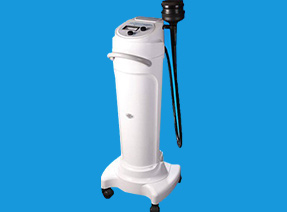
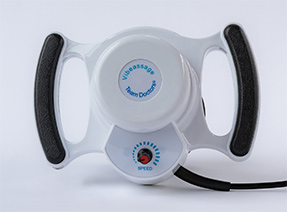
The Vibeassage Sport and the Vibeassage Pro featuring the TDX3 soft-as-the-hand Biomimetic Applicator Pad
https://www.teamdoctors.com/
✓ Get Dr. Stoxen’s #1 International Bestselling Books
Learn how to understand, examine, and reverse your TOS—without surgery.
https://drstoxen.com/1-international-best-selling-author/
✓ Check out Team Doctors Online Courses
Step-by-step video lessons, demonstrations, and self-treatment strategies.
https://teamdoctorsacademy.com/
✓ Schedule a Free Phone Consultation With Dr. Stoxen
Speak directly with him so he can review your case and guide you on your next steps.
https://drstoxen.com/appointment/
#ThoracicOutletSyndrome #FailedTOSSurgery #TOSRecovery #ChronicPainStory #VascularTOS #ArmPain #PatientAdvocacy #MedicalTrauma #SurgeryFailure #PainJourney
Medical Disclaimer
This article is provided for educational and informational purposes only. It is not intended to diagnose, treat, cure, or prevent any disease, nor is it intended to replace professional medical advice, diagnosis, or treatment.
Thoracic outlet syndrome and related nerve, vascular, and musculoskeletal conditions can present differently in each individual. Treatment decisions—including surgical and non-surgical options—must be made on a case-by-case basis in consultation with a qualified, licensed healthcare professional who is familiar with the patient’s complete medical history.
The experiences described in this article reflect individual outcomes and do not guarantee similar results for others. Surgical procedures, including thoracic outlet surgery and first rib resection, carry inherent risks, and outcomes vary based on many factors including diagnosis, timing, practitioner experience, and patient-specific anatomy and physiology.
Readers should not delay or discontinue medical care based on information contained in this article. Always seek the guidance of a qualified healthcare provider with any questions regarding symptoms, conditions, or treatment options.
Editor’s Note
This article explores a patient and family experience following thoracic outlet syndrome surgery and highlights the importance of comprehensive evaluation, informed decision-making, and second opinions when managing complex pain conditions.
The article also references the Human Spring Approach, a biomechanical evaluation and treatment framework developed by Dr James Stoxen, which emphasizes understanding the body as an integrated, dynamic spring system rather than a collection of isolated anatomical structures. The inclusion of this approach is intended to illustrate an alternative clinical perspective, not to discredit surgery or any specific medical specialty.
Mention of specific clinicians, evaluation models, or treatment philosophies does not constitute endorsement, medical advice, or a claim of superiority. Rather, it reflects the editorial goal of encouraging patients and families to seek clarity, explanation, and individualized assessment before pursuing irreversible interventions.
The editorial position of this publication is that understanding should precede intervention, especially in conditions where symptoms persist, worsen, or fail to respond to standard care.

Dr James Stoxen DC., FSSEMM (hon) He is the president of Team Doctors®, Treatment and Training Center Chicago, one of the most recognized treatment centers in the world.
Dr Stoxen is a #1 International Bestselling Author of the book, The Human Spring Approach to Thoracic Outlet Syndrome. He has lectured at more than 20 medical conferences on his Human Spring Approach to Thoracic Outlet Syndrome and asked to publish his research on this approach to treating thoracic outlet syndrome in over 30 peer review medical journals.
He has been asked to submit his other research on the human spring approach to treatment, training and prevention in over 150 peer review medical journals. He serves as the Editor-in-Chief, Journal of Orthopedic Science and Research, Executive Editor or the Journal of Trauma and Acute Care, Chief Editor, Advances in Orthopedics and Sports Medicine Journal and editorial board for over 35 peer review medical journals.
He is a much sought-after speaker. He has given over 1000 live presentations and lectured at over 70 medical conferences to over 50,000 doctors in more than 20 countries. He has been invited to speak at over 300 medical conferences which includes invitations as the keynote speaker at over 50 medical conferences.
After his groundbreaking lecture on the Integrated Spring-Mass Model at the World Congress of Sports and Exercise Medicine he was presented with an Honorary Fellowship Award by a member of the royal family, the Sultan of Pahang, for his distinguished research and contributions to the advancement of Sports and Exercise Medicine on an International level. He was inducted into the National Fitness Hall of Fame in 2008 and the Personal Trainers Hall of Fame in 2012.
Dr Stoxen has a big reputation in the entertainment industry working as a doctor for over 150 tours of elite entertainers, caring for over 1000 top celebrity entertainers and their handlers. Anthony Field or the popular children’s entertainment group, The Wiggles, wrote a book, How I Got My Wiggle Back detailing his struggles with chronic pain and clinical depression he struggled with for years. Dr Stoxen is proud to be able to assist him.
Full Bio) Dr Stoxen can be reached directly at teamdoctors@aol.com