The Doctor Behind the Curtain
There is a wall of photographs that tends to stop people mid-sentence.
Most visitors notice it before they notice anything else. Framed images of musicians, performers, and public figures—some instantly recognizable, others only familiar to people who work inside the touring world. To an outsider, it looks like a quiet gallery of celebrity. To the man whose office it hangs in, it is something else entirely: a record of work, pressure, and responsibility that rarely shows up in public.
For more than two decades, Dr. James Stoxen has occupied a peculiar position in the entertainment industry. He is not a manager. Not a producer. Not a publicist. Yet entire tours have quietly depended on him. When something goes wrong with a body that has to perform on stage night after night, in city after city, he is often the person they call.
He did not set out to build this kind of career. In fact, almost none of it was planned.
It started, as many unlikely careers do, with a single phone call.
The Call
In 2003, a talent agent in New York contacted Stoxen with a simple question. Would he be willing to come out and work with a tour connected to Michael Bolton?
There was nothing particularly dramatic about the request. At least, not at first. Touring productions are full of people with aches, injuries, and long-standing physical problems. The pace is unforgiving, the travel constant, and the margin for physical failure surprisingly small.
When Stoxen arrived, one of the tour managers mentioned a shoulder problem. It was not new. He had been living with it for eight or nine years. It interfered with his sleep, his work, and his ability to function comfortably, but like many people in high-pressure jobs, he had learned to work around it.
Stoxen worked with him for about an hour and a half.
When the session ended, the pain was gone.
Not improved. Not reduced. Gone.
The tour manager said something that would later echo far beyond that room: “The doctor took away my shoulder pain in one visit.”
In the touring world, where word of mouth travels faster than any marketing campaign, that sentence matters.
By the time a decade had passed, the pattern was impossible to miss. Tour after tour, year after year, the same quiet process repeated itself: a problem backstage, a call, a few hours of work, and a system that could keep going.
Since 2002, Stoxen has been brought onto well over 130 national and international tours and has treated well over a thousand performers and touring personnel—artists, dancers, musicians, and the people who keep productions running. The work has spanned almost every corner of the live entertainment world: pop, rock, metal, hip-hop, country, Broadway, arena tours, festival circuits, and international productions.
Over the years, this has included world tours and national tours involving artists and productions as varied as Michael Bolton, Michael Bublé, Iron Maiden, Blondie, Bette Midler, Beyoncé, Justin Timberlake, Britney Spears, Kenny Chesney, Dolly Parton, Aerosmith, Coldplay, Paul Simon, Mariah Carey, Backstreet Boys, New Kids on the Block, Leonard Cohen, Steely Dan, Def Leppard, Wiggles, Cirque du Soleil, Dancing with the Stars, American Idol, Vans Warped Tour, Ozzfest, Taste of Chaos, and many others—along with hundreds of supporting performers, crew members, and production staff.
Here is a partial list https://drstoxen.com/130-tours-of-top-entertainers/
Some years meant bouncing between massive arena productions. Others meant long festival runs, theater tours, or multi-city international circuits. The common thread was not the genre or the fame of the artist. It was the demand placed on the body: night after night, under lights, under pressure, with no margin for failure.
By then, the work had long since stopped being about any single artist. It had become something closer to infrastructure—an invisible part of how large tours kept moving.
How Referrals Really Work
Shortly after that first visit, the same agent called Stoxen again. She asked if she could reach out in the future when similar situations came up.
He said yes.
That second call became a third. Then a fourth. Then a pattern.
Over time, one tour led to another. One crew told another crew. One manager told another manager. Eventually, that first hour-and-a-half treatment turned into more than 150 tours—almost entirely by referral.
There were no advertisements. No campaigns. No deliberate attempt to build a presence in the entertainment industry.
The work spread the way it always does in high-stakes environments: quietly, through people who cannot afford to be wrong about who they trust.
The Economics of a Body
To understand why this kind of reputation matters, it helps to understand the economics of touring.
When an artist is performing at a level where each show generates hundreds of thousands of dollars in revenue, their body is no longer just a personal concern. It is a central piece of a much larger system. A cancelled show does not just disappoint fans. It disrupts contracts, venues, staff, logistics, and entire chains of financial planning.
When a performer cannot go on stage, the consequences ripple outward.
This is why touring productions are conservative about risk. They do not experiment with unproven solutions. They do not have the luxury of long recovery timelines. They need problems solved quickly, reliably, and without creating new ones.
In that environment, the difference between “mostly better” and “fully functional” is not academic. It is operational.
The Reality of Life on Tour
From the outside, touring looks glamorous. From the inside, it is physically relentless.
Long flights.
Inconsistent sleep.
Heavy equipment.
Repetitive movements.
High adrenaline.
High stress.
Over time, this combination creates a predictable pattern: muscles tighten, joints lose space, movement becomes more constrained, and the body slowly shifts from something that absorbs stress to something that accumulates it.
Most performers do not break down in one dramatic moment. They erode. A little less range of motion. A little more stiffness. A little more pain at the end of the night. Eventually, the system reaches a point where something stops cooperating.
What Stoxen encountered again and again was not just injury, but a kind of progressive mechanical fatigue.
A Different Kind of Medical Problem
In a typical clinical setting, the question is often, “What structure is damaged?”
In the touring world, the question is more often, “What system is failing to recover?”
The distinction matters.
Many of the people Stoxen worked with were not dealing with fresh injuries. They were dealing with bodies that had slowly adapted to stress by becoming tighter, more rigid, and less forgiving. The problem was not that something had snapped. It was that the entire system had lost some of its ability to move freely.
In that context, pain is not just a symptom. It is a signal that the body’s internal mechanics are no longer distributing load the way they should.
The Invisible Job
Most audiences never see this side of performance.
They see the show.
They hear the music.
They assume the bodies on stage are simply holding up.
Behind the scenes, there is often a constant, quiet effort to keep those bodies working.
Stoxen’s role, over time, became less like that of a traditional clinician and more like that of a systems engineer for human movement—someone called in when a complex, high-demand system was no longer behaving the way it should.
The work was rarely dramatic. It was simply necessary.
Trust Under Pressure
In environments where the cost of failure is high, trust is not given easily.
Tour managers, producers, and artists do not recommend people lightly. When they do, it is usually because they have seen something work under real pressure.
That is how Stoxen’s work spread—not through publicity, but through the quiet circulation of stories that begin with, “We had a problem, and he fixed it.”
The Pattern That Emerged
Over years of working with performers, a pattern became impossible to ignore.
The biggest threat to long-term performance was not sudden injury. It was the slow accumulation of tension, compression, and lost movement. Bodies did not fail all at once. They failed gradually, by becoming less elastic, less adaptable, and less capable of absorbing stress.
This observation would eventually become the foundation of a much broader way of thinking about human movement and recovery.
But at the time, it was simply a practical insight: the job was not just to reduce pain. The job was to restore how the body moved.
Where the Story Is Going
What began as a single tour assignment slowly turned into a front-row seat to one of the most demanding physical environments in modern work. It also became an unexpected laboratory for understanding what keeps the human body functioning under extreme, repetitive load.
In the process, Stoxen’s work began to evolve beyond problem-solving and into something closer to a philosophy of how bodies break down—and how they can be kept working.
The Slow Failure of Strong Bodies
One of the great misconceptions about physical breakdown—especially among people who appear strong, fit, and successful—is that it happens suddenly.
A torn muscle.
A slipped disc.
A dramatic moment on stage or in training.
But in the touring world, that is not usually how it unfolds.
What Dr. James Stoxen saw, again and again, was something quieter and far more predictable. Bodies did not fail in a single moment. They failed slowly, through the accumulation of small, almost invisible losses: a little less range of motion, a little more stiffness, a little less tolerance for long days and late nights.
The performer would still be able to do the job—until one day they couldn’t.
The Illusion of Strength
Many of the people Stoxen worked with were, by any reasonable definition, in excellent shape. They exercised. They rehearsed. They performed at a level that demanded stamina, coordination, and control. From the outside, they looked resilient.
But physical strength and mechanical resilience are not the same thing.
A system can be strong and still be fragile.
In engineering, this distinction is obvious. A structure can be rigid and impressive while quietly accumulating stress in the wrong places. It does not collapse because of one bad day. It collapses because it has lost the ability to distribute load.
Human bodies are not so different.
The Accumulation Problem
Touring imposes a specific kind of stress. It is not just intense. It is repetitive.
The same movements.
The same postures.
The same instruments.
The same choreography.
Over time, the body adapts to this repetition by tightening certain areas and avoiding others. Muscles that are used constantly become chronically contracted. Joints that should move freely begin to lose their subtle motion. The body becomes more efficient in a narrow sense—and less adaptable in a broad one.
This is not immediately painful. In fact, it often feels like “getting in shape.”
But underneath, something else is happening: the system is becoming less elastic.
Why Pain Shows Up Late
Pain is a lagging indicator.
By the time someone feels persistent pain, the mechanical problem has usually been present for a long time. The body has been compensating, redistributing stress, and quietly working around limitations.
Eventually, those workarounds run out.
When Stoxen evaluated performers, he often found that the area that hurt was not the area where the problem began. A shoulder might hurt because the rib cage had lost motion. A neck might hurt because the mid-back had become rigid. A hip might hurt because the foot no longer absorbed shock properly.
The pain was real. But it was rarely the root of the problem.
The Limits of the “Broken Part” Model
Conventional medicine is very good at dealing with clear structural failures. A fracture. A tear. A disc herniation. A ruptured tendon.
But much of what Stoxen was seeing on tour did not fit neatly into those categories.
These were not broken parts. They were poorly behaving systems.
The body still worked. It just didn’t work well.
And in a profession where the margin for error is small, “not working well” is often enough to put an entire operation at risk.
A Different Way to Look at the Body
Over time, Stoxen began to think less in terms of individual muscles or joints and more in terms of how force moved through the body as a whole.
When a person walks, runs, jumps, or performs on stage, their body is constantly dealing with impact and load. That load has to go somewhere. In a healthy system, it is distributed, absorbed, and returned smoothly.
In a compromised system, it concentrates.
And wherever force concentrates, tissues get irritated.
The Role of Elasticity
One of the consistent differences between bodies that held up under touring demands and bodies that didn’t was not strength. It was elasticity.
The resilient bodies were not necessarily the most muscular or the most conditioned. They were the ones that still had a subtle, spring-like quality to their movement. They could absorb stress and release it. They did not hold on to it.
The failing bodies were the ones that had become rigid.
Rigid systems do not dissipate force. They transmit it.
And eventually, something downstream pays the price.
Why Rest Alone Is Not Enough
When performers started to struggle, the usual advice was rest, anti-inflammatories, or reduced activity. Sometimes this helped. Often, it didn’t.
The reason is simple: rest does not automatically restore lost movement.
A joint that has become stiff does not magically regain its motion because it is unloaded. A muscle that has learned to stay contracted does not automatically relearn how to relax.
Without changing the mechanics of how the system moves, rest simply pauses the deterioration. It does not reverse it.
The Touring Time Constraint
In normal life, someone might tolerate months of slow improvement. On tour, that is not an option.
There is a show tonight. And tomorrow. And the next night.
This forced a kind of ruthless clarity: either an intervention restored function quickly, or it was not useful in that environment.
Over time, this reality filtered out anything that did not produce real, functional change.
Seeing the Same Story Everywhere
What made the pattern impossible to ignore was its consistency.
It did not matter whether the performer was a singer, a guitarist, a drummer, or a dancer. It did not matter whether they were young or old. The story was always some version of the same one:
- Gradual loss of movement
• Increasing stiffness
• More frequent pain
• Less tolerance for long days
• Eventually, a crisis
The details changed. The mechanics did not.
From Treating Symptoms to Restoring Systems
This is where Stoxen’s work began to shift.
The goal was no longer simply to reduce pain in a specific area. The goal became to restore how the entire system handled load.
When that happened, something interesting occurred: the pain often resolved as a side effect.
Not because it was directly attacked. But because the mechanical environment that produced it no longer existed.
The Question That Changed the Work
At some point, a different question started to guide the work:
Not, “How do we fix this injury?”
But:
“How do we make this body behave like a resilient system again?”
That question would eventually lead to a much more formal way of thinking about human movement, resilience, and recovery.
But it started in the most practical place possible: backstage, under time pressure, with no room for theory that didn’t work.
The Edge of a New Model
By the time Stoxen had worked with dozens of tours, he had seen enough to know that the standard way of describing the body—as a collection of parts and levers—was missing something important.
The performers who lasted were not just strong. They were mechanically forgiving.
They could bend without breaking.
They could absorb stress without accumulating it.
They could keep going without becoming rigid.
Something about how they used their bodies was fundamentally different.
Understanding that difference would become the next phase of the work.
Here is PART III, completing the long-form narrative in the same serious, third-person, documentary-style voice.
This finishes the full story arc and brings it from touring → biomechanics → philosophy → future → meaning.
The Body as a Living Mechanical System
By the time Dr. James Stoxen had spent years moving from tour to tour, working quietly behind stages and inside rehearsal halls, a certain conclusion had become unavoidable: the human body does not fail like a machine that breaks a single part. It fails like a system that slowly loses its ability to manage force.
This distinction may sound subtle. In practice, it changes everything.
The Problem With the Parts List
Modern medicine is organized around anatomy. Muscles, tendons, ligaments, discs, joints. When something hurts, the instinct is to locate the structure and name the diagnosis.
But what Stoxen kept seeing did not behave that way.
Two people could have the same MRI and completely different levels of pain. One performer could work for years with obvious structural “issues” while another would be sidelined with no clear damage at all. The images did not tell the whole story.
What mattered more was how the body was moving.
Or, more precisely, how it was no longer moving.
When Systems Lose Their Give
In healthy movement, the body is never rigid. It is constantly yielding, adapting, and redistributing load. Each step, each landing, each twist sends forces through a chain of tissues that are meant to deform slightly and then recover.
This is not weakness. It is how resilience works.
In the bodies that broke down, that subtle yielding quality was disappearing. Certain areas stopped participating in movement. Other areas started doing too much work. Load that should have been spread out began to concentrate.
Nothing dramatic happened at first. The body compensated.
Eventually, it always does.
A Mechanical Insight
Engineers understand this problem well. Systems that cannot flex under load do not survive long. They crack. They fatigue. They fail.
The same principle applies to biological systems.
What Stoxen was really treating, he realized, was not pain. He was treating a loss of mechanical adaptability.
Pain was simply the alarm.
Why Strength Isn’t Enough
It is tempting to believe that stronger bodies are safer bodies. In some ways, this is true. Strength matters.
But strength without adaptability is brittle.
Many of the performers who struggled were extremely strong in the conventional sense. They trained. They rehearsed. They could produce force. What they had lost was the ability to absorb it.
They were not weak. They were rigid.
The Return of Movement
When Stoxen’s interventions worked best, they did not just quiet symptoms. They changed how the body moved.
Joints that had been acting like fixed hinges began to glide again. Muscles that had been permanently “on” learned to let go. Movement became smoother, less effortful, less guarded.
And as movement quality changed, pain often receded without being directly targeted.
This was not because pain had been “treated.”
It was because the mechanical environment that created it had been altered.
The Touring Laboratory
The touring world turned out to be an ideal testing ground for these ideas.
There is no room for theoretical success on tour. A performer either functions or does not. There is no six-week trial period. There is no margin for interventions that feel good but do not hold up under real use.
If something restored function, it stayed.
If it didn’t, it disappeared.
Over time, a very practical, very unforgiving filter shaped the work.
From Practice to Framework
Eventually, these observations coalesced into something more organized: a way of thinking about the body not as a stack of parts, but as a force-managing system.
In that framework, health is not defined primarily by the absence of damage. It is defined by the ability to move, adapt, and recover.
Breakdowns happen when that adaptability is lost.
Why Ordinary People Break the Same Way
One of the more surprising realizations came when these same patterns showed up outside the touring world.
Office workers. Drivers. Tradespeople. Recreational athletes.
The environments were different. The mechanics were not.
Long hours. Repetitive positions. Limited movement variety. The same slow drift toward stiffness, compensation, and pain.
The difference was only in speed and visibility.
The Quiet Future of Performance Medicine
If there is a lesson in all of this, it is that the most important work in keeping bodies functioning is often invisible.
It is not dramatic. It does not make headlines. It does not involve heroic interventions.
It involves maintaining the conditions under which the body can keep adapting.
When those conditions exist, performance tends to take care of itself.
When they don’t, no amount of symptom management is enough.
The Wall of Photographs, Revisited
The wall of photographs in Stoxen’s office still stops people.
But to him, it no longer represents celebrity.
It represents hundreds of complex systems that, for a time, were kept working under extraordinary demand.
Not because they were perfect.
But because they were made adaptable again.
What the Story Is Really About
This is not a story about famous people.
It is a story about how bodies work.
And how they stop working.
And what it takes to help them recover their ability to deal with the world.
In that sense, the touring world was never the point.
It was simply the place where the problem could no longer be ignored.
Closing Thought
Most breakdowns do not come from doing too much.
They come from losing the ability to adapt to what you are doing.
Restore that ability, and the system often surprises you with how much it can handle.
Team Doctors Resources
✓ Check out the Team Doctors Recovery Tools
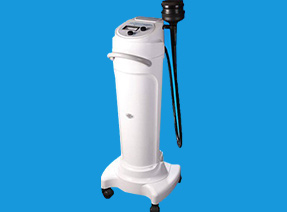
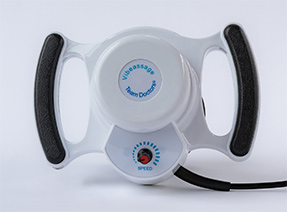
The Vibeassage Sport and the Vibeassage Pro featuring the TDX3 soft-as-the-hand Biomimetic Applicator Pad
https://www.teamdoctors.com/
✓ Get Dr. Stoxen’s #1 International Bestselling Books
Learn how to understand, examine, and reverse your TOS—without surgery.
https://drstoxen.com/1-international-best-selling-author/
✓ Check out Team Doctors Online Courses
Step-by-step video lessons, demonstrations, and self-treatment strategies.
https://teamdoctorsacademy.com/
✓ Schedule a Free Phone Consultation With Dr. Stoxen
Speak directly with him so he can review your case and guide you on your next steps.
https://drstoxen.com/appointment/
#ThoracicOutletSyndrome #TOS #ArmPain #ShoulderPain #NerveCompression #ChronicPain #Biomechanics #Posture #NeckPain #VascularCompression #BrachialPlexus #PhysicalTherapy #MassageTherapy #PainScience #MovementHealth #UpperExtremity #ChronicSymptoms #PainEducation #Rehabilitation #TeamDoctors

Dr James Stoxen DC., FSSEMM (hon) He is the president of Team Doctors®, Treatment and Training Center Chicago, one of the most recognized treatment centers in the world.
Dr Stoxen is a #1 International Bestselling Author of the book, The Human Spring Approach to Thoracic Outlet Syndrome. He has lectured at more than 20 medical conferences on his Human Spring Approach to Thoracic Outlet Syndrome and asked to publish his research on this approach to treating thoracic outlet syndrome in over 30 peer review medical journals.
He has been asked to submit his other research on the human spring approach to treatment, training and prevention in over 150 peer review medical journals. He serves as the Editor-in-Chief, Journal of Orthopedic Science and Research, Executive Editor or the Journal of Trauma and Acute Care, Chief Editor, Advances in Orthopedics and Sports Medicine Journal and editorial board for over 35 peer review medical journals.
He is a much sought-after speaker. He has given over 1000 live presentations and lectured at over 70 medical conferences to over 50,000 doctors in more than 20 countries. He has been invited to speak at over 300 medical conferences which includes invitations as the keynote speaker at over 50 medical conferences.
After his groundbreaking lecture on the Integrated Spring-Mass Model at the World Congress of Sports and Exercise Medicine he was presented with an Honorary Fellowship Award by a member of the royal family, the Sultan of Pahang, for his distinguished research and contributions to the advancement of Sports and Exercise Medicine on an International level. He was inducted into the National Fitness Hall of Fame in 2008 and the Personal Trainers Hall of Fame in 2012.
Dr Stoxen has a big reputation in the entertainment industry working as a doctor for over 150 tours of elite entertainers, caring for over 1000 top celebrity entertainers and their handlers. Anthony Field or the popular children’s entertainment group, The Wiggles, wrote a book, How I Got My Wiggle Back detailing his struggles with chronic pain and clinical depression he struggled with for years. Dr Stoxen is proud to be able to assist him.
Full Bio) Dr Stoxen can be reached directly at teamdoctors@aol.com