They Wanted Neck Surgery
Not Medically Necessary
The First Time He Thought It Was His Heart
The first time it happened, he was sure he was about to die.
It started as a pressure — not sharp, not sudden — just a heavy, spreading tightness across the upper part of his chest. It felt as if someone had wrapped a thick band around his rib cage and was slowly tightening it. His neck stiffened. His right shoulder burned. And then the pain began to move — down his arm, into his forearm, into his hand.
His thought he felt his heart.
He stopped what he was doing and stood very still, waiting for the moment his body would either calm down… or collapse.
“This is it,” he thought. “This is a heart attack.”
He had no reason to think otherwise. The pain was in his chest. His arm was going numb. His breath felt shallow. His skin felt strange — hot and cold at the same time.
Someone drove him to the hospital.
They ran the tests quickly. Electrodes. Blood work. Monitors. Questions.
And then, after a long wait that felt like a verdict, the doctor came back and said, almost casually:
“Your heart is fine.”
He laughed — not because it was funny, but because he didn’t know what else to do.
“Then what is this?” he asked.
The doctor shrugged. “Not cardiac. Probably musculoskeletal. Follow up with your primary care doctor.”
That was it.
No explanation. No plan. No answer.
Just: Good luck.
Over the next weeks, it kept happening.
Not always as dramatic. Sometimes it was just a deep ache under the collarbone. Sometimes it was a burning sensation in the shoulder. Sometimes his arm felt heavy, like it didn’t quite belong to him. Sometimes his hand tingled — especially the pinky and ring finger. Sometimes he woke up at night with his arm completely numb.
He started noticing patterns.
If he lifted his arm overhead, it went numb faster.
If he carried something heavy, the pain shot down his arm.
If he worked at a computer too long, his hand felt weak and clumsy.
If he turned his head a certain way, his shoulder burned.
He began unconsciously protecting the arm. Holding it closer to his body. Avoiding certain movements. Shifting loads to the other side.
And slowly, almost without realizing it, his world got smaller.
He saw doctors.
One thought it was his neck.
One thought it was his shoulder.
One thought it was anxiety.
One thought it was “just posture.”
The scans were mostly normal.
Which somehow made it worse.
Because the symptoms were not normal.
His arm tired easily. His grip felt weaker. Sometimes his hand was cold for no reason. Sometimes there was a deep, crawling ache along the inside of the arm that he couldn’t describe to anyone in a way that made sense.
He started to worry about his future.
Not in big, dramatic ways.
In small ones.
What if I can’t use this arm properly in a year?
What if this keeps getting worse?
What if something is seriously wrong and no one sees it?
The first person who said the words out loud was a physical therapist.
“This looks like thoracic outlet syndrome,” she said.
He had never heard of it.
She explained — roughly — that it had something to do with nerves and blood vessels being compressed between the neck, collarbone, and shoulder.
“Compressed by what?” he asked.
“By your own body,” she said.
That sentence stayed with him.
That night, he went home and started reading.
And for the first time, he saw his symptoms written down by strangers.
The numbness when his arm was overhead.
The pain down the arm.
The burning in the shoulder.
The tingling in the fingers.
The weakness.
The heaviness.
The fatigue.
It was all there.
And it scared him.
Because once something has a name, it also has a future.
He tried to fix it conservatively at first.
Exercises. Stretching. Rest. Less work. Different work. Massage. Posture correction.
Some things helped a little.
Nothing fixed it.
And slowly, the conversations changed.
Instead of, “Let’s see how this goes,” the tone became:
“You might need surgery.”
The surgeon was calm. Confident. Efficient.
“We remove the first rib,” he said. “And cut the scalene muscles. That takes the pressure off.”
“And then I’m better?” he asked.
“Usually.”
Usually.
That word echoed in his head for days.
He went home and started reading again.
And what he found this time frightened him far more than the diagnosis.
Stories of people who were worse after surgery.
People who still had pain.
People who had nerve damage.
People who had complications.
People who needed another surgery.
People who said, If I could go back, I wouldn’t do it.
He looked at the diagrams of what they wanted to remove from his body.
And something deep in him said:
“This cannot be the only way.”
The Weight He Couldn’t Put Down
For several weeks, he tried to convince himself that surgery was just a word.
Something abstract. Something that applied to other people.
He went back to his normal routines, or at least tried to. But his body no longer behaved like it used to. Every movement had a consequence now. If he lifted something heavy, his arm paid for it. If he reached overhead, his fingers went numb. If he sat too long at a computer, his shoulder burned and his neck tightened until the pain spilled downward like water finding a crack.
At night, he lay in bed and felt the strange sensations crawl through his arm — tingling, buzzing, sometimes a deep, dull ache that felt as if it came from inside the bones themselves.
He began sleeping with his arm supported on pillows, like it was something fragile.
He didn’t tell many people how worried he was. He made jokes. He worked around it. He told himself it would settle down.
But the word surgery stayed with him.
He went to another specialist. And another.
The story was always the same.
“Yes, this looks like thoracic outlet syndrome.”
“Yes, you’ve probably tried enough conservative care.”
“Yes, surgery is the next step.”
One doctor said it as if he were recommending a dental filling.
Another said it as if it were inevitable.
And one said, with a tone that made him uneasy, “You don’t want this to go on too long. Nerves don’t like being compressed.”
That sentence haunted him.
He started reading obsessively.
Not blogs. Not marketing sites.
Patient stories.
Forums.
Support groups.
Late at night, with the room dark and his arm buzzing uncomfortably, he scrolled through accounts written by people who sounded just like him a year earlier.
Some said surgery changed their lives for the better.
But too many said things like:
“I still have pain.”
“The numbness never went away.”
“My symptoms came back.”
“I’m worse now than before.”
“I lost strength I never got back.”
He read about people who had nerve injuries. People who developed chronic pain. People who needed a second surgery. People who regretted ever starting down that road.
- He learned that removing a rib did not guarantee space.
- He learned that cutting muscles did not guarantee function.
- He learned that once something was cut, it could never be uncut.
- And a quiet, stubborn thought formed in his mind:
- If my body learned to collapse into this problem, maybe it can learn to get out of it.
He began looking for doctors who didn’t start with a scalpel.
That was harder than he expected.
Most websites talked about surgery.
Most academic papers talked about surgical outcomes.
Most specialists were surgeons.
Then, late one night, he found something different.
Not flashy.
Not aggressive.
Just… different.
The Doctor from Chicago Who Helped Him when In the Circus
A doctor in Chicago who talked about the body as a spring system.
Who talked about suspension, not structure.
Who talked about function, not parts.
Who started at the feet.
He almost closed the page.
It sounded strange.
But something about it made sense in a way nothing else had.
He called.
When he arrived at the clinic, he expected a quick exam and a sales pitch.
He got neither.
Instead, he got two hours of the most thorough evaluation he had ever experienced.
- They didn’t start with his neck.
- They didn’t start with his shoulder.
- They started with how he stood.
How he walked.
- How his weight shifted.
- How his feet loaded the ground.
- They looked at how his pelvis moved. How his rib cage moved. How his shoulder blades moved.
- They checked circulation in different arm positions.
- They checked sensation.
- They checked joint motion.
They checked things no one had ever checked before.
At one point, the doctor had him raise his arm while turning his head slightly.
His hand went cold.
The pulse weakened.
“See?” the doctor said calmly. “That’s not a rib problem. That’s a suspension problem.”
He didn’t fully understand what that meant yet.
But for the first time, someone was showing him what was actually happening — in real time — in his own body.
They explained it in simple terms:
The shoulder isn’t supposed to hang.
It’s supposed to be suspended.
When the system that suspends it collapses — when posture, foot mechanics, spinal motion, and muscle tone stop working together — the space under the collarbone and behind the chest tightens.
Not because something grew there.
But because the body sank into it.
“And if you sank into it,” the doctor said, “you can climb back out of it.”
That sentence felt like oxygen.
They didn’t promise a miracle.
They didn’t promise speed.
They promised work.
A lot of it.
The first treatment day started early.
And went on… and on.
He had never experienced anything like it.
This was not a relaxing massage.
This was not a quick adjustment.
This was slow, precise, relentless work into muscles that felt like stone.
The doctor worked a fraction of an inch at a time, following patterns of tension that seemed to wrap around his chest, neck, and shoulder like a cast.
Sometimes it hurt.
Sometimes it didn’t.
But something strange began to happen.
As certain areas released, his arm would suddenly feel warmer.
Or lighter.
Or clearer.
Once, in the middle of a session, his hand started tingling — and then the tingling stopped.
It felt as if someone were slowly unwrapping him from the inside.
He remembered thinking:
So this is what it’s supposed to feel like.
The days were long.
Nine in the morning until night.
Again.
And again.
Not because it took that long to “treat a spot.”
But because his whole upper body had adapted to a broken way of holding itself.
And it had to learn a new one.
One evening, as he sat quietly after a session, he realized something strange:
For the first time in months, his arm felt… normal.
Not perfect.
But normal.
No burning.
No buzzing.
No heaviness.
Just… there.
Attached to him.
Working.
He still wasn’t cured.
But for the first time, he believed he could be.
The Body Remembers
On the fourth morning, something felt different before the treatment even started.
He noticed it while brushing his teeth.
His arm didn’t feel heavy.
Not light exactly — just… normal.
It was such a small thing that it almost escaped his attention. But after months of living with a constant sense of weight, tension, and buzzing discomfort, the absence of it was startling.
He raised his arm experimentally.
No immediate tingling.
No sudden coldness in the hand.
No sharp pull under the collarbone.
It wasn’t perfect — not yet — but it was different enough to make him stop and stare at his reflection for a long moment.
So this is what progress feels like, he thought.
The sessions continued.
Long.
Methodical.
Uncompromising.
There was nothing rushed about them. The doctor worked the way a restorer works on an old painting — slowly uncovering layers that had built up over years.
Sometimes the pain came from places he didn’t know were involved.
Sometimes a small release near the rib cage changed the feeling in his fingers.
Sometimes work in his hip changed the tension in his shoulder.
That was when he truly began to understand what they meant by a system.
His problem had never lived in one place.
It had lived in a pattern.
One afternoon, in the middle of a session, something remarkable happened.
He was lying quietly while the doctor worked along the deep tissues of the chest and shoulder, tracing lines of tension that felt ancient and stubborn.
Suddenly, he felt a warmth spread into his arm.
Not a flush.
Not a burning.
A calm, steady warmth.
His hand, which was often cool to the touch, felt alive in a way it hadn’t for a long time.
The doctor paused.
“Feel that?” he asked.
He nodded.
“That’s blood flow returning,” the doctor said. “That’s space reopening.”
It was the first time anyone had ever shown him, in real time, what “getting better” actually looked like inside his own body.
By the end of the treatment series, the change was undeniable.
The burning pain in his shoulder was gone.
The constant tingling had faded.
The heaviness in his arm was no longer his baseline.
He could lift his arm without immediately losing sensation.
He could sleep without propping himself into strange positions.
He wasn’t “fixed” in the sense of being invincible.
But he was himself again.
Before he left, they didn’t just send him home with relief.
They sent him home with responsibility.
He was taught how to maintain what they had restored.
He was given exercises — not generic ones, but specific ones designed to keep his body behaving like a suspension system instead of a collapsing structure.
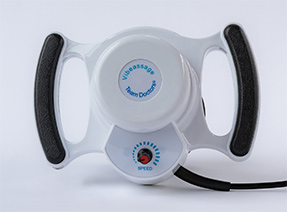
And he was given a tool — the Vibeassage — to continue working on the deep tissues before they could harden and shorten again.
“This isn’t something you ‘finish,’” the doctor told him. “It’s something you keep.”
That made sense to him.
After all, his body hadn’t collapsed into this problem overnight.
It wasn’t going to stay out of it by accident.
Back home, life slowly returned to normal.
Not the old normal.
A better one.
He moved differently now.
He noticed how he stood.
How he sat.
How he loaded his body when he lifted things.
He noticed tension earlier.
And when he noticed it, he addressed it.
Months passed.
Then a year.
The symptoms did not return.
Not because he was lucky.
But because he had changed the way his body worked.
Sometimes, he thought about the surgery he almost had.
The rib that was almost removed.
The muscles that were almost cut.
And he felt a quiet gratitude for the path he did not take.
Not because surgery is always wrong.
But because, for him, it was never the right first answer.
What He Learned (And What Others Can Learn Too)
- The Body Is a Suspension System, Not a Stack of Parts
If you treat the body like disconnected pieces, you miss the real problem. When posture, movement, and load-sharing collapse, space disappears. Restoring function restores space. - Compression Is Often a Result of Collapse, Not Something That Must Be Cut Away
Nerves and blood vessels are usually not trapped by anatomy — they are trapped by mechanics. Fixing the mechanics can relieve compression without removing parts. - Maintenance Is Not Optional
The same forces that broke the system can break it again. Daily movement, posture awareness, and tissue care keep the body behaving like a spring instead of a vise.
#ThoracicOutletSyndrome #TOSRecovery #ChronicPainJourney #ArmNumbness #NervePain #NaturalHealing #AvoidSurgery #PatientStory #PainFreeLiving #FunctionalMedicine
Team Doctors Resources
✓ Check out the Team Doctors Recovery Tools
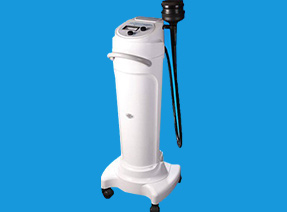
The Vibeassage Sport and the Vibeassage Pro featuring the TDX3 soft-as-the-hand Biomimetic Applicator Pad
https://www.teamdoctors.com/
✓ Get Dr. Stoxen’s #1 International Bestselling Books
Learn how to understand, examine, and reverse your TOS—without surgery.
https://drstoxen.com/1-international-best-selling-author/
✓ Check out Team Doctors Online Courses
Step-by-step video lessons, demonstrations, and self-treatment strategies.
https://teamdoctorsacademy.com/
✓ Schedule a Free Phone Consultation With Dr. Stoxen
Speak directly with him so he can review your case and guide you on your next steps.
https://drstoxen.com/appointment/
#ThoracicOutletSyndrome #FailedTOSSurgery #TOSRecovery #ChronicPainStory #VascularTOS #ArmPain #PatientAdvocacy #MedicalTrauma #SurgeryFailure #PainJourney
Medical Disclaimer
This article is provided for educational and informational purposes only. It is not intended to diagnose, treat, cure, or prevent any disease, nor is it intended to replace professional medical advice, diagnosis, or treatment.
Thoracic outlet syndrome and related nerve, vascular, and musculoskeletal conditions can present differently in each individual. Treatment decisions—including surgical and non-surgical options—must be made on a case-by-case basis in consultation with a qualified, licensed healthcare professional who is familiar with the patient’s complete medical history.
The experiences described in this article reflect individual outcomes and do not guarantee similar results for others. Surgical procedures, including thoracic outlet surgery and first rib resection, carry inherent risks, and outcomes vary based on many factors including diagnosis, timing, practitioner experience, and patient-specific anatomy and physiology.
Readers should not delay or discontinue medical care based on information contained in this article. Always seek the guidance of a qualified healthcare provider with any questions regarding symptoms, conditions, or treatment options.
Editor’s Note
This article explores a patient and family experience following thoracic outlet syndrome surgery and highlights the importance of comprehensive evaluation, informed decision-making, and second opinions when managing complex pain conditions.
The article also references the Human Spring Approach, a biomechanical evaluation and treatment framework developed by Dr James Stoxen, which emphasizes understanding the body as an integrated, dynamic spring system rather than a collection of isolated anatomical structures. The inclusion of this approach is intended to illustrate an alternative clinical perspective, not to discredit surgery or any specific medical specialty.
Mention of specific clinicians, evaluation models, or treatment philosophies does not constitute endorsement, medical advice, or a claim of superiority. Rather, it reflects the editorial goal of encouraging patients and families to seek clarity, explanation, and individualized assessment before pursuing irreversible interventions.
The editorial position of this publication is that understanding should precede intervention, especially in conditions where symptoms persist, worsen, or fail to respond to standard care.

Dr James Stoxen DC., FSSEMM (hon) He is the president of Team Doctors®, Treatment and Training Center Chicago, one of the most recognized treatment centers in the world.
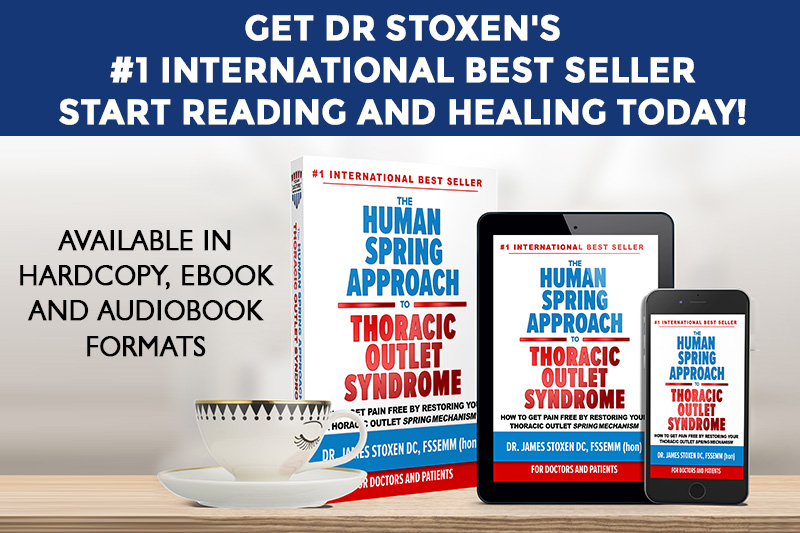
Dr Stoxen is a #1 International Bestselling Author of the book, The Human Spring Approach to Thoracic Outlet Syndrome. He has lectured at more than 20 medical conferences on his Human Spring Approach to Thoracic Outlet Syndrome and asked to publish his research on this approach to treating thoracic outlet syndrome in over 30 peer review medical journals.
He has been asked to submit his other research on the human spring approach to treatment, training and prevention in over 150 peer review medical journals. He serves as the Editor-in-Chief, Journal of Orthopedic Science and Research, Executive Editor or the Journal of Trauma and Acute Care, Chief Editor, Advances in Orthopedics and Sports Medicine Journal and editorial board for over 35 peer review medical journals.
He is a much sought-after speaker. He has given over 1000 live presentations and lectured at over 70 medical conferences to over 50,000 doctors in more than 20 countries. He has been invited to speak at over 300 medical conferences which includes invitations as the keynote speaker at over 50 medical conferences.
After his groundbreaking lecture on the Integrated Spring-Mass Model at the World Congress of Sports and Exercise Medicine he was presented with an Honorary Fellowship Award by a member of the royal family, the Sultan of Pahang, for his distinguished research and contributions to the advancement of Sports and Exercise Medicine on an International level. He was inducted into the National Fitness Hall of Fame in 2008 and the Personal Trainers Hall of Fame in 2012.
Dr Stoxen has a big reputation in the entertainment industry working as a doctor for over 150 tours of elite entertainers, caring for over 1000 top celebrity entertainers and their handlers. Anthony Field or the popular children’s entertainment group, The Wiggles, wrote a book, How I Got My Wiggle Back detailing his struggles with chronic pain and clinical depression he struggled with for years. Dr Stoxen is proud to be able to assist him.
Full Bio) Dr Stoxen can be reached directly at teamdoctors@aol.com