I Flew 9,000 Miles
To Avoid TOS Surgery
Section 1: Living Inside a Question No One Could Answer
She did not wake up one day injured. There was no accident, no dramatic moment she could point to and say, “That’s when it started.” Instead, her pain crept in quietly, weaving itself into daily life until it became impossible to ignore.
At first, it was an annoyance — a dull ache in her arm that appeared after long days or physical effort. She assumed it would resolve on its own. But it didn’t. Over time, the discomfort intensified, spreading from her shoulder into her arm and forearm. Some days it burned. Other days it throbbed. At times, her arm felt weak and unreliable. At other times, it tingled or went numb without warning.
What unsettled her most was how inconsistent it felt. The pain did not follow a clear path. It changed with posture. It changed with movement. It changed with breathing. Some activities triggered symptoms immediately, while others caused delayed pain hours later. Nothing about it felt predictable.
She began asking the questions that would come to define the next chapter of her life:
Why does my arm hurt when my scans are normal?
Is this nerve pain or muscle pain?
Is this coming from my neck, my shoulder, or somewhere else entirely?
These were not abstract questions. They shaped how she moved, how she worked, and how she slept. They followed her everywhere.
Normal Tests, Growing Fear
When she sought medical care, she expected clarity. Instead, she encountered reassurance without answers. Imaging studies came back clean. MRI scans showed no tears, no disc herniations, no obvious nerve compression. Blood work was normal. Each result felt like a contradiction.
She was now living the reality of normal tests but arm pain — a state that leaves patients stranded between certainty and doubt. Doctors told her nothing serious was wrong, yet her symptoms continued to worsen. She experienced why MRI is normal but pain persists firsthand, watching her quality of life decline while tests insisted she was fine.
The nerve pain became more pronounced. At times, it felt electric, radiating unpredictably through her arm. Other times, her arm felt heavy, cold, and fatigued. She found herself searching online late at night, typing phrases like nerve pain but MRI normal and why tests don’t show my pain, hoping someone else had found an answer she hadn’t.
What she found instead were thousands of people asking the same questions.
Being Passed From One Explanation to Another
As she moved through the healthcare system, each provider offered a different possibility. One suggested a pinched nerve. Another mentioned carpal tunnel syndrome. Someone else focused on the shoulder. Each explanation addressed one piece of her symptoms while ignoring the rest.
She quickly learned how confusing arm pain could be. Her experience became a textbook case of confusing arm pain diagnosis. Every new label came with a new treatment suggestion — none of which resolved the problem.
She began comparing diagnoses herself. She learned the difference between thoracic outlet vs pinched nerve, realizing that a pinched nerve usually follows a consistent pattern, while her symptoms shifted constantly. She explored thoracic outlet vs carpal tunnel, understanding that carpal tunnel does not explain shoulder pain or whole-arm weakness. She studied thoracic outlet vs cervical radiculopathy, recognizing that disc problems usually appear on imaging — hers did not.
Each comparison ruled something out, but nothing fully explained what was happening.
When Pain Is Dismissed Because It Can’t Be Seen
The most painful part of her journey was not physical. It was emotional.
When doctors said, “There’s nothing wrong,” she felt unheard. When they suggested stress or posture without explanation, she felt blamed. Over time, the message became harder to ignore: if tests were normal, her pain must not matter.
She lived with the quiet erosion of confidence that comes with doctor says nothing is wrong arm pain. Friends tried to understand, but without a diagnosis, it was difficult to explain why she struggled with everyday tasks. She looked healthy. She moved well enough — until she didn’t.
Inside, fear grew. What if this never stopped? What if no one ever figured it out?
Early Clues Hidden in Movement
What no one had paid attention to yet was how her symptoms behaved during activity. Exercise consistently made things worse. During physical effort, her arm felt tight and heavy. Afterward, it felt weak and drained. She experienced exercise-related nerve compression without knowing the term for it yet.
She noticed deep aching in her forearm muscles — both the forearm flexors and forearm extensors — especially during repetitive use. The pain felt internal, pressurized, and mechanical. It did not behave like a strained muscle.
These were early signs of compartment syndrome symptoms, though no one had named them. Her body was signaling compression — pressure building in places designed to move freely.
But until someone looked at the whole system, the signals remained misunderstood.
When the Body Starts Sending Louder Signals
As time passed, her symptoms became harder to ignore and impossible to explain away. What had once been intermittent discomfort turned into persistent dysfunction. Her arm no longer felt like a reliable part of her body. It behaved differently from day to day, sometimes from hour to hour.
During activity, a deep pressure sensation developed in her forearm. The muscles felt swollen, tight, and resistant, as though they were pressing outward against something that would not give. After exertion, her arm felt weak and drained, as if circulation had been interrupted. This was not the soreness of normal use. It was mechanical, oppressive, and unsettling.
She began experiencing episodes of numbness that appeared suddenly during movement. At times, her hand tingled. At other times, it felt cold and clumsy. These sensations came and went depending on posture, breathing, and arm position. She noticed that lifting her arm or turning her head could change symptoms almost instantly.
These patterns suggested that nerves and blood vessels were involved — not just muscles. Yet no one had explained how or why.
Neurological or Vascular? The Question No One Could Answer
One of the most distressing aspects of her condition was the uncertainty about its nature. Some days, the pain felt neurological — sharp, burning, electric. Other days, it felt vascular — heavy, congested, cold. She found herself constantly asking, Is my arm pain neurological or vascular?
Clinicians disagreed. Some insisted the symptoms were nerve-related. Others dismissed neurological involvement because imaging was normal. Vascular testing was inconclusive. Each specialty viewed the problem through a narrow lens, leaving her caught between explanations.
She began researching comparisons to make sense of what she was feeling. She explored what mimics thoracic outlet syndrome, discovering how many conditions overlap in symptoms but differ in cause. She compared thoracic outlet vs shoulder impingement, realizing that impingement does not explain hand numbness or vascular changes. She revisited thoracic outlet vs pinched nerve, recognizing again that her symptoms did not follow a single nerve path.
The more she learned, the clearer it became that her pain did not fit neatly into any one category. It was not purely neurological. It was not purely vascular. It was both — and neither.
The Forearm Reveals a Deeper Problem
As the months passed, her forearm symptoms intensified. During repetitive use, the pressure built rapidly, sometimes within minutes. The pain forced her to stop what she was doing, even when she felt otherwise capable. Afterward, weakness lingered far longer than normal.
She later learned that this pattern aligned with chronic exertional compartment syndrome, a condition often overlooked because it develops gradually and lacks dramatic findings. Unlike acute compartment syndrome, which presents suddenly and requires emergency treatment, the chronic form erodes function over time.
Her experience reflected the classic compartment syndrome signs and symptoms: activity-induced pain, pressure, weakness, and partial relief with rest. The cause of compartment syndrome in her case was not trauma, but sustained muscle contraction, inflammation, and loss of tissue compliance.
The fact that her forearm symptoms worsened alongside her shoulder and neck pain was not a coincidence. Reduced circulation and nerve mobility higher up compounded pressure lower down. The system was failing as a whole.
Surgery Enters the Conversation — and the Fear Intensifies
Eventually, surgery was mentioned more directly. One provider suggested that if nerve pain persisted, decompression surgery might be necessary. Another discussed chronic compartment syndrome treatment, noting that fasciotomy was often considered the standard approach.
The idea terrified her.
She researched surgical options and found mixed outcomes. Some patients improved. Others struggled with persistent pain, weakness, and nerve symptoms after compartment syndrome surgery. Recovery timelines were long and unpredictable. The possibility of permanent limitation loomed large.
She learned about severe compartment syndrome and how surgical intervention can be lifesaving in acute cases. But her condition was different. It was chronic, functional, and dynamic. Cutting tissue would not explain why her system had broken down.
She began to see surgery not as a solution, but as a gamble — one that could cost her function without guaranteeing relief.
Why She Did Not Want Surgery
Her refusal of surgery was deliberate and reasoned.
She understood that her pain changed with movement and posture. It was influenced by breathing, muscle tension, and activity. Static procedures could not address dynamic problems. Removing tissue would not restore coordination, elasticity, or circulation.
She did not want a compartment syndrome operation that addressed pressure without understanding its origin. She did not want thoracic outlet surgery that removed anatomy without restoring function.
Most of all, she did not want to accept that her only options were surgery or lifelong pain.
She wanted an explanation that made sense.
Standing at the Edge of Hopelessness
By this point, exhaustion set in. Not just physical exhaustion, but emotional fatigue. She had spent months living inside unanswered questions. Every appointment felt like another dead end. Every clean test felt like another dismissal.
She lived with nerve pain no clear diagnosis, trapped between reassurance and suffering. Friends encouraged her to “be patient.” Doctors advised her to “wait and see.” But waiting only made things worse.
She feared that this was her new normal — a life defined by limitation and uncertainty.
It was at this lowest point that she discovered a different way of thinking about pain.
When the Explanation Finally Matches the Experience
She found Dr. James Stoxen at a moment when she had nearly stopped believing an answer existed. What first caught her attention was not a promise of cure, but language that finally matched what she was living. He spoke about compression, not damage. About systems, not isolated parts. About movement, not images.
During their initial consultation, Dr. Stoxen listened carefully as she described her symptoms — the shifting nerve pain, the heaviness in her arm, the coldness and swelling, the way exercise made everything worse. Instead of interrupting or redirecting her story, he mapped it.
He explained that her pain did not show up on scans because it was not a static injury. It was a dynamic compression problem — one that appeared during movement, load, and sustained muscle contraction. Imaging studies capture anatomy at rest. Her pain existed in motion.
This insight immediately explained why arm pain doesn’t show on scans and why she had been told repeatedly that nothing was wrong despite clear functional decline.
Dr. Stoxen introduced her to the Human Spring Approach, a model that views the body as an integrated spring-mass system. In this framework, muscles are not just motors; they are elastic structures designed to absorb force, distribute load, and maintain space for nerves and blood vessels. When muscles lose their spring behavior and remain chronically contracted, pressure builds.
This pressure, he explained, was the missing link.
How Compression Replaced Elasticity
In her body, multiple regions had lost elasticity at the same time. In the shoulder and neck, chronically tight muscles narrowed the thoracic outlet — compressing nerves and blood vessels dynamically. This explained her shifting neurological and vascular symptoms and clarified the long-standing question of is my arm pain neurological or vascular. It was both, because compression affects both systems simultaneously.
At the same time, her forearm muscles had become chronically overcontracted. During activity, they expanded without sufficient room to accommodate increased blood flow. Internal pressure rose rapidly, compressing nerves and veins within the compartments. This was the essence of chronic exertional compartment syndrome.
Unlike acute compartment syndrome, which presents suddenly and dramatically, her condition had developed slowly. The etiology of compartment syndrome in her case was not trauma, but sustained muscle tension, inflammation, and loss of normal movement behavior.
What made her case particularly complex was the interaction between these regions. Reduced circulation and nerve mobility at the thoracic outlet worsened congestion in the forearm. Increased forearm pressure fed back into proximal nerve irritation. Each region magnified the other.
For the first time, everything made sense — not as separate diagnoses, but as one system under sustained compression.
Why Surgery Was Never the Right Answer
Dr. Stoxen explained why surgery had been offered so quickly — and why it had never truly fit her situation.
Surgery is designed to correct structural problems: torn tissue, bone abnormalities, space-occupying lesions. Her problem was not missing space. It was lost function. Her tissues were intact, but they were behaving abnormally.
A compartment syndrome cure based on surgery would have addressed pressure by cutting fascia, but it would not have restored normal muscle behavior. Thoracic outlet surgery might have removed one or two muscles, but it would not have addressed the remaining contributors to compression.
He explained why so many patients struggle after compartment syndrome surgery — because cutting does not retrain muscles to relax, lengthen, and coordinate again. Surgery can reduce pressure temporarily while leaving the underlying dysfunction untouched.
Her decision to avoid surgery was not only validated — it was reinforced.
Treatment Focused on Restoration, Not Removal
Treatment began with a clear goal: reduce compression by restoring elasticity.
Rather than forcing release, the approach was methodical and progressive. Vibration-assisted therapy helped mobilize fluid, reduce inflammation, and interrupt chronic muscle guarding. Deep tissue work addressed muscles that had been locked in contraction for months, sometimes years.
The focus was not on pain tolerance, but on physiological change. Each session aimed to reduce internal pressure just enough to allow circulation and nerve mobility to improve. As pressure decreased, symptoms began to shift.
Her forearm felt less rigid. The crushing sensation during activity eased. Numbness appeared less frequently. Her hand felt warmer — a sign that blood flow was returning.
As thoracic outlet compression diminished, overhead movements became tolerable again. The positional sensitivity that had plagued her began to fade. Her body responded not with collapse, but with adaptation.
This was not a quick fix. It was a process of restoring normal behavior to tissues that had forgotten how to move.
Learning to Trust Her Body Again
Recovery required more than physical change. It required rebuilding trust.
For months, movement had been associated with fear. Every activity felt like a risk. Now, she had to relearn how to move without bracing or anticipation. Movement was reintroduced gradually, with attention to posture, breathing, and load.
She learned how certain positions narrowed nerve and vascular space — and how others restored it. She learned why exercises that once triggered exercise-related nerve compression now felt safe when performed with proper mechanics.
Slowly, strength returned. Tasks that once caused arm pain after exercise now produced healthy fatigue. Instead of unpredictable numbness, she felt stability. Instead of fear, she felt control.
Her body was no longer fighting itself.
Clarity Changes Everything
What changed her life was not just symptom relief. It was understanding.
She finally knew why her pain existed. She finally understood why tests were normal. She finally saw how her symptoms fit together instead of contradicting each other.
This clarity transformed her relationship with her body. Pain was no longer mysterious or threatening. It was information — information that could be addressed without surgery, without removal, and without sacrifice.
Through the Human Spring Approach and the expertise of Dr. James Stoxen, she reclaimed not just comfort, but confidence.
A Message for Others Still Searching
Her story is not unique. Countless people live with unexplained nerve pain arm, why tests don’t show my pain, and the quiet fear that nothing will ever make sense. Many are told surgery is inevitable when understanding is absent.
Her journey offers a different message: pain does not have to be visible on scans to be real. Compression can be functional, dynamic, and reversible. And healing does not always require cutting.
She did not need surgery.
She needed clarity.
And with that clarity, she got her life back.
Team Doctors Resources
✓ Check out the Team Doctors Recovery Tools
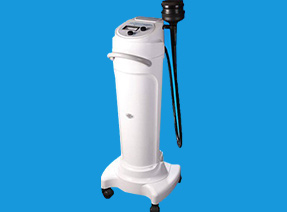
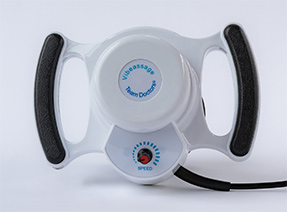
The Vibeassage Sport and the Vibeassage Pro featuring the TDX3 soft-as-the-hand Biomimetic Applicator Pad
https://www.teamdoctors.com/
✓ Get Dr. Stoxen’s #1 International Bestselling Books
Learn how to understand, examine, and reverse your TOS—without surgery.
https://drstoxen.com/1-international-best-selling-author/
✓ Check out Team Doctors Online Courses
Step-by-step video lessons, demonstrations, and self-treatment strategies.
https://teamdoctorsacademy.com/
✓ Schedule a Free Phone Consultation With Dr. Stoxen
Speak directly with him so he can review your case and guide you on your next steps.
https://drstoxen.com/appointment/
#ThoracicOutletSyndrome #TOS #TOSDiagnosis #NeurogenicTOS #MuscleGuarding #RibDysfunction #Misdiagnosis #HandsOnCare #ClinicalExamination #Biomechanics #NerveCompression #PectoralisMinor #ThoracicOutletCompression #PatientStories #MedicalEducation #MovementBasedCare #TOSAwareness #DeepTissue #EarlyTreatment #TeamDoctors #ThoracicOutletSyndrome #TOSAwareness #TOSPain #ChronicPainJourney #NerveCompression #ArmPain #ShoulderPain #RareDiseaseAwareness #InvisibleIllness #ChronicPainLif
Medical Disclaimer
This article is provided for educational and informational purposes only. It is not intended to diagnose, treat, cure, or prevent any disease, nor is it intended to replace professional medical advice, diagnosis, or treatment.
Thoracic outlet syndrome and related nerve, vascular, and musculoskeletal conditions can present differently in each individual. Treatment decisions—including surgical and non-surgical options—must be made on a case-by-case basis in consultation with a qualified, licensed healthcare professional who is familiar with the patient’s complete medical history.
The experiences described in this article reflect individual outcomes and do not guarantee similar results for others. Surgical procedures, including thoracic outlet surgery and first rib resection, carry inherent risks, and outcomes vary based on many factors including diagnosis, timing, practitioner experience, and patient-specific anatomy and physiology.
Readers should not delay or discontinue medical care based on information contained in this article. Always seek the guidance of a qualified healthcare provider with any questions regarding symptoms, conditions, or treatment options.
Editor’s Note
This article explores a patient and family experience following thoracic outlet syndrome surgery and highlights the importance of comprehensive evaluation, informed decision-making, and second opinions when managing complex pain conditions.
The article also references the Human Spring Approach, a biomechanical evaluation and treatment framework developed by Dr James Stoxen, which emphasizes understanding the body as an integrated, dynamic spring system rather than a collection of isolated anatomical structures. The inclusion of this approach is intended to illustrate an alternative clinical perspective, not to discredit surgery or any specific medical specialty.
Mention of specific clinicians, evaluation models, or treatment philosophies does not constitute endorsement, medical advice, or a claim of superiority. Rather, it reflects the editorial goal of encouraging patients and families to seek clarity, explanation, and individualized assessment before pursuing irreversible interventions.
The editorial position of this publication is that understanding should precede intervention, especially in conditions where symptoms persist, worsen, or fail to respond to standard care.

Dr James Stoxen DC., FSSEMM (hon) He is the president of Team Doctors®, Treatment and Training Center Chicago, one of the most recognized treatment centers in the world.
Dr Stoxen is a #1 International Bestselling Author of the book, The Human Spring Approach to Thoracic Outlet Syndrome. He has lectured at more than 20 medical conferences on his Human Spring Approach to Thoracic Outlet Syndrome and asked to publish his research on this approach to treating thoracic outlet syndrome in over 30 peer review medical journals.
He has been asked to submit his other research on the human spring approach to treatment, training and prevention in over 150 peer review medical journals. He serves as the Editor-in-Chief, Journal of Orthopedic Science and Research, Executive Editor or the Journal of Trauma and Acute Care, Chief Editor, Advances in Orthopedics and Sports Medicine Journal and editorial board for over 35 peer review medical journals.
He is a much sought-after speaker. He has given over 1000 live presentations and lectured at over 70 medical conferences to over 50,000 doctors in more than 20 countries. He has been invited to speak at over 300 medical conferences which includes invitations as the keynote speaker at over 50 medical conferences.
After his groundbreaking lecture on the Integrated Spring-Mass Model at the World Congress of Sports and Exercise Medicine he was presented with an Honorary Fellowship Award by a member of the royal family, the Sultan of Pahang, for his distinguished research and contributions to the advancement of Sports and Exercise Medicine on an International level. He was inducted into the National Fitness Hall of Fame in 2008 and the Personal Trainers Hall of Fame in 2012.
Dr Stoxen has a big reputation in the entertainment industry working as a doctor for over 150 tours of elite entertainers, caring for over 1000 top celebrity entertainers and their handlers. Anthony Field or the popular children’s entertainment group, The Wiggles, wrote a book, How I Got My Wiggle Back detailing his struggles with chronic pain and clinical depression he struggled with for years. Dr Stoxen is proud to be able to assist him.
Full Bio) Dr Stoxen can be reached directly at teamdoctors@aol.com