Learning From Ed Coan — A Journey Into Strength and the Human Spring Within Him
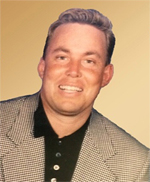
When I first met Ed Coan, I knew he was different from most athletes I had ever seen. Ed is one of the most famous powerlifters of all time. Over his career, he set more than 70 world records in powerlifting — numbers most people thought were impossible for his body size. (Wikipedia)
But even before he became a legend, something important was happening inside his body that had nothing to do with how much weight he could lift. It was something that related deeply to the work I would later build into the human spring model and the human spring approach that guides much of my thinking and clinical work today.
My time working with Ed from about 1986 to 1993 became one of the richest learning experiences of my career.
The Legend Ed Coan
Ed’s story is remarkable. He wasn’t born huge or naturally overpowering. As a kid in Chicago, he was skinny and even picked on. At age 16, after training in a basement with just basic equipment, he was already squatting 485 pounds and deadlifting nearly 500. (T NATION)
By the mid-1980s and into the early 1990s, Ed was rewriting the record books.
In 1986, he was already lifting totals that challenged what the world thought was possible for a man his size. (Thoracic Outlet Syndrome)
By the early 1990s, he became the lightest person ever to total over 2,400 pounds across the three powerlifting lifts — the squat, bench press, and deadlift — combined. (Athlete for Life!)
These lifts — and the movements that made them possible — were more than raw strength. They were full-body expressions of coordination, timing, balance, posture, neurological control, and structural efficiency.
Ed’s Body Worked Like a Spring
To most people watching, Ed looked like a machine made of muscles and bones. But when I studied how he moved and lifted, I saw something else.
I saw spring-based biomechanics in action.
Every great squat began with elastic tension in the feet and hips. Every powerful deadlift started with stored energy up the back and through the legs. The bench press was not just pushing — it was tension built in his chest, shoulders, and arms, then released with control and precision.
This was not just strength. This was energy recycling in human motion.
Ed’s body behaved like a body as a spring system, not just a set of levers with motors attached. Instead of simply pulling a weight, he used elastic energy storage in the body and impact attenuation biomechanics to manage the stress and recoil forces of each lift.
That early insight — that the human body behaves more like springs and elastic networks than rigid levers — helped shape my integrated spring-mass model for understanding movement and pain.
Training With Intent: Lessons From Ed
Working with Ed taught me that the best athletes don’t just lift heavy weights. They learn how to use their body’s natural spring mechanisms:
- The foot arch spring mechanism becomes like a coiled spring at the start of a squat.
- The hips and hamstrings work like torsional spring mechanics in joints, twisting and untwisting to store and release energy.
- The spine acts less like a column of bricks and more like compression springs in the spine, absorbing and passing force smoothly throughout movement.
Ed’s training was not random. It was thoughtful. It was controlled. And it was always about efficiency — not just power.
He understood how to handle progressive overload — gradually challenging his body without breaking it. He knew how to peak for a powerlifting meet by balancing effort and recovery. His coaches and training partners helped him master bar path in the squat and bench press, and perfect timing in the deadlift for a clean lockout and strong posterior chain engagement. (openipf.org)
And though gear like knee wraps, lifting belts, and careful spotting were part of his world, the real strength came from inside — from how the body used its internal springs to move with efficiency and resilience.
Why This Matters to Everyday Bodies, Not Just Lifters
People often think powerlifters like Ed are special. And in some ways, they are. But the mechanics that made Ed strong are the same spring principles every body uses in everyday life.
When you walk down stairs, catch yourself from slipping, or even stand up from a chair, your body uses the same spring mechanics in human movement.
When any part of this spring system becomes stiff or loses its ability to absorb and release energy — what I call spring stiffness vs compliance — the rest of the body compensates.
Over time, that compensation can lead to uncomfortable patterns, stiffness, and pain.
This is one of the big ideas behind the human spring approach.
Instead of seeing the body like a machine of sticks and pulleys, we study it like a network of springs — a system designed to absorb, store, and reuse mechanical energy with every move.
Ed never talked about “springs” in scientific terms. But when I watched how he trained, how his body moved under load, and how he managed his technique for performance and longevity, I began to see the same spring patterns that I now teach hundreds of patients and athletes every year.
Learning Beyond Lifting
Working with Ed was not just about watching records get broken. It was about seeing how a body — even one moving massive weights — can express movement in a resilient, efficient way.
It taught me to look deeper than numbers.
Ed understood his body’s timing, neuromechanical spring control, and how to manage forces through the entire kinetic chain spring transfer from foot to hip to shoulder.
He did not just lift heavy things. He used his body’s elastic nature to do it.
That lesson became a cornerstone of my work — noticing how people’s bodies behave under load, and how restoring the spring-like qualities can help smooth movement, reduce stress, and support everyday activities.
How Normal Life Slowly Steals Your Spring
When people watched Ed Coan lift, they saw something extraordinary.
But what most people don’t realize is this:
Ed’s body was using the same basic design that your body was born with.
The difference is that Ed protected and trained his spring system.
Most people slowly lose theirs.
You Were Born With a Spring System
Every human is born with a body designed around the human spring model, even if no one ever explains it that way.
Your body is not built mainly like a crane or a machine made of hinges. It is built as a body as a spring system.
Your feet, legs, spine, ribs, shoulders, and connective tissues form a network of biological springs in the body. This network stores energy, releases energy, and spreads force safely using spring mechanics in human movement, elastic energy storage in the body, and energy recycling in human motion.
When you walk, your foot arch works like a spring using the foot arch spring mechanism.
When you move your spine, it behaves more like a stack of compression springs in the spine than like a stiff pole.
When you twist, your joints use torsional spring mechanics in joints.
When everything works together, force moves smoothly through the body using kinetic chain spring transfer and biomechanical load distribution.
This is also how the body protects itself using shock absorption biomechanics and impact attenuation biomechanics.
The Invisible Suspension System Inside You
One of the most important ideas in the human spring approach is that your body is built like a suspension bridge, not like a pile of bricks.
This is what we mean by suspension-based anatomy.
Your joints are not supposed to be smashed together all day. They are meant to hang, float, and move with space using joint decompression mechanics.
Inside your body, your nerves and blood vessels pass through many tight spaces. These spaces depend on tunnel mechanics for nerves and blood vessels staying open and flexible.
When the spring system works, those tunnels stay open naturally.
When the spring system stiffens, those spaces slowly shrink.
How Modern Life Breaks the Spring System
Nobody wakes up one day and suddenly “loses their spring.”
It happens slowly.
Very slowly.
Here are some of the biggest reasons:
- Too much sitting
- Too little walking on natural surfaces
- Shoes that block foot motion
- Stress that keeps muscles tight
- Repeating the same movements every day
- Not enough full-body movement
- Too little bouncing, twisting, and elastic motion
Over time, the body starts to lose spring stiffness vs compliance balance. It becomes more stiff and less springy.
When that happens, the body starts to move more like the lever model vs spring model — more rigid, more effort, more stress on joints.
What Happens When the Spring Fails
When the spring system begins to fail, the body adapts to survive.
Muscles tighten to protect joints.
Movement becomes slower and heavier.
Energy gets wasted instead of recycled.
This is the early stage of what I call spring failure and chronic pain.
It does not start with “damage.”
It starts with lost motion, lost elasticity, and lost timing.
The body begins to rely more on muscle effort and less on biomechanical energy efficiency.
Every movement costs more energy.
Every step feels heavier.
Why Many People Feel “Compressed”
Many patients tell me they feel:
- “Compressed”
- “Collapsed”
- “Tight everywhere”
- “Heavy”
- “Stuck”
This is not just a feeling.
It is often the result of losing joint decompression mechanics and suspension-based anatomy.
Instead of joints floating and unloading, they begin to stack and press together.
Instead of forces spreading out, they concentrate in small areas.
Instead of the body acting like a spring system, it acts like a rigid structure.
The Stretch-Shortening Cycle: The Missing Link in Normal Life
In sports, we talk about the stretch-shortening cycle biomechanics all the time.
This is the same thing used in Plyometrics, where athletes train reactive strength, explosive power, and elastic recoil.
They use jump training, box jumps, bounding, hopping drills, and medicine ball throws to teach the body to load and unload springs quickly.
They care about ground contact time, rate of force development, landing mechanics, deceleration control, and the amortization phase.
Scientists often call this the spring-mass model.
But here is the problem:
Most adults never do this kind of movement.
They walk slowly.
They sit a lot.
They avoid bouncing, twisting, and quick elastic motions.
So the stretch-shortening cycle slowly disappears from daily life.
And when that disappears, so does a big part of the body’s natural spring system.
Why Athletes Keep Their Spring Longer
This is one reason athletes often move better than non-athletes, even as they age.
In Powerlifting, Olympic Weightlifting, and many sports, the body is constantly trained to manage force, timing, and elastic loading.
Even in heavy lifting like the squat, deadlift, and bench press, the best lifters are not just pushing — they are loading and unloading their spring system.
In Olympic lifting movements like the clean, snatch, and clean and jerk, everything depends on timing, elasticity, and energy recycling in human motion.
But normal life removes these patterns.
The Silent Shrinking of Space
One of the most important ideas in applied clinical biomechanics is that many problems are not about things being “torn” or “broken.”
They are about space being lost.
When springs stop working:
- Joints lose space
- Tissues get crowded
- Nerves and blood vessels have less room
- The body starts protecting instead of flowing
This is why tunnel mechanics for nerves and blood vessels matter so much.
And this is why restoring spring motion can often change how the body feels and moves — even without “fixing” anything structurally.
Where Vibration Fits In
This is where tools that use vibration and spring restoration come into the picture.
Vibration is not a cure.
It is not a treatment.
It is a way to gently explore movement, circulation, and relaxation.
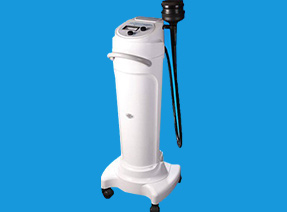
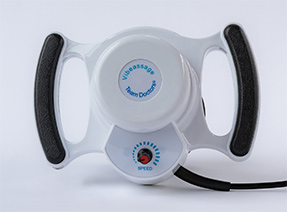
In the human spring approach, tools like the Vibeassage Pro and Vibeassage Sport are used as self-care tools to help people:
- Feel movement more easily
- Relax guarded muscles
- Explore motion without effort
- Become more aware of stiff areas
- Support restoring human spring function
They are not medical devices for diagnosis or treatment.
They are tools for participating in your own movement and recovery process.
The Big Shift in Thinking
Most systems of care ask:
“What is damaged?”
The human spring approach asks:
“Where did the spring system stop working well?”
It looks at:
- Lost elasticity
- Lost timing
- Lost motion
- Lost suspension
- Lost energy recycling
This is a completely different way of seeing the body.
It is based on spring-based biomechanics, the integrated spring-mass model, and the idea that your body is not meant to feel heavy, stiff, and compressed all the time.
How Movement, Training, and Daily Life Either Build or Destroy Your Spring
By now, you can see that your body was designed to work as a spring system.
Not a stiff machine.
Not a stack of hinges.
But a living network of springs, timing, and elastic motion.
This is the heart of the human spring model and the foundation of the human spring approach.
The big question now is:
Why do some people keep their spring, while others slowly lose it?
The Two Paths: Spring-Friendly vs Spring-Hostile Living
Every movement you do either supports spring mechanics in human movement or slowly works against it.
Some activities encourage elastic energy storage in the body and energy recycling in human motion.
Others force the body to rely only on muscle effort and rigid positions.
When the body moves in a spring-friendly way, it becomes more efficient, more fluid, and less tiring. This is what we mean by biomechanical energy efficiency.
When it does not, the body becomes stiff, heavy, and expensive to operate.
This is where spring failure and chronic pain slowly begin.
Why Athletes Train the Spring (Even If They Don’t Call It That)
In Plyometrics, athletes directly train the stretch-shortening cycle biomechanics.
They use jump training, depth jumps, box jumps, bounding, hopping drills, and medicine ball throws to improve reactive strength, explosive power, and elastic recoil.
They care about ground contact time, rate of force development, deceleration control, landing mechanics, and the amortization phase.
All of this is based on the spring-mass model and elastic energy storage.
But even in slower strength sports like Powerlifting, the best lifters are still using springs.
In the squat, bench press, and deadlift, the strongest and safest lifters are not just muscling the weight. They are loading and unloading their internal springs using kinetic chain spring transfer, biomechanical load distribution, and precise timing.
In Olympic Weightlifting, movements like the snatch, clean, and clean and jerk are impossible without good spring mechanics in human movement.
They depend on triple extension, a fast pull under, a stable catch position, and smooth timing and coordination.
What Good Training Really Does
Good training does not just make muscles bigger.
It teaches the body how to:
- Absorb force using shock absorption biomechanics
- Spread force using impact attenuation biomechanics
- Store energy using elastic energy storage in the body
- Release energy using energy recycling in human motion
It also teaches the nervous system neuromechanical spring control — how to turn springs on and off at the right time.
This is true whether you are lifting weights, jumping, throwing, or just learning to move better.
How Normal Exercise Can Still Be Spring-Hostile
Here is something that surprises many people:
You can exercise regularly and still slowly destroy your spring system.
If all your movement is slow, stiff, and guided by machines…
If you never bounce, twist, or move freely…
If your feet never load and unload naturally…
If your joints are always locked into the same paths…
Then your body slowly shifts from a body as a spring system toward the lever model vs spring model way of moving.
More rigid.
More muscular.
Less elastic.
More tiring.
The Role of the Feet and the Spine
Two of the most important spring areas in the body are the feet and the spine.
Your feet are not just platforms.
They are living springs built around the foot arch spring mechanism.
Your spine is not a stiff pole.
It behaves more like a stack of compression springs in the spine.
Your joints twist and untwist using torsional spring mechanics in joints.
All of this is tied together by the fascial spring network.
When these parts move well, the body maintains suspension-based anatomy and joint decompression mechanics.
When they do not, the body begins to feel compressed, heavy, and stiff.
Why Timing Matters More Than Strength
Many people think pain and stiffness come from being “weak.”
Often, they come from bad timing.
When springs fire too late, too early, or not at all, the body starts using muscle tension as a substitute.
This is tiring.
This is stiff.
This is inefficient.
And over time, it contributes to spring failure and chronic pain.
This is why applied clinical biomechanics focuses so much on coordination, timing, and movement patterns — not just strength.
Where Vibration Fits In (Safely and Honestly)
In the human spring approach, tools that use vibration and spring restoration are used for one simple reason:
They make it easier to explore movement and relaxation.
They do not cure diseases.
They do not diagnose problems.
They do not replace professional care.
Tools like the Vibeassage Pro and Vibeassage Sport are used as self-care tools to help people:
- Relax guarded muscles
- Improve comfort during movement
- Explore stiff areas gently
- Increase body awareness
- Support restoring human spring function
They are a way to participate in your own care.
Not a promise.
Not a shortcut.
Not a medical treatment.
Why Energy Matters So Much
When your spring system works well, your body wastes less energy.
Movement feels lighter.
You tire less easily.
You recover faster.
This is what biomechanical energy efficiency really means.
When your spring system does not work well, your body has to “muscle through” everything.
This is exhausting.
This is why so many people feel tired, heavy, and worn down even when they are not doing very much.
The Quiet Return of Elastic Movement
The good news is this:
The body often remembers how to be springy.
With the right kind of movement, awareness, and patience, many people can begin to feel:
- Lighter
- Looser
- More fluid
- Less guarded
- More comfortable in motion
This is not about becoming an athlete.
It is about returning to how the body was designed to work.
Living the Rest of Your Life as a Spring, Not a Rusty Machine
By now, you have seen the big picture.
Your body was not designed to feel heavy, stiff, and compressed.
It was designed to move, absorb force, store energy, and give that energy back.
This is the heart of the human spring model and the guiding idea behind the human spring approach.
Your body is a body as a spring system, not a pile of rigid parts.
When this system works well, movement feels lighter. When it does not, everything feels harder.
The Goal Is Not “Perfect Health”
The goal is not to become an athlete.
The goal is not to become young again.
The goal is not to chase symptoms.
The goal is to support your spring system so your body can move with less effort and less stress.
That means protecting:
- spring mechanics in human movement
- elastic energy storage in the body
- energy recycling in human motion
- shock absorption biomechanics
- impact attenuation biomechanics
And it means keeping your body from slowly turning into a stiff version of the lever model vs spring model.
Thinking in Springs Changes Everything
Most people are taught to think in terms of parts.
“My back hurts.”
“My shoulder is bad.”
“My knee is worn out.”
The human spring approach asks different questions:
- Where did motion become stiff?
- Where did timing get lost?
- Where did the body stop floating and start compressing?
- Where did the spring stop working well?
This way of thinking comes from spring-based biomechanics, the integrated spring-mass model, and applied clinical biomechanics.
It is not about fixing one part.
It is about helping the whole system move better.
Protecting Your Internal Suspension System
Your body works best when it keeps its suspension-based anatomy and joint decompression mechanics.
That means:
- Joints should have space
- Movement should be smooth
- Forces should spread out using biomechanical load distribution and kinetic chain spring transfer
- The fascial spring network should stay elastic and alive
This also protects the tunnel mechanics for nerves and blood vessels, which depend on motion and space.
A Simple Way to Think About Daily Life
Every day, you are either:
- Teaching your body to be more springy
- Or teaching it to be more stiff
Long sitting.
Short walking.
No bouncing.
No twisting.
No flowing.
That slowly takes you away from spring stiffness vs compliance balance and toward spring failure and chronic pain.
But gentle, varied, natural movement nudges you back toward elasticity.
Movement Is Information
Movement is not just exercise.
It is information for your nervous system.
It teaches neuromechanical spring control — when to load, when to release, when to relax.
It improves biomechanical energy efficiency — how much effort your body needs just to live.
The goal is not intensity.
The goal is quality, variety, and flow.
Where Training Fits In (For Regular People)
You do not need to be a powerlifter or Olympic lifter.
But their sports show us something important:
The body thrives when it remembers how to load and unload springs.
That is why Plyometrics, when done gently and safely, are based on the stretch-shortening cycle biomechanics and the spring-mass model.
That is why jumping, light bouncing, and playful movement matter.
That is why feet, hips, and spine must stay alive with motion.
Your foot arch spring mechanism, compression springs in the spine, and torsional spring mechanics in joints are not luxury features.
They are how your body is supposed to work.
A Safe and Honest Role for Vibration Tools
In the human spring approach, tools that use vibration and spring restoration are used as support tools.
They are not cures.
They are not medical treatments.
They are not promises.
Tools like the Vibeassage Pro and Vibeassage Sport are used to help people:
- Relax guarded areas
- Explore motion gently
- Improve comfort
- Increase body awareness
- Support restoring human spring function
They are part of a self-care mindset.
Not a replacement for professional care.
Not a shortcut.
Aging Does Not Have to Mean Rusting
Aging does not automatically mean stiffness.
Many older people move better than younger ones.
The difference is not age.
The difference is how much of their spring system they kept.
Bodies that keep moving in elastic, varied, spring-like ways often feel lighter, smoother, and more capable.
Bodies that become rigid and repetitive often feel heavy and tired.
The Big Life Idea
The human spring model is not just about pain.
It is about how you live inside your body.
It is about whether movement feels like:
- Something you survive
- Or something that supports you
It is about whether your body feels like:
- A rusty machine
- Or a living spring system
The Real Promise (And It Is an Honest One)
The real promise is not that you will never have pain.
The real promise is this:
If you treat your body like a spring system instead of a machine, movement usually becomes easier, lighter, and less stressful over time.
That is a reasonable, honest, and human goal.
Final Thought
Ed Coan taught me that the greatest performers never stop learning.
The human body teaches us something similar:
The greatest bodies never stop moving like what they were designed to be.
Not levers.
Not rigid machines.
But living, adaptable, intelligent springs.
Team Doctors Resources
✓ Check out the Team Doctors Recovery Tools
The Vibeassage Sport and the Vibeassage Pro featuring the TDX3 soft-as-the-hand Biomimetic Applicator Pad
https://www.teamdoctors.com/
✓ Get Dr. Stoxen’s #1 International Bestselling Books
Learn how to understand, examine, and reverse your TOS—without surgery.
https://drstoxen.com/1-international-best-selling-author/
✓ Check out Team Doctors Online Courses
Step-by-step video lessons, demonstrations, and self-treatment strategies.
https://teamdoctorsacademy.com/
✓ Schedule a Free Phone Consultation With Dr. Stoxen
Speak directly with him so he can review your case and guide you on your next steps.
https://drstoxen.com/appointment/
#ThoracicOutletSyndrome #TOSCommunity #ChronicPainSupport #YouAreNotAlone #PainWarrior #InvisibleIllness #HealingJourney #RecoveryJourney #PatientVoices #HopeAndHealing #ChronicCondition #HealthStruggles #PainSupport #KeepGoing #Wellness

Dr James Stoxen DC., FSSEMM (hon) He is the president of Team Doctors®, Treatment and Training Center Chicago, one of the most recognized treatment centers in the world.
Dr Stoxen is a #1 International Bestselling Author of the book, The Human Spring Approach to Thoracic Outlet Syndrome. He has lectured at more than 20 medical conferences on his Human Spring Approach to Thoracic Outlet Syndrome and asked to publish his research on this approach to treating thoracic outlet syndrome in over 30 peer review medical journals.
He has been asked to submit his other research on the human spring approach to treatment, training and prevention in over 150 peer review medical journals. He serves as the Editor-in-Chief, Journal of Orthopedic Science and Research, Executive Editor or the Journal of Trauma and Acute Care, Chief Editor, Advances in Orthopedics and Sports Medicine Journal and editorial board for over 35 peer review medical journals.
He is a much sought-after speaker. He has given over 1000 live presentations and lectured at over 70 medical conferences to over 50,000 doctors in more than 20 countries. He has been invited to speak at over 300 medical conferences which includes invitations as the keynote speaker at over 50 medical conferences.
After his groundbreaking lecture on the Integrated Spring-Mass Model at the World Congress of Sports and Exercise Medicine he was presented with an Honorary Fellowship Award by a member of the royal family, the Sultan of Pahang, for his distinguished research and contributions to the advancement of Sports and Exercise Medicine on an International level. He was inducted into the National Fitness Hall of Fame in 2008 and the Personal Trainers Hall of Fame in 2012.
Dr Stoxen has a big reputation in the entertainment industry working as a doctor for over 150 tours of elite entertainers, caring for over 1000 top celebrity entertainers and their handlers. Anthony Field or the popular children’s entertainment group, The Wiggles, wrote a book, How I Got My Wiggle Back detailing his struggles with chronic pain and clinical depression he struggled with for years. Dr Stoxen is proud to be able to assist him.
Full Bio) Dr Stoxen can be reached directly at teamdoctors@aol.com