A Pianist’s Hand Failed
Doctors Missed Why
The Last Attempt to Save a Career
By the time the pianist found Dr. James Stoxen’s lectures online, he was no longer looking for a cure.
He was looking for permission to hope.
For more than a year, his world had been shrinking.
First it was a missed passage. Then another. Then the slow, creeping realization that something was wrong with his right hand. Not sore. Not tired. Not injured in any normal way. It simply would not always do what his brain asked it to do.
At first, he told himself it was stress.
Then overwork.
Then age.
But the mistakes kept happening in the same places. The same fingers. The same loss of control.
Soon, long rehearsals became battles. Then short rehearsals. Then some days, he couldn’t practice at all.
His arm felt heavy. His hand felt unreliable. His forearm burned and tightened like it was being inflated from the inside. Sometimes his fingers tingled. Sometimes they went numb. Sometimes his grip felt weak and clumsy, like it belonged to someone else.
And worst of all — sometimes his hand just wouldn’t obey.
When a Musician Starts to Hide
Musicians are experts at hiding pain.
They learn to compensate.
They learn to push through.
They learn to pretend.
He did all of that.
He adjusted fingerings. Changed practice schedules. Took more breaks. Shortened sessions. Avoided certain passages. Avoided certain pieces.
Then avoided certain performances.
Then started quietly turning things down.
His world began to shrink.
And with it, his identity.
The Endless Carousel of Treatments
He did everything he was supposed to do.
He went to physical therapy. Then more physical therapy. He saw chiropractors. Massage therapists. Manual therapists. Soft tissue specialists.
Everyone had a theory.
Tendonitis. Nerve irritation. Overuse. Posture. Weakness. Tightness.
Everyone had a technique.
Nothing worked.
In fact, things were getting worse.
His arm fatigued faster.
His forearm felt tighter.
His hand felt less trustworthy.
The numbness and tingling became more frequent.
And the fear became constant.
“What if this is permanent?”
“What if this ends my career?”
“What if this is the beginning of the end?”
The Two Words That Changed Everything
Eventually, two diagnoses began to appear in conversations.
Thoracic Outlet Syndrome.
Compartment Syndrome.
Both sounded serious.
Both sounded surgical.
Both sounded like things musicians don’t come back from.
He started reading stories.
He started seeing forums.
He started seeing people who never fully recovered.
People who had surgery.
People who got worse.
People who couldn’t play anymore.
That’s when the fear stopped being abstract.
That’s when it became real.
The Night Everything Shifted
One night, exhausted and discouraged, he and his family started searching for something different.
Not another exercise.
Not another stretch.
Not another generic explanation.
They were searching for understanding.
That’s when they found a series of YouTube lectures by a doctor in Chicago:
Dr. James Stoxen.
At first, he didn’t even know what he was listening to.
But something felt different immediately.
This wasn’t symptom talk.
This wasn’t “try this exercise.”
This wasn’t “strengthen this muscle.”
Dr. Stoxen was talking about mechanics.
About how the body carries load.
About how space for nerves and blood vessels is created and maintained.
About why surgeries fail.
About why chronic pain doesn’t resolve.
About why musicians, athletes, and high performers break down in strange, confusing ways.
And then he said something that stopped the pianist cold:
“Most of these problems are not tissue problems.
They are system failures.”
The First Real Hope
For the first time in more than a year, the pianist felt something shift inside.
Not in his arm.
In his thinking.
This explanation didn’t blame the hand.
Or the forearm.
Or the neck.
It explained the whole chain.
It explained why everything seemed connected.
It explained why nothing local ever worked.
He watched more lectures.
Then more.
Then he watched them again.
And again.
By the end, one thought was unavoidable:
“This man understands what is happening to me.”
The Phone Call
He called the next day.
What he expected to be a short conversation turned into hours.
Dr. Stoxen asked questions no one had ever asked:
- About how long he could hold his arms overhead
- About circulation changes
- About fatigue patterns
- About posture
- About breathing
- About rib movement
- About forearm pressure
- About nerve symptoms
This wasn’t a checklist.
This was an investigation.
Within minutes, the pianist realized something profound:
“For the first time, someone is not guessing.”
The Decision
By the end of the call, the decision was already made.
He had to go to Chicago.
Not for another treatment.
Not for another opinion.
But for a real examination.
One that looked at the entire system.
Because now he understood something critical:
If this problem was truly mechanical,
then it could not be solved locally.
And if it was truly mechanical…
…maybe it could actually be fixed.
Standing at the Edge of Everything
When he booked the trip, he did not know if he was traveling toward recovery…
…or toward confirmation that his career was over.
But he knew one thing:
This was his last real attempt.
Perfect. Here is:
The Human Spring Explanation: Why His Body Collapsed—and How It Was Rebuilt
When the pianist arrived in Chicago, he did not yet know the words human spring model or human spring approach. He only knew that his body had betrayed him and that nothing conventional had worked.
What he was about to learn would permanently change the way he understood movement, pain, injury, and recovery.
The First Question That Changed Everything
Dr. Stoxen did not begin by asking about his hand.
He asked about how his body carried load.
That alone was strange.
For more than a year, every practitioner had focused on:
- The fingers
- The wrist
- The forearm
- The neck
No one had asked how force traveled through his body as a system.
Dr. Stoxen explained something simple and radical:
“Your problem isn’t where it hurts.
Your problem is how your body handles force.”
The Body as a Spring System
He began by describing the body as a spring system.
Not as a rigid structure.
Not as a set of levers.
But as a living network of elastic components designed for:
- spring-based biomechanics
- The integrated spring-mass model
- spring mechanics in human movement
- The stretch-shortening cycle biomechanics
- elastic energy storage in the body
- energy recycling in human motion
- shock absorption biomechanics
In a healthy body, movement is not powered by muscle alone.
It is powered by springs.
The Living Springs Inside the Body
The pianist learned that the body is full of biological springs in the body:
- The foot arch spring mechanism
- The spine behaving like stacked compression springs in the spine
- The shoulder suspended in a suspension-based anatomy
- The connective tissue acting as a fascial spring network
- The joints functioning through torsional spring mechanics in joints
All of these springs work together to manage:
- biomechanical load distribution
- impact attenuation biomechanics
- kinetic chain spring transfer
When these springs are healthy, forces are spread out.
When they become stiff, forces concentrate.
And where forces concentrate, tissue gets crushed.
Spring Stiffness vs. Compliance
One of the most important ideas he learned was spring stiffness vs compliance.
A healthy system is compliant.
It deforms slightly under load, then rebounds.
A sick system becomes stiff.
Stiff systems:
- Don’t absorb shock
- Don’t recycle energy
- Don’t maintain space
- Don’t distribute load
They compress inward.
They grind.
They choke their own tunnels.
That is how spring failure and chronic pain develops.
The Tunnel Problem
Dr. Stoxen explained that the body depends on tunnel mechanics for nerves and blood vessels.
Those tunnels stay open because spring forces hold them open.
When spring tension is lost:
- The shoulder drops
- The rib cage rises
- The clavicle collapses inward
- The tunnels narrow
That is how nerve and vascular compression starts.
That is how thoracic outlet compression forms.
Not because something is “wrong” with the nerve.
But because the space for the nerve has collapsed.
Why His Forearm Became a Pressure Cooker
The same spring failure explained his forearm.
When elastic suspension fails, muscles must hold structure.
When muscles become structural, they become pressure chambers.
That is exactly how compartment syndromes develop.
Not from overuse alone.
From loss of elastic load sharing.
The Lever Model vs. Spring Model
Dr. Stoxen contrasted the lever model vs spring model.
Lever thinking says:
- Strengthen
- Stabilize
- Brace
- Control
Spring thinking says:
- Restore recoil
- Restore compliance
- Restore suspension
- Restore elastic timing
The pianist realized that years of “stabilization” had slowly made his body more rigid—and more compressive.
Why Energy Matters More Than Strength
In a healthy body:
- elastic energy storage in the body reduces muscular work
- energy recycling in human motion prevents fatigue
- The stretch-shortening cycle biomechanics keeps movement efficient
When this fails, muscles:
- Work too hard
- Tire too fast
- Tighten
- Become painful
- Become pressure chambers
This was exactly what had happened to him.
Joint Decompression, Not Joint Forcing
Dr. Stoxen explained joint decompression mechanics.
Healthy joints don’t just move.
They breathe.
They open under load and close under release.
When spring systems fail, joints only compress.
They stop opening.
Space disappears.
Nerves suffer.
The Role of Vibration and Neuromechanical Reset
Part of the restoration process involves:
- vibration and spring restoration
- Resetting neuromechanical spring control
Vibration helps tissues:
- Let go of chronic contraction
- Restore elastic timing
- Improve circulation
- Reawaken normal reflexes
It is not “massage.”
It is nervous-system reprogramming.
What Restoring the Spring System Actually Means
Restoring human spring function means:
- Rebuilding suspension
- Rebuilding recoil
- Rebuilding load sharing
- Reopening tunnels
- Normalizing pressure
- Letting muscles go back to being movers—not structural supports
This is applied clinical biomechanics in action.
Not symptom treatment.
System repair.
The Moment the Model Became Real
As the pianist went through the long, detailed evaluation and treatment, he felt something he had not felt in years:
His body was opening instead of collapsing.
His arm felt lighter.
His shoulder felt less heavy.
His forearm felt less tight.
This wasn’t pain relief.
It was mechanical change.
A New Understanding of His Own Body
For the first time, he understood:
“I didn’t break a part.
I lost a system.”
And now, that system was being rebuilt.
The Restoration: How Spring Mechanics Gave Him His Hand, His Arm, and His Life Back
By the time the treatment truly began, the pianist no longer thought of himself as someone with a “hand problem” or an “arm problem.”
He now understood that he had been living inside a spring failure.
His body had slowly lost its ability to absorb force, distribute load, and maintain space. The result had been compression everywhere—at the shoulder, in the neck, and inside the forearm.
Now, the work was not about treating symptoms.
It was about restoring a system.
Not a Session. Not a Technique. A Process.
This was not a typical appointment.
There was no clock-watching.
No 20-minute slot.
No single body part.
Dr. Stoxen explained that applied clinical biomechanics does not work on pieces—it works on chains.
The first phase focused on joint decompression mechanics.
Not forcing joints.
Not cracking joints.
But restoring their ability to open under load.
As the shoulder, clavicle, ribs, and spine began to regain elastic movement, something subtle but profound started to happen:
Space returned.
Releasing the Collapsed Suspension System
The shoulder girdle had been acting like a collapsed bridge.
Muscles had been holding up what should have been suspended by elastic structures.
Layer by layer, those chronic protective contractions were released.
This was not relaxation work.
This was structural restoration.
As the suspension-based anatomy of the shoulder was rebuilt, the tunnel mechanics for nerves and blood vessels began to normalize.
The pianist felt this not as “less pain,” but as less pressure.
The Forearm: From Pressure Chamber Back to Muscle
Then came the forearm.
For a long time, his forearm had not behaved like a mover.
It had behaved like a pressure vessel.
Hours were spent restoring tissue compliance, decompressing compartments, and reversing the mechanical environment that had created the chronic pressure state.
The goal was not to “loosen muscles.”
The goal was to restore elastic load sharing so the muscles no longer had to act as structural supports.
This is the difference between treating tissue and restoring spring mechanics in human movement.
The Role of Vibration in Spring Restoration
Part of the process involved vibration and spring restoration.
Not as a comfort tool.
But as a neurological reset.
Vibration helps:
- Normalize muscle firing patterns
- Reduce chronic protective tone
- Improve circulation
- Restore neuromechanical spring control
This is not about relaxation.
It is about reprogramming how the nervous system manages load and recoil.
The Moment the System Turned Back On
One day, in the middle of treatment, something happened that he will never forget.
His hand felt… warm.
Not “less painful.”
Not “a little better.”
Warm.
Then heavier.
Then alive.
For the first time in a very long time, he could feel blood flow returning to his hand.
The constant heaviness lifted.
The tingling faded.
The sense of pressure dissolved.
This wasn’t placebo.
This was circulation and space returning to tissues that had been living in chronic compression.
When Control Returned
Shortly after that, something else returned:
Precision.
Coordination.
Trust.
He sat at the piano.
Carefully at first.
Then more confidently.
The passages that had betrayed him for more than a year were there again.
His hand did what his brain asked.
No delay.
No confusion.
No failure.
In that moment, he knew something fundamental had changed.
The Difference Between Healing and Rebuilding
He realized something important:
His body had not been “healed.”
It had been rebuilt.
The system that manages load, space, and energy had been restored.
That is why this lasted.
That is why the symptoms did not creep back.
The New Normal
Months later, he was back on stage.
Not managing pain.
Not compensating.
Not fearing every performance.
But playing.
With confidence.
With endurance.
With trust in his body again.
Why This Works When Everything Else Fails
Traditional approaches chase symptoms.
This approach restores biomechanical load distribution.
Traditional rehab strengthens levers.
This restores springs.
Traditional treatment stabilizes.
This restores compliance, recoil, and energy recycling in human motion.
The Real Victory
The real victory was not that his pain went away.
The real victory was that:
His body works again.
The Bigger Message
This story is not unique.
It is happening to musicians, athletes, and high-level performers everywhere.
They are not broken.
They are collapsed.
And collapsed systems do not need to be cut.
They need to be re-suspended.
The Final Truth
The pianist did not need surgery.
He did not need injections.
He did not need to lose parts of his body.
He needed his human spring system restored.
And when that happened, his career came back with it.
The Body as a Spring System
Dr. Stoxen explained that the human body is not designed primarily as a lever system.
It is designed as a body as a spring system.
Movement is not supposed to be stiff and force-driven. It is supposed to be elastic.
Walking, running, lifting, breathing, and even holding posture rely on:
- spring-based biomechanics
- The integrated spring-mass model
- spring mechanics in human movement
- The stretch-shortening cycle biomechanics
- elastic energy storage in the body
- energy recycling in human motion
- shock absorption biomechanics
When this system is working, movement is efficient, light, and sustainable.
When it fails, everything becomes heavy, rigid, and compressive.
The Invisible Springs Inside You
The pianist learned that the body is full of biological springs in the body.
They are not metal, but they behave the same way:
- The foot arch spring mechanism
- The spine acting like stacked compression springs in the spine
- The shoulder and rib cage working as suspension-based anatomy
- The connective tissue network forming a fascial spring network
- Joints using torsional spring mechanics in joints
Together, these systems manage:
- biomechanical load distribution
- impact attenuation biomechanics
- kinetic chain spring transfer
When these springs are compliant, forces spread out.
When they become stiff, forces concentrate.
And where forces concentrate, tissues get compressed.
Why Tunnels Collapse
Dr. Stoxen explained something that immediately clicked:
Nerves and blood vessels don’t get pinched because they are weak.
They get pinched because the tunnel mechanics for nerves and blood vessels collapse.
Those tunnels are kept open by spring tension.
Lose that tension, and space disappears.
That is why the pianist had developed:
- Thoracic outlet compression
- Forearm pressure syndromes
- Multi-level nerve irritation
All from one cause: loss of spring compliance.
Spring Stiffness vs Compliance
One of the most important ideas he learned was spring stiffness vs compliance.
A healthy body is compliant enough to deform under load and then rebound.
A sick body becomes stiff.
Stiff systems:
- Don’t absorb shock
- Don’t distribute load
- Don’t maintain space
- Don’t recycle energy
They compress.
They grind.
They collapse inward.
That is how you get spring failure and chronic pain.
The Lever Model vs Spring Model
In the lever model vs spring model, the difference is everything.
Lever thinking says:
- Strengthen muscles
- Stabilize joints
- Control motion
Spring thinking says:
- Restore elasticity
- Restore suspension
- Restore recoil
Lever models create rigidity.
Spring models create space.
The pianist realized that years of “stabilization” and “tightening” had actually made him worse.
Why Energy Matters
In a healthy system:
- elastic energy storage in the body reduces muscular effort
- energy recycling in human motion prevents fatigue
- The stretch-shortening cycle biomechanics keeps movement light
When that system fails:
Muscles must work harder.
They get tired faster.
They become tight.
They become painful.
They become pressure chambers.
That is exactly what had happened in his forearm.
The Shoulder as a Suspension System
One of the most important revelations was that the shoulder is not meant to hang from muscles.
It is meant to float in a suspension-based anatomy system.
When that suspension fails:
- The clavicle drops
- The rib cage rises
- Tunnels collapse
- Nerves and vessels get compressed
That is thoracic outlet syndrome explained mechanically.
The Spine as a Stack of Springs
He also learned to think of the spine not as a rigid column, but as stacked compression springs in the spine.
Each segment is meant to deform slightly under load.
When those springs become stiff:
- Load stops being shared
- Stress concentrates
- Posture collapses
- Pain becomes chronic
The Missing Piece in Modern Rehab
Most rehab tries to:
- Strengthen
- Stabilize
- Control
Very little tries to:
- Restore recoil
- Restore compliance
- Restore elastic timing
But without that, the system never truly recovers.
The New Goal
For the first time, the pianist understood that the goal was not:
- To “fix” his hand
- To “protect” his neck
- To “release” his forearm
The goal was:
restoring human spring function
A Completely Different Kind of Treatment
This is why Dr. Stoxen’s work is described as applied clinical biomechanics.
It is not symptom chasing.
It is system restoration.
It looks at:
- How load enters the body
- How it is absorbed
- How it is transferred
- How it is released
And where it gets stuck.
The Beginning of the End of Chronic Pain
Once the pianist understood this, everything that had happened to his body finally made sense.
He did not have bad luck.
He had lost his spring system.
Team Doctors Resources
✓ Check out the Team Doctors Recovery Tools
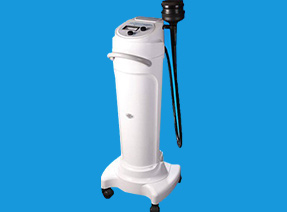
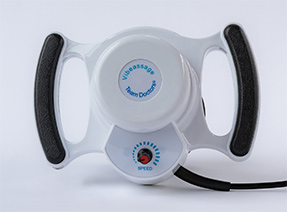
The Vibeassage Sport and the Vibeassage Pro featuring the TDX3 soft-as-the-hand Biomimetic Applicator Pad
https://www.teamdoctors.com/
✓ Get Dr. Stoxen’s #1 International Bestselling Books
Learn how to understand, examine, and reverse your TOS—without surgery.
https://drstoxen.com/1-international-best-selling-author/
✓ Check out Team Doctors Online Courses
Step-by-step video lessons, demonstrations, and self-treatment strategies.
https://teamdoctorsacademy.com/
✓ Schedule a Free Phone Consultation With Dr. Stoxen
Speak directly with him so he can review your case and guide you on your next steps.
https://drstoxen.com/appointment/
#ThoracicOutletSyndrome #FailedTOSSurgery #TOSRecovery #ChronicPainStory #VascularTOS #ArmPain #PatientAdvocacy #MedicalTrauma #SurgeryFailure #PainJourney
Medical Disclaimer
This article is provided for educational and informational purposes only. It is not intended to diagnose, treat, cure, or prevent any disease, nor is it intended to replace professional medical advice, diagnosis, or treatment.
Thoracic outlet syndrome and related nerve, vascular, and musculoskeletal conditions can present differently in each individual. Treatment decisions—including surgical and non-surgical options—must be made on a case-by-case basis in consultation with a qualified, licensed healthcare professional who is familiar with the patient’s complete medical history.
The experiences described in this article reflect individual outcomes and do not guarantee similar results for others. Surgical procedures, including thoracic outlet surgery and first rib resection, carry inherent risks, and outcomes vary based on many factors including diagnosis, timing, practitioner experience, and patient-specific anatomy and physiology.
Readers should not delay or discontinue medical care based on information contained in this article. Always seek the guidance of a qualified healthcare provider with any questions regarding symptoms, conditions, or treatment options.
Editor’s Note
This article explores a patient and family experience following thoracic outlet syndrome surgery and highlights the importance of comprehensive evaluation, informed decision-making, and second opinions when managing complex pain conditions.
The article also references the Human Spring Approach, a biomechanical evaluation and treatment framework developed by Dr James Stoxen, which emphasizes understanding the body as an integrated, dynamic spring system rather than a collection of isolated anatomical structures. The inclusion of this approach is intended to illustrate an alternative clinical perspective, not to discredit surgery or any specific medical specialty.
Mention of specific clinicians, evaluation models, or treatment philosophies does not constitute endorsement, medical advice, or a claim of superiority. Rather, it reflects the editorial goal of encouraging patients and families to seek clarity, explanation, and individualized assessment before pursuing irreversible interventions.
The editorial position of this publication is that understanding should precede intervention, especially in conditions where symptoms persist, worsen, or fail to respond to standard care.

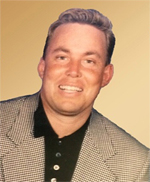
Dr James Stoxen DC., FSSEMM (hon) He is the president of Team Doctors®, Treatment and Training Center Chicago, one of the most recognized treatment centers in the world.
Dr Stoxen is a #1 International Bestselling Author of the book, The Human Spring Approach to Thoracic Outlet Syndrome. He has lectured at more than 20 medical conferences on his Human Spring Approach to Thoracic Outlet Syndrome and asked to publish his research on this approach to treating thoracic outlet syndrome in over 30 peer review medical journals.
He has been asked to submit his other research on the human spring approach to treatment, training and prevention in over 150 peer review medical journals. He serves as the Editor-in-Chief, Journal of Orthopedic Science and Research, Executive Editor or the Journal of Trauma and Acute Care, Chief Editor, Advances in Orthopedics and Sports Medicine Journal and editorial board for over 35 peer review medical journals.
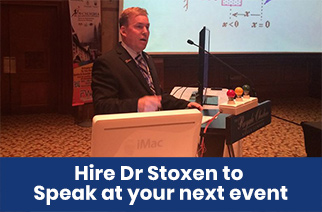
He is a much sought-after speaker. He has given over 1000 live presentations and lectured at over 70 medical conferences to over 50,000 doctors in more than 20 countries. He has been invited to speak at over 300 medical conferences which includes invitations as the keynote speaker at over 50 medical conferences.
After his groundbreaking lecture on the Integrated Spring-Mass Model at the World Congress of Sports and Exercise Medicine he was presented with an Honorary Fellowship Award by a member of the royal family, the Sultan of Pahang, for his distinguished research and contributions to the advancement of Sports and Exercise Medicine on an International level. He was inducted into the National Fitness Hall of Fame in 2008 and the Personal Trainers Hall of Fame in 2012.
Dr Stoxen has a big reputation in the entertainment industry working as a doctor for over 150 tours of elite entertainers, caring for over 1000 top celebrity entertainers and their handlers. Anthony Field or the popular children’s entertainment group, The Wiggles, wrote a book, How I Got My Wiggle Back detailing his struggles with chronic pain and clinical depression he struggled with for years. Dr Stoxen is proud to be able to assist him.
Full Bio) Dr Stoxen can be reached directly at teamdoctors@aol.com