In my clinical experience, one of the most misunderstood drivers of chronic neck pain, chronic shoulder pain, and the persistent patterns often mistaken for structural problems is the righting reflex.
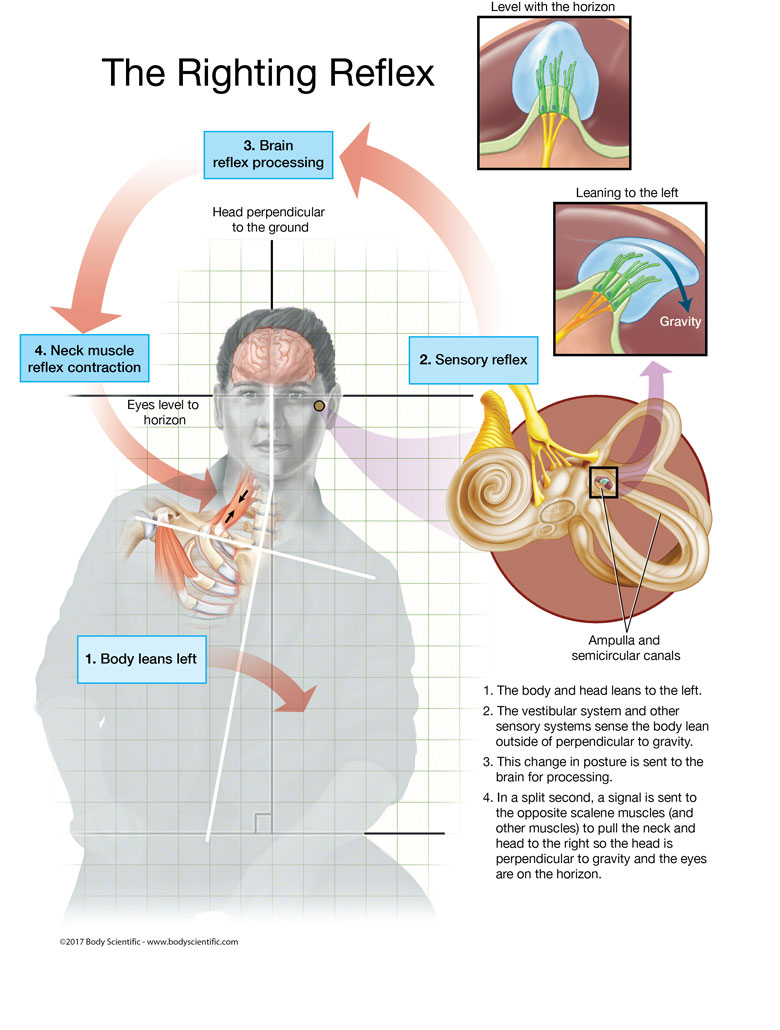
This reflex is the automatic neurological mechanism the body uses to keep the head level with the horizon.
When posture repeatedly triggers this reflex, individuals can develop chronic neck and shoulder pain, constant neck pain, neck muscle pain, and even chronic thoracic pain that behave exactly like more serious conditions.
These symptoms often coexist with neck stiffness, neck pain causes linked to postural imbalance, and pressure patterns that mimic postural thoracic outlet complications.
The righting reflex originates in the semicircular canals—three fluid-filled structures of the inner ear that detect head position.
Each canal contains thousands of mechanosensory hairs beneath a gelatinous layer. When a person tilts left, right, forward, or backward, the gel shifts and bends these hairs.
This instantly signals the brain to activate specific muscle groups—in particular the scalenes—to realign the head with gravity.
This is essential for balance and spatial orientation, but when held for long periods, it becomes a source of ongoing strain, tension, and pain, including neck shoulder pain, neck and arm pain, and patterns that resemble arm neck pain.
When someone repeatedly leans left, the opposite (right) scalene muscles must contract continuously to carry the 9–12-pound weight of the head.
Over time, sustained contraction leads to fatigue, micro-tearing, congestion, and inflammation.
This cascade triggers the brain’s protective reflexes, creating chronic guarding.
Patients then report symptoms like neck pain and headaches, neck pain and dizziness, and collarbone neck pain due to muscular overload on the upper thoracic and cervical stabilizers.
If inflammation stabilizes but never clears, the cycle becomes self-perpetuating: the more the muscles guard, the more they fatigue, and the more congestion forms around sensitive structures.
In some cases, soft tissue restrictions contribute to scar tissue entrapment, which can worsen circulation and nerve mobility.
Over months or years, this pattern may shift soft tissue or skeletal structures into the thoracic outlet, creating compression patterns that look like TOS, including collarbone neck and shoulder pain, chest pain under the collarbone, tingling in collarbone, and collarbone and arm pain.
This neurological mechanism is so powerful that even the best Massage Therapy, Physical Therapy, or Chiropractic Treatment cannot overcome it if the patient continues to sit or stand in ways that repeatedly trigger the reflex.
Similarly, individuals performing TOS Self Treatment, TOS Physical Therapy, or TOS Stretches may notice minimal progress if their daily posture continues to activate the overload pattern.
In some patients, persistent issues are mistaken for surgical failure, when in reality the recurrence stems from unresolved reflex-driven muscular tension—what some call recurrence of symptoms after surgery.
The behaviors that activate the righting reflex are surprisingly common:
- leaning in bed to watch TV
- sitting tilted on a soft couch
- using pillows that are too thick or too thin
- carrying a heavy bag on one shoulder
- working at a laptop while slightly rotated
- sliding sideways when scrolling on a phone
With each tilt, the semicircular canals detect the shift, and the scalenes fire automatically.
Over weeks, this can lead to constant overload and symptoms such as chest pain around collar bone, pain above collarbone, and patterns resembling thoracic outlet compression.
A patient from Minneapolis came to me with bilateral symptoms that had resisted every form of conservative care, including Thoracic Outlet Syndrome Physical Therapy and Thoracic Outlet Syndrome Massage Treatment.
When I investigated, the cause was simple: she spent several hours every night leaning backward in an easy chair.
This position triggered equal tension on both sides, overwhelming her tissues. Changing the posture reduced her symptoms by nearly half within a week.
Another patient, an attorney from Toronto, experienced debilitating upper-extremity symptoms for years despite Acupuncture, Chiropractic for Thoracic Outlet Syndrome, and multiple sessions of Myofascial Release for Thoracic Outlet Syndrome.
Once he learned to sit perpendicular to gravity, 40% of his symptoms improved within days. Deep tissue and vibration work later cleared the remaining inflammation.
These experiences underscore a critical principle: no treatment—including Thoracic Outlet Syndrome Exercises, Exercises for Thoracic Outlet Syndrome, or even specialized Thoracic Outlet Physical Therapy—can succeed if the posture pattern triggering the righting reflex continues.
When symptoms appear predominantly on one side, it often means the person is leaning in the opposite direction.
When symptoms appear on both sides, it often means they are leaning backward.
The righting reflex itself is not a disorder; it is a survival mechanism enabling humans to maintain stability in a gravity-based environment.
However, when modern habits conflict with how the body was engineered to function, this reflex becomes overactivated.
Chronic tension, congestion, and impaired circulation follow.
Understanding and correcting these subtle postural habits is often the turning point for people living with persistent constant neck and shoulder pain, chronic neck pain, or thoracic outlet–like symptoms.
Once individuals finally notice how often they tilt during daily life—driving, working at a laptop, scrolling on a phone, cooking, lifting a child, brushing their teeth—they begin to understand the frequency with which the righting reflex is being triggered.
Team Doctors Resources
✓ Check out the Team Doctors Recovery Tools
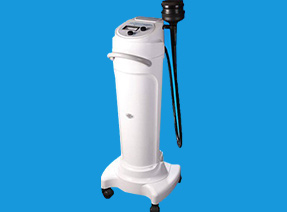
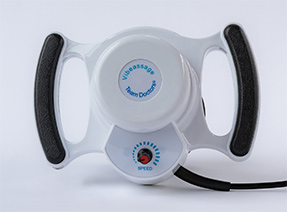
The Vibeassage Sport and the Vibeassage Pro featuring the TDX3 soft-as-the-hand Biomimetic Applicator Pad
https://www.teamdoctors.com
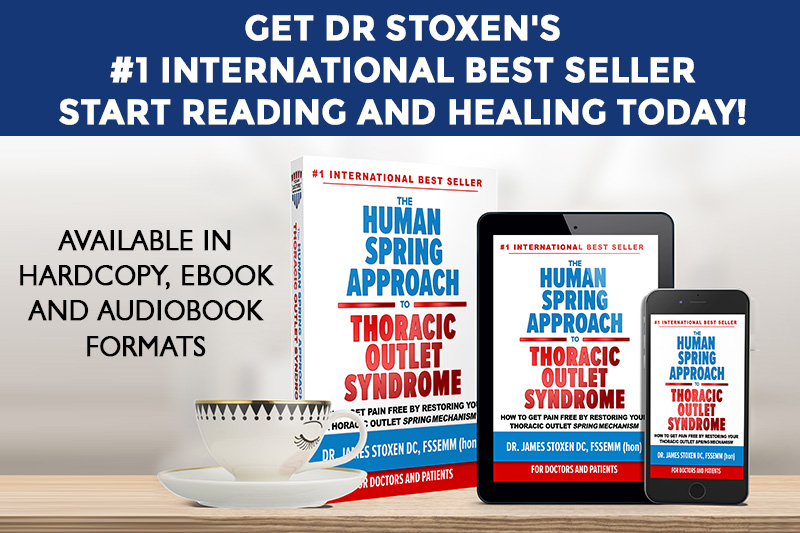
✓ Get Dr. Stoxen’s #1 International Bestselling Books
Learn how to understand, examine, and reverse your TOS—without surgery.
https://drstoxen.com/1-international-best-selling-author
✓ Check out Team Doctors Online Courses
Step-by-step video lessons, demonstrations, and self-treatment strategies.
https://teamdoctorsacademy.com
✓ Schedule a Free Phone Consultation With Dr. Stoxen
Speak directly with him so he can review your case and guide you on your next steps.
https://drstoxen.com/appointment

Dr James Stoxen DC., FSSEMM (hon) He is the president of Team Doctors®, Treatment and Training Center Chicago, one of the most recognized treatment centers in the world.
Dr Stoxen is a #1 International Bestselling Author of the book, The Human Spring Approach to Thoracic Outlet Syndrome. He has lectured at more than 20 medical conferences on his Human Spring Approach to Thoracic Outlet Syndrome and asked to publish his research on this approach to treating thoracic outlet syndrome in over 30 peer review medical journals.
He has been asked to submit his other research on the human spring approach to treatment, training and prevention in over 150 peer review medical journals. He serves as the Editor-in-Chief, Journal of Orthopedic Science and Research, Executive Editor or the Journal of Trauma and Acute Care, Chief Editor, Advances in Orthopedics and Sports Medicine Journal and editorial board for over 35 peer review medical journals.
He is a much sought-after speaker. He has given over 1000 live presentations and lectured at over 70 medical conferences to over 50,000 doctors in more than 20 countries. He has been invited to speak at over 300 medical conferences which includes invitations as the keynote speaker at over 50 medical conferences.
After his groundbreaking lecture on the Integrated Spring-Mass Model at the World Congress of Sports and Exercise Medicine he was presented with an Honorary Fellowship Award by a member of the royal family, the Sultan of Pahang, for his distinguished research and contributions to the advancement of Sports and Exercise Medicine on an International level. He was inducted into the National Fitness Hall of Fame in 2008 and the Personal Trainers Hall of Fame in 2012.
Dr Stoxen has a big reputation in the entertainment industry working as a doctor for over 150 tours of elite entertainers, caring for over 1000 top celebrity entertainers and their handlers. Anthony Field or the popular children’s entertainment group, The Wiggles, wrote a book, How I Got My Wiggle Back detailing his struggles with chronic pain and clinical depression he struggled with for years. Dr Stoxen is proud to be able to assist him.
Full Bio) Dr Stoxen can be reached directly at teamdoctors@aol.com