A story from Moscow
January 22, 2026 brings back a memory that still makes me smile.
Do you remember the first time we went to Russia with Ernie Frantz and the APF?
It was the first powerlifting meet against the Russians. At the time, the Cold War mindset was still very real. Everyone believed the other side had some secret formula for strength.
We went to Moscow, and at one point we were traveling by train. A Russian sports scientist took me in his car, and, of course, they brought out the vodka. That was kind of their specialty.
But what they were really trying to do was get information.
They wanted details.
They wanted training secrets.
They wanted to know how we were getting such strong lifters.
They were asking questions, pouring drinks, asking more questions, pouring more drinks. It felt less like a scientific meeting and more like an interrogation disguised as hospitality.
By the end of it, it turned into something like a drinking contest mixed with a wrestling match.
That was the atmosphere back then. Everyone believed the other side had some kind of hidden trick.
What they didn’t realize was that there was no magic trick—just hard training, smart training, and brutal consistency.
But something else was also true.
Even back then, watching lifters move, strain, and sometimes break down, I could see that the human body does not really work like a machine made of rigid parts. It works more like something alive, elastic, and springy.
That idea would eventually become what I now call the Human Spring way of understanding the body.
The strength world taught me something important
In the world of powerlifting, everything revolves around three big lifts: the Squat, the Bench press, and the Deadlift. Lifters chase their One-rep max (1RM) and plan their training around Progressive overload, Max effort training, a Strength cycle, and a Peaking phase.
They talk about Periodization. They prepare for a Powerlifting meet. Some lift Raw lifting, some do Equipped lifting with Knee wraps and a Lifting belt. Everyone relies on a good Spotter. Coaches watch the Bar path, fight for a strong Lockout, add Accessory exercises, and focus on the Posterior chain. When progress stalls, they work on Weak point training.
This world taught me discipline. It taught me respect for effort. But it also taught me something else.
It showed me that two people can train the same way, but one breaks down and the other keeps getting stronger.
Why?
Because one body is moving like a healthy spring, and the other is moving like a stiff, rusty machine.
The body is not a pile of parts
Most people are taught to think about the body as a collection of pieces.
A knee.
A shoulder.
A back.
A neck.
But when you watch real movement—especially in sports like Olympic weightlifting—you see something very different.
In Olympic lifting, athletes train the Snatch and the Clean and jerk. They break those lifts into the Clean and the Jerk, or use variations like the Power clean and Power snatch. They build strength with the Front squat and Overhead squat. They practice the Split jerk.
They talk about Triple extension, learning how to Pull under the bar, hitting the right Catch position, and having enough Mobility to get there. They live in Technique training, chase Bar speed, and train on a Weightlifting platform. They learn the Hook grip, perfect the Receiving position, sharpen the Turnover, and refine Timing and coordination.
What is really happening in all of this?
The whole body is loading, stretching, and releasing energy—like a spring.
The hidden spring inside every movement
Now think about jumping.
In plyometrics, coaches talk about the Stretch-shortening cycle, Reactive strength, and Explosive power. Athletes do Jump training, Depth jumps, Box jumps, Bounding, Hopping drills, and Medicine ball throws.
They care about Ground contact time, Elastic recoil, and Shock absorption. They measure Rate of force development. They use Neuromuscular training to improve Dynamic stability.
Scientists often describe this as the Spring-mass model. The body stores and releases energy through Elastic energy storage. Good athletes have great Deceleration control, clean Landing mechanics, and a short Amortization phase.
This is not just sports science language.
This is how the human body is designed to work.
The Human Spring idea in simple terms
Imagine two rubber bands.
One is fresh, stretchy, and alive.
The other is old, dry, and stiff.
Pull both.
The healthy one stores energy and snaps back.
The stiff one barely moves—and might even crack.
Your body is the same way.
When your joints move freely, your tissues stay elastic, and your nervous system is calm, your body behaves like a spring. It loads energy, stores it, and releases it smoothly.
When your body is stiff, guarded, inflamed, or stuck, it behaves like a rigid lever system. Energy does not flow. Stress builds up. Something eventually complains.
This is the foundation of the Human Spring approach.
It is not about forcing.
It is not about muscling through.
It is about restoring natural movement, natural elasticity, and natural flow.
Why I started thinking differently
Over decades of working with athletes, performers, and everyday people, I saw the same pattern again and again.
People did not break because they were weak.
They broke because their springs were not working anymore.
They became stiff.
They lost joint play.
They lost natural motion.
Their nervous system stayed in a constant state of protection.
When the body stops behaving like a spring, it starts behaving like a stack of stressed parts.
Where vibration and self-care come in
One of the challenges in modern life is that people sit too much, move too little, and carry too much tension.
Gentle, controlled mechanical vibration has been used for many years in sports, fitness, and wellness settings as a way to help people relax tissues, explore movement, and improve body awareness.
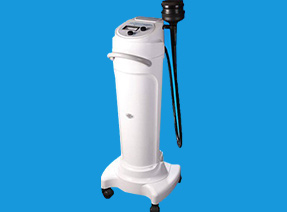
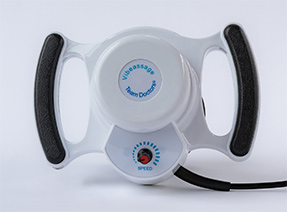
This is where tools like Vibeassage Pro and Vibeassage Sport come in.
They are not medical treatments.
They are not making disease claims.
They are self-care tools designed to help people:
- Explore tight areas
- Relax muscles
- Improve comfort
- Become more aware of their own bodies
- Support recovery and relaxation routines
Think of them like a foam roller or massage ball—but using vibration instead of pressure alone.
The real goal is not force — it is spring
In powerlifting, Olympic lifting, and plyometrics, the best athletes are not just strong.
They are springy.
They move smoothly into the bottom of a Squat.
They stay elastic off the chest in the Bench press.
They don’t grind every Deadlift like a rusty hinge.
In Olympic lifts, they don’t just muscle the bar. They flow under it.
In jumping, they don’t thud into the ground. They rebound.
This is the Human Spring in action.
Why this matters for normal people
You don’t need to be a competitive athlete to benefit from this way of thinking.
Walking.
Standing up.
Climbing stairs.
Reaching overhead.
Getting out of a car.
All of these are spring movements when done well.
When done poorly, they become grinding, compressive, stressful movements.
Over time, that difference adds up.
A different way to think about your body
The Human Spring approach is not about chasing pain.
It is about restoring normal motion, normal elasticity, and normal rhythm.
It is about helping your body remember how it is supposed to move.
Tools like Vibeassage Pro and Vibeassage Sport are simply one way people can support that process at home as part of a broader self-care and movement routine.
The Human Spring: How the Body Loses and Regains Its Natural Bounce
The problem almost nobody explains
Most people don’t wake up one day “broken.”
They slowly get stiffer.
They slowly get less springy.
They slowly stop trusting their bodies.
At first, it shows up as little things. You feel tight getting out of bed. You move carefully when you bend. You don’t drop easily into a Squat anymore. You brace before you lift groceries like you’re about to do a Deadlift.
Your body is still strong enough. But it’s no longer free enough.
In the strength world, coaches see this all the time. A lifter might still be chasing a bigger One-rep max (1RM) with Progressive overload, but the movement starts to look forced. The Bar path gets shaky. The Lockout turns into a grind. More and more Accessory exercises are added to fix problems that are really about lost spring, not lost strength.
This is not a failure of effort.
It is a failure of elastic movement.
Your nervous system is the real boss
Here is a simple truth that changes everything:
Your muscles do not decide when to relax.
Your joints do not decide when to move.
Your nervous system decides.
When your nervous system feels safe, your body moves freely.
When your nervous system feels threatened—by stress, fatigue, old injuries, or even bad habits—it tightens things up to protect you.
This is called guarding.
Guarding is not a disease. It is not an injury. It is a protective strategy.
But when guarding becomes your normal state, your body stops behaving like a spring and starts behaving like a rigid structure.
What guarding does to the Human Spring
A healthy spring loads, stores, and releases energy.
A guarded body:
- Loads poorly
- Stores very little energy
- Releases movement in a jerky, forced way
This shows up everywhere.
In powerlifting, it looks like a lifter who needs more and more Knee wraps, a tighter Lifting belt, and a more aggressive Spotter just to get through a Peaking phase.
In Olympic lifting, it looks like someone who struggles to drop under the bar, misses the Catch position, or can’t find a smooth Receiving position in the Snatch or Clean and jerk.
In jumping, it looks like heavy landings, long Ground contact time, and poor Elastic recoil.
Different sports. Same problem.
The spring is not working.
The body was designed for flow
When you watch a great Olympic lifter perform a Power clean or a Power snatch, you don’t see strain first.
You see flow.
You see Triple extension, a fast Pull under, a smooth Turnover, and a stable catch. You see beautiful Timing and coordination and enough Mobility to move without fear.
When you watch a great jumper, you see the Stretch-shortening cycle in action. You see Reactive strength, Explosive power, short Amortization phase, and clean Landing mechanics with excellent Deceleration control.
This is not just skill.
This is a healthy spring system.
The Spring-Mass Model is not just for scientists
In biomechanics, researchers often describe human movement using the Spring-mass model.
That sounds complicated, but the idea is simple:
Your body works like a spring that carries a mass.
When you step, jump, or lift, your tissues stretch slightly, store energy through Elastic energy storage, and then release it.
That is how you move efficiently.
That is how you protect your joints.
That is how you avoid turning every movement into wear and tear.
What happens when the spring gets stiff
Now imagine that same spring is rusty.
It doesn’t stretch well.
It doesn’t store much energy.
It doesn’t bounce back smoothly.
So what happens?
Your muscles have to work harder.
Your joints take more load.
Your movements become effortful instead of elastic.
Over time, this shows up as:
- Feeling heavy and slow
- Needing more warm-up just to feel normal
- Avoiding certain movements
- Losing confidence in your body
Why people confuse strength with stiffness
This is a big mistake.
Many people think being “tight” means being “strong.”
But look at the best performers in any sport.
The best lifters during a Strength cycle are not the stiffest. They are the ones who can stay relaxed until the moment they apply force.
The best jumpers are not rigid. They are elastic.
The best movers are not braced all the time. They are responsive.
How daily life trains stiffness
You don’t have to compete in a Powerlifting meet or train on a Weightlifting platform to lose your spring.
Modern life does a great job of training stiffness:
- Sitting for hours
- Looking at screens
- Not moving through full ranges
- Always being in a hurry
- Always being under stress
Your nervous system learns one lesson:
“Stay tight. Stay guarded. Don’t relax.”
Where gentle vibration fits in
This is where gentle vibration tools like Vibeassage Pro and Vibeassage Sport can be helpful as part of a self-care routine.
Not as a medical treatment.
Not as a cure.
Not as a promise.
But as a way to:
- Help your nervous system feel safe
- Encourage muscles to relax
- Explore tight areas without forcing them
- Improve body awareness
- Support recovery, relaxation, and comfort
Think of it like giving your nervous system permission to let go.
Why this is different from forcing flexibility
Forcing a stretch on a guarded muscle is like pulling harder on a rusty spring.
Sometimes it moves.
Sometimes it resists.
Sometimes something complains.
The Human Spring approach is about changing the nervous system’s message first, not overpowering the body.
When the nervous system feels safer, the body often gives you more movement on its own.
The same pattern in every sport
In plyometrics, coaches look for short Ground contact time, good Shock absorption, fast Rate of force development, and strong Dynamic stability supported by Neuromuscular training.
In Olympic lifting, coaches look for speed, smoothness, and confidence under the bar.
In powerlifting, the best lifters don’t look like they’re fighting the weight on every rep. They look organized and efficient.
Different sports. Same truth.
Spring beats strain.
The Human Spring is not about being loose
Let’s be very clear.
This is not about being floppy.
A good spring is:
- Stable
- Controlled
- Responsive
- Strong
It is not weak.
It is not sloppy.
It is organized elasticity.
A simple test
Here’s an easy way to feel the difference.
Try to gently bounce on the balls of your feet.
Do you feel:
- Light and springy?
- Or heavy and stiff?
Now try a gentle bodyweight Squat.
Does it feel like you’re dropping into a spring?
Or lowering into a tight box?
That difference is the Human Spring.
The Human Spring in Real Life: Why People Hurt, Get Tired, and Lose Confidence in Their Bodies
Why most people chase the wrong problem
When something hurts, most people ask a very reasonable question:
“What part is broken?”
Is it the shoulder?
The back?
The knee?
The neck?
But the Human Spring approach starts with a different question:
“What happened to the way the whole body moves?”
Because in real life, the body almost never fails as one single part.
It fails as a system.
The slow fade of the spring
Very few people can point to one single day when everything changed.
Instead, they describe a slow story:
- “I just don’t move like I used to.”
- “I get tired faster.”
- “Everything feels tighter.”
- “I’m afraid to do certain movements now.”
This is what it feels like when your spring system is losing elasticity.
You can still be strong.
You can still be active.
But movement starts to feel expensive.
How this shows up in athletes
In powerlifting, you see this when someone is still chasing their One-rep max (1RM) and pushing through Progressive overload, but every rep looks heavier than it should.
They rely more on Equipped lifting, tighter Knee wraps, and a stiffer Lifting belt. The Bar path becomes less smooth. The Lockout turns into a battle. More and more Accessory exercises and Weak point training get added.
They’re still strong.
But the spring is fading.
In Olympic lifting, the same athlete might lose confidence dropping under the bar in the Snatch or Clean and jerk. The Pull under slows down. The Catch position feels scary. The Receiving position feels unstable. Timing and coordination start to slip.
In plyometrics, the same person feels heavy. Ground contact time gets longer. Elastic recoil feels weak. Shock absorption gets noisy and uncomfortable.
Different sports. Same story.
How this shows up in normal people
You don’t need to train on a Weightlifting platform or prepare for a Powerlifting meet to lose your spring.
For everyday people, it looks like:
- Getting out of a chair carefully
- Avoiding stairs
- Being afraid to bend or twist
- Feeling tired after simple tasks
- Feeling “old” before your time
This is not just about age.
This is about how your nervous system and tissues are working together.
The body is always trying to protect you
Here is something very important to understand:
Your body is not your enemy.
When it tightens up, it is trying to keep you safe.
But sometimes it gets overprotective.
Stress, past injuries, fear of movement, and long periods of not moving well can all teach the nervous system to keep things tight “just in case.”
Over time, this becomes the new normal.
Why treating “parts” often fails
If the real problem is that the whole system has lost its spring, then only treating one part at a time is like:
- Replacing one shock absorber on a car with four broken ones
- Oiling one hinge in a rusty machine
It might help a little.
But it doesn’t restore the whole system.
The Human Spring view of recovery
The Human Spring approach is not about chasing pain.
It is about restoring movement quality.
It is about helping the body:
- Load better
- Store energy better through Elastic energy storage
- Release movement more smoothly
- Improve Deceleration control and Landing mechanics
- Shorten the Amortization phase
- Move with better Dynamic stability and Neuromuscular training patterns
This is not about pushing harder.
It is about moving smarter and calmer.
Why fear is such a big deal
One of the biggest killers of the Human Spring is fear of movement.
When people are afraid, they brace.
When they brace, they stiffen.
When they stiffen, they stop being springs.
This is true in sports and in daily life.
How gentle self-care fits into the picture
Tools like Vibeassage Pro and Vibeassage Sport are not magic.
They are not medical treatments.
They are ways to explore your body safely and gently.
Used as part of a calm self-care routine, they can help people:
- Notice where they hold tension
- Encourage relaxation
- Improve comfort
- Increase body awareness
- Create a feeling of safety in movement
Sometimes, the nervous system just needs a gentle signal that it is okay to let go.
The goal is confidence, not just flexibility
The Human Spring approach is not about being loose.
It is about being confident and responsive.
A good spring is:
- Stable
- Controlled
- Ready
Just like in a good Front squat or Overhead squat, or a clean Split jerk, the body is not floppy. It is organized and alive.
Why performance and daily life are not so different
In sports science, people talk about the Stretch-shortening cycle, Reactive strength, Explosive power, and the Spring-mass model.
In real life, this shows up as:
- How easily you walk
- How smoothly you turn
- How confidently you step off a curb
- How relaxed you are getting out of bed
It’s the same system.
A simple way to think about progress
Progress in the Human Spring approach often looks like:
- Movements feel easier
- You think less about your body
- You move more without planning it
- You trust yourself again
This is not about chasing numbers.
It is about getting your life back.
Living Like a Spring Again: A New Way to Think About Your Body and Your Future
The big idea, in plain language
By now, you’ve seen the pattern.
Whether we are talking about:
- A powerlifter trying to improve a Squat, Bench press, or Deadlift
- An Olympic lifter working on the Snatch or Clean and jerk
- Or a normal person just trying to move through daily life without feeling stiff and tired
The real difference is not just strength.
The difference is whether the body is still acting like a spring.
A spring-friendly life is not complicated
The Human Spring approach is not about:
- Perfect posture
- Perfect workouts
- Or perfect routines
It is about something much simpler:
Keeping your body moving, calm, and elastic.
That means:
- Not living in constant tension
- Not bracing for everything
- Not treating your body like it is fragile
What healthy movement feels like
When your spring system is working better, movement often feels:
- Lighter
- Smoother
- Less forced
- Less “planned”
You don’t think as much about how to get up from a chair.
You don’t rehearse every step.
You just… move.
Why athletes show us the model
Look at the best movers in any sport.
In Olympic lifting, great lifters don’t just rely on strength. They rely on Technique training, Bar speed, clean Timing and coordination, a confident Pull under, a fast Turnover, and a stable Receiving position. Even details like the Hook grip and footwork matter because everything is about flow, not force.
In plyometrics, great athletes show beautiful Stretch-shortening cycle, fast Ground contact time, strong Elastic recoil, and quiet Landing mechanics.
In powerlifting, the best lifters during a Strength cycle don’t look like they’re fighting the weight. They look organized. The Bar path is clean. The Posterior chain works together. The Lockout looks confident, not desperate.
Different sports. Same truth.
The body works best when it works like a spring.
What a “spring-friendly” lifestyle looks like
A spring-friendly life usually includes:
- Regular, gentle movement
- Not staying in one position too long
- Not living in constant stress and tension
- Letting the body move through comfortable ranges
- Paying attention to how you move, not just what you do
It is not about doing more.
It is about doing things with less fear and less stiffness.
Where simple self-care fits in
Self-care tools like Vibeassage Pro and Vibeassage Sport are not medical treatments.
They are not cures.
They are tools for awareness, comfort, and relaxation.
Used calmly and gently, they can help people:
- Notice tight areas
- Encourage relaxation
- Feel more comfortable in their bodies
- Explore movement without forcing it
- Support recovery and relaxation routines
Sometimes the nervous system just needs a signal that says:
“It’s okay to let go a little.”
Why this is not about chasing pain
The Human Spring approach is not about hunting for what hurts.
It is about building a body that moves better overall.
When movement quality improves:
- Things often feel easier
- You think less about your body
- You move more naturally
- You trust yourself more
That confidence is a huge part of feeling better in your own body.
The long-term view
This is not a 30-day challenge.
It is not a quick fix.
It is a way of understanding your body for the rest of your life.
Just like brushing your teeth or walking every day, keeping your Human Spring healthy is about:
- Small habits
- Repeated often
- Without drama
- Without force
A simple daily check-in
Here is an easy question you can ask yourself:
“Do I feel more like a spring today, or more like a rusty machine?”
If you feel more springy:
- Great. Keep going.
If you feel stiff:
- Don’t panic.
- Don’t fight your body.
- Just gently bring more movement, more calm, and more awareness into your day.
The real goal
The real goal is not perfect movement.
The real goal is:
- Confidence
- Ease
- Freedom
- Trust in your own body again
The Human Spring, in one sentence
Your body is not meant to be a rigid structure. It is meant to be a living, breathing, adaptable spring.
A final thought
Back in Moscow, all those years ago, everyone was looking for secret formulas.
The truth is simpler.
There is no secret.
There is only:
- How well your body moves
- How calm your nervous system is
- And how well your internal springs still work
Take care of those, and you are taking care of the real you.
Team Doctors Resources
✓ Check out the Team Doctors Recovery Tools
The Vibeassage Sport and the Vibeassage Pro featuring the TDX3 soft-as-the-hand Biomimetic Applicator Pad
https://www.teamdoctors.com/
✓ Get Dr. Stoxen’s #1 International Bestselling Books
Learn how to understand, examine, and reverse your TOS—without surgery.
https://drstoxen.com/1-international-best-selling-author/
✓ Check out Team Doctors Online Courses
Step-by-step video lessons, demonstrations, and self-treatment strategies.
https://teamdoctorsacademy.com/
✓ Schedule a Free Phone Consultation With Dr. Stoxen
Speak directly with him so he can review your case and guide you on your next steps.
https://drstoxen.com/appointment/
#ThoracicOutletSyndrome #PainRelief #ChronicPain #HealthEducation #MedicalEducation #PatientEducation #PainScience #BodyHealing #Rehab #Movement #Wellness #PhysicalTherapy #Posture #HolisticHealth #InjuryRecovery

Dr James Stoxen DC., FSSEMM (hon) He is the president of Team Doctors®, Treatment and Training Center Chicago, one of the most recognized treatment centers in the world.
Dr Stoxen is a #1 International Bestselling Author of the book, The Human Spring Approach to Thoracic Outlet Syndrome. He has lectured at more than 20 medical conferences on his Human Spring Approach to Thoracic Outlet Syndrome and asked to publish his research on this approach to treating thoracic outlet syndrome in over 30 peer review medical journals.
He has been asked to submit his other research on the human spring approach to treatment, training and prevention in over 150 peer review medical journals. He serves as the Editor-in-Chief, Journal of Orthopedic Science and Research, Executive Editor or the Journal of Trauma and Acute Care, Chief Editor, Advances in Orthopedics and Sports Medicine Journal and editorial board for over 35 peer review medical journals.
He is a much sought-after speaker. He has given over 1000 live presentations and lectured at over 70 medical conferences to over 50,000 doctors in more than 20 countries. He has been invited to speak at over 300 medical conferences which includes invitations as the keynote speaker at over 50 medical conferences.
After his groundbreaking lecture on the Integrated Spring-Mass Model at the World Congress of Sports and Exercise Medicine he was presented with an Honorary Fellowship Award by a member of the royal family, the Sultan of Pahang, for his distinguished research and contributions to the advancement of Sports and Exercise Medicine on an International level. He was inducted into the National Fitness Hall of Fame in 2008 and the Personal Trainers Hall of Fame in 2012.
Dr Stoxen has a big reputation in the entertainment industry working as a doctor for over 150 tours of elite entertainers, caring for over 1000 top celebrity entertainers and their handlers. Anthony Field or the popular children’s entertainment group, The Wiggles, wrote a book, How I Got My Wiggle Back detailing his struggles with chronic pain and clinical depression he struggled with for years. Dr Stoxen is proud to be able to assist him.
Full Bio) Dr Stoxen can be reached directly at teamdoctors@aol.com