One of the most common questions patients ask is whether Thoracic Outlet Syndrome surgery will completely eliminate pain. In clinical discussions, most surgeons explain that surgery is designed to create improvement rather than total symptom resolution.
When a patient undergoes first rib resection with removal of the scalene muscles, the goal is to reduce compression on sensitive structures passing through the thoracic outlet. Becoming completely pain-free after this procedure is considered an exceptional outcome.
The explanation is biomechanical rather than surgical technique alone. The head weighs roughly nine to twelve pounds and sits atop a complex support system made of muscles, ribs, and joints. This system behaves like a spring that must remain balanced to avoid long-term discomfort.
Removing stabilizing structures alters that balance. When the anterior scalene and middle scalene muscles are resected, important contributors to neck and rib cage support are lost. While compression may decrease, new areas of weakness can emerge.
Similar effects occur when procedures address the chest, such as pectoralis minor release. Although space may increase in one region, overall equilibrium across the neck, shoulder, and rib cage is not automatically restored.
This is why surgeons often describe success as functional improvement rather than pain elimination. Surgery changes anatomy, but it does not correct every factor involved in chronic pain patterns.
Inflammation and Reflex Muscle Guarding
Two fundamental mechanisms drive most Thoracic Outlet Syndrome symptoms. The first is inflammation caused by sustained contraction, repetitive strain, postural stress, or trauma.
Inflammation stimulates sensory receptors in muscle tissue, sending signals to the spinal cord. The nervous system responds with reflex muscle contraction designed to protect the area, a process known as reflex muscle guarding.
Guarding has two important effects. First, it twists the body into a predictable pattern involving the neck, shoulders, chest, and rib cage. Second, it narrows the thoracic outlet, increasing neurovascular compression.
This narrowing may affect the brachial plexus, the subclavian vein, or the subclavian artery, depending on posture, load, and activity. Symptoms may fluctuate daily as different tissues become stressed.
When therapy fails to address the scale of underlying inflammation, frustration often follows. Patients may feel that conservative care “did not work,” even though the deeper drivers of guarding were never fully addressed.
At that point, surgery can appear to be the final option. However, surgery primarily enlarges space at one choke point and does not remove inflammation from surrounding muscles.
Multiple Choke Points in TOS
Thoracic outlet compression rarely occurs in only one location. Beyond the interscalene triangle, two additional regions are frequently involved.
The first is the costoclavicular space, located between the clavicle and first rib. The second is the sub-pectoralis minor space, which lies beneath the coracoid process.
These regions are influenced by a different group of muscles, including the pectoralis minor, coracobrachialis, biceps short head, and subclavius.
These muscles are heavily activated during modern activities such as typing, phone use, and forward-reaching tasks. Prolonged contraction increases inflammation and tone.
Surgery that removes only the first rib and scalene muscles does not address these additional contributors. As a result, outlet narrowing and pain patterns may persist after the procedure.
This explains why some patients report partial improvement but continued discomfort, postural distortion, or fatigue during daily activity.
Addressing the Root Cause Systemically
A comprehensive approach to Thoracic Outlet Syndrome management must consider the entire muscular system surrounding the outlet. The objective is not forceful stretching, but controlled reduction of inflammation and tone.
This involves meticulous deep-tissue work performed inch by inch from muscle origin to insertion. Each pass is designed to mechanically displace inflammatory chemicals trapped within tissue.
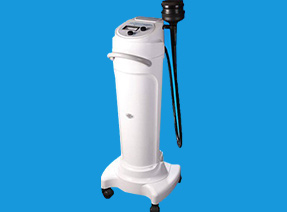
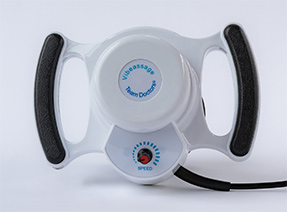
Once tissue density decreases, circulation must increase to flush metabolic waste. Tools such as Vibeassage®, including the Vibeassage® Sport and Vibeassage® Pro, are designed to assist with this process.
When paired with the TDX3 soft-as-the-hand Biomimetic Applicator Pad, vibration can increase blood flow without triggering protective contraction. This supports tissue normalization rather than irritation.
The process follows a simple but repetitive sequence: release, flush, and repeat. Multiple passes are often required to reduce long-standing inflammation and calm neuromuscular guarding.
Over time, muscle tone may normalize, posture can improve, and mechanical compression may decrease across all choke points.
A Broader Perspective on Outcomes
Understanding realistic outcomes is critical when considering TOS surgery recovery. Surgery may be appropriate in specific cases, particularly when vascular compromise is present.
However, surgery alone does not resolve the reflex-driven inflammation patterns that extend beyond the rib and scalene region. This distinction explains why pain-free outcomes are uncommon.
A broader perspective emphasizes restoring balance rather than simply removing structures. When inflammation, guarding, and circulation are addressed together, long-term improvement becomes more plausible.
Team Doctors Resources
✓ Check out the Team Doctors Recovery Tools
The Vibeassage Sport and the Vibeassage Pro featuring the TDX3 soft-as-the-hand Biomimetic Applicator Pad
https://www.teamdoctors.com/
✓ Get Dr. Stoxen’s #1 International Bestselling Books
Learn how to understand, examine, and reverse your TOS—without surgery.
https://drstoxen.com/1-international-best-selling-author/
✓ Check out Team Doctors Online Courses
Step-by-step video lessons, demonstrations, and self-treatment strategies.
https://teamdoctorsacademy.com/
✓ Schedule a Free Phone Consultation With Dr. Stoxen
Speak directly with him so he can review your case and guide you on your next steps.
https://drstoxen.com/appointment/
#ThoracicOutletSyndrome #TOS #TOSSurgery #ChronicPain #NeckPain #ShoulderPain #BrachialPlexus #VascularCompression #PostureHealth #Biomechanics #MuscleGuarding #Inflammation #PainScience #RepetitiveStrain #ModernPosture #Costoclavicular #PectoralisMinor #FirstRib #ScaleneMuscles #TeamDoctors
References
- Sanders, R. J., & Hammond, S. L. “Thoracic outlet syndrome: A review.” Neurologic Clinics 27, no. 2 (2009): 365–379.
- Povlsen, B., Hansson, T., & Povlsen, S. “Treatment for thoracic outlet syndrome.” Cochrane Database of Systematic Reviews (2014).
- Urschel, H. C., & Razzuk, M. A. “Neurovascular compression in thoracic outlet syndrome.” Annals of Thoracic Surgery 64, no. 2 (1997): 339–346.
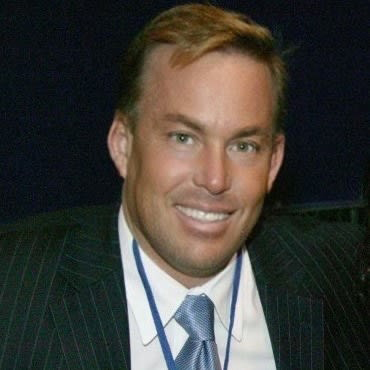
Dr James Stoxen DC., FSSEMM (hon) He is the president of Team Doctors®, Treatment and Training Center Chicago, one of the most recognized treatment centers in the world.
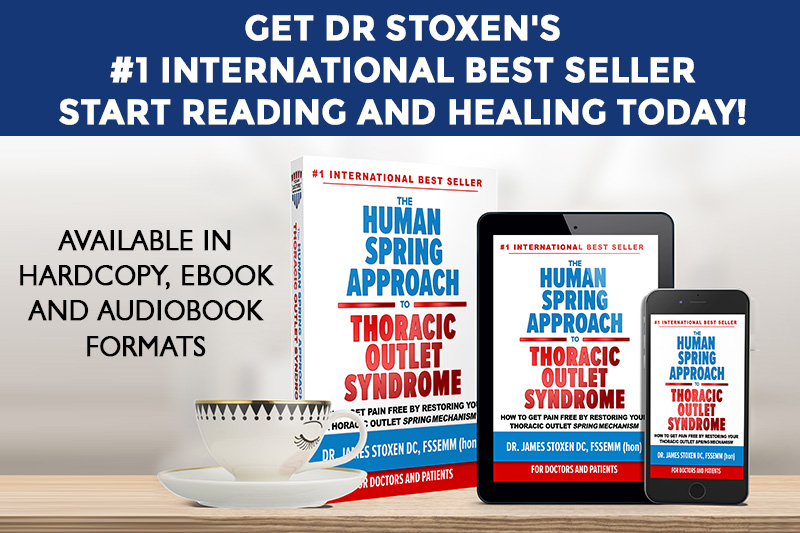
Dr Stoxen is a #1 International Bestselling Author of the book, The Human Spring Approach to Thoracic Outlet Syndrome. He has lectured at more than 20 medical conferences on his Human Spring Approach to Thoracic Outlet Syndrome and asked to publish his research on this approach to treating thoracic outlet syndrome in over 30 peer review medical journals.
He has been asked to submit his other research on the human spring approach to treatment, training and prevention in over 150 peer review medical journals. He serves as the Editor-in-Chief, Journal of Orthopedic Science and Research, Executive Editor or the Journal of Trauma and Acute Care, Chief Editor, Advances in Orthopedics and Sports Medicine Journal and editorial board for over 35 peer review medical journals.
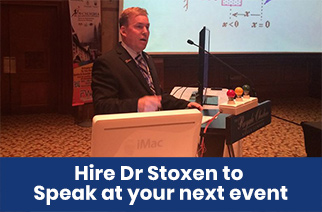
He is a much sought-after speaker. He has given over 1000 live presentations and lectured at over 70 medical conferences to over 50,000 doctors in more than 20 countries. He has been invited to speak at over 300 medical conferences which includes invitations as the keynote speaker at over 50 medical conferences.
After his groundbreaking lecture on the Integrated Spring-Mass Model at the World Congress of Sports and Exercise Medicine he was presented with an Honorary Fellowship Award by a member of the royal family, the Sultan of Pahang, for his distinguished research and contributions to the advancement of Sports and Exercise Medicine on an International level. He was inducted into the National Fitness Hall of Fame in 2008 and the Personal Trainers Hall of Fame in 2012.
Dr Stoxen has a big reputation in the entertainment industry working as a doctor for over 150 tours of elite entertainers, caring for over 1000 top celebrity entertainers and their handlers. Anthony Field or the popular children’s entertainment group, The Wiggles, wrote a book, How I Got My Wiggle Back detailing his struggles with chronic pain and clinical depression he struggled with for years. Dr Stoxen is proud to be able to assist him.
Full Bio) Dr Stoxen can be reached directly at teamdoctors@aol.com