Many people seek care because of shoulder pain not getting better even after weeks or months of effort.
In my clinical experience, this pattern is often confusing and frustrating for individuals who expected improvement.
Patients often report arm pain despite physical therapy and are told to simply give it more time.
For some, time passes but the symptoms remain unchanged or intensify.
A common description I hear is chronic arm pain after pt that never truly resolves.
This is not uncommon when the underlying biomechanics are not fully understood.
Some individuals describe neck and arm pain not resolving despite trying multiple approaches.
This is a pattern I commonly see in people later identified with thoracic outlet involvement.
Others explain that there is pain still there after massage, even though the muscles feel temporarily looser.
Massage may change sensation without addressing mechanical suspension.
Many individuals describe being still numb after therapy, especially into the hand or fingers.
This raises questions about ongoing neural or vascular stress.
When people say treatments not working for arm pain, it is important to re-examine assumptions.
Not all arm pain responds to the same mechanical strategies.
A frequent complaint is persistent nerve pain in arm that fluctuates but never disappears.
This can reflect dynamic compression rather than static injury.
Some experience chronic shoulder nerve pain that worsens with posture or overhead activity.
These patterns suggest changes in tunnel space rather than isolated muscle weakness.
Patients sometimes feel hopeless and say they have pain doctors can’t fix.
This usually reflects a mismatch between the problem and the model used to explain it.
Others report symptoms worse after treatment, which can feel alarming.
In my clinical experience, this often happens when tissues are already guarding.
A repeating cycle occurs when pain returns after treatment despite short-term relief.
Temporary improvement does not always mean true mechanical change.
Some tell me pt made symptoms worse, particularly after aggressive strengthening.
This may increase load on a system that is already stiff.
Similarly, massage made symptoms worse can occur when compressed structures are irritated.
Soft tissue input does not always equal decompression.
People also notice stretching makes pain worse, especially into the arm.
Stretching a guarded system can increase neural tension.
Another observation is that exercise worsens arm pain instead of improving tolerance.
This can reflect loss of elastic compliance rather than deconditioning.
Many describe no relief after injections, even when imaging guided.
Chemical modulation does not change tunnel mechanics.
Some report pain after cortisone shot shoulder, which can be confusing.
Inflammation reduction does not restore suspension behavior.
A large group fits the description of failed conservative treatment arm pain.
This does not mean conservative care is wrong, but that it may be incomplete.
People often say they have tried everything arm pain and feel stuck.
This usually means many approaches were tried within the same framework.
Another phrase I hear is chronic pain despite treatment, which suggests persistence of load.
Pain may reflect ongoing mechanical stress rather than tissue damage.
Those with long-term unresolved arm pain often adapt their movement patterns.
These adaptations can further narrow available space.
Some present with refractory arm nerve pain that resists typical protocols.
This is often activity-dependent and posture-dependent.
Patients say therapy didn’t help arm pain even when attendance was consistent.
Attendance alone does not guarantee biomechanical correction.
A hallmark sign is pain keeps coming back after rest or care.
This suggests the system resets to the same stressed position.
Many describe temporary relief only arm pain, followed by recurrence.
This pattern is common when symptoms are load-related.
Some express frustration saying nothing helps my arm pain anymore.
This is often when thoracic outlet mechanics are finally considered.
Others notice arm pain getting worse over time, not better.
Progressive stiffness can increase compression risk.
Emotional strain appears when chronic pain frustration becomes part of daily life.
Understanding the mechanism can help restore clarity.
People often say they have pain that won’t go away no matter what they do.
This persistence often reflects unresolved suspension failure.
At this stage, many ask do i have thoracic outlet syndrome.
This question usually arises after repeated setbacks.
Others directly ask is this thoracic outlet syndrome because symptoms span neck, shoulder, and arm.
These overlapping regions are characteristic of thoracic outlet involvement.
The thoracic outlet is not a rigid tunnel.
It is a dynamic passage that must adapt to movement and load.
Anatomically, it allows the brachial plexus and subclavian vessels to travel from the neck into the arm [1].
These structures require protection during motion.
To achieve this, the shoulder girdle is suspended over the rib cage.
Muscles act as living springs rather than static supports.
In a healthy system, these muscles maintain elasticity.
They lengthen and recoil with movement.
This spring behavior allows force to be absorbed and dispersed.
It protects nerves and vessels from sustained compression.
The rib cage forms the floor of this system.
The clavicle and scapula move above it.
Problems arise when the suspension muscles lose compliance.
Chronic guarding, inflammation, or posture can stiffen them.
When stiffness replaces elasticity, tunnel space becomes vulnerable.
The system can no longer adapt to load.
In my clinical experience, many persistent cases reflect this loss of spring behavior.
The issue is not weakness but stiffness.
Traditional approaches often focus on isolated strengthening.
This may increase compression if done prematurely.
Stretching alone may also be problematic.
Stretching stiff tissues can provoke symptoms.
Massage can reduce tone temporarily.
Without restoring mechanics, symptoms often return.
Injection-based approaches target inflammation.
They do not change suspension dynamics.
This explains why symptoms may fluctuate.
Relief occurs without lasting resolution.
Thoracic outlet symptoms are often activity-dependent.
They change with posture, load, and arm position.
This dynamic nature is sometimes missed.
Static imaging may appear normal.
Understanding thoracic outlet mechanics requires a movement-based lens [2].
Tunnel space changes throughout the day.
The shoulder acts like a suspended bridge.
If the cables stiffen, stress increases below.
Restoring health means restoring spring compliance.
This includes rib mobility and coordinated motion.
It also means reducing excessive guarding.
Muscles must regain elastic behavior.
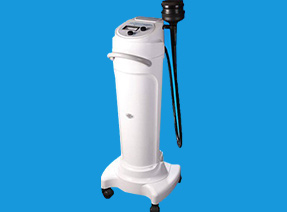
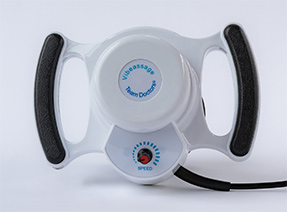
The Vibeassage® is designed to interact with soft tissue in a controlled way.
Its application is focused on sensory input rather than force.
The Vibeassage® Sport and Vibeassage® Pro are used within an educational framework.
They are not presented as treatments.
The TDX3 soft-as-the-hand Biomimetic Applicator Pad is designed to mimic human contact.
Its surface characteristics are intended to distribute pressure.
Team Doctors® emphasizes education around biomechanics.
Understanding precedes any intervention.
Thoracic outlet issues are rarely solved by a single technique.
They require respect for system behavior.
In many unresolved cases, the missing piece is suspension restoration.
Elasticity matters more than strength.
This perspective helps explain why symptoms persist.
It reframes failure as incomplete understanding.
Research supports the role of dynamic compression in thoracic outlet presentations [3].
Static models do not fully explain symptoms.
When the spring system is restored, load is shared.
Neural and vascular structures experience less stress.
This does not imply guaranteed outcomes.
It reflects observed mechanical principles.
Education empowers individuals to recognize patterns.
Patterns guide better questions.
Understanding why things didn’t work can be clarifying.
It opens the door to new strategies.
Thoracic outlet syndrome is not a mystery tunnel.
It is a dynamic suspension system.
When that system stiffens, symptoms emerge.
When elasticity returns, tolerance often improves.
Team Doctors Resources
✓ Check out the Team Doctors Recovery Tools
The Vibeassage Sport and the Vibeassage Pro featuring the TDX3 soft-as-the-hand Biomimetic Applicator Pad
https://www.teamdoctors.com/
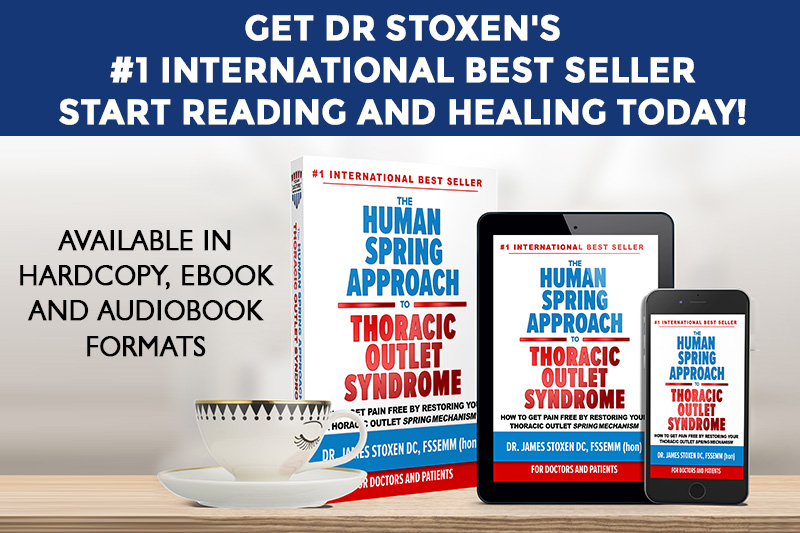
✓ Get Dr. Stoxen’s #1 International Bestselling Books
Learn how to understand, examine, and reverse your TOS—without surgery.
https://drstoxen.com/1-international-best-selling-author/
✓ Check out Team Doctors Online Courses
Step-by-step video lessons, demonstrations, and self-treatment strategies.
https://teamdoctorsacademy.com/
✓ Schedule a Free Phone Consultation With Dr. Stoxen
Speak directly with him so he can review your case and guide you on your next steps.
https://drstoxen.com/appointment/
#ThoracicOutletSyndrome #TOS #ArmPain #ShoulderPain #NerveCompression #ChronicPain #Biomechanics #Posture #NeckPain #VascularCompression #BrachialPlexus #PhysicalTherapy #MassageTherapy #PainScience #MovementHealth #UpperExtremity #ChronicSymptoms #PainEducation #Rehabilitation #TeamDoctors
References
[1] Sanders, R. J., & Hammond, S. L. “Thoracic Outlet Syndrome: A Review.” Neurologic Clinics 27, no. 2 (2009): 365–377. https://doi.org/10.1016/j.ncl.2008.09.006
[2] Gillard, J., et al. “Thoracic outlet syndrome: evaluation of the subclavian vessels by dynamic ultrasonography.” Journal of Vascular Surgery 42, no. 5 (2005): 989–995. https://doi.org/10.1016/j.jvs.2005.07.040
[3] Urschel, H. C., & Razzuk, M. A. “Neurovascular compression in the thoracic outlet.” Annals of Thoracic Surgery 55, no. 3 (1993): 687–692. https://doi.org/10.1016/0003-4975(93)90039-Y

Dr James Stoxen DC., FSSEMM (hon) He is the president of Team Doctors®, Treatment and Training Center Chicago, one of the most recognized treatment centers in the world.
Dr Stoxen is a #1 International Bestselling Author of the book, The Human Spring Approach to Thoracic Outlet Syndrome. He has lectured at more than 20 medical conferences on his Human Spring Approach to Thoracic Outlet Syndrome and asked to publish his research on this approach to treating thoracic outlet syndrome in over 30 peer review medical journals.
He has been asked to submit his other research on the human spring approach to treatment, training and prevention in over 150 peer review medical journals. He serves as the Editor-in-Chief, Journal of Orthopedic Science and Research, Executive Editor or the Journal of Trauma and Acute Care, Chief Editor, Advances in Orthopedics and Sports Medicine Journal and editorial board for over 35 peer review medical journals.
He is a much sought-after speaker. He has given over 1000 live presentations and lectured at over 70 medical conferences to over 50,000 doctors in more than 20 countries. He has been invited to speak at over 300 medical conferences which includes invitations as the keynote speaker at over 50 medical conferences.
After his groundbreaking lecture on the Integrated Spring-Mass Model at the World Congress of Sports and Exercise Medicine he was presented with an Honorary Fellowship Award by a member of the royal family, the Sultan of Pahang, for his distinguished research and contributions to the advancement of Sports and Exercise Medicine on an International level. He was inducted into the National Fitness Hall of Fame in 2008 and the Personal Trainers Hall of Fame in 2012.
Dr Stoxen has a big reputation in the entertainment industry working as a doctor for over 150 tours of elite entertainers, caring for over 1000 top celebrity entertainers and their handlers. Anthony Field or the popular children’s entertainment group, The Wiggles, wrote a book, How I Got My Wiggle Back detailing his struggles with chronic pain and clinical depression he struggled with for years. Dr Stoxen is proud to be able to assist him.
Full Bio) Dr Stoxen can be reached directly at teamdoctors@aol.com