Your Body Is Not a Machine Made of Levers — It Is a Living Spring
Most people grow up thinking about the body like a machine made of rigid parts. We imagine bones as sticks. We imagine joints as hinges. We imagine muscles as ropes that pull on levers. This way of thinking is simple, but it is also incomplete.
Dr. James Stoxen teaches something very different. He teaches that the human body works best when we understand it as a body as a spring system, not as a system of stiff levers. This way of thinking is called the human spring model, and the clinical way of using it is called the human spring approach.
This idea did not come from imagination. It came from years of observing how real human bodies move, absorb force, store energy, and protect themselves. When you walk, run, jump, or even just stand, your body is not acting like a crane or a robot arm. It is acting like a network of living springs.
This is the heart of spring-based biomechanics and the integrated spring-mass model: your body is designed to store energy, recycle energy, and release energy with every step you take.
That process is called elastic energy storage in the body and energy recycling in human motion. It is the same basic idea used in a pogo stick, a trampoline, or a bow and arrow. You load the spring. You store energy. Then the spring gives it back.
In human movement, this shows up in what scientists call stretch-shortening cycle biomechanics. A muscle and tendon system stretches slightly, stores energy, and then shortens again, releasing that energy to help you move with less effort. This is a huge part of biomechanical energy efficiency — how your body saves fuel and reduces wear and tear.
When this system is working well, movement feels light, smooth, and strong. When it is not working well, movement feels heavy, stiff, tiring, and often painful.
The Body’s Hidden Spring System
Your body contains many biological springs in the body. Some are easy to imagine. For example, the foot arch spring mechanism acts like a leaf spring in a car, flattening slightly when you step down and then springing back.
But springs exist everywhere in you, not just in your feet.
Your spine behaves like a stack of compression springs in the spine. Your joints twist and untwist using torsional spring mechanics in joints. Your connective tissues form a continuous fascial spring network that links your whole body together.
All of this creates a system that spreads force, shares load, and prevents any one spot from being crushed. This is called biomechanical load distribution and kinetic chain spring transfer.
When you land from a step or a jump, your body does not rely on one joint or one muscle. It uses impact attenuation biomechanics — meaning the force is absorbed and spread across many springs at once.
This is also how your body protects your nerves and blood vessels. Your anatomy is built like a suspension bridge, not like a rigid tunnel. Dr. Stoxen calls this suspension-based anatomy and tunnel mechanics for nerves and blood vessels. When the spring system is working, spaces stay open, pressure stays low, and tissues stay safe.
This is part of joint decompression mechanics — joints and tunnels stay open because springs are holding things apart, not because muscles are squeezing everything together.
Why the Lever Model Falls Short
The old way of thinking is often called the lever model vs spring model. The lever model says bones are rigid levers and muscles just pull them around.
Levers are simple. Springs are more complex. But the human body is not simple.
A lever system does not store energy. A lever system does not recycle energy. A lever system does not absorb shock very well. That is why machines built only from levers break unless they have springs built into them.
Your body is no different.
If you move as if you are only a lever system, you waste energy. You pound your joints. You increase wear and tear. Over time, this contributes to spring failure and chronic pain — not because something “broke” suddenly, but because the spring system slowly lost its ability to do its job.
This is why Dr. Stoxen teaches spring mechanics in human movement instead of lever mechanics.
Stiff Springs vs Flexible Springs
Every spring has two main qualities: how stiff it is and how much it can move. This is called spring stiffness vs compliance.
A very stiff spring does not move much. A very loose spring moves a lot. The healthy human body lives in the middle — strong but flexible, stable but elastic.
When springs become too stiff, they stop absorbing shock. When they become too loose, they stop supporting the body well.
Either way, the system stops working as it should.
When the spring system is not working, the body starts to rely more and more on muscle tension to hold itself together. That is where trouble begins.
The Brain, Muscle Tone, and the Spring System
The brain controls the tension in your muscles. This tension is what loads your spring system.
To stand upright, you only need a small amount of tension. This is called normal resting tone.
Anything more than that is called abnormal tone, or hypertonicity.
When muscles are in a state of hypertonicity, two important things happen:
First, the extra tension twists the body out of its natural alignment.
Second, the extra tension compresses the body. It pushes joints together. It narrows spaces. It increases pressure in places that were designed to stay open.
This is how joint decompression mechanics fail. This is how tunnel mechanics for nerves and blood vessels start to break down. This is how a spring system turns into a clamp.
This is not a failure of bones. It is not a failure of anatomy. It is a failure of neuromechanical spring control — the way the nervous system controls tension in the spring system.
And what drives this excessive tension?
Inflammation.
When inflammation is high, the brain turns muscle tone up. When inflammation goes down, tone comes back toward normal.
When tone normalizes, compression decreases. When compression decreases, the spring system can begin working again.
This is one of the central ideas behind restoring human spring function.
Why Vibration Is Used in This System
Dr. Stoxen uses vibration as a way to interact with the spring system. This is not about forcing, cracking, or aggressively pushing. It is about gently stimulating tissue so it can begin to release excessive tension and move again.
This concept is called vibration and spring restoration.
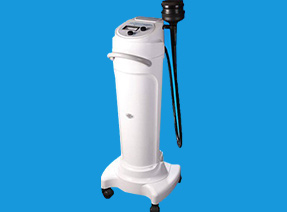
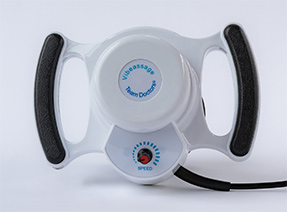
The tools he developed — the Vibeassage Pro and the Vibeassage Sport — are designed to be used by patients at home as part of self-care and body awareness. They are not medical treatments. They are not making medical claims. They are tools for helping people interact with their own tissues in a gentle, controlled way.
In the human spring approach, these tools are used to help the body remember how to move, soften, and load its spring system more evenly.
This fits within the broader idea of applied clinical biomechanics — not as a promise of cure, but as a way of understanding and supporting how the body works.
The Big Picture
When the spring system works:
- Forces are shared
- Shock is absorbed
- Energy is recycled
- Movement is efficient
- Spaces stay open
- The body feels lighter and easier to move
When the spring system does not work:
- Forces concentrate
- Shock pounds tissues
- Energy is wasted
- Muscles stay tight
- Spaces close down
- The body feels heavy, stiff, and tired
This is the difference between a living spring system and a rigid lever system.
And this is why spring-based injury prevention is really about protecting and maintaining the spring system before it fails.
The Hidden Spring Network — And Why Muscles Develop Knots, Tension, and Pain Patterns
In Part 1, we talked about how the body is designed to work as a living spring system, not as a rigid lever machine. We talked about how force is supposed to spread through the body, how energy is supposed to be recycled, and how spaces are supposed to stay open through suspension and spring tension.
Now we need to talk about what happens when that spring system is disturbed.
Most people first notice trouble in their muscles. They feel tight spots. Sore areas. Aching zones. Stiff regions that never seem to relax. Many people call these Muscle knots, but in clinical language these areas are often called Trigger points or Myofascial trigger points.
When these problems become widespread and long-lasting, the condition is often described as Myofascial pain syndrome or Chronic myofascial pain. These are not mysterious problems. They are signs that the body’s spring system is no longer sharing load evenly.
What a “Knot” Really Is
A so-called muscle knot is not actually a knot in the muscle. It is usually a small, tight area inside a muscle or its surrounding tissue. These areas often feel like Palpable nodules or thickened cords inside the muscle.
Doctors and therapists often find these inside Muscle taut bands, which are long, tight strands running through the muscle. These tight bands do not relax normally, and they change how force moves through the body.
Some of these spots hurt all the time. These are called Active trigger points. Others may not hurt unless you press on them. These are called Latent trigger points.
When you press on one of these areas, it may send pain somewhere else. This is called Referred pain patterns, and the areas where the pain shows up are sometimes called Pain referral zones.
This happens because the nervous system is involved. These tissues contain Sensitized nociceptors, which are pain-sensing nerve endings that have become overly reactive.
Why the Body Creates These Tight Areas
The body does not create tension for no reason. It creates tension for protection.
When the brain senses danger, overload, inflammation, or instability, it increases muscle tension. This is called Muscle guarding or Protective muscle spasm. At first, this is useful. It is the body trying to protect itself.
But when this state lasts too long, it turns into Chronic muscle tension and Hypertonic muscles — muscles that are always partially contracted, even when they should be resting.
This constant tension reduces normal movement inside the tissues. It reduces circulation. It changes how the spring system loads and unloads.
Over time, this can lead to Fascial restrictions, Soft tissue adhesions, and even Muscle fibrosis, where tissue becomes thicker, stiffer, and less elastic.
This entire situation is often described as Myofascial dysfunction or Neuromuscular dysfunction — meaning the muscles, fascia, and nervous system are no longer working together smoothly.
What Happens Inside Tight, Overloaded Tissue
When a muscle or fascial area stays tight for too long, blood flow through it decreases. This is called Muscular ischemia, which simply means not enough oxygen and circulation.
When circulation is reduced, the tissue cannot clear waste products efficiently. This leads to Metabolic waste buildup and Lactic acid accumulation in the area.
This chemical environment makes nerves more sensitive and muscles more irritable. Over time, the nervous system itself can become more reactive. This process is often called Central sensitization — when the brain and spinal cord start amplifying pain signals even from small inputs.
Now the problem is no longer just in one spot. The whole system becomes more sensitive.
How This Affects the Human Spring System
Remember from Part 1 that your body is designed to share force across many springs at once.
When one area becomes tight and stiff, it stops acting like a spring. It starts acting like a rigid block.
Now the force has to go somewhere else.
This is how overload spreads through the body. This is how one tight area slowly leads to others. This is how local tension becomes a whole-body spring problem.
This is also why these problems often do not stay in one place. A shoulder problem becomes a neck problem. A hip problem becomes a back problem. A foot problem becomes a knee problem.
The spring chain is interrupted.
Why Pressing on These Areas Sometimes Helps
Many people have experienced that pressing on tight areas can feel both painful and relieving at the same time. This has led to many approaches such as Pressure point therapy, Trigger point therapy, Ischemic compression, and Myofascial release.
When a tight spot is pressed, several things can happen. The nervous system may temporarily reduce guarding. The tissue may briefly soften. Circulation may improve when pressure is released.
Sometimes, when a true trigger point is pressed, the muscle will jump or twitch. This is called a Local twitch response. It is a reflex, not something you control.
These effects do not mean something is “fixed.” They mean the nervous system and tissue are being temporarily influenced.
In the human spring approach, these kinds of inputs are seen as ways to communicate with the system, not as ways to force it.
Why Tension Keeps Coming Back
Many people notice that even after massage, stretching, or other hands-on work, their tightness returns.
This is because the tension is not just in the muscle. It is in the control system.
As long as the nervous system believes the body needs protection, it will keep turning the tension back on.
This is why long-term Chronic myofascial pain is not just a tissue problem. It is a tone-regulation problem. It is a load-distribution problem. It is a spring-system problem.
Where Vibration Fits In
In the Human Spring system, vibration is not used to “break” tissue or “force” change. It is used as a gentle signal to the nervous system and the tissues.
The idea is to help tissues begin to move again, to help circulation improve, and to help the nervous system gradually reduce excessive guarding.
The Vibeassage Pro and Vibeassage Sport are used by patients as part of self-care to explore their own tissues, notice areas of tension, and gently stimulate areas that have become stiff or guarded.
This is not medical treatment. It is not a medical claim. It is education and self-awareness applied to the body.
The Bigger Pattern
When you step back and look at the whole picture, you see a clear chain:
Inflammation and stress increase tone.
Increased tone creates guarding.
Guarding reduces movement and circulation.
Reduced circulation increases sensitivity and waste buildup.
Sensitive tissue creates more guarding.
And the cycle continues.
Meanwhile, the spring system becomes less elastic, less shared, and more rigid.
Why This Matters
This is not just about sore muscles.
This is about how the entire human spring model slowly loses its ability to absorb force, share load, and protect space.
It is about how the body slowly shifts from a spring-based system to a compression-based system.
And compression, over time, is never friendly to comfort or movement.
Posture Is Not About Holding Yourself Up — It Is About How Your Spring System Is Balanced
Most people think posture is something you “hold.” They imagine that good posture comes from trying harder, sitting up straighter, or pulling their shoulders back.
But in the human spring model, posture is not something you hold. It is something that emerges when your spring system is balanced.
When the springs are working well, your body naturally stands tall with very little effort. When the springs are not working well, your body slumps, twists, or collapses even if you try to “sit up straight.”
This is one of the most important ideas in the human spring approach: posture is not a willpower problem. It is a spring mechanics in human movement problem.
Your Body Is a Suspension System, Not a Stack of Blocks
From your head to your feet, your body is organized like a suspension bridge. This is what Dr. Stoxen calls suspension-based anatomy.
Your head does not sit like a brick on your spine. It is suspended. Your rib cage does not rest like a box on your pelvis. It is suspended. Your organs are suspended. Your shoulders are suspended. Your hips are suspended.
This suspension is maintained by a living network of biological springs in the body, including muscles, tendons, fascia, and joint structures.
When this system is balanced, it automatically maintains joint decompression mechanics. Spaces stay open. Loads are shared. Nothing has to clamp down to hold you up.
But when the spring system becomes uneven, the body starts using muscle tension as a substitute for spring support.
How Daily Life Slowly Changes Your Spring System
Your spring system is not static. It changes every day based on how you live.
Long sitting. Repetitive work. Stress. Lack of movement. Old injuries. Fatigue. Inflammation.
All of these slowly change spring stiffness vs compliance in different parts of your body. Some areas become too stiff. Some areas become too loose. The system becomes unbalanced.
When this happens, the body shifts its biomechanical load distribution. Instead of forces being shared across the whole system, certain areas start taking too much load.
This is how the kinetic chain spring transfer system breaks down.
One stiff area forces another area to work harder. One collapsed spring forces another spring to overload.
This is not something you feel all at once. It happens slowly, quietly, over months and years.
From Spring Balance to Compression
As the spring system loses balance, the body begins to rely more and more on muscle tension to hold itself together.
This is when hypertonic muscles and chronic guarding patterns start to dominate.
Instead of being held up by elastic suspension, the body is now being held together by compression.
Compression is not just uncomfortable. It changes anatomy.
It narrows joints. It reduces joint decompression mechanics. It interferes with tunnel mechanics for nerves and blood vessels. It increases pressure on discs, joints, and soft tissues.
This is how a body slowly moves away from shock absorption biomechanics and toward impact and wear.
Why “Good Posture” Feels Hard for Many People
Many people notice that trying to “sit up straight” feels exhausting.
That is because they are trying to use muscles to do a job that should be done by springs.
In a healthy system, posture requires very little effort. The body is supported by its internal suspension system.
In an unbalanced system, posture becomes work.
This is not a failure of strength. It is a failure of neuromechanical spring control — the way the nervous system manages tone and tension in the spring system.
The Role of Inflammation and Fatigue
Inflammation plays a major role in this process.
As discussed earlier, inflammation increases resting muscle tone. Increased tone increases compression. Increased compression interferes with movement and circulation. That, in turn, creates more sensitivity and fatigue.
Fatigue also changes how the nervous system controls tension. Tired tissues become less elastic. They stop participating in elastic energy storage in the body and energy recycling in human motion.
When that happens, movement becomes heavier and more costly. The system becomes less efficient. Biomechanical energy efficiency decreases.
How the Body Gradually Loses Its Bounce
A healthy spring system has a certain “bounce” to it. Walking feels light. Movement feels fluid. Impacts are absorbed quietly.
As the system stiffens, that bounce disappears.
Steps feel heavier. Movements feel more effortful. The body starts to move more like a rigid structure and less like a living spring.
This is the slow transition from a body as a spring system to a lever-and-compression system.
This is the real meaning behind spring failure and chronic pain — not a sudden break, but a gradual loss of spring behavior.
Where Vibration Fits Into This Picture
In the Human Spring Approach, vibration is used as a way to gently reintroduce movement into tissues that have become stiff, guarded, or under-moving.
This idea is sometimes described as vibration and spring restoration.
The Vibeassage Pro and Vibeassage Sport are used by patients at home as tools for self-exploration and gentle stimulation. They are not forcing change. They are not making claims. They are simply ways to interact with tissue, notice stiffness, and encourage small, safe movements.
Small movements matter.
In a spring system, even small changes in motion and tension can change how load is shared across the entire structure.
Why the Human Spring Approach Looks at the Whole Body
The human spring approach does not chase symptoms.
It does not ask, “Where does it hurt?”
It asks, “Where has the spring system stopped sharing load correctly?”
This is the perspective of applied clinical biomechanics — looking at how forces move through the whole structure, not just where they happen to be felt.
Pain often shows up far away from the real mechanical problem.
That is normal in a spring system.
The Big Idea
Posture is not about holding.
Posture is about balance.
When the spring system is balanced, posture is easy.
When the spring system is unbalanced, posture is work.
Where We Go Next
In Part 4, we will bring everything together and talk about:
- How restoring spring behavior is a process, not a quick fix
- How gentle daily inputs can slowly change spring behavior
- How the Human Spring Approach views long-term body care
- How tools like the Vibeassage fit into a larger self-care picture
- What it means to support your body instead of fighting it
Posture Is Not About Holding Yourself Up — It Is About How Your Spring System Is Balanced
Most people think posture is something you “hold.” They imagine that good posture comes from trying harder, sitting up straighter, or pulling their shoulders back.
But in the human spring model, posture is not something you hold. It is something that emerges when your spring system is balanced.
When the springs are working well, your body naturally stands tall with very little effort. When the springs are not working well, your body slumps, twists, or collapses even if you try to “sit up straight.”
This is one of the most important ideas in the human spring approach: posture is not a willpower problem. It is a spring mechanics in human movement problem.
Your Body Is a Suspension System, Not a Stack of Blocks
From your head to your feet, your body is organized like a suspension bridge. This is what Dr. Stoxen calls suspension-based anatomy.
Your head does not sit like a brick on your spine. It is suspended. Your rib cage does not rest like a box on your pelvis. It is suspended. Your organs are suspended. Your shoulders are suspended. Your hips are suspended.
This suspension is maintained by a living network of biological springs in the body, including muscles, tendons, fascia, and joint structures.
When this system is balanced, it automatically maintains joint decompression mechanics. Spaces stay open. Loads are shared. Nothing has to clamp down to hold you up.
But when the spring system becomes uneven, the body starts using muscle tension as a substitute for spring support.
How Daily Life Slowly Changes Your Spring System
Your spring system is not static. It changes every day based on how you live.
Long sitting. Repetitive work. Stress. Lack of movement. Old injuries. Fatigue. Inflammation.
All of these slowly change spring stiffness vs compliance in different parts of your body. Some areas become too stiff. Some areas become too loose. The system becomes unbalanced.
When this happens, the body shifts its biomechanical load distribution. Instead of forces being shared across the whole system, certain areas start taking too much load.
This is how the kinetic chain spring transfer system breaks down.
One stiff area forces another area to work harder. One collapsed spring forces another spring to overload.
This is not something you feel all at once. It happens slowly, quietly, over months and years.
From Spring Balance to Compression
As the spring system loses balance, the body begins to rely more and more on muscle tension to hold itself together.
This is when hypertonic muscles and chronic guarding patterns start to dominate.
Instead of being held up by elastic suspension, the body is now being held together by compression.
Compression is not just uncomfortable. It changes anatomy.
It narrows joints. It reduces joint decompression mechanics. It interferes with tunnel mechanics for nerves and blood vessels. It increases pressure on discs, joints, and soft tissues.
This is how a body slowly moves away from shock absorption biomechanics and toward impact and wear.
Why “Good Posture” Feels Hard for Many People
Many people notice that trying to “sit up straight” feels exhausting.
That is because they are trying to use muscles to do a job that should be done by springs.
In a healthy system, posture requires very little effort. The body is supported by its internal suspension system.
In an unbalanced system, posture becomes work.
This is not a failure of strength. It is a failure of neuromechanical spring control — the way the nervous system manages tone and tension in the spring system.
The Role of Inflammation and Fatigue
Inflammation plays a major role in this process.
As discussed earlier, inflammation increases resting muscle tone. Increased tone increases compression. Increased compression interferes with movement and circulation. That, in turn, creates more sensitivity and fatigue.
Fatigue also changes how the nervous system controls tension. Tired tissues become less elastic. They stop participating in elastic energy storage in the body and energy recycling in human motion.
When that happens, movement becomes heavier and more costly. The system becomes less efficient. Biomechanical energy efficiency decreases.
How the Body Gradually Loses Its Bounce
A healthy spring system has a certain “bounce” to it. Walking feels light. Movement feels fluid. Impacts are absorbed quietly.
As the system stiffens, that bounce disappears.
Steps feel heavier. Movements feel more effortful. The body starts to move more like a rigid structure and less like a living spring.
This is the slow transition from a body as a spring system to a lever-and-compression system.
This is the real meaning behind spring failure and chronic pain — not a sudden break, but a gradual loss of spring behavior.
Where Vibration Fits Into This Picture
In the Human Spring Approach, vibration is used as a way to gently reintroduce movement into tissues that have become stiff, guarded, or under-moving.
This idea is sometimes described as vibration and spring restoration.
The Vibeassage Pro and Vibeassage Sport are used by patients at home as tools for self-exploration and gentle stimulation. They are not forcing change. They are not making claims. They are simply ways to interact with tissue, notice stiffness, and encourage small, safe movements.
Small movements matter.
In a spring system, even small changes in motion and tension can change how load is shared across the entire structure.
Why the Human Spring Approach Looks at the Whole Body
The human spring approach does not chase symptoms.
It does not ask, “Where does it hurt?”
It asks, “Where has the spring system stopped sharing load correctly?”
This is the perspective of applied clinical biomechanics — looking at how forces move through the whole structure, not just where they happen to be felt.
Pain often shows up far away from the real mechanical problem.
That is normal in a spring system.
The Big Idea
Posture is not about holding.
Posture is about balance.
When the spring system is balanced, posture is easy.
When the spring system is unbalanced, posture is work.
Team Doctors Resources
✓ Check out the Team Doctors Recovery Tools
The Vibeassage Sport and the Vibeassage Pro featuring the TDX3 soft-as-the-hand Biomimetic Applicator Pad
https://www.teamdoctors.com/
✓ Get Dr. Stoxen’s #1 International Bestselling Books
Learn how to understand, examine, and reverse your TOS—without surgery.
https://drstoxen.com/1-international-best-selling-author/
✓ Check out Team Doctors Online Courses
Step-by-step video lessons, demonstrations, and self-treatment strategies.
https://teamdoctorsacademy.com/
✓ Schedule a Free Phone Consultation With Dr. Stoxen
Speak directly with him so he can review your case and guide you on your next steps.
https://drstoxen.com/appointment/
#ThoracicOutletSyndrome #Biomechanics #HumanSpring #FunctionalMovement #PostureMatters #BodyAsASystem #MovementMatters #PainMechanics #EnergySystem #RehabScience #InjuryRecovery #ChronicPainHelp #BodyEngineering #PainEducation #Health

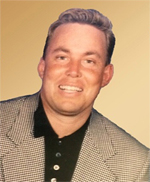
Dr James Stoxen DC., FSSEMM (hon) He is the president of Team Doctors®, Treatment and Training Center Chicago, one of the most recognized treatment centers in the world.
Dr Stoxen is a #1 International Bestselling Author of the book, The Human Spring Approach to Thoracic Outlet Syndrome. He has lectured at more than 20 medical conferences on his Human Spring Approach to Thoracic Outlet Syndrome and asked to publish his research on this approach to treating thoracic outlet syndrome in over 30 peer review medical journals.
He has been asked to submit his other research on the human spring approach to treatment, training and prevention in over 150 peer review medical journals. He serves as the Editor-in-Chief, Journal of Orthopedic Science and Research, Executive Editor or the Journal of Trauma and Acute Care, Chief Editor, Advances in Orthopedics and Sports Medicine Journal and editorial board for over 35 peer review medical journals.
He is a much sought-after speaker. He has given over 1000 live presentations and lectured at over 70 medical conferences to over 50,000 doctors in more than 20 countries. He has been invited to speak at over 300 medical conferences which includes invitations as the keynote speaker at over 50 medical conferences.
After his groundbreaking lecture on the Integrated Spring-Mass Model at the World Congress of Sports and Exercise Medicine he was presented with an Honorary Fellowship Award by a member of the royal family, the Sultan of Pahang, for his distinguished research and contributions to the advancement of Sports and Exercise Medicine on an International level. He was inducted into the National Fitness Hall of Fame in 2008 and the Personal Trainers Hall of Fame in 2012.
Dr Stoxen has a big reputation in the entertainment industry working as a doctor for over 150 tours of elite entertainers, caring for over 1000 top celebrity entertainers and their handlers. Anthony Field or the popular children’s entertainment group, The Wiggles, wrote a book, How I Got My Wiggle Back detailing his struggles with chronic pain and clinical depression he struggled with for years. Dr Stoxen is proud to be able to assist him.
Full Bio) Dr Stoxen can be reached directly at teamdoctors@aol.com