When Oliver arrived at Team Doctors® in Chicago, his first words were that he had traveled more than 4,500 miles because no one in Europe could help him. Despite being a highly trained nurse with access to advanced medical care, his condition continued to deteriorate under severe Thoracic Outlet Syndrome.
In my clinical experience, this situation reflects a pattern seen worldwide. Many individuals receive treatment aimed at reducing tightness while the true driver—deep muscular inflammation—remains unaddressed.
Oliver described crushing neck and shoulder pain, nerve symptoms radiating into both hands, cold sensations in the forearms, and profound sleep disruption. These were not isolated complaints but signs of multi-chokepoint thoracic outlet collapse affecting nerves and blood vessels simultaneously.
His body was visibly twisted by involuntary muscle guarding. Simple daily activities had become nearly impossible, and continuing to work was no longer feasible.
During a three-hour remote consultation, it became clear why previous treatments failed. No provider had removed the deep inflammatory waste trapped within his guarding muscles.
When inflammation accumulates inside muscle fibers, it sends continuous danger signals through the nervous system. This triggers the spinal cord to maintain contraction as a protective response.
This reflex cannot be resolved through stretching alone. It also does not respond to strengthening programs or posture correction when inflammation remains present.
As long as inflammatory signaling persists, the muscles remain locked in contraction around the thoracic outlet. This sustained tone produces nerve compression patterns, vascular restriction, and progressive symptom escalation.
In clinical observation, severe Thoracic Outlet Syndrome is driven by inflammation more than by simple muscle shortening. Treating tightness without addressing inflammation leaves the reflex intact.
Oliver had already been scheduled for aggressive surgical intervention. Plans included first rib resection, scalenectomy, and pectoralis minor tenotomy.
For many individuals, the healthcare system defaults to a “cut it out” surgical approach when conservative care fails. However, surgery removes structures without shutting down the guarding reflex.
In my clinical experience, many patients are offered surgery not because it is the correct solution, but because the underlying mechanism was never identified.
Patients travel to Chicago from Sweden, Germany, Australia, India, Canada, Saudi Arabia, and across the United States for this reason. They have seen specialists in their home countries and continue to worsen.
What these individuals need is precision inflammation mapping, targeted deep tissue work, and daily habit correction that reduces reflexive muscle activation.
Oliver underwent six days of intensive treatment focused on deep tissue techniques, vibration-assisted circulation work, posture resetting, and muscle tone balancing.
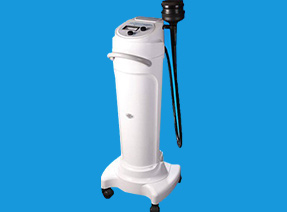
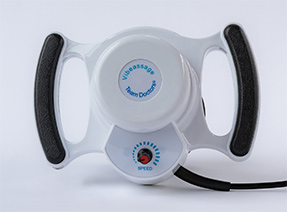
We used vibration massage with Vibeassage® Sport and Vibeassage® Pro, featuring the TDX3 soft-as-the-hand Biomimetic Applicator Pad, to mobilize inflammatory fluid into venous and lymphatic pathways.
Low-amplitude vibration combined with precise pressure allows inflammatory congestion to move out of the tissue. This interrupts the danger signal feeding the guarding reflex.
Treatment progressed inch by inch across the chest, neck, shoulder, and rib cage. Each area required repeated passes to release stubborn inflammation.
As the inflammatory load decreased, muscle tone softened. The rib cage began to settle, and shoulder position normalized.
By the end of the week, Oliver stood taller, moved more freely, and breathed more easily. Warmth returned to his hands as circulation improved through the thoracic outlet.
His symptoms did not disappear magically. Instead, the system stopped collapsing under reflex-driven compression.
This shift illustrates an essential concept. Thoracic Outlet Syndrome is not simply a tight muscle problem.
It is a reflex-driven mechanical disorder fueled by inflammation, guarding, and internal compression.
Daily habits play a significant role. Prolonged phone use, computer work, and sustained shoulder flexion continuously activate the same muscles involved in compression.
Without addressing both inflammation and habits, symptoms tend to recur.
Education is critical. When individuals understand why their body is guarding, fear diminishes and compliance improves.
This knowledge empowers patients to participate actively in their recovery rather than passively waiting for structural solutions.
Oliver’s story demonstrates why addressing inflammation changes outcomes in severe cases.
By targeting the reflex loop driving compression, patients gain a realistic path forward—even after years of failed care.
Understanding why the thoracic outlet collapses is the key to regaining function, restoring confidence, and escaping chronic pain patterns that once felt permanent.
Team Doctors Resources
✓ Check out the Team Doctors Recovery Tools
The Vibeassage Sport and the Vibeassage Pro featuring the TDX3 soft-as-the-hand Biomimetic Applicator Pad
https://www.teamdoctors.com/
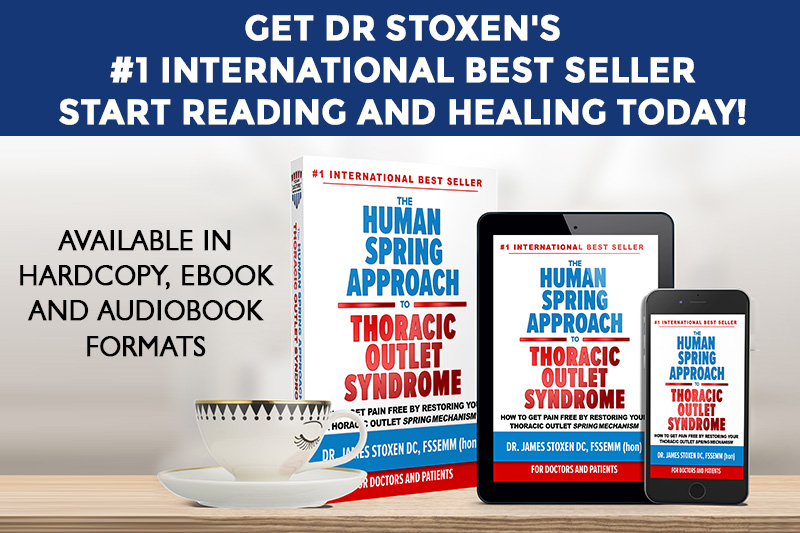
✓ Get Dr. Stoxen’s #1 International Bestselling Books
Learn how to understand, examine, and reverse your TOS—without surgery.
https://drstoxen.com/1-international-best-selling-author/
✓ Check out Team Doctors Online Courses
Step-by-step video lessons, demonstrations, and self-treatment strategies.
https://teamdoctorsacademy.com/
✓ Schedule a Free Phone Consultation With Dr. Stoxen
Speak directly with him so he can review your case and guide you on your next steps.
https://drstoxen.com/appointment/
#ThoracicOutletSyndrome #TOSSuccessStory #FailedTOSCare #ChronicPainRecovery #MuscleGuarding #InflammationScience #DeepTissueTherapy #Vibeassage #UpperBodyCompression #NeurogenicTOS #VascularTOS #PainEducation #Biomechanics #ChronicInflammation #TOSAwareness #PatientJourney #MovementHealth #PosturalStress #RehabilitationScience #GlobalHealthcare
References
- Roos, D. B. “Thoracic Outlet Syndrome Is Underdiagnosed.” Muscle & Nerve 22, no. 1 (1999): 126–129.
- Sanders, Richard J., and Neal S. Pearce. “Neurogenic Thoracic Outlet Syndrome.” Journal of Vascular Surgery 36, no. 3 (2002): 669–676.
- Urschel, Harold C., and R. B. Razzuk. “The Neurovascular Compression Syndromes of the Thoracic Outlet.” Annals of Thoracic Surgery 50, no. 3 (1990): 484–490.

Dr James Stoxen DC., FSSEMM (hon) He is the president of Team Doctors®, Treatment and Training Center Chicago, one of the most recognized treatment centers in the world.
Dr Stoxen is a #1 International Bestselling Author of the book, The Human Spring Approach to Thoracic Outlet Syndrome. He has lectured at more than 20 medical conferences on his Human Spring Approach to Thoracic Outlet Syndrome and asked to publish his research on this approach to treating thoracic outlet syndrome in over 30 peer review medical journals.
He has been asked to submit his other research on the human spring approach to treatment, training and prevention in over 150 peer review medical journals. He serves as the Editor-in-Chief, Journal of Orthopedic Science and Research, Executive Editor or the Journal of Trauma and Acute Care, Chief Editor, Advances in Orthopedics and Sports Medicine Journal and editorial board for over 35 peer review medical journals.
He is a much sought-after speaker. He has given over 1000 live presentations and lectured at over 70 medical conferences to over 50,000 doctors in more than 20 countries. He has been invited to speak at over 300 medical conferences which includes invitations as the keynote speaker at over 50 medical conferences.
After his groundbreaking lecture on the Integrated Spring-Mass Model at the World Congress of Sports and Exercise Medicine he was presented with an Honorary Fellowship Award by a member of the royal family, the Sultan of Pahang, for his distinguished research and contributions to the advancement of Sports and Exercise Medicine on an International level. He was inducted into the National Fitness Hall of Fame in 2008 and the Personal Trainers Hall of Fame in 2012.
Dr Stoxen has a big reputation in the entertainment industry working as a doctor for over 150 tours of elite entertainers, caring for over 1000 top celebrity entertainers and their handlers. Anthony Field or the popular children’s entertainment group, The Wiggles, wrote a book, How I Got My Wiggle Back detailing his struggles with chronic pain and clinical depression he struggled with for years. Dr Stoxen is proud to be able to assist him.
Full Bio) Dr Stoxen can be reached directly at teamdoctors@aol.com