The Body Was Never Meant to Work Like a Machine
Many people live with chest pain, chest pains, or thoracic pain and do not really know why. Some wake up with chest pain and arm pain and think they slept wrong. Others feel chest pain and neck pain or notice chest pain with arm pain after working at a desk or driving for a long time.
There are people who feel thoracic chest pain, people who notice thoracic pain right side, and people who struggle with strange thoracic back pain symptoms that seem to move around and never stay in one place.
Some people feel deep thoracic muscle pain, while others are told they have thoracic myalgia, which is just a medical way of saying the muscles in the upper body hurt. Many notice discomfort around the collarbone, such as chest pain around collar bone, chest pain under the collarbone, or chest pain by the collarbone.
Some even feel chest pain below collar bone right side and begin to worry because the pain is in a sensitive area.
When this happens, people often search for answers about thoracic pain causes and thoracic pain symptoms. They may wonder if they have suffered an injury and start reading about thoracic injury symptoms. They may try thoracic pain exercises or look for some form of thoracic muscle pain treatment, hoping something will finally make their body feel normal again.
What most people are never told is that the human body was never designed to work like a rigid machine.
Dr. James Stoxen teaches something called the Human Spring Approach. This way of looking at the body starts with a very simple idea. Your body is not built like a crane, a door hinge, or a robot. It is built more like a spring-based suspension system. It is meant to bend, stretch, rebound, and carry load through elastic movement, not through stiff, locked positions.
For many years, most people have been taught to think about the body in what could be called a “lever model.” In that way of thinking, bones are like sticks and joints are like hinges. Movement is seen as something that happens by pushing and pulling parts against each other.
That way of thinking can be useful for understanding some things, but it misses something very important. It misses the idea that the body survives and thrives because it can hold space using spring-like tension.
One of the most important places where this idea shows up is in the shoulder.
The shoulder is not simply attached to the rib cage like a shelf bracket bolted to a wall. The shoulder is actually suspended above the rib cage. It hangs there, supported by muscles and connective tissues that work like elastic cables. This creates a protective tunnel where the major nerves and blood vessels can travel safely from the neck into the arm.
This is not a rigid structure. It is a suspension system.
When this suspension system is healthy, it has elasticity. It has give. It can adjust to movement, posture, breathing, and load. When it loses that elasticity, the space inside that tunnel can slowly become smaller. When that happens, the nerves and blood vessels do not have as much room as they should.
This is one reason why some people begin to notice feelings of pressure, heaviness, tingling, or aching in the upper body. It is also one reason why some people begin searching for ways to avoid thoracic outlet surgery or start reading about thoracic outlet syndrome without surgery and natural treatment for thoracic outlet syndrome. Many people want to understand whether there is a non-surgical treatment for TOS or a conservative treatment for thoracic outlet syndrome that focuses on helping the body work the way it was designed to work.
It is important to say something very clearly and very safely here. This article is not here to diagnose anyone. It is not here to tell anyone what medical decisions to make. It is not here to promise cures or results. It is here to explain how the body is designed and why so many modern bodies slowly lose their spring.
When the body loses its spring, it does not usually happen in one dramatic moment. It happens slowly. It happens through years of sitting, slouching, hunching, tensing, and moving in very limited ways. Over time, muscles that should behave like elastic bands begin to behave more like tight ropes. Joints that should float and adapt begin to feel heavy and stiff.
This is when people begin to notice that normal life feels harder. Reaching overhead feels uncomfortable. Carrying things feels tiring. Sitting for long periods makes the upper back and shoulders ache. Some people begin to feel sensations that match what they read about thoracic pain symptoms or thoracic back pain symptoms, even though they cannot point to any single injury.
Many people, at this point, start looking for the “best” solution. They search for things like best therapy for thoracic outlet syndrome, best non-surgical TOS treatment, or wonder can thoracic outlet syndrome heal naturally. They read about how to fix thoracic outlet syndrome and look for alternatives to thoracic outlet surgery. They also look for natural ways to treat TOS, holistic treatment for thoracic outlet syndrome, home treatment for thoracic outlet syndrome, or self-treatment for thoracic outlet syndrome.
Behind all of these searches is the same simple hope. People want to feel normal again. They want their body to feel like it belongs to them again. They want to move without fear and live without constantly thinking about their shoulders, neck, chest, or arms.
The Human Spring Approach begins by changing how a person understands their own body. It asks them to stop thinking of themselves as a stack of parts and to start thinking of themselves as a living suspension system.
If the suspension loses its elasticity, the space collapses. If the space collapses, sensitive structures can become crowded. And if the crowding continues, the body often responds by tightening even more in an attempt to protect itself. This creates a cycle where stiffness leads to more stiffness.
Dr. Stoxen often explains that if someone only looks at bones and joints and ignores the suspension system, they are only seeing part of the picture. If the suspension is not restored, the tunnel is not restored. And if the tunnel is not restored, the underlying stress in the system never truly changes.
This is why the Human Spring Approach does not start with force. It does not start with aggression. It starts with understanding, patience, and respect for how the body is built.
In the next part, we will talk about what happens when this suspension system stays stiff for too long, why so many people worry about compression, and why so many people look for reduce compression without surgery, restore shoulder space naturally, improve blood flow without surgery, and relieve nerve compression naturally, as part of a conservative care for TOS, physical rehabilitation for TOS and non-invasive TOS treatment way of thinking.
We will also continue building the bigger picture of non-surgical recovery TOS, functional treatment for TOS manual therapy for TOS, movement-based treatment TOS, postural correction for TOS, and a truly conservative approach to TOS that supports long-term, natural recovery from thoracic outlet syndrome without making reckless promises or ignoring proper medical care.
When Space Disappears and the Body Begins to Complain
The Tunnel That Was Meant to Stay Open
Inside your upper body, there is a narrow but very important passageway where major nerves and blood vessels travel from your neck into your arm. This passageway is not supposed to be squeezed. It is supposed to stay open because your shoulder is suspended above the rib cage, not pressed down onto it. When this suspension system is elastic and healthy, it protects that space naturally. When it becomes stiff and heavy, the space can slowly shrink.
This is often when people begin to notice strange and uncomfortable feelings. Some feel chest pain, some notice chest pain and arm pain, and others experience chest pain and neck pain or chest pain with arm pain that seems to come and go without a clear reason. Some describe thoracic chest pain, while others talk about thoracic pain right side or persistent thoracic back pain symptoms that make sitting, driving, or sleeping uncomfortable.
Why the Body Tightens Instead of Relaxes
The body is very smart, but sometimes it uses strategies that are helpful in the short term and unhelpful in the long term. When it senses stress or instability, it often tightens muscles to protect itself. This is not a mistake. It is a survival response. But when this tightening becomes permanent, muscles stop behaving like springs and start behaving like ropes.
This is one reason why people begin to feel thoracic muscle pain or are told they have thoracic myalgia. They may also notice chest pain around collar bone, chest pain under the collarbone, or chest pain by the collarbone. Some people even feel chest pain below collar bone right side, which can be frightening simply because of where it is located.
Over time, people begin to search for explanations about thoracic pain causes and thoracic pain symptoms. They may worry about thoracic injury symptoms, even when nothing dramatic ever happened. The discomfort often came from slow, quiet changes in posture, movement, and muscle tension.
Compression Is Usually a Process, Not an Event
Most people imagine compression as something sudden and violent. In real life, it is usually slow and sneaky. It happens through years of sitting, leaning forward, carrying stress in the shoulders, and moving less and less. The suspension system slowly loses its spring. The space slowly becomes smaller. The body slowly adapts to a pattern that is not very kind to it.
This is why so many people begin searching for ways to avoid thoracic outlet surgery or start reading about thoracic outlet syndrome without surgery and natural treatment for thoracic outlet syndrome. They want to know if there is a non-surgical treatment for tos or a conservative treatment for thoracic outlet syndrome that respects the body instead of forcing it.
Why Many People Prefer a Conservative Path First
When people feel discomfort in such a sensitive area of the body, it is natural to be afraid. It is also natural to want the safest, least aggressive path first. This is why so many people ask questions like can thoracic outlet syndrome heal naturally or search for how to fix thoracic outlet syndrome and best non-surgical tos treatment. They also look for alternatives to thoracic outlet surgery, natural ways to treat tos, holistic treatment for thoracic outlet syndrome, home treatment for thoracic outlet syndrome, and self-treatment for thoracic outlet syndrome.
Behind all of these questions is not denial of medicine. It is a desire to work with the body before doing anything irreversible.
What “Conservative” Really Means in the Human Spring World
In the Human Spring Approach, conservative does not mean passive. It does not mean ignoring problems. It means starting with methods that aim to restore function, space, and movement before trying to remove or permanently change structures.
This is why people talk about conservative care for tos, physical rehabilitation for tos, and non-invasive tos treatment. They want approaches that respect the body’s design and support its natural mechanics.
Many also search for ways to avoid surgery for arm pain, treat tos without surgery, reduce compression without surgery, restore shoulder space naturally, improve blood flow without surgery, and relieve nerve compression naturally. Again, these are not promises. They are goals. They are directions. They are hopes for a gentler path.
The Difference Between Forcing the Body and Supporting the Body
There is a big difference between forcing tissues to move and helping them feel safe enough to relax. The Human Spring Approach is built on the idea that the body changes best when it feels supported, not attacked.
That is why people often describe this way of thinking as non-surgical recovery tos, functional treatment for tos, or manual therapy for tos. It is also why movement plays such a big role, leading people to explore movement-based treatment tos and postural correction for tos as part of a truly conservative approach to tos.
The long-term hope is not a quick fix. The long-term hope is natural recovery from thoracic outlet syndrome by slowly restoring the spring and suspension system that was always supposed to protect that space.
Why Understanding Comes Before Technique
Before any tool, any exercise, or any program, the most important change is how a person thinks about their body. When someone stops seeing themselves as broken and starts seeing themselves as compressed and stiff, their whole attitude changes. Compression can often be reduced. Stiffness can often be softened. Springs can often be reminded how to act like springs again.
This does not happen overnight. It happens gradually, through daily habits, better movement, and kinder treatment of one’s own body.
In the next part, we will talk about how gentle daily self-care fits into this model, why muscle relaxation is so important for restoring spring, and how Dr. Stoxen uses tools like the Vibeassage Pro and Vibeassage Sport as comfort and recovery tools that help people participate in their own care without making medical claims or promises.
Learning to Be Kind to Your Own Tissues
Why Tension Becomes a Habit
Most people do not realize how much tension they carry in their body until they finally begin to let some of it go. The shoulders slowly creep upward. The neck slowly stiffens. The chest slowly tightens. None of this happens in one dramatic moment. It happens quietly, day after day, especially in a world where people sit, drive, and look at screens more than they move.
Over time, muscles that were meant to behave like elastic bands begin to behave more like thick ropes. This is often when people begin to notice thoracic muscle pain or are told they have thoracic myalgia. They may also feel strange sensations like chest pain around collar bone, chest pain under the collarbone, or chest pain by the collarbone. Some notice chest pain below collar bone right side, which can be especially worrying simply because of the location.
When muscles stay tight for too long, they do not just feel uncomfortable. They also change how the body carries itself. The shoulders may start to hang forward instead of floating. The upper back may become stiff instead of springy. The neck may begin to feel heavy instead of light. All of this affects the suspension system that is supposed to protect the tunnel for nerves and blood vessels.
Why Relaxation Is Not Laziness
Many people think of muscle relaxation as something that is only about comfort. In reality, relaxation is a big part of how the body maintains space and movement. A spring that is always clenched cannot work like a spring. It becomes more like a stick.
This is one reason why people who are trying to support a conservative care for tos or physical rehabilitation for tos way of thinking often focus on reducing unnecessary tension first. The goal is not to force anything. The goal is to let the body remember how to move and hold itself more naturally.
When muscles soften, posture often improves without being forced. When posture improves, the shoulder suspension system can begin to behave more like a suspension again. This supports the larger goals people talk about when they search for ways to restore shoulder space naturally, improve blood flow without surgery, or relieve nerve compression naturally as part of a non-invasive tos treatment or non-surgical recovery tos approach.
The Role of Gentle Touch and Vibration
Human beings have used touch for comfort for as long as there have been human beings. Rubbing a sore area is one of the most natural instincts in the world. Gentle vibration and pressure are simply modern ways of doing something very old, which is helping the body feel safe enough to let go of tension.
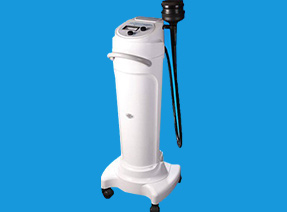
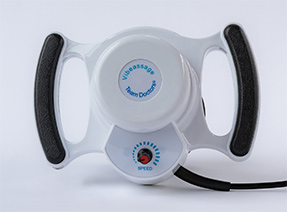
Dr. James Stoxen uses professional tools in his clinical environment, and he also helped design the Vibeassage Pro and the Vibeassage Sport so people could do gentle self-care at home. These are not medical treatment devices. They are wellness and recovery tools meant to support comfort, relaxation, and daily maintenance of the muscles.
They are used for the same reason people use heating pads, foam rollers, or massage chairs. They are there to help muscles feel less guarded and to help the body feel more at ease in itself.
Why Self-Care Changes How People Relate to Their Body
One of the quiet problems with long-term discomfort is that people begin to fear their own body. They stop moving as much. They become cautious. They hold themselves stiffly without even realizing it. This stiffness then becomes part of the problem.
Gentle self-care can change this relationship. When someone learns to touch and care for their own tissues in a calm, non-threatening way, their body often becomes less defensive. Movement starts to feel safer. Posture starts to feel easier. Breathing starts to feel less restricted.
This supports the broader ideas behind functional treatment for tos, manual therapy for tos, and movement-based treatment tos, where the body is not forced into change but invited into it.
How This Fits Into a Bigger Daily Picture
No single tool changes a body. Bodies change because of daily habits. They change because of how a person sits, stands, walks, reaches, breathes, and rests. The Vibeassage tools are simply one small part of that daily picture.
They are like brushing your teeth. Brushing your teeth does not guarantee perfect health, but not brushing them almost guarantees problems. Gentle daily muscle care is similar. It supports the environment in which the body can function better.
People who are trying to follow a conservative approach to tos often discover that small daily habits matter more than dramatic occasional efforts. A few minutes of gentle care, done often, can be more meaningful than rare, aggressive sessions.
Why This Is Not About “Fixing” Anything
It is important to keep the language honest and safe. These ideas are not about claiming to fix or cure conditions. They are about supporting comfort, movement, and function. They are about helping the body work closer to the way it was designed to work.
This is the same mindset behind people who hope for natural recovery from thoracic outlet syndrome rather than immediate invasive solutions. It is not denial. It is patience. It is respect for the body’s ability to adapt when it is given the right conditions.
Learning to Notice Your Own Patterns
One of the most powerful changes a person can make is simply noticing how they hold themselves. Many people are surprised to discover how often their shoulders are lifted, their chest is tight, or their neck is braced.
As awareness grows, choices begin to change. People begin to lower their shoulders. They begin to sit differently. They begin to move more gently and more often. This is not dramatic. It is quiet. But over time, it can change how the whole suspension system behaves.
In the final part, we will bring everything together and talk about how to think about the body long-term, how to build a life that supports spring instead of stiffness, and how the Human Spring Approach becomes not just something you do, but a way you live in your body.
Thinking About Your Body Over a Lifetime
From Short-Term Thinking to Long-Term Thinking
Most people are taught to think about their body only when something hurts. If there is chest pain, thoracic pain, or strange thoracic back pain symptoms, attention suddenly turns to the area. When the discomfort fades, the body is forgotten again. This way of thinking makes it easy to miss the slow changes that happen over many years.
The Human Spring Approach encourages a different way of thinking. It invites people to think about how they live in their body every day, not just when something feels wrong. The body is not something that should only receive attention in moments of crisis. It is something that deserves steady, quiet care over a lifetime.
Why Stiffness Feels Normal but Is Not Natural
Many people reach a point in life where stiffness feels normal. They wake up tight. They move slowly at first. They accept that their shoulders, neck, or upper back always feel a little heavy. Some live with thoracic muscle pain or are told they have thoracic myalgia and begin to believe this is just how aging feels.
But stiffness is not the same thing as structure. Stiffness is often the sign of a spring system that has forgotten how to behave like a spring. When the body is meant to be elastic and becomes rigid, even simple activities begin to feel like work.
This is one reason people sometimes begin to notice chest pain around collar bone, chest pain under the collarbone, chest pain by the collarbone, or even chest pain below collar bone right side without any clear injury. It is not always that something is broken. Sometimes it is that something has slowly lost its ability to adapt.
The Quiet Power of Better Posture and Easier Movement
Posture is often misunderstood. Many people think posture means forcing themselves to sit or stand straight. In the Human Spring way of thinking, posture is not something you force. It is something that improves naturally when the body is balanced and relaxed.
When muscles are not constantly guarding, the shoulders can hang instead of being held up. When the shoulders hang, the suspension system can begin to work the way it was designed to work. When the suspension works, the tunnel for nerves and blood vessels can stay more open and comfortable.
This is why people interested in a conservative approach to tos often focus on postural correction for tos and movement-based treatment tos. The goal is not to hold the body in a rigid position. The goal is to let the body discover an easier way to carry itself.
Living in a Way That Supports the Spring
A spring stays healthy by being used, not by being locked in place. The same is true for the human body. Gentle, regular movement, varied positions, and simple daily care all help the body remember its natural design.
This is where ideas like functional treatment for tos, manual therapy for tos, and physical rehabilitation for tos fit into a bigger picture. They are not about chasing symptoms. They are about supporting how the body works as a whole.
Many people who follow this way of thinking also appreciate non-invasive tos treatment and conservative care for tos because these approaches respect the body instead of trying to overpower it.
Why People Hope to Avoid Invasive Solutions
It is natural for people to want to avoid thoracic outlet surgery or look for alternatives to thoracic outlet surgery when they can. It is also natural to ask can thoracic outlet syndrome heal naturally or to search for how to fix thoracic outlet syndrome and best non-surgical tos treatment.
These questions do not mean someone is ignoring medicine. They mean they are hoping their body can be supported before anything irreversible is done. That is why so many people explore natural ways to treat tos, holistic treatment for thoracic outlet syndrome, home treatment for thoracic outlet syndrome, and self-treatment for thoracic outlet syndrome under proper guidance.
They also look for ways to treat tos without surgery, reduce compression without surgery, restore shoulder space naturally, improve blood flow without surgery, and relieve nerve compression naturally as part of a thoughtful, careful path toward non-surgical recovery tos.
Where the Vibeassage Tools Fit Into Real Life
The Vibeassage Pro and Vibeassage Sport are not miracle tools. They are not medical treatments. They are simple, practical wellness tools designed to help people participate in their own daily muscle care.
Used gently and thoughtfully, they can support relaxation, comfort, and body awareness. They can remind tight muscles to soften. They can make it easier for people to notice where they hold tension and to let some of that tension go.
In the Human Spring way of thinking, this kind of daily care is like watering a plant. It does not force growth. It supports the conditions in which healthy change can happen.
The Most Important Change Is How You See Your Body
Perhaps the biggest shift of all is not physical. It is mental. When someone stops thinking of their body as broken and starts thinking of it as stiff, guarded, and compressed, their relationship with their body changes.
A compressed system can often become less compressed. A stiff system can often become more elastic. A guarded system can often learn to relax again. None of this is instant. All of it takes patience.
This is why the Human Spring Approach is not a quick program. It is a long-term way of understanding and living in your body.
A Different Kind of Hope
The hope offered here is not the promise that pain will magically disappear. The hope is something quieter and more realistic. It is the hope that your body can move a little easier. That you can feel a little lighter. That daily life can require a little less effort.
For many people, that is what natural recovery from thoracic outlet syndrome truly means. Not a dramatic moment. Not a single solution. But a slow return toward a body that works more like the spring system it was always meant to be.
Closing Thoughts
Your body is not a machine made of rigid parts. It is a living, moving suspension system. When it is treated like one, it often responds in kinder ways.
The Human Spring Approach taught by Dr. James Stoxen is, at its heart, an invitation. An invitation to move more, to stiffen less, to support your body instead of fighting it, and to think about your health not as a battle, but as a long relationship with the only body you will ever live in.
Team Doctors Resources
✓ Check out the Team Doctors Recovery Tools
The Vibeassage Sport and the Vibeassage Pro featuring the TDX3 soft-as-the-hand Biomimetic Applicator Pad
https://www.teamdoctors.com/
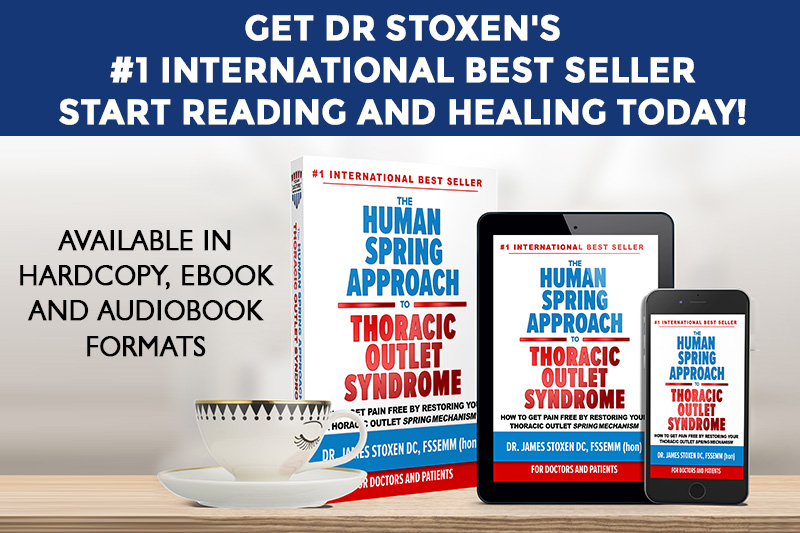
✓ Get Dr. Stoxen’s #1 International Bestselling Books
Learn how to understand, examine, and reverse your TOS—without surgery.
https://drstoxen.com/1-international-best-selling-author/
✓ Check out Team Doctors Online Courses
Step-by-step video lessons, demonstrations, and self-treatment strategies.
https://teamdoctorsacademy.com/
✓ Schedule a Free Phone Consultation With Dr. Stoxen
Speak directly with him so he can review your case and guide you on your next steps.
https://drstoxen.com/appointment/
#ThoracicOutletSyndrome #TOS #ArmNumbness #ShoulderPain #NerveCompression #PostureMatters #UpperExtremity #ChronicPainEducation #Biomechanics #MovementHealth #NeckPain #HandTingling #ClinicalObservation #ConservativeCare #RehabEducation #SoftTissue #VascularSymptoms #NeurologicalSymptoms #PatientEducation #TeamDoctors

Dr James Stoxen DC., FSSEMM (hon) He is the president of Team Doctors®, Treatment and Training Center Chicago, one of the most recognized treatment centers in the world.
Dr Stoxen is a #1 International Bestselling Author of the book, The Human Spring Approach to Thoracic Outlet Syndrome. He has lectured at more than 20 medical conferences on his Human Spring Approach to Thoracic Outlet Syndrome and asked to publish his research on this approach to treating thoracic outlet syndrome in over 30 peer review medical journals.
He has been asked to submit his other research on the human spring approach to treatment, training and prevention in over 150 peer review medical journals. He serves as the Editor-in-Chief, Journal of Orthopedic Science and Research, Executive Editor or the Journal of Trauma and Acute Care, Chief Editor, Advances in Orthopedics and Sports Medicine Journal and editorial board for over 35 peer review medical journals.
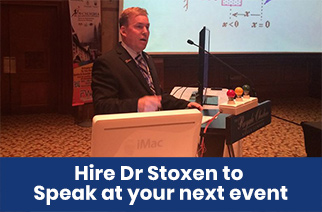
He is a much sought-after speaker. He has given over 1000 live presentations and lectured at over 70 medical conferences to over 50,000 doctors in more than 20 countries. He has been invited to speak at over 300 medical conferences which includes invitations as the keynote speaker at over 50 medical conferences.
After his groundbreaking lecture on the Integrated Spring-Mass Model at the World Congress of Sports and Exercise Medicine he was presented with an Honorary Fellowship Award by a member of the royal family, the Sultan of Pahang, for his distinguished research and contributions to the advancement of Sports and Exercise Medicine on an International level. He was inducted into the National Fitness Hall of Fame in 2008 and the Personal Trainers Hall of Fame in 2012.
Dr Stoxen has a big reputation in the entertainment industry working as a doctor for over 150 tours of elite entertainers, caring for over 1000 top celebrity entertainers and their handlers. Anthony Field or the popular children’s entertainment group, The Wiggles, wrote a book, How I Got My Wiggle Back detailing his struggles with chronic pain and clinical depression he struggled with for years. Dr Stoxen is proud to be able to assist him.
Full Bio) Dr Stoxen can be reached directly at teamdoctors@aol.com