Twelve Years of Pain, One Correct Explanation
Dave never thought the moment that changed his life would be so ordinary.
It was a left-hand turn. A routine one. Traffic light green. His mind was on where he needed to be next, not on danger. When the impact came, it came fast and hard—metal collapsing into metal, his body snapping sideways as another vehicle slammed into him.
At the time, it didn’t seem catastrophic.
He felt shaken. Sore. But alive. He went home. He rested. He assumed his body would do what bodies are supposed to do—heal.
That assumption would cost him twelve years.
The First Signs Something Was Wrong
A few days after the accident, Dave returned to the gym. Training had always been part of his identity. Strong pull-ups. Balanced upper-body strength. Full control of his shoulders and back.
That was the day the weakness appeared.
It wasn’t soreness. It wasn’t fatigue. It was as if someone had unplugged his left arm.
He reached for the bar and pulled.
Nothing.
His left side failed him completely. The strength he had relied on was gone, replaced by a deep burning sensation and a stabbing pain behind his shoulder blade that felt sharp, electric, and relentless. He stopped immediately, confused and unsettled.
Over the next weeks, the symptoms multiplied.
His scapula began to grind when he moved it, an audible, unsettling sensation that made him wince. The pain didn’t fade—it embedded itself. His left arm weakened further, and the burning sensation crept downward, into the shoulder, the neck, the arm, even the hand.
Dave went back to work.
That’s when fear set in.
When Work Becomes Impossible
Dave’s job required repetitive arm use—plugging in cables, lifting equipment, sustained positioning of his arms in front of his body. Tasks he had done without thought now required effort, strategy, and frequent breaks.
At times, his arm was so weak that he had to lift it with his other hand just to complete basic movements.
The weakness didn’t stay confined to the arm.
It spread.
His neck tightened constantly. His shoulder felt unstable. His breathing changed. On the left side, his chest felt compressed, as if his lung simply wasn’t filling completely. He would take deep breaths and feel unsatisfied, like the air wasn’t reaching where it needed to go.
Then came the jaw pain.
A swollen lymph node in his neck followed.
And the stabbing pain between his shoulder blades intensified—deep, knife-like, impossible to ignore.
The Search for Answers Begins
Dave did what most people do when pain doesn’t resolve: he sought medical help.
And then more medical help.
And then more.
Over the next decade, Dave would see nearly twenty healthcare professionals. Two chiropractors. Multiple physical therapists. Physicians. Specialists. Even a vascular thoracic outlet specialist.
Each appointment came with hope.
Each ended with uncertainty.
One clinician thought it was a shoulder injury. Another suspected a neck problem. Others suggested nerve irritation. Several raised the possibility of thoracic outlet syndrome.
But no one could agree.
Dave underwent:
- Five sets of X-rays
- Seven MRIs
- A CT scan
- Three diagnostic ultrasounds
- Thoracic outlet syndrome imaging
- Diagnostic Tests – MRI
- Diagnostic Tests – X-ray
- Diagnostic – Ultrasound
- Duplex Imaging
- Thoracic outlet syndrome radiology reviews
He had thoracic outlet syndrome MRI protocols, thoracic outlet ultrasound, thoracic outlet syndrome x ray views, and imaging specifically looking for cervical ribs, vascular compromise, and nerve compression.
Some images looked “normal.”
Others were “inconclusive.”
None explained why his life was shrinking.
When Surgery Is Offered Without Certainty
Eventually, Dave was referred to a surgeon.
The conversation was brief.
The recommendation was clear: first rib resection and scalenectomy—remove the rib, cut the scalene muscles, create space.
But Dave hesitated.
He had a question no one could answer.
“How do we know this is the real problem?”
After twelve years of pain, conflicting opinions, and imaging that never lined up with how he felt, the idea of cutting out parts of his body without certainty terrified him.
He didn’t want to make things worse.
He wanted answers.
That’s when he began searching differently.
Not just for a diagnosis—but for someone who actually understood what he was experiencing.
He searched for:
- who treats thoracic outlet syndrome
- thoracic outlet syndrome second opinion
- doctor who understands thoracic outlet syndrome
- who actually understands TOS
- specialist for unexplained arm pain
- doctor for chronic arm pain
- best care for thoracic outlet syndrome
- TOS diagnosis specialist
- orthopedic vs vascular TOS specialist
What he found wasn’t a clinic.
It was a book.
A Different Way of Thinking
The Human Spring Approach to Thoracic Outlet Syndrome.
Dave didn’t expect much at first. He had read countless articles, watched endless videos, and listened to conflicting explanations for years.
But this was different.
The book didn’t start with surgery.
It didn’t treat the body as static pipes and rigid tunnels.
It explained movement, load, muscle tone, and dynamic space—how the shoulder, rib cage, and neck are meant to function as a coordinated spring suspension system.
For the first time, Dave saw his symptoms reflected accurately on the page.
Burning arm pain without structural damage.
Normal MRIs with severe symptoms.
Compression caused by chronic muscle guarding, not missing anatomy.
He watched lectures. Patient testimonials. Stories of people just like him—people who had seen the best doctor for thoracic outlet syndrome, visited a TOS clinic near me, sought a second opinion for arm pain, and still found no relief until someone looked at function instead of images.
That’s when Dave decided to do what he should have done years earlier.
He sought a true second opinion.
Not just from another surgeon.
But from an expert in thoracic outlet syndrome who evaluated the whole system.
The Evaluation That Changed Everything
Dave arrived at the appointment carrying more than medical records.
He carried twelve years of frustration, fear, and unanswered questions.
By this point, he knew the routine. Intake forms. A brief conversation. A glance at imaging. A hypothesis formed before he finished speaking.
But this visit felt different from the moment it began.
Instead of starting with scans, the evaluation began with movement.
Instead of focusing on one structure, the examination looked at how his entire upper body functioned as a system—from his rib cage to his shoulder, from his neck to his breathing mechanics.
This was not a rushed visit.
This was a TOS specialist evaluation that went far beyond labels.
Looking Beyond the MRI
Dave had brought everything with him:
- Thoracic outlet syndrome MRI reports
- MRI for thoracic outlet syndrome images
- Thoracic outlet MRI interpretations
- Thoracic outlet syndrome ultrasound results
- Duplex imaging reports
- X ray of cervical rib views
- Thoracic outlet syndrome radiology summaries
Most doctors had focused on what wasn’t there.
No clear arterial blockage.
No obvious cervical rib.
No dramatic nerve impingement on imaging.
But imaging only shows structure at rest.
It does not show function under load.
That distinction would change everything.
A Different Kind of Diagnosis
Instead of declaring “you have thoracic outlet syndrome,” the evaluation asked a different question:
What is collapsing space dynamically?
Muscle by muscle, joint by joint, Dave was assessed.
The findings were immediate and undeniable.
His upper trapezius muscles were locked in chronic, severe spasm.
His shoulder girdle was being pulled downward.
His biceps short head and coracobrachialis were shortened and hypertonic.
Multiple arm muscles were guarding reflexively.
Most importantly, his rib cage was twisted.
That rib cage distortion explained the stabbing pain between his shoulder blades, the chest tightness, and the sensation that his left lung wasn’t filling properly.
No imaging study had ever explained that.
No MRI had captured that reality.
The Truth About “Thoracic Outlet Syndrome”
Here was the moment Dave had waited twelve years for.
He was told something no one else had said:
He did not have thoracic outlet syndrome.
What he had was chronic, severe muscle-driven compression that mimicked thoracic outlet symptoms—but without structural obstruction requiring surgery.
This explained everything:
- Why imaging was inconsistent
- Why symptoms worsened with activity
- Why surgery felt like a gamble
- Why no single provider had been able to “see” the problem
Thoracic outlet syndrome is often treated as a static diagnosis.
But Dave’s condition was dynamic.
The space wasn’t missing.
It was being collapsed by muscle tension, postural distortion, and load mismanagement.
This is where many patients go wrong—especially when choosing between an orthopedic vs vascular TOS specialist without someone who understands functional compression.
Why Surgery Would Have Failed
The recommendation for first rib resection and scalenectomy suddenly made no sense.
Removing a rib would not:
- Untwist his rib cage
- Restore shoulder suspension
- Normalize muscle tone
- Fix breathing mechanics
In fact, surgery would likely have destabilized the system further.
Dave realized how close he had come to making an irreversible mistake.
This was the moment he fully understood the value of a thoracic outlet syndrome second opinion from someone who actually understands TOS.
Treatment Without Cutting
Instead of surgery, the plan focused on:
- Non-surgical treatment for TOS
- Functional treatment for TOS
- Manual therapy for TOS
- Movement-based treatment TOS
- Postural correction for TOS
- Restore shoulder space naturally
- Reduce compression without surgery
- Improve blood flow without surgery
- Relieve nerve compression naturally
The goal was simple but profound:
Restore space by restoring function.
The work addressed muscle tone first—because muscles create pressure before bones ever do.
As tension softened, Dave felt changes immediately.
His breathing improved.
The stabbing pain diminished.
The grinding in his scapula eased.
For the first time in twelve years, his body felt like it was moving with him instead of against him.
A Tool for Daily Control
Dave was given one critical instruction:
Muscle tension must be managed daily.
Not occasionally.
Not when pain flares.
Every day.
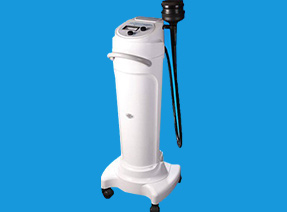
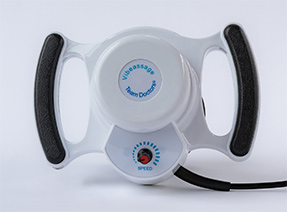
He was introduced to a daily self-care tool—one that allowed him to maintain progress between treatments and prevent spasms from returning.
Used consistently, it functioned like a personal deep tissue session—keeping muscles pliable, reducing guarding, and preventing compression from rebuilding.
This was self-treatment for thoracic outlet syndrome principles, even though his diagnosis wasn’t classic TOS.
It was home treatment for thoracic outlet syndrome concepts applied correctly.
Strength Returns
As tension normalized, Dave returned to training—carefully at first.
Then confidently.
Then powerfully.
Three days a week.
Upper body focused.
Pain-free.
His strength returned.
His breathing normalized.
His fear disappeared.
He hadn’t just avoided surgery.
He had avoided years of unnecessary disability.
Life After Pain, and What Dave Learned
For the first time in twelve years, Dave woke up without bracing himself for the day.
No mental checklist of what movements to avoid.
No fear that lifting his arm would trigger stabbing pain.
No shallow breathing or grinding shoulder blade reminding him that his body was broken.
The pain that had once dictated every decision no longer ran his life.
Reclaiming Normal
At first, the changes felt subtle.
His breathing deepened.
The tightness across his chest loosened.
The knife-like pain between his shoulder blades faded into memory.
Then the changes became undeniable.
Dave returned to the gym—not to test himself, but to move. Pull-ups no longer felt impossible. His left arm responded again. Strength didn’t come back overnight, but it returned naturally, without forcing, without fear.
This wasn’t recovery driven by rest or avoidance.
This was non-surgical recovery for TOS-like symptoms—a functional restoration of space, tone, and movement.
Understanding What Really Went Wrong
Looking back, Dave finally understood why his journey had taken twelve years.
He had been searching for:
- the best doctor for thoracic outlet syndrome
- a thoracic outlet syndrome specialist
- a TOS expert near me
- someone who could tell him where to go for TOS
But his real need wasn’t a label.
It was understanding.
Most providers he saw were skilled—but they were trained to look for structural damage, not functional collapse. They relied on thoracic outlet syndrome MRI findings, thoracic outlet syndrome ultrasound results, or thoracic outlet syndrome X-ray images to justify decisions.
When those tests were unclear, the default path leaned toward escalation.
Surgery.
What Dave learned is something many patients never hear:
Normal imaging does not mean normal function.
And abnormal symptoms do not always require anatomical removal.
The Cost of a Missed Diagnosis
Dave often thought about how close he had come to surgery.
A first rib removed.
Scalene muscles cut.
A body permanently altered—without certainty.
He wondered how many others were in the same position, searching for:
- who treats thoracic outlet syndrome
- find thoracic outlet specialist
- best treatment center for TOS
- best specialist for TOS
- best doctor for arm numbness
- specialist for arm nerve pain
- neurologist for arm nerve pain
- shoulder nerve pain specialist
- vascular thoracic outlet specialist
- nerve compression specialist
…only to be offered invasive solutions before functional ones.
The truth is uncomfortable but important:
Many people diagnosed with thoracic outlet syndrome are actually suffering from muscle-driven compression, postural collapse, rib cage distortion, and chronic guarding.
And those issues can often be addressed without surgery.
Why Conservative Care Worked
Dave’s recovery succeeded because the approach respected how the body actually works.
Instead of forcing space by cutting anatomy, treatment focused on:
- Conservative treatment for thoracic outlet syndrome
- Non-invasive TOS treatment
- Physical rehabilitation for TOS
- Conservative care for TOS
- Functional treatment for TOS
- Manual therapy for TOS
- Movement-based treatment TOS
- Postural correction for TOS
This wasn’t about “pushing through pain.”
It was about removing the cause of compression, not the structures surrounding it.
As muscle tone normalized, the shoulder suspended properly again.
As the rib cage untwisted, breathing returned.
As guarding shut off, nerves calmed.
This is what thoracic outlet syndrome without surgery can look like when the diagnosis is correct.
Dave’s Message to Others
Today, Dave still uses daily self-care strategies to maintain his progress.
Not because he’s fragile—but because he’s informed.
He understands that chronic muscle tension can return if neglected. He understands how posture, breathing, training load, and stress influence compression.
Most importantly, he understands his own body.
And that knowledge gave him his life back.
He often tells others:
“Don’t give up just because imaging is unclear. Don’t rush into surgery just because pain is severe. And don’t assume that no answers means no solutions.”
Sometimes, the right answer isn’t found by doing more tests.
It’s found by asking better questions.
Below is a ~1,000-word educational extension that fits seamlessly after Story 1 and explains why Dr. Stoxen’s work healed Dave—not just that it did—using the Human Spring Approach and the full biomechanical framework you specified.
Why the Human Spring Approach Succeeded When Everything Else Failed
What ultimately healed Dave was not a new scan, a new diagnosis code, or a more aggressive intervention. It was a different biomechanical model—one that finally matched how the human body actually functions under load.
Dr. James Stoxen did not view Dave’s body as a rigid structure with faulty parts that needed to be removed. He evaluated it through the human spring model, an approach grounded in spring-based biomechanics and real-world movement physics rather than static anatomy.
The Body Is Not a Lever—It Is a Spring System
Traditional medicine often relies on a lever model vs spring model misunderstanding. In the lever model, joints act like hinges, muscles pull like cables, and forces are transferred rigidly from one segment to the next. This framework works reasonably well for analyzing isolated movements on a table—but it fails under real-life conditions like impact, repetition, fatigue, and asymmetry.
The human spring approach instead recognizes the body as a spring system—a living, adaptive structure designed to absorb, store, recycle, and release energy efficiently. Walking, running, lifting, breathing, and even posture rely on spring mechanics in human movement, not rigid levers.
When this spring system is intact, forces are distributed smoothly. When it fails, pressure accumulates at choke points—especially around tunnels that carry nerves and blood vessels.
Spring Failure Explains Dave’s Symptoms
Dave’s pain was not caused by missing space. It was caused by spring failure and chronic pain.
His accident disrupted the integrated spring-mass model of his upper body. Over time, protective muscle guarding increased spring stiffness vs compliance, turning normally elastic tissues into rigid restraints. This changed how load traveled through his body.
Instead of being absorbed and recycled, force was trapped.
This led to:
- Shock absorption biomechanics failure
- Abnormal biomechanical load distribution
- Collapsing tunnel mechanics for nerves and blood vessels
- Progressive nerve irritation without structural damage
MRI and X-ray imaging could not explain this because imaging captures anatomy at rest—not energy recycling in human motion.
The Role of Biological Springs
The human body contains multiple layers of biological springs in the body:
- Compression springs in the spine that protect discs and nerves
- Torsional spring mechanics in joints that allow rotation without shear
- The foot arch spring mechanism, which initiates energy transfer upward
- The fascial spring network, which distributes tension across regions
These systems work together through kinetic chain spring transfer. When one segment fails—such as the shoulder suspension or rib cage alignment—forces overload adjacent regions.
In Dave’s case, chronic muscle spasms disrupted suspension-based anatomy of the shoulder girdle. His rib cage twisted, altering joint decompression mechanics and collapsing space dynamically during movement and breathing.
That is why his symptoms worsened with activity and improved only temporarily with rest.
Why Surgery Would Have Made Things Worse
Surgery is based on the assumption that compression is static and structural. But in a spring-based system, cutting tissue does not restore function—it often removes stabilizing elements.
Removing a rib or scalene muscles would not have restored:
- Elastic energy storage in the body
- Stretch-shortening cycle biomechanics
- Neuromechanical spring control
- Biomechanical energy efficiency
In fact, surgery often increases stiffness, disrupts proprioception, and accelerates spring failure elsewhere.
Dr. Stoxen’s approach focused on spring-based injury prevention by restoring compliance before considering irreversible options.
Restoring the Spring Instead of Removing Parts
Treatment targeted the root cause: loss of elastic function.
Through applied clinical biomechanics, Dr. Stoxen normalized muscle tone, untwisted the rib cage, and re-established proper impact attenuation biomechanics across Dave’s upper body.
As spring function returned:
- Nerve irritation resolved without decompression surgery
- Blood flow improved naturally through restored space
- Breathing normalized as thoracic compliance returned
- Strength returned through proper stretch-shortening cycle use
This is what restoring human spring function looks like in practice.
Why Vibration Played a Critical Role
One key component of Dave’s recovery was vibration and spring restoration. Low-amplitude vibration helped interrupt chronic muscle guarding, improve neuromuscular timing, and reintroduce elastic responsiveness to tissues that had been locked in protective contraction.
This was not about “relaxation.”
It was about re-educating the nervous system to allow normal spring behavior again.
Once daily tone management was established, Dave’s body could finally maintain gains between treatments.
From Chronic Pain to Efficient Motion
As his spring system recovered, Dave experienced something he had not felt in years: efficiency.
Movement required less effort.
Breathing felt natural.
Training no longer created backlash pain.
This is the hallmark of restored biomechanical energy efficiency—when the body recycles energy instead of dissipating it as pain and inflammation.
The Bigger Lesson
Dave’s story is not unique.
Many patients labeled with thoracic outlet syndrome, unexplained arm pain, or chronic nerve symptoms are not suffering from missing space—but from failed spring mechanics.
Until the medical system fully embraces spring mechanics in human movement, these patients will continue to be misdiagnosed, over-imaged, and over-operated.
3 Practical Tips to Improve Your Health (Starting Today)
1. Respect Function Over Images
If your MRI or X-ray doesn’t explain your pain, don’t stop searching. Seek evaluation from someone who understands dynamic compression, movement, and muscle tone—not just static anatomy.
2. Manage Muscle Tension Daily
Chronic muscle guarding recreates compression. Daily self-care—manual tools, mobility work, and breathing exercises—can prevent symptoms from returning and support natural recovery. Find these self help techniques in Chapter 13 of Dr Stoxen’s book, The Human Spring Approach to Thoracic Outlet Syndrome
3. Delay Surgery Until Function Is Fully Assessed
Surgery is irreversible. Before considering it, explore non-surgical treatment for TOS, natural treatment for thoracic outlet syndrome, and alternatives to thoracic outlet surgery with a provider who evaluates the whole system. Schedule a Free Phone Consultation With Dr. Stoxen Speak directly with him so he can review your case and guide you on your next steps.
https://drstoxen.com/appointment/
Team Doctors Resources
✓ Check out the Team Doctors Recovery Tools
The Vibeassage Sport and the Vibeassage Pro featuring the TDX3 soft-as-the-hand Biomimetic Applicator Pad
https://www.teamdoctors.com/
✓ Get Dr. Stoxen’s #1 International Bestselling Books
Learn how to understand, examine, and reverse your TOS—without surgery.
https://drstoxen.com/1-international-best-selling-author/
✓ Check out Team Doctors Online Courses
Step-by-step video lessons, demonstrations, and self-treatment strategies.
https://teamdoctorsacademy.com/
✓ Schedule a Free Phone Consultation With Dr. Stoxen
Speak directly with him so he can review your case and guide you on your next steps.
https://drstoxen.com/appointment/
#ThoracicOutletSyndrome #FailedTOSSurgery #TOSRecovery #ChronicPainStory #VascularTOS #ArmPain #PatientAdvocacy #MedicalTrauma #SurgeryFailure #PainJourney
Medical Disclaimer
This article is provided for educational and informational purposes only. It is not intended to diagnose, treat, cure, or prevent any disease, nor is it intended to replace professional medical advice, diagnosis, or treatment.
Thoracic outlet syndrome and related nerve, vascular, and musculoskeletal conditions can present differently in each individual. Treatment decisions—including surgical and non-surgical options—must be made on a case-by-case basis in consultation with a qualified, licensed healthcare professional who is familiar with the patient’s complete medical history.
The experiences described in this article reflect individual outcomes and do not guarantee similar results for others. Surgical procedures, including thoracic outlet surgery and first rib resection, carry inherent risks, and outcomes vary based on many factors including diagnosis, timing, practitioner experience, and patient-specific anatomy and physiology.
Readers should not delay or discontinue medical care based on information contained in this article. Always seek the guidance of a qualified healthcare provider with any questions regarding symptoms, conditions, or treatment options.
Editor’s Note
This article explores a patient and family experience following thoracic outlet syndrome surgery and highlights the importance of comprehensive evaluation, informed decision-making, and second opinions when managing complex pain conditions.
The article also references the Human Spring Approach, a biomechanical evaluation and treatment framework developed by Dr James Stoxen, which emphasizes understanding the body as an integrated, dynamic spring system rather than a collection of isolated anatomical structures. The inclusion of this approach is intended to illustrate an alternative clinical perspective, not to discredit surgery or any specific medical specialty.
Mention of specific clinicians, evaluation models, or treatment philosophies does not constitute endorsement, medical advice, or a claim of superiority. Rather, it reflects the editorial goal of encouraging patients and families to seek clarity, explanation, and individualized assessment before pursuing irreversible interventions.
The editorial position of this publication is that understanding should precede intervention, especially in conditions where symptoms persist, worsen, or fail to respond to standard care.

Dr James Stoxen DC., FSSEMM (hon) He is the president of Team Doctors®, Treatment and Training Center Chicago, one of the most recognized treatment centers in the world.
Dr Stoxen is a #1 International Bestselling Author of the book, The Human Spring Approach to Thoracic Outlet Syndrome. He has lectured at more than 20 medical conferences on his Human Spring Approach to Thoracic Outlet Syndrome and asked to publish his research on this approach to treating thoracic outlet syndrome in over 30 peer review medical journals.
He has been asked to submit his other research on the human spring approach to treatment, training and prevention in over 150 peer review medical journals. He serves as the Editor-in-Chief, Journal of Orthopedic Science and Research, Executive Editor or the Journal of Trauma and Acute Care, Chief Editor, Advances in Orthopedics and Sports Medicine Journal and editorial board for over 35 peer review medical journals.
He is a much sought-after speaker. He has given over 1000 live presentations and lectured at over 70 medical conferences to over 50,000 doctors in more than 20 countries. He has been invited to speak at over 300 medical conferences which includes invitations as the keynote speaker at over 50 medical conferences.
After his groundbreaking lecture on the Integrated Spring-Mass Model at the World Congress of Sports and Exercise Medicine he was presented with an Honorary Fellowship Award by a member of the royal family, the Sultan of Pahang, for his distinguished research and contributions to the advancement of Sports and Exercise Medicine on an International level. He was inducted into the National Fitness Hall of Fame in 2008 and the Personal Trainers Hall of Fame in 2012.
Dr Stoxen has a big reputation in the entertainment industry working as a doctor for over 150 tours of elite entertainers, caring for over 1000 top celebrity entertainers and their handlers. Anthony Field or the popular children’s entertainment group, The Wiggles, wrote a book, How I Got My Wiggle Back detailing his struggles with chronic pain and clinical depression he struggled with for years. Dr Stoxen is proud to be able to assist him.
Full Bio) Dr Stoxen can be reached directly at teamdoctors@aol.com