I did not write a book on Thoracic Outlet Syndrome because it was popular. I wrote it because it was difficult, and because it remains one of the most misunderstood and poorly treated upper-body conditions in modern healthcare. Confusion persists not because the condition is rare, but because the wrong questions are often asked.
Earlier in my career, I had already learned how to restore the body’s spring mechanism from the floor to the waist. The feet, knees, hips, and pelvis function as an integrated suspension system. When this lower-body spring system is restored, pain often decreases, strength returns, and movement efficiency improves, even in complex cases.
But one question remained unanswered: how does the upper body absorb force?
If the upper body were designed as a rigid lever system, contact sports would be impossible. Yet athletes collide shoulder-to-shoulder and neck-to-neck at full speed every weekend without catastrophic injury. That reality reveals an essential truth: the upper body is not built as a lever. It is built as a spring system.
The nerves and blood vessels traveling from the neck into the arm do not pass through a single opening. They travel through a dynamic series of tunnels—the scalene triangle, the costoclavicular space, and the subcoracoid region—collectively referred to as the thoracic outlet. These tunnels must expand, decompress, and protect critical structures during movement, posture, and load.
Thoracic Outlet Syndrome develops when this spring-based protective system loses compliance. As posture collapses, muscle tone rises, and elastic recoil is lost, the tunnels that once opened under stress begin to narrow under load. Compression then develops, whether it presents as neurogenic, venous, or arterial Thoracic Outlet Syndrome.
This is why Thoracic Outlet Syndrome is so frequently misdiagnosed. Many evaluations focus on a single nerve, a single muscle, or a single imaging finding. But TOS is not a part failure. It is a systems failure involving posture, force distribution, and tunnel safety.
One of the most important concepts explored in the book is energy recycling. In a healthy upper-body spring system, impact energy is absorbed elastically and dispersed through the rib cage and shoulder girdle. This elastic recoil prevents excessive muscular splinting and protects the neurovascular structures passing into the arm.
When recoil is lost, muscles must contract continuously just to hold the system together. Over time, this leads to chronic inflammation, reduced circulation, and progressive compression. Muscles are no longer assisting movement; they are acting as static supports, which they were never designed to do.
Standard imaging often fails to explain these symptoms because Thoracic Outlet Syndrome is a dynamic compression disorder. Compression occurs during posture, movement, and muscle activation—not necessarily when a patient is lying still in a scanner. This explains why so many individuals are told their scans are “normal” while their symptoms continue to worsen.
The book was written to explain how the upper-body spring system is supposed to function, why it fails, and what must be restored to reopen tunnels and protect nerves and blood vessels. Understanding this architecture reframes Thoracic Outlet Syndrome from a mysterious diagnosis into a logical mechanical breakdown.
This perspective also explains why symptom patterns shift. One day the nerve is irritated, another day the vein, another day the artery. The problem is not which structure hurts today. The problem is that the tunnels are no longer protected by elastic compliance.
When posture improves, muscle guarding decreases, and spring recoil begins to return, the system regains tolerance. This does not happen by strengthening harder or stretching aggressively. It happens by restoring mechanics that reduce the need for constant muscular contraction.
From a clinical education standpoint, this framework helps explain why isolated treatments often plateau. Addressing one muscle while ignoring tunnel dynamics leaves the underlying architecture unchanged. Likewise, focusing on posture without restoring spring behavior fails to resolve compression under load.
Thoracic Outlet Syndrome is best understood as a failure of upper-body spring mechanics. When that system collapses, nerves and blood vessels become vulnerable. When it is restored, tunnel safety improves.
This is why the book does not chase symptoms. It explains structure, mechanics, and function. Once those are understood, the condition becomes less confusing for both clinicians and patients.
Understanding the upper body as a spring system changes how Thoracic Outlet Syndrome is viewed—and why lasting improvement requires restoring mechanics rather than suppressing signals.
Team Doctors Resources
✓ Check out the Team Doctors Recovery Tools
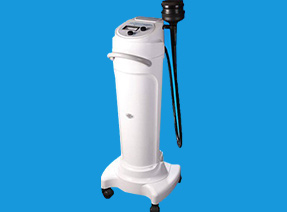
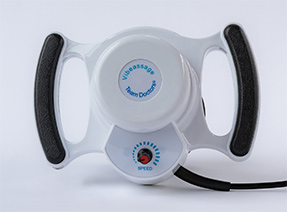
The Vibeassage Sport and the Vibeassage Pro featuring the TDX3 soft-as-the-hand Biomimetic Applicator Pad
https://www.teamdoctors.com/
✓ Get Dr. Stoxen’s #1 International Bestselling Books
Learn how to understand, examine, and reverse your TOS—without surgery.
https://drstoxen.com/1-international-best-selling-author/
✓ Check out Team Doctors Online Courses
Step-by-step video lessons, demonstrations, and self-treatment strategies.
https://teamdoctorsacademy.com/
✓ Schedule a Free Phone Consultation With Dr. Stoxen
Speak directly with him so he can review your case and guide you on your next steps.
https://drstoxen.com/appointment/
#ThoracicOutletSyndrome #TOSAwareness #HumanSpring #Biomechanics #UpperBodyMechanics #DynamicCompression #BrachialPlexus #PostureScience #MovementEducation #ChronicPainUnderstanding #NeurovascularCompression #SpringMechanics #MusculoskeletalHealth #TeamDoctors #JamesStoxen #ClinicalBiomechanics #TOSBook #MedicalEducation #FunctionalAnatomy #SystemsBasedCare
References
- Sanders, Richard J., and Neal S. Pearce. “Neurogenic Thoracic Outlet Syndrome.” Journal of Vascular Surgery 36, no. 3 (2002): 669–676.
- Roos, David B. “Thoracic Outlet Syndrome Is Underdiagnosed.” Muscle & Nerve 22, no. 1 (1999): 126–129.
- Urschel, Harold C., and R. B. Razzuk. “The Neurovascular Compression Syndromes of the Thoracic Outlet.” Annals of Thoracic Surgery 50, no. 3 (1990): 484–490.
- Zatsiorsky, Vladimir M., and William J. Kraemer. Science and Practice of Strength Training. Champaign, IL: Human Kinetics, 2006.

Dr James Stoxen DC., FSSEMM (hon) He is the president of Team Doctors®, Treatment and Training Center Chicago, one of the most recognized treatment centers in the world.
Dr Stoxen is a #1 International Bestselling Author of the book, The Human Spring Approach to Thoracic Outlet Syndrome. He has lectured at more than 20 medical conferences on his Human Spring Approach to Thoracic Outlet Syndrome and asked to publish his research on this approach to treating thoracic outlet syndrome in over 30 peer review medical journals.
He has been asked to submit his other research on the human spring approach to treatment, training and prevention in over 150 peer review medical journals. He serves as the Editor-in-Chief, Journal of Orthopedic Science and Research, Executive Editor or the Journal of Trauma and Acute Care, Chief Editor, Advances in Orthopedics and Sports Medicine Journal and editorial board for over 35 peer review medical journals.
He is a much sought-after speaker. He has given over 1000 live presentations and lectured at over 70 medical conferences to over 50,000 doctors in more than 20 countries. He has been invited to speak at over 300 medical conferences which includes invitations as the keynote speaker at over 50 medical conferences.
After his groundbreaking lecture on the Integrated Spring-Mass Model at the World Congress of Sports and Exercise Medicine he was presented with an Honorary Fellowship Award by a member of the royal family, the Sultan of Pahang, for his distinguished research and contributions to the advancement of Sports and Exercise Medicine on an International level. He was inducted into the National Fitness Hall of Fame in 2008 and the Personal Trainers Hall of Fame in 2012.
Dr Stoxen has a big reputation in the entertainment industry working as a doctor for over 150 tours of elite entertainers, caring for over 1000 top celebrity entertainers and their handlers. Anthony Field or the popular children’s entertainment group, The Wiggles, wrote a book, How I Got My Wiggle Back detailing his struggles with chronic pain and clinical depression he struggled with for years. Dr Stoxen is proud to be able to assist him.
Full Bio) Dr Stoxen can be reached directly at teamdoctors@aol.com