Why Thoracic Outlet Syndrome Is a Failure of the Body’s Spring System
Most people are taught that the human body functions like a system of levers. Elbows hinge, knees extend, and joints rotate much like mechanical parts. In my clinical experience, this model explains only part of how the body truly works. The other half—often ignored—is that the body also operates as a spring-based system designed to absorb force, recycle energy, and protect vital structures.
This distinction becomes critical when examining Thoracic Outlet Syndrome. The shoulder girdle is not a rigid lever suspended on fixed joints. It is a dynamic suspension system engineered to behave like a spring. Its purpose is not only movement, but protection.
In high-impact situations, such as a football tackle, the shoulder does not remain rigid. Instead, it drops slightly, stretches elastic tissues, and absorbs force. Like a bungee cord, it yields just enough to protect the nerves, artery, and vein that pass beneath it. Then it recoils, returning the shoulder to its resting position without damage.
This design depends on elastic balance. The first and second ribs form the floor of the thoracic outlet, while the scalene muscles and surrounding soft tissues suspend the roof. When this system functions properly, the shoulder can tolerate enormous loads without creating thoracic outlet compression.
Problems arise when inflammation enters the system.
Inflammation alters tissue chemistry. Sensory nerves detect irritation and send warning signals to the spinal cord. The spinal cord responds with a protective bracing reflex, contracting muscles to stabilize the area. This response is normal and beneficial in the short term. It limits motion and prevents further injury.
However, in Thoracic Outlet Syndrome, inflammation is not short-lived. When it becomes chronic, the protective reflex never shuts off. The muscles that normally act like elastic springs become rigid struts.
This is the beginning of the inflammation-driven guarding loop.
Sustained muscle contraction reduces circulation, increases fatigue, and produces more inflammatory byproducts. The nerves detect this escalation and send stronger danger signals to the spinal cord. The spinal cord responds with even greater contraction. Over time, the loop intensifies.
As these contractions persist, they become powerful enough to physically alter structure. Muscles pull the shoulder downward, elevate ribs, and twist soft tissues inward. The spring system locks. The thoracic outlet narrows. The artery, vein, and brachial plexus become compressed not by trauma, but by sustained internal force.
This explains why TOS can become so severe without a single dramatic injury. The condition evolves slowly as inflammation turns elastic suspension into rigid splinting.
As long as inflammation remains high, the spinal cord continues to fire bracing commands. The body stays locked in survival mode. This is why symptoms persist even after rest or standard care.
Unfortunately, many common treatments do not address this mechanism. Stretching, massage, electrical stimulation, and exercise may temporarily relax muscles, but they often fail to reduce inflammation deeply enough to shut off the reflex loop. Once the stimulus ends, guarding returns.
In my clinical experience, this is why patients often report trying every therapy available for years without lasting progress. These approaches target muscle tone but not the trigger driving the tone.
You cannot restore the spring system by treating muscles alone if inflammation remains embedded in the tissues. Without reducing the inflammatory signal, the spinal cord has no reason to release its protective grip.
This also explains why posture alone cannot resolve advanced TOS. While posture matters, forcing alignment against an active guarding reflex is like trying to stretch a compressed spring without releasing the latch. The body resists.
When inflammation is finally reduced enough to silence the reflex, something remarkable happens. The shoulder suspension system begins to release on its own. Muscles soften. Ribs settle. Space returns to the thoracic outlet without force.
Patients often notice that posture improves automatically. Breathing becomes easier. The heaviness in the arms begins to lift. These changes occur not because muscles were pushed into place, but because the spring system was allowed to function again.
This shift marks the moment the body exits survival mode. Movement becomes efficient rather than guarded. The shoulder once again behaves like a shock absorber instead of a clamp.
Understanding Thoracic Outlet Syndrome through spring mechanics clarifies why some individuals recover quickly while others struggle for years. The difference is not effort or motivation. It is whether the inflammatory reflex has been shut down.
When the root cause is addressed, the system does not need to be forced. It resets itself. The suspension system rebounds. The thoracic outlet opens. And the body returns to the design it was built for—elastic, resilient, and protective rather than rigid and compressed.
This perspective reframes TOS entirely. It is not a broken joint problem. It is a locked spring problem. And when the spring is freed, function follows.
Team Doctors Resources
✓ Check out the Team Doctors Recovery Tools
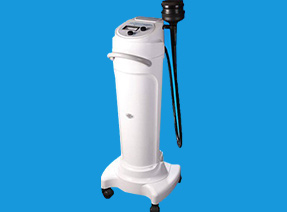
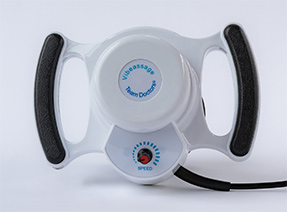
The Vibeassage® Sport and the Vibeassage® Pro featuring the TDX3 soft-as-the-hand Biomimetic Applicator Pad
https://www.teamdoctors.com/
✓ Get Dr. Stoxen’s #1 International Bestselling Books
Learn how to understand, examine, and reverse your TOS—without surgery.
https://drstoxen.com/1-international-best-selling-author/
✓ Check out Team Doctors Online Courses
Step-by-step video lessons, demonstrations, and self-treatment strategies.
https://teamdoctorsacademy.com/
✓ Schedule a Free Phone Consultation With Dr. Stoxen
Speak directly with him so he can review your case and guide you on your next steps.
https://drstoxen.com/appointment/
#ThoracicOutletSyndrome #TOS #Biomechanics #HumanSpring #ThoracicOutletEngineering #MuscleGuarding #InflammationLoop #NerveCompression #VascularCompression #ShoulderMechanics #ChronicPain #MovementScience #PostureMatters #NonSurgicalCare #PainEducation #TeamDoctors #DrStoxen #TOSRecovery #WhatWorks #HumanMovement
References
- McGill, S. Ultimate Back Fitness and Performance. Backfitpro Inc., 2009.
- Lund, J. P., et al. “The Pain Adaptation Model.” Pain, 1991.
- Shacklock, M. Clinical Neurodynamics. Elsevier, 2005.
- Grieve, G. P. Common Vertebral Joint Problems. Churchill Livingstone, 2006.

Dr James Stoxen DC., FSSEMM (hon) He is the president of Team Doctors®, Treatment and Training Center Chicago, one of the most recognized treatment centers in the world.
Dr Stoxen is a #1 International Bestselling Author of the book, The Human Spring Approach to Thoracic Outlet Syndrome. He has lectured at more than 20 medical conferences on his Human Spring Approach to Thoracic Outlet Syndrome and asked to publish his research on this approach to treating thoracic outlet syndrome in over 30 peer review medical journals.
He has been asked to submit his other research on the human spring approach to treatment, training and prevention in over 150 peer review medical journals. He serves as the Editor-in-Chief, Journal of Orthopedic Science and Research, Executive Editor or the Journal of Trauma and Acute Care, Chief Editor, Advances in Orthopedics and Sports Medicine Journal and editorial board for over 35 peer review medical journals.
He is a much sought-after speaker. He has given over 1000 live presentations and lectured at over 70 medical conferences to over 50,000 doctors in more than 20 countries. He has been invited to speak at over 300 medical conferences which includes invitations as the keynote speaker at over 50 medical conferences.
After his groundbreaking lecture on the Integrated Spring-Mass Model at the World Congress of Sports and Exercise Medicine he was presented with an Honorary Fellowship Award by a member of the royal family, the Sultan of Pahang, for his distinguished research and contributions to the advancement of Sports and Exercise Medicine on an International level. He was inducted into the National Fitness Hall of Fame in 2008 and the Personal Trainers Hall of Fame in 2012.
Dr Stoxen has a big reputation in the entertainment industry working as a doctor for over 150 tours of elite entertainers, caring for over 1000 top celebrity entertainers and their handlers. Anthony Field or the popular children’s entertainment group, The Wiggles, wrote a book, How I Got My Wiggle Back detailing his struggles with chronic pain and clinical depression he struggled with for years. Dr Stoxen is proud to be able to assist him.
Full Bio) Dr Stoxen can be reached directly at teamdoctors@aol.com