Why the Roos Test Does Not Tell You Where Thoracic Outlet Compression Comes From
Raise your arms overhead and repeatedly open and close your hands. This maneuver, known as the Roos Test, is one of the most widely used screening tools for Thoracic Outlet Syndrome. If your hands become weak, heavy, numb, or tingly, the test is considered “positive.”
While this response suggests that blood flow or nerve signaling may be impaired, the most important point is often overlooked: the Roos Test does not identify where the compression is occurring.
In my clinical experience, this misunderstanding is one of the main reasons patients are misdiagnosed and pushed toward unnecessary surgery.
The Roos Test simply stresses the entire upper-extremity circulation and nerve supply. It does not isolate a specific anatomical structure. When symptoms appear, all it tells us is that somewhere along the chain from the neck to the hand, flow or signaling is being compromised.
There are multiple potential choke points capable of producing a positive Roos Test.
The most commonly discussed location is the scalene triangle, where inflammation and muscle guarding can lift the first rib into the thoracic outlet. This is the area most vascular surgeons focus on. However, it is far from the only place compression can occur.
Another frequent site is beneath the clavicle, where shoulder mechanics play a critical role. Tight or inflamed tissues such as the pectoralis minor, subclavius, short head of the biceps, and coracobrachialis can drag the shoulder downward, collapsing the outlet from above.
A swollen or chronically guarded pectoralis minor alone can significantly narrow the thoracic outlet. In these cases, removing the first rib does not address the primary problem, because the compression is not coming from below.
The shoulder itself can also shift forward out of alignment. In a pattern known as hyperabduction syndrome, the shoulder may sit one centimeter or more too far forward, falling directly into the thoracic outlet with arm elevation. This mechanical fault cannot be corrected by rib removal or scalene cutting.
Beyond the thoracic outlet, additional choke points exist further down the arm. Muscles that are overused from texting, gaming, computer work, or sustained shoulder flexion can tighten enough to compress nerves and blood vessels distally.
One severe example is exertional compartment syndrome of the forearm. In these cases, swollen muscle compartments restrict circulation so dramatically that blood flow is impaired regardless of what happens at the thoracic outlet. A positive Roos Test in this situation reflects distal obstruction, not scalene compression.
I have even documented extremely rare cases where the intrinsic muscles of the palm became so inflamed that they obstructed blood flow. This phenomenon is not described in standard medical literature, yet it produced clear vascular symptoms with arm elevation.
Because of this wide range of possible choke points, the Roos Test should never be used as a standalone diagnostic tool. It cannot distinguish between scalene compression, costoclavicular compression, pectoralis minor syndrome, shoulder instability, forearm compartment syndrome, or distal soft-tissue obstruction.
When clinicians assume that every positive Roos Test equals scalene compression, patients are placed at risk.
Many individuals have undergone first rib resection and scalenectomy even though the true source of compression was located elsewhere. In Brady’s case, both first ribs were removed despite the actual problem being a compartment syndrome of the forearm caused by years of gaming. The surgery could never have solved his condition.
Another patient suffered for seven years because his shoulder capsule was so stretched that the joint repeatedly slid forward and into the thoracic outlet with movement. Each episode compressed the vessels. No amount of rib removal could have corrected that instability.
Clinical observation suggests that approximately sixty percent of patients who fail first-rib and scalene surgeries actually have compression in the costoclavicular or pectoralis minor region. These areas are now heavily affected by modern posture habits, particularly prolonged smartphone use and constant shoulder flexion.
If a clinician does not palpate these regions, perform detailed orthopedic testing, or evaluate the entire chain from the neck to the hand, they may never identify the true choke point. Instead, they rely on the Roos Test as confirmation of a surgical narrative.
This is how irreversible decisions are made based on incomplete exams.
Bones and muscles cannot be put back once removed. Before consenting to surgery, it is essential to understand whether the compression truly originates in the scalene triangle or somewhere else entirely.
The Roos Test is a screening tool, not a diagnosis. Its value lies in signaling that something is wrong—not in defining what that something is.
A precise evaluation that examines every potential choke point is what prevents unnecessary procedures and long-term complications. When the true source of compression is identified, treatment decisions become logical rather than assumptive.
If you are considering surgery based largely on a positive Roos Test, a more comprehensive evaluation may be the most important next step you take.
Team Doctors Resources
✓ Check out the Team Doctors Recovery Tools
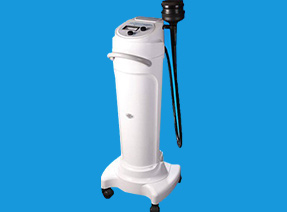
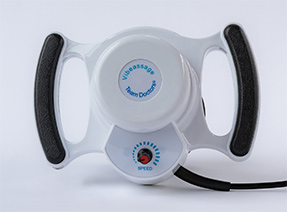
The Vibeassage® Sport and the Vibeassage® Pro featuring the TDX3 soft-as-the-hand Biomimetic Applicator Pad
https://www.teamdoctors.com/
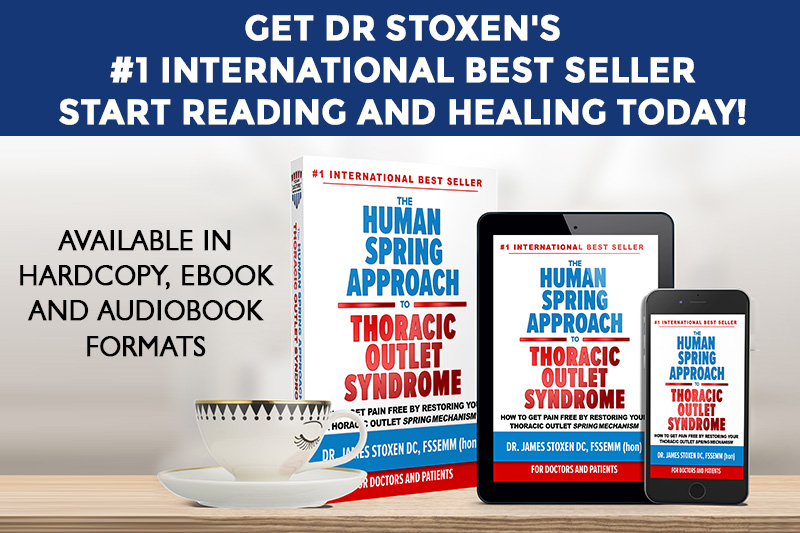
✓ Get Dr. Stoxen’s #1 International Bestselling Books
Learn how to understand, examine, and reverse your TOS—without surgery.
https://drstoxen.com/1-international-best-selling-author/
✓ Check out Team Doctors Online Courses
Step-by-step video lessons, demonstrations, and self-treatment strategies.
https://teamdoctorsacademy.com/
✓ Schedule a Free Phone Consultation With Dr. Stoxen
Speak directly with him so he can review your case and guide you on your next steps.
https://drstoxen.com/appointment/
#ThoracicOutletSyndrome #TOS #RoosTest #TOSDiagnosis #DiagnosticErrors #NerveCompression #VascularCompression #PectoralisMinor #ScaleneMuscles #HyperabductionSyndrome #CompartmentSyndrome #PostureRelatedPain #WhatDoesntWork #PatientEducation #SecondOpinion #TOSSurgery #UpperExtremityPain #Biomechanics #TOSAwareness #ClinicalAssessment
References
- Sanders, R. J., and Hammond, S. L. “Thoracic Outlet Syndrome: A Review.” Neurologic Clinics, 2009.
- Illig, K. A., et al. “Thoracic Outlet Syndrome.” Journal of Vascular Surgery, 2010.
- Urschel, H. C., and Razzuk, M. A. “Paget–Schroetter Syndrome.” Annals of Thoracic Surgery, 2000.
- Novak, C. B., and Mackinnon, S. E. “Thoracic Outlet Syndrome.” Current Problems in Surgery, 2002.

Dr James Stoxen DC., FSSEMM (hon) He is the president of Team Doctors®, Treatment and Training Center Chicago, one of the most recognized treatment centers in the world.
Dr Stoxen is a #1 International Bestselling Author of the book, The Human Spring Approach to Thoracic Outlet Syndrome. He has lectured at more than 20 medical conferences on his Human Spring Approach to Thoracic Outlet Syndrome and asked to publish his research on this approach to treating thoracic outlet syndrome in over 30 peer review medical journals.
He has been asked to submit his other research on the human spring approach to treatment, training and prevention in over 150 peer review medical journals. He serves as the Editor-in-Chief, Journal of Orthopedic Science and Research, Executive Editor or the Journal of Trauma and Acute Care, Chief Editor, Advances in Orthopedics and Sports Medicine Journal and editorial board for over 35 peer review medical journals.
He is a much sought-after speaker. He has given over 1000 live presentations and lectured at over 70 medical conferences to over 50,000 doctors in more than 20 countries. He has been invited to speak at over 300 medical conferences which includes invitations as the keynote speaker at over 50 medical conferences.
After his groundbreaking lecture on the Integrated Spring-Mass Model at the World Congress of Sports and Exercise Medicine he was presented with an Honorary Fellowship Award by a member of the royal family, the Sultan of Pahang, for his distinguished research and contributions to the advancement of Sports and Exercise Medicine on an International level. He was inducted into the National Fitness Hall of Fame in 2008 and the Personal Trainers Hall of Fame in 2012.
Dr Stoxen has a big reputation in the entertainment industry working as a doctor for over 150 tours of elite entertainers, caring for over 1000 top celebrity entertainers and their handlers. Anthony Field or the popular children’s entertainment group, The Wiggles, wrote a book, How I Got My Wiggle Back detailing his struggles with chronic pain and clinical depression he struggled with for years. Dr Stoxen is proud to be able to assist him.
Full Bio) Dr Stoxen can be reached directly at teamdoctors@aol.com