Thoracic Outlet Syndrome is often discussed in terms of posture, nerve irritation, and vascular compression, but one overlooked issue is how certain neck movements can increase symptoms rather than reduce them.
In my clinical experience, patients often report that their discomfort worsened after being instructed to stretch the neck repeatedly.
One of the most common complaints is an increase the level of pain in the base of the neck following routine stretching exercises.
This pain pattern is not random and often reflects underlying biomechanical stress within sensitive structures.
Many individuals describe tightness and pressure rather than simple stiffness.
This distinction matters because tension and compression behave differently than shortened tissue.
When clinicians attempt to detect stretching of the neck, they may assume that limited motion automatically indicates a need for more stretching.
However, limited motion can also be protective guarding.
The cervical spine functions as part of a suspension system rather than an isolated hinge.
Forces applied to the neck are transmitted into the shoulders, ribs, and upper thorax.
In Thoracic Outlet Syndrome, tissues are already managing reduced tolerance to load.
Adding aggressive motion can amplify irritation instead of calming it.
A frequent issue involves lateral flexion directions contraindicated for individuals with certain compression patterns.
Side-bending the neck can narrow already compromised spaces.
Patients often report tingling, heaviness, or pressure when lateral flexion is introduced too early.
These sensations are clues, not obstacles to be ignored.
In cases involving outlet-type compression syndromes, symptoms frequently worsen with movements that reduce neurovascular clearance.
This includes poorly timed or repetitive neck stretching.
One reason this persists is the biggest mistake made by doctors physical therapists massage therapists—assuming more motion is always better.
This assumption ignores the role of suspension and load sharing.
The common advice to adopt a stretch everything out approach is often delivered without biomechanical analysis.
Stretching becomes reflexive rather than reasoned.
When pain levels rise, it usually reflects excessive tension or compression rather than simple tightness.
Stretching compressed tissue does not restore space.
Patients frequently notice neck lateral flexion worsening symptoms, especially when combined with rotation.
This movement can amplify brachial plexus strain.
A reflexive stretching instruction often follows reports of stiffness, even when stiffness is protective.
This is a pattern I commonly see.
Rather than improving comfort, repetitive stretching can increase guarding.
Guarding further stiffens the system.
Over time, this leads to a loss of proper suspension and space within the shoulder and cervical region.
The system becomes less tolerant of load.
Thoracic Outlet Syndrome involves interactions between the cervical spine, first rib, clavicle, and shoulder girdle.
These structures rely on coordinated motion.
Stretching one segment in isolation can destabilize the whole system.
This is particularly true when suspension muscles are already fatigued.
In imaging studies, reduced clearance in the thoracic outlet is often positional.
Certain neck movements exaggerate narrowing.
Patients often report morning symptoms that worsen after stretching routines.
This timing is important.
Morning tissues are already less hydrated and more sensitive.
Aggressive motion at this time increases irritation.
In my clinical experience, symptoms often calm when provocative stretching is removed.
This does not mean movement is avoided.
Instead, movement selection becomes more precise.
The goal shifts toward restoring load distribution.
Education is critical because many individuals believe discomfort means they are “doing it wrong.”
In reality, discomfort may be a warning.
Thoracic Outlet Syndrome symptoms are not uniform.
Some individuals experience neurological sensations, while others notice vascular changes.
Both types can be aggravated by poor movement choices.
Neck stretching is a frequent trigger.
Patients often report that symptoms travel into the arm after stretching.
This reflects increased neural tension.
Stretching increases tensile load through the brachial plexus.
In compressed systems, this load cannot dissipate.
Biomechanically, the neck does not function as a simple lever.
It operates within a spring-like system.
The shoulder girdle suspends from muscular and fascial supports.
Disruption here affects cervical mechanics.
When suspension weakens, tissues rely on passive structures.
Passive structures are less tolerant of stress.
Stretching passive structures does not restore dynamic control.
It often increases vulnerability.
Thoracic Outlet Syndrome education frequently overlooks this distinction.
As a result, well-meaning instructions backfire.
Many individuals describe feeling “looser” immediately after stretching.
This sensation is temporary.
Short-term relief does not equal improved mechanics.
Symptoms often return stronger.
In the literature, nerve irritation is associated with tensile overload.
Stretching contributes to this overload.
Vascular structures are also sensitive to positional narrowing.
Lateral flexion can reduce venous outflow.
Patients may notice swelling or heaviness after stretching.
These signs should not be ignored.
Clinical observation shows that reducing provocative motion improves tolerance.
This supports a load-management model.
Movement quality matters more than movement quantity.
This principle is often missed.
Thoracic Outlet Syndrome requires an understanding of regional interdependence.
The neck cannot be treated in isolation.
Repetitive stretching without assessment increases risk.
Assessment guides safer movement choices.
In my clinical experience, education alone reduces symptom flares.
Patients change behavior when they understand the why.
This is not about avoiding motion entirely.
It is about respecting tissue tolerance.
Gradual, supported movement restores confidence.
Aggressive stretching undermines it.
Tools such as Vibeassage® are sometimes discussed in educational contexts.
They are referenced for understanding vibration and sensory input, not treatment claims.
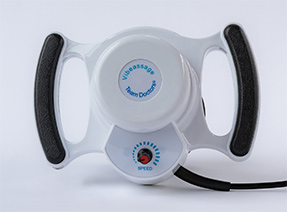
The Vibeassage® Sport and Vibeassage® Pro are often mentioned in discussions about self-awareness and movement feedback.
Their role is informational in this context.
The TDX3 soft-as-the-hand Biomimetic Applicator Pad is referenced in educational material about surface compliance.
No claims are made regarding outcomes.
Team Doctors® educational resources emphasize biomechanics over symptom chasing.
This framework helps patients interpret signals accurately.
Thoracic Outlet Syndrome is complex but not mysterious.
Patterns emerge when movement responses are observed.
Pain is information, not an obstacle.
Ignoring it leads to escalation.
Stretching is not inherently harmful.
Timing and direction determine its effect.
Lateral flexion is not universally appropriate.
Context matters.
Education empowers individuals to make informed decisions.
This reduces fear and confusion.
Patients often report fewer flares once provocative stretching stops.
This is a consistent observation.
Understanding suspension and load sharing reframes rehabilitation.
It shifts focus from length to control.
Thoracic Outlet Syndrome management begins with awareness.
Movement choices follow.
The goal is not to force change.
It is to allow the system to regain balance.
When balance improves, tolerance increases naturally.
This progression is gradual.
Respecting biomechanics prevents unnecessary aggravation.
This is especially true for the cervical region.
Thoracic Outlet Syndrome highlights the importance of precision.
Generalized advice often fails.
In summary, neck stretching can worsen symptoms when applied reflexively.
Education helps prevent this common error.
Team Doctors Resources
✓ Check out the Team Doctors Recovery Tools
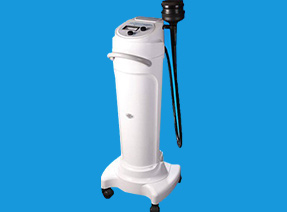
The Vibeassage Sport and the Vibeassage Pro featuring the TDX3 soft-as-the-hand Biomimetic Applicator Pad
https://www.teamdoctors.com/
✓ Get Dr. Stoxen’s #1 International Bestselling Books
Learn how to understand, examine, and reverse your TOS—without surgery.
https://drstoxen.com/1-international-best-selling-author/
✓ Check out Team Doctors Online Courses
Step-by-step video lessons, demonstrations, and self-treatment strategies.
https://teamdoctorsacademy.com/
✓ Schedule a Free Phone Consultation With Dr. Stoxen
Speak directly with him so he can review your case and guide you on your next steps.
https://drstoxen.com/appointment/
#ThoracicOutletSyndrome #TOS #NeckPain #BrachialPlexus #PostureMechanics #NeckStretching #NerveCompression #VascularCompression #Biomechanics #ClinicalObservation #MovementScience #PainPatterns #CervicalSpine #ShoulderGirdle #RehabilitationEducation #PhysicalTherapy #MassageTherapy #ChronicPain #OrthopedicEducation #HumanMovement
References
[1] Sanders, Richard J., and Neal M. Pearce. “Thoracic Outlet Syndrome: A Common Sequela of Neck Injuries.” Philadelphia Hand Center Journal 5, no. 2 (2009): 125–134. https://pubmed.ncbi.nlm.nih.gov/19556896/
[2] Wilbourn, A. J. “Thoracic Outlet Syndrome Is Overdiagnosed.” Muscle & Nerve 19, no. 8 (1996): 1020–1021. https://pubmed.ncbi.nlm.nih.gov/8708653/
[3] Povlsen, Bo, et al. “Treatment for Thoracic Outlet Syndrome.” Cochrane Database of Systematic Reviews (2014). https://www.cochranelibrary.com/cdsr/doi/10.1002/14651858.CD007218.pub3/full
[4] Jordan, Steven E., et al. “Biomechanics of the Cervical Spine.” Spine 25, no. 1 (2000): 43–49. https://pubmed.ncbi.nlm.nih.gov/10647159/

Dr James Stoxen DC., FSSEMM (hon) He is the president of Team Doctors®, Treatment and Training Center Chicago, one of the most recognized treatment centers in the world.
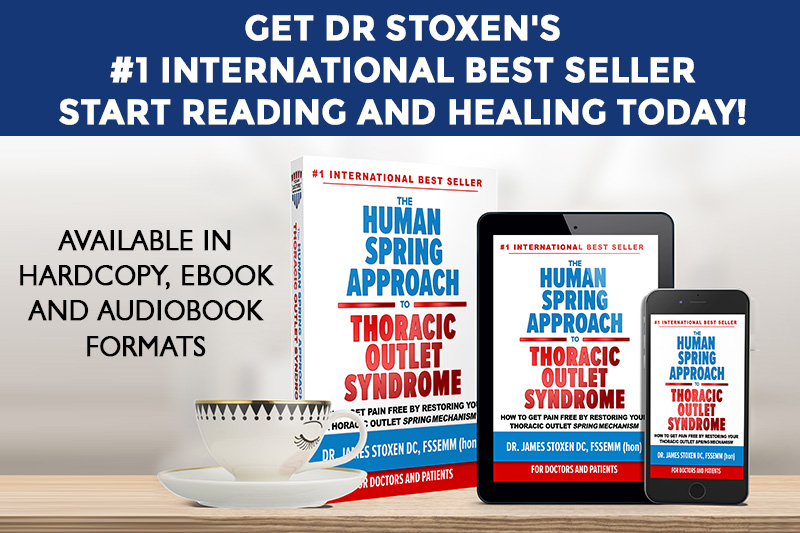
Dr Stoxen is a #1 International Bestselling Author of the book, The Human Spring Approach to Thoracic Outlet Syndrome. He has lectured at more than 20 medical conferences on his Human Spring Approach to Thoracic Outlet Syndrome and asked to publish his research on this approach to treating thoracic outlet syndrome in over 30 peer review medical journals.
He has been asked to submit his other research on the human spring approach to treatment, training and prevention in over 150 peer review medical journals. He serves as the Editor-in-Chief, Journal of Orthopedic Science and Research, Executive Editor or the Journal of Trauma and Acute Care, Chief Editor, Advances in Orthopedics and Sports Medicine Journal and editorial board for over 35 peer review medical journals.
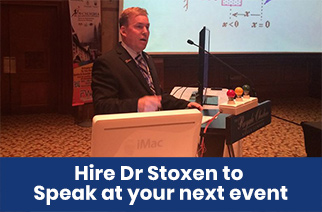
He is a much sought-after speaker. He has given over 1000 live presentations and lectured at over 70 medical conferences to over 50,000 doctors in more than 20 countries. He has been invited to speak at over 300 medical conferences which includes invitations as the keynote speaker at over 50 medical conferences.
After his groundbreaking lecture on the Integrated Spring-Mass Model at the World Congress of Sports and Exercise Medicine he was presented with an Honorary Fellowship Award by a member of the royal family, the Sultan of Pahang, for his distinguished research and contributions to the advancement of Sports and Exercise Medicine on an International level. He was inducted into the National Fitness Hall of Fame in 2008 and the Personal Trainers Hall of Fame in 2012.
Dr Stoxen has a big reputation in the entertainment industry working as a doctor for over 150 tours of elite entertainers, caring for over 1000 top celebrity entertainers and their handlers. Anthony Field or the popular children’s entertainment group, The Wiggles, wrote a book, How I Got My Wiggle Back detailing his struggles with chronic pain and clinical depression he struggled with for years. Dr Stoxen is proud to be able to assist him.
Full Bio) Dr Stoxen can be reached directly at teamdoctors@aol.com