Why the Right Diagnosis Often Appears Only When Insurance Is Removed
In my clinical experience, one of the most revealing moments in healthcare happens when insurance is taken out of the equation. I often tell patients that if they truly want an accurate diagnosis, they should walk into a doctor’s office and say, “I have no insurance. I just want to know what’s actually wrong with me.”
What follows is striking. The pace of the visit changes. The conversation slows. The doctor listens more carefully. Questions become more thoughtful. Physical examination replaces rapid referrals. This shift is not about money—it is about incentives.
Modern healthcare is largely driven by insurance billing codes rather than clinical reasoning. Physicians are under constant pressure to fit complex symptoms into predefined categories that are fast, billable, and familiar. When a condition does not fit neatly into a code, it often gets simplified, redirected, or ignored altogether.
Thoracic Outlet Syndrome is a classic example. TOS is biomechanically complex, variable in presentation, and highly individualized. It rarely conforms to a single imaging finding or textbook description. Yet insurance systems favor quick diagnoses supported by scans, checklists, and standardized pathways.
This is how nuanced clinical stories are reduced to oversimplified labels. A patient with neck pain, arm heaviness, tingling, and fatigue may be quickly coded as cervical disc disease, carpal tunnel syndrome, or shoulder impingement. Each label has an associated billing pathway. None require deep investigation of biomechanics, posture, or inflammatory patterns.
When insurance dictates the structure of the visit, clinical curiosity is often replaced by efficiency. The goal becomes documentation rather than understanding. Imaging replaces examination. Procedures replace reasoning. Scripts replace conversation.
Removing insurance changes that dynamic. Without the need to justify every minute through billing codes, the clinician can think freely. They can say, “Let me figure this out.” That mindset is foundational to real diagnosis.
True diagnosis begins with listening. It requires time to understand symptom patterns, triggers, positional changes, and history. It requires hands-on examination rather than reliance on machines. It requires reasoning through anatomy, biomechanics, and physiology as an integrated system.
Thoracic Outlet Syndrome demands this level of thinking. Compression can occur at multiple points, driven by inflammation, muscle guarding, posture, or movement habits. No single test can define it. No scan can capture its dynamic nature. Only careful reasoning can.
Insurance-driven systems discourage this depth. Long examinations are difficult to justify. Detailed biomechanical assessments are poorly reimbursed. As a result, patients with complex conditions often feel rushed, dismissed, or misunderstood.
This is not a failure of individual doctors. It is a systemic issue. Most clinicians are intelligent, capable, and well-intentioned. But the structure of modern healthcare rewards speed and categorization over complexity and thought.
When patients are misdiagnosed, the downstream consequences can be severe. They may undergo unnecessary testing, repeated imaging, or invasive procedures that fail to address the root problem. In the case of TOS, this can include surgeries that permanently alter anatomy without resolving symptoms.
The irony is that many of these outcomes stem not from lack of technology, but from lack of time to think.
When insurance is removed, the visit becomes about understanding rather than coding. The doctor can ask better questions. They can examine instead of rush. They can consider less common explanations. They can acknowledge uncertainty and explore it rather than forcing a conclusion.
This environment allows complex conditions like Thoracic Outlet Syndrome to be evaluated properly. It opens space for clinical reasoning, pattern recognition, and individualized assessment.
Patients often notice the difference immediately. They feel heard. Their story matters. The examination feels purposeful rather than procedural. Even before treatment begins, clarity starts to replace confusion.
This does not mean insurance-based care is inherently bad. It means that the current incentive structure often works against conditions that require thought rather than templates.
Understanding this reality empowers patients. It helps explain why so many have seen multiple providers without answers. It reframes frustration not as personal failure, but as a mismatch between the system and the complexity of their condition.
Real diagnosis is not found in a codebook. It is found in reasoning, observation, and understanding the whole patient. When incentives align with thinking instead of billing, medicine returns to what it was always meant to be: a process of discovery.
For patients with Thoracic Outlet Syndrome and other complex disorders, recognizing this difference can be the first step toward clarity.
Team Doctors Resources
✓ Check out the Team Doctors Recovery Tools
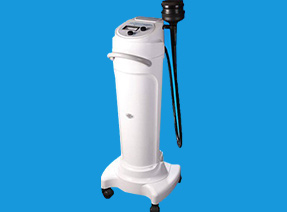
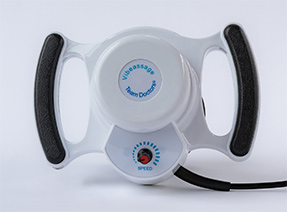
The Vibeassage® Sport and the Vibeassage® Pro featuring the TDX3 soft-as-the-hand Biomimetic Applicator Pad
https://www.teamdoctors.com/
✓ Get Dr. Stoxen’s #1 International Bestselling Books
Learn how to understand, examine, and reverse your TOS—without surgery.
https://drstoxen.com/1-international-best-selling-author/
✓ Check out Team Doctors Online Courses
Step-by-step video lessons, demonstrations, and self-treatment strategies.
https://teamdoctorsacademy.com/
✓ Schedule a Free Phone Consultation With Dr. Stoxen
Speak directly with him so he can review your case and guide you on your next steps.
https://drstoxen.com/appointment/
#ThoracicOutletSyndrome #TOS #Misdiagnosis #HealthcareSystem #ClinicalReasoning #PatientExperience #DiagnosticErrors #Biomechanics #ComplexConditions #InsuranceDrivenCare #PatientEducation #SecondOpinion #WhatDoesntWork #MedicalAwareness #TOSAwareness #HealthcareReform #ChronicPain #UpperExtremityPain #TeamDoctors #DrStoxen
References
- Sanders, R. J., and Hammond, S. L. “Thoracic Outlet Syndrome: A Review.” Neurologic Clinics, 2009.
- Illig, K. A., et al. “Thoracic Outlet Syndrome.” Journal of Vascular Surgery, 2010.
- Grieve, G. P. Common Vertebral Joint Problems. Churchill Livingstone, 2006.
- Emanuel, E. J., et al. “The Problem With Fee-for-Service Medicine.” New England Journal of Medicine, 2016.

Dr James Stoxen DC., FSSEMM (hon) He is the president of Team Doctors®, Treatment and Training Center Chicago, one of the most recognized treatment centers in the world.
Dr Stoxen is a #1 International Bestselling Author of the book, The Human Spring Approach to Thoracic Outlet Syndrome. He has lectured at more than 20 medical conferences on his Human Spring Approach to Thoracic Outlet Syndrome and asked to publish his research on this approach to treating thoracic outlet syndrome in over 30 peer review medical journals.
He has been asked to submit his other research on the human spring approach to treatment, training and prevention in over 150 peer review medical journals. He serves as the Editor-in-Chief, Journal of Orthopedic Science and Research, Executive Editor or the Journal of Trauma and Acute Care, Chief Editor, Advances in Orthopedics and Sports Medicine Journal and editorial board for over 35 peer review medical journals.
He is a much sought-after speaker. He has given over 1000 live presentations and lectured at over 70 medical conferences to over 50,000 doctors in more than 20 countries. He has been invited to speak at over 300 medical conferences which includes invitations as the keynote speaker at over 50 medical conferences.
After his groundbreaking lecture on the Integrated Spring-Mass Model at the World Congress of Sports and Exercise Medicine he was presented with an Honorary Fellowship Award by a member of the royal family, the Sultan of Pahang, for his distinguished research and contributions to the advancement of Sports and Exercise Medicine on an International level. He was inducted into the National Fitness Hall of Fame in 2008 and the Personal Trainers Hall of Fame in 2012.
Dr Stoxen has a big reputation in the entertainment industry working as a doctor for over 150 tours of elite entertainers, caring for over 1000 top celebrity entertainers and their handlers. Anthony Field or the popular children’s entertainment group, The Wiggles, wrote a book, How I Got My Wiggle Back detailing his struggles with chronic pain and clinical depression he struggled with for years. Dr Stoxen is proud to be able to assist him.
Full Bio) Dr Stoxen can be reached directly at teamdoctors@aol.com