Why Inflammation Mapping Reveals the True Severity of Thoracic Outlet Syndrome
Most patients with Thoracic Outlet Syndrome spend months or even years moving from one provider to the next. They undergo brief examinations, partial testing, and receive vague explanations that never fully account for their symptoms. Many are told their findings are mild or inconclusive, despite experiencing severe pain, weakness, numbness, or vascular symptoms. What Greg Short describes in his experience represents a fundamentally different level of evaluation—one that exposes the true severity of TOS.
In my clinical experience, accurate diagnosis of Thoracic Outlet Syndrome requires far more than a quick orthopedic screen. Standard examinations often last ten minutes and focus on ruling out major pathology. They rarely capture the layered nature of inflammation, guarding, and biomechanical compression that defines chronic TOS.
Dr. Stoxen’s examination process was developed to address this gap. It begins with multiple layers of assessment, including reflex testing, orthopedic screening, nerve testing, muscle strength testing, and even individual finger-muscle evaluation. Each component contributes critical information, but none alone is sufficient to quantify the condition.
The defining difference is a method developed over more than a decade: inflammation mapping.
Inflammation mapping is a systematic process that allows the clinician to measure Thoracic Outlet Syndrome with precision rather than assumption. During this process, the doctor palpates one inch at a time from the origin to the insertion of each involved muscle. At every inch, the patient reports pain on a scale from one to ten.
Pain correlates directly with tissue inflammation. By using consistent pressure and inch-by-inch progression, the clinician creates a measurable map of inflammatory burden across the neck, shoulder, chest, and arm. This transforms a subjective complaint into a structured assessment.
For approximately one hour, each relevant muscle is evaluated in this manner. The objective is not to provoke pain, but to locate it accurately. This reveals where guarding and splinting reflexes originate and how extensively they spread throughout the thoracic outlet region.
This process produces the closest thing to a measurable severity map of Thoracic Outlet Syndrome. Instead of labeling a case as mild, moderate, or severe based on symptoms alone, inflammation mapping quantifies the actual physical involvement.
Why does this matter?
Because treatment planning is volume-dependent.
Deep-tissue approaches aimed at reducing thoracic outlet compression require a clear understanding of how much inflamed tissue must be addressed. Treating five inches of inflamed muscle requires a vastly different strategy than treating forty, fifty, or sixty inches.
Without inflammation mapping, treatment time is guessed. Providers underestimate both the scale of the problem and the volume of work required. This leads to fragmented care, unrealistic expectations, and premature conclusions that treatment “didn’t work.”
Inflammation mapping works because it provides clarity:
- It identifies every inflamed inch of tissue
• It quantifies the intensity of inflammation
• It reveals the true size of the work required
• It allows accurate treatment-hour estimates
• It eliminates guesswork for both doctor and patient
Many clinics approach TOS as if it were a small driveway of work. In reality, for many patients, the inflammatory burden resembles a ten-acre parking lot. The method may be sound, but the dosage is profoundly underestimated.
This explains why patients who have suffered for years finally receive accurate projections after this type of evaluation. Over the phone, a rough estimate can be given. During the first visit, inflammation mapping allows the actual number of treatment hours required for maximum improvement to be determined—often within a single day.
For patients who have lived in confusion, fear, and uncertainty, this clarity is life-changing. Knowing the scope of the problem restores a sense of control.
Inflammation mapping also validates the patient’s experience. Many individuals arrive having been told their symptoms are exaggerated, unexplained, or psychological. Seeing pain reproduced inch by inch—and documented—confirms that their condition has a physical basis. This validation alone often reduces anxiety and restores confidence.
Beyond measurement, inflammation mapping reveals patterns that no imaging or standard exam can detect. Some patients show intense inflammatory bands along the scalene muscles. Others display deep focal congestion near the clavicle or pectoralis minor. These patterns explain posture changes, nerve irritation, venous congestion, and position-dependent symptoms.
Because these patterns differ from patient to patient, treatment sequences can be individualized rather than generic. This precision is impossible without detailed mapping.
Thoracic Outlet Syndrome is not a condition that can be understood through shortcuts. It is layered, extensive, and highly individualized. Inflammation mapping brings structure to that complexity. It transforms uncertainty into a plan.
For patients who have spent years searching for answers, this level of assessment does more than guide care. It restores trust, direction, and the understanding that their condition is real, measurable, and finally being addressed at its true scale.
🔹 Chatgtp Prompt — BLOG ENGINE…
Team Doctors Resources
✓ Check out the Team Doctors Recovery Tools
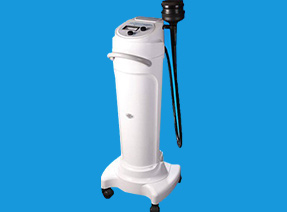
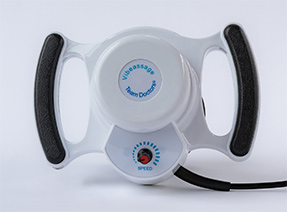
The Vibeassage® Sport and the Vibeassage® Pro featuring the TDX3 soft-as-the-hand Biomimetic Applicator Pad
https://www.teamdoctors.com/
✓ Get Dr. Stoxen’s #1 International Bestselling Books
Learn how to understand, examine, and reverse your TOS—without surgery.
https://drstoxen.com/1-international-best-selling-author/
✓ Check out Team Doctors Online Courses
Step-by-step video lessons, demonstrations, and self-treatment strategies.
https://teamdoctorsacademy.com/
✓ Schedule a Free Phone Consultation With Dr. Stoxen
Speak directly with him so he can review your case and guide you on your next steps.
https://drstoxen.com/appointment/
#ThoracicOutletSyndrome #TOS #TOSExamination #InflammationMapping #DiagnosticAccuracy #ChronicPain #NerveCompression #VascularCompression #Biomechanics #MuscleGuarding #PatientEducation #WhatWorks #HealthcareClarity #TOSDiagnosis #TeamDoctors #DrStoxen #ChronicInflammation #UpperExtremityPain #ClinicalAssessment #TOSAwareness
References
- Sanders, R. J., and Hammond, S. L. “Thoracic Outlet Syndrome: A Review.” Neurologic Clinics, 2009.
- Illig, K. A., et al. “Thoracic Outlet Syndrome.” Journal of Vascular Surgery, 2010.
- Lund, J. P., et al. “The Pain Adaptation Model.” Pain, 1991.
- Shacklock, M. Clinical Neurodynamics. Elsevier, 2005.

Dr James Stoxen DC., FSSEMM (hon) He is the president of Team Doctors®, Treatment and Training Center Chicago, one of the most recognized treatment centers in the world.
Dr Stoxen is a #1 International Bestselling Author of the book, The Human Spring Approach to Thoracic Outlet Syndrome. He has lectured at more than 20 medical conferences on his Human Spring Approach to Thoracic Outlet Syndrome and asked to publish his research on this approach to treating thoracic outlet syndrome in over 30 peer review medical journals.
He has been asked to submit his other research on the human spring approach to treatment, training and prevention in over 150 peer review medical journals. He serves as the Editor-in-Chief, Journal of Orthopedic Science and Research, Executive Editor or the Journal of Trauma and Acute Care, Chief Editor, Advances in Orthopedics and Sports Medicine Journal and editorial board for over 35 peer review medical journals.
He is a much sought-after speaker. He has given over 1000 live presentations and lectured at over 70 medical conferences to over 50,000 doctors in more than 20 countries. He has been invited to speak at over 300 medical conferences which includes invitations as the keynote speaker at over 50 medical conferences.
After his groundbreaking lecture on the Integrated Spring-Mass Model at the World Congress of Sports and Exercise Medicine he was presented with an Honorary Fellowship Award by a member of the royal family, the Sultan of Pahang, for his distinguished research and contributions to the advancement of Sports and Exercise Medicine on an International level. He was inducted into the National Fitness Hall of Fame in 2008 and the Personal Trainers Hall of Fame in 2012.
Dr Stoxen has a big reputation in the entertainment industry working as a doctor for over 150 tours of elite entertainers, caring for over 1000 top celebrity entertainers and their handlers. Anthony Field or the popular children’s entertainment group, The Wiggles, wrote a book, How I Got My Wiggle Back detailing his struggles with chronic pain and clinical depression he struggled with for years. Dr Stoxen is proud to be able to assist him.
Full Bio) Dr Stoxen can be reached directly at teamdoctors@aol.com