In the world of elite strength sport, some moments transcend medals and records. They become historical markers where politics, human performance, science, and trust intersect. One such moment occurred in 1989, when Dr. James Stoxen, then a young American chiropractic physician, traveled deep into the former Soviet Union as team doctor for the United States Powerlifting Federation during direct competition against Soviet lifters.
At the center of that story stands Sultan Rakhmanov, the super heavyweight gold medalist of the 1980 Moscow Olympic Games and one of the most dominant strength athletes in Olympic history. Rakhmanov’s Olympic victory became legendary not only for raw power, but for composure under extraordinary pressure.
During the Moscow Games, his famed teammate Vasily Alekseyev failed all three snatch attempts. In contrast, Rakhmanov executed six flawless lifts, securing gold in front of a global audience and cementing his place in strength sport history.
By 1989, Cold War tensions were easing, but international strength competitions remained deeply symbolic. Matches between American and Soviet athletes represented more than sport. They were tests of ideology, training philosophy, and performance science, watched closely by officials, coaches, and governments alike.
Dr. Stoxen, just twenty-seven years old at the time, served as primary team chiropractic physician for the U.S. delegation. His responsibility was to keep athletes functional, safe, and neurologically intact under maximal load in unfamiliar, high-pressure environments.
This was an era before advanced recovery technology, digital monitoring, or wearable sensors. Clinical decisions relied on observation, palpation, movement analysis, and deep understanding of biomechanics. In that environment, credibility was earned instantly and only through results.
One of the most remarkable outcomes of this trip was that Sultan Rakhmanov himself became a patient of Dr. Stoxen. Within the tightly controlled Soviet sports system, trust in a foreign clinician was rare. Yet elite athletes recognize competence regardless of nationality.
Dr. Stoxen’s emphasis on joint mechanics under load, structural balance, and force distribution resonated across borders. Super heavyweight lifters operate at the absolute limits of human capacity. Every lift places extreme stress on the spine, hips, shoulders, and connective tissues.
At this level, failure is rarely about strength alone. It is more often a breakdown in movement efficiency, fatigue management, or force transfer. These principles formed the foundation of Dr. Stoxen’s work even early in his career.
The Soviet training system emphasized scientific rigor, volume control, and technical precision. American powerlifting, by contrast, prioritized maximal output and individualized programming. Observing both systems firsthand profoundly shaped Dr. Stoxen’s later work in applied biomechanics and recovery-based care.
The experience underscored a critical insight: while training philosophies vary, the human body obeys the same mechanical laws everywhere. Load management, neuromuscular coordination, and joint integrity do not change at national borders.
During the Siberian leg of the competition in Abakan, something extraordinary occurred. Olympic legends Sultan Rakhmanov and David Rigert personally served as Dr. Stoxen’s bodyguards. In a time of political uncertainty, this gesture reflected earned respect rather than formal assignment.
In the world of strength sport, respect is not symbolic. It is practical. Athletes trust those who understand what happens to the body under extreme load. Strength recognizes strength—physical, intellectual, and professional.
This moment illustrates why sports medicine often becomes a bridge between cultures. While politics divide, anatomy unites. The spine responds to load the same way in Moscow as it does in Chicago. Muscles fatigue according to the same physiological rules everywhere.
For Dr. Stoxen, this experience reinforced a universal truth that would later define his career. Performance longevity depends not on nationality, ideology, or technology, but on respecting biomechanical reality.
Elite athletes may speak different languages, but their bodies speak the same one. When clinicians understand that language, trust follows naturally.
From an educational standpoint, this story highlights how high-performance care is built on principles rather than protocols. Observation, movement quality, and mechanical efficiency matter as much as raw output.
The 1989 Soviet-American competition was not just about lifting heavier weight. It was about demonstrating whose understanding of the human machine was more complete.
Decades later, this moment stands as a reminder that sport has always been a testing ground for applied science. It is where theory meets reality under maximal stress.
This Cold War-era exchange shows that when performance science is applied with integrity, it transcends borders. Politics fade. Anatomy remains.
That is why this moment still matters. It represents a rare convergence of history, human performance, and professional trust—etched not in records, but in respect.
Team Doctors Resources
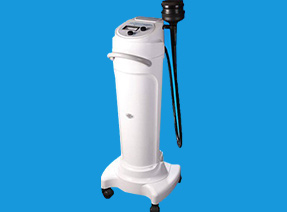
✓ Check out the Team Doctors Recovery Tools
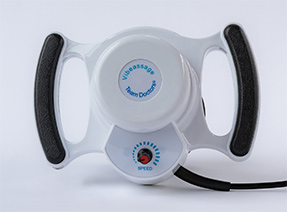
The Vibeassage Sport and the Vibeassage Pro featuring the TDX3 soft-as-the-hand Biomimetic Applicator Pad
https://www.teamdoctors.com/
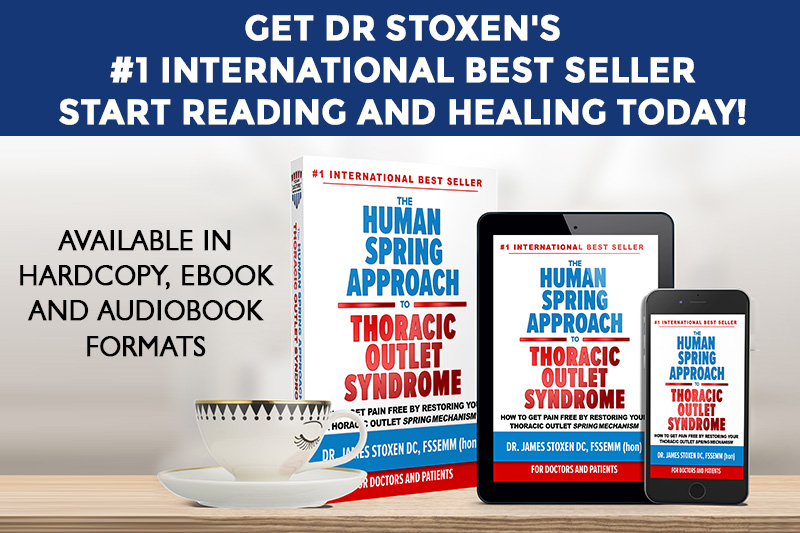
✓ Get Dr. Stoxen’s #1 International Bestselling Books
Learn how to understand, examine, and reverse your TOS—without surgery.
https://drstoxen.com/1-international-best-selling-author/
✓ Check out Team Doctors Online Courses
Step-by-step video lessons, demonstrations, and self-treatment strategies.
https://teamdoctorsacademy.com/
✓ Schedule a Free Phone Consultation With Dr. Stoxen
Speak directly with him so he can review your case and guide you on your next steps.
https://drstoxen.com/appointment/
#StrengthSportHistory #ColdWarSports #OlympicWeightlifting #PowerliftingHistory #SportsBiomechanics #PerformanceScience #EliteAthletes #HumanPerformance #AppliedBiomechanics #StrengthCulture #SportsMedicine #AthleteCare #InternationalSport #OlympicLegends #PerformanceLongevity #TeamDoctors #JamesStoxen #StrengthAndScience #HistoricalSport #RespectThroughPerformance
References
- Fair, John D. “The Politics of Olympic Weightlifting in the Cold War.” Journal of Sport History 25, no. 2 (1998): 210–230.
- Riordan, James. Sport in Soviet Society: Development of Sport and Physical Education in Russia and the USSR. Cambridge: Cambridge University Press, 1977.
- Stone, Michael H., et al. “Maximum Strength and Strength Training.” Sports Medicine 34, no. 9 (2004): 663–679.
- Zatsiorsky, Vladimir M., and William J. Kraemer. Science and Practice of Strength Training. Champaign, IL: Human Kinetics, 2006.
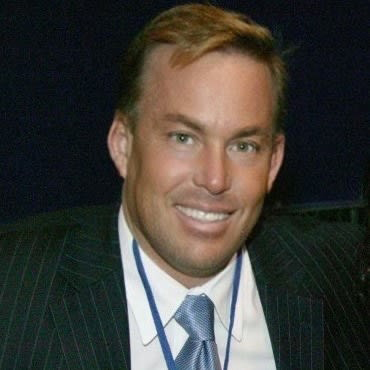
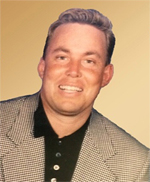
Dr James Stoxen DC., FSSEMM (hon) He is the president of Team Doctors®, Treatment and Training Center Chicago, one of the most recognized treatment centers in the world.
Dr Stoxen is a #1 International Bestselling Author of the book, The Human Spring Approach to Thoracic Outlet Syndrome. He has lectured at more than 20 medical conferences on his Human Spring Approach to Thoracic Outlet Syndrome and asked to publish his research on this approach to treating thoracic outlet syndrome in over 30 peer review medical journals.
He has been asked to submit his other research on the human spring approach to treatment, training and prevention in over 150 peer review medical journals. He serves as the Editor-in-Chief, Journal of Orthopedic Science and Research, Executive Editor or the Journal of Trauma and Acute Care, Chief Editor, Advances in Orthopedics and Sports Medicine Journal and editorial board for over 35 peer review medical journals.
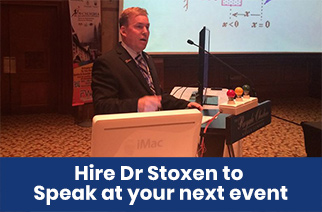
He is a much sought-after speaker. He has given over 1000 live presentations and lectured at over 70 medical conferences to over 50,000 doctors in more than 20 countries. He has been invited to speak at over 300 medical conferences which includes invitations as the keynote speaker at over 50 medical conferences.
After his groundbreaking lecture on the Integrated Spring-Mass Model at the World Congress of Sports and Exercise Medicine he was presented with an Honorary Fellowship Award by a member of the royal family, the Sultan of Pahang, for his distinguished research and contributions to the advancement of Sports and Exercise Medicine on an International level. He was inducted into the National Fitness Hall of Fame in 2008 and the Personal Trainers Hall of Fame in 2012.
Dr Stoxen has a big reputation in the entertainment industry working as a doctor for over 150 tours of elite entertainers, caring for over 1000 top celebrity entertainers and their handlers. Anthony Field or the popular children’s entertainment group, The Wiggles, wrote a book, How I Got My Wiggle Back detailing his struggles with chronic pain and clinical depression he struggled with for years. Dr Stoxen is proud to be able to assist him.
Full Bio) Dr Stoxen can be reached directly at teamdoctors@aol.com