Chronic Fatigue, Chronic Pain, and the Missing Energy System
Why Dr. Stoxen’s Human Spring Approach Changes Everything
Chronic fatigue and chronic pain are two of the most misunderstood conditions in modern healthcare. Millions of people wake up exhausted, move through their day in a fog, and collapse at night without feeling restored. Many of them are told they are depressed, unmotivated, deconditioned, or simply “getting older.” Others are given stimulant-based solutions—coffee, energy drinks, pre-workouts—or medications that temporarily mask symptoms without addressing the underlying problem.
But what if fatigue is not a chemical failure?
What if pain is not the primary problem?
What if both fatigue and pain stem from a broken mechanical energy system?
This is where Dr. James Stoxen’s Human Spring Approach fundamentally reframes how we understand chronic fatigue and chronic pain.
The Forgotten Truth: Humans Are Not Muscle-Driven Machines
The dominant model in rehabilitation, fitness, and medicine treats the human body as a lever-based system. Muscles pull on bones, joints act as hinges, and movement is powered by repeated muscular contraction. In this model, energy is produced by effort, and fatigue is simply the result of insufficient conditioning or poor metabolic health.
But this model ignores a far more important system—one that nature designed long before modern exercise science existed.
Humans are spring-based organisms.
The body is built to store, release, and recycle mechanical energy. This system allows movement to be efficient, elastic, and sustainable. When functioning properly, it reduces muscular workload, conserves energy, and protects joints and soft tissues from excessive stress.
When the spring system fails, the body is forced to compensate with continuous muscle contraction—and that is where fatigue begins.
The Human Spring: Your Original Energy Recycling System
Dr. Stoxen’s Human Spring Theory explains that the body stores mechanical potential energy every time it contacts the ground. Instead of muscles doing all the work, elastic tissues—fascia, tendons, ligaments, joint capsules, and compliant joints—absorb force and release it back into movement.
Think of how a healthy person walks or runs:
- There is bounce, rhythm, and flow
- Steps feel light rather than heavy
- Movement feels automatic, not effortful
That is spring-based locomotion.
Now compare that to someone with chronic fatigue:
- Steps feel heavy
- Movement feels forced
- Walking drains energy instead of generating it
This is not a conditioning problem.
It is a spring failure problem.
What Happens When the Spring Mechanism Locks
When joints lose play, tissues stiffen, inflammation accumulates, and protective muscle guarding sets in, the spring system becomes restricted—or “locked.”
Once that happens:
- Energy can no longer be stored elastically
- Movement shifts from elastic recoil to muscular pushing
- Muscles must contract continuously to move the body
Instead of bouncing off the ground, the body bangs, twists, and pushes itself forward.
This dramatically increases energy expenditure.
The body begins to feel heavy. Walking becomes tiring. Standing drains energy. Even sitting upright requires effort. Over time, this constant muscular demand overwhelms the nervous system and leads to persistent fatigue.
Why Chronic Fatigue Patients Feel Tired All Day—and Wired at Night
One of the most confusing patterns in chronic fatigue is this paradox:
- Exhausted all day
- Unable to sleep at night
Dr. Stoxen explains this through the lens of mechanical stress and nervous system overload.
When muscles are forced to act as primary movers instead of springs:
- Muscle tone stays elevated
- Sympathetic nervous system activity increases
- The body never truly down-regulates
Even at rest, the nervous system remains in a low-grade fight-or-flight state.
That’s why so many patients:
- Rely on coffee just to function
- Crash in the afternoon
- Feel “tired but wired” at night
- Wake up unrefreshed
This is not laziness or anxiety—it is mechanical inefficiency driving neurologic fatigue.
Chronic Pain and Chronic Fatigue Are Mechanically Linked
Pain and fatigue are not separate conditions. They are two expressions of the same breakdown.
When spring function is lost:
- Muscles remain shortened and overworked
- Blood flow becomes restricted
- Inflammatory waste accumulates
- Nerves experience sustained compression
Pain develops as a protective signal.
Fatigue develops because the body is burning energy inefficiently—every movement costs too much.
This is why people with chronic pain often develop chronic fatigue, and why treating one without addressing the other rarely works.
Ambulation: The Most Overlooked Diagnostic Clue
One of Dr. Stoxen’s most important insights is this:
How a person moves through space reveals more than any imaging study.
If a patient:
- Gets tired quickly while walking
- Feels heavy with each step
- Loses rhythm and elasticity
- Uses excessive muscular effort to move
Then the spring system is not functioning.
This is why treadmill tests, gait analysis, and real-world movement observation are central to the Human Spring Approach. Fatigue is not just something a patient feels—it is something you can see in how they ambulate.
Why Traditional Exercise Makes Many Patients Worse
Many chronic fatigue patients are told to “just exercise more.” But when spring function is impaired, exercise becomes a trap.
Without elastic recoil:
- Strength training increases muscle tension
- Cardio increases repetitive load without energy return
- Stretching fails to restore joint play
The result is more fatigue, more pain, and more discouragement.
Dr. Stoxen emphasizes that spring restoration must come before conditioning. Otherwise, exercise simply reinforces inefficient mechanics.
Restoring the Human Spring: A Different Therapeutic Goal
The Human Spring Approach does not chase symptoms. It restores mechanical compliance.
Key principles include:
- Restoring joint play throughout the body
- Reducing tonic muscle guarding
- Improving tissue glide and elasticity
- Re-educating natural movement patterns
When spring function begins to return:
- Walking feels easier
- Energy increases naturally
- Sleep improves
- Pain diminishes without forcing it
This is not about pushing harder—it is about moving smarter.
Why Energy Returns Without Stimulants
As the spring system recovers, something remarkable happens:
- Muscles no longer need to overwork
- Nervous system tone normalizes
- Energy recycling resumes
Patients often report:
- Less reliance on coffee
- Improved morning energy
- Better sleep quality
- A sense of lightness while moving
Energy does not need to be created—it needs to be recovered.
Chronic Fatigue Is Not a Motivation Problem
One of the most damaging myths is that fatigue is psychological or motivational. Dr. Stoxen’s work makes it clear that chronic fatigue is often the result of mechanical inefficiency, not personal failure.
When the body loses its spring:
- Every task costs too much energy
- Motivation becomes irrelevant
- Willpower cannot overcome physics
Restoring spring mechanics restores capacity—and capacity restores confidence.
A New Framework for Chronic Pain and Fatigue Recovery
The Human Spring Approach represents a paradigm shift:
- From chemistry-only explanations to mechanical reality
- From symptom chasing to system restoration
- From effort-based solutions to efficiency-based healing
For patients who have tried everything and still feel exhausted, this framework explains why nothing worked—and what must change next.
Final Thought
If the body is forced to move like a rigid machine, it will fatigue like one.
But when the human spring is restored, energy is no longer consumed—it is recycled.
And that changes everything.
Team Doctors Resources
✓ Check out the Team Doctors Recovery Tools
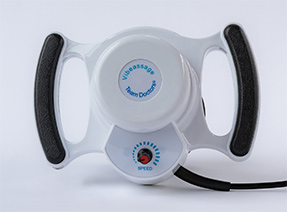
The Vibeassage Sport and the Vibeassage Pro featuring the TDX3 soft-as-the-hand Biomimetic Applicator Pad
https://www.teamdoctors.com/
✓ Get Dr. Stoxen’s #1 International Bestselling Books
Learn how to understand, examine, and reverse your TOS—without surgery.
https://drstoxen.com/1-international-best-selling-author/
✓ Check out Team Doctors Online Courses
Step-by-step video lessons, demonstrations, and self-treatment strategies.
https://teamdoctorsacademy.com/
✓ Schedule a Free Phone Consultation With Dr. Stoxen
Speak directly with him so he can review your case and guide you on your next steps.
https://drstoxen.com/appointment/

Dr James Stoxen DC., FSSEMM (hon) He is the president of Team Doctors®, Treatment and Training Center Chicago, one of the most recognized treatment centers in the world.
Dr Stoxen is a #1 International Bestselling Author of the book, The Human Spring Approach to Thoracic Outlet Syndrome. He has lectured at more than 20 medical conferences on his Human Spring Approach to Thoracic Outlet Syndrome and asked to publish his research on this approach to treating thoracic outlet syndrome in over 30 peer review medical journals.
He has been asked to submit his other research on the human spring approach to treatment, training and prevention in over 150 peer review medical journals. He serves as the Editor-in-Chief, Journal of Orthopedic Science and Research, Executive Editor or the Journal of Trauma and Acute Care, Chief Editor, Advances in Orthopedics and Sports Medicine Journal and editorial board for over 35 peer review medical journals.
He is a much sought-after speaker. He has given over 1000 live presentations and lectured at over 70 medical conferences to over 50,000 doctors in more than 20 countries. He has been invited to speak at over 300 medical conferences which includes invitations as the keynote speaker at over 50 medical conferences.
After his groundbreaking lecture on the Integrated Spring-Mass Model at the World Congress of Sports and Exercise Medicine he was presented with an Honorary Fellowship Award by a member of the royal family, the Sultan of Pahang, for his distinguished research and contributions to the advancement of Sports and Exercise Medicine on an International level. He was inducted into the National Fitness Hall of Fame in 2008 and the Personal Trainers Hall of Fame in 2012.
Dr Stoxen has a big reputation in the entertainment industry working as a doctor for over 150 tours of elite entertainers, caring for over 1000 top celebrity entertainers and their handlers. Anthony Field or the popular children’s entertainment group, The Wiggles, wrote a book, How I Got My Wiggle Back detailing his struggles with chronic pain and clinical depression he struggled with for years. Dr Stoxen is proud to be able to assist him.
Full Bio) Dr Stoxen can be reached directly at teamdoctors@aol.com