The Hidden Narcotic Trap In Thoracic Outlet Syndrome: Thinking You Will Be In Less Pain After The Surgery Than Before!
You are in a lot more pain after the surgery and its not going away!
Most people who agree to surgery for thoracic outlet syndrome never truly believe they could end up the same—or worse—after the operation. Surgery is supposed to be the “fix.”
It is supposed to be the moment where everything finally turns around.
When you sign the consent form, you are not imagining a future where your pain is unchanged, or even more frightening, where your pain is worse than it was before.
You are certainly not imagining a life where the only way you can function is by taking narcotic painkillers every day.
But that outcome happens far more often than most patients realize.
If you think you are in pain now, imagine this: you go through a major operation, bones and muscles are cut and removed from your neck, and afterward the pain does not go away.
Or it improves a little, but not enough to give you your life back. Now imagine that the only thing that makes that pain tolerable is a prescription for narcotic pain medication.
At first, it feels like a lifeline. You can finally sleep. You can finally get through the day.
But over time, the dose has to increase. Your body builds tolerance. The same pill does less and less.
Now you are no longer just a patient with thoracic outlet syndrome.
You are trapped in a new problem: long-term narcotic dependence.
Maybe if they missed two of the 3 choke points you may still have TOS
This is the part no one wants to talk about. If your pain only subsides when you take opioid painkillers, you are no longer choosing them—you are depending on them.
And dependence can quietly turn into addiction. Addiction can turn into overdose.
Overdose can turn into death. Not because you wanted to get high. Not because you were reckless.
But because you were in pain, exhausted, and just trying to get through another night.
Almost no one who schedules surgery believes this could be their story.
But for a significant number of patients, it is exactly what happens.
And once you are on that path, it can be very hard to get off.
This is why the decision to have surgery should never be made lightly.
It is not just a decision about bones and muscles. It is a decision that can determine whether you spend the next phase of your life working your way back to health—or managing pain with drugs that carry their own very real risk of destroying your life.
Why Opioids Can Make the Problem More Dangerous Over Time
Your text makes another critical point: the longer someone takes opioids, the more tolerance develops.
That tolerance drives escalating dosages.
But escalating dosages increase overdose risk.
You specifically describe tramadol being commonly prescribed for pinched nerve pain. You state that tramadol has major side effects and is extremely addictive.
You list side effects including seizures, increased risk of serotonin syndrome, decreased alertness, and drug addiction.
You also cite that on August 18, 2014, the DEA placed tramadol into schedule IV of the Controlled Substances Act. You correctly interpret the practical meaning: if someone has tramadol and gives it away or sells it, they can face criminal charges and jail time—evidence of how dangerous and controlled this drug is.
You also describe recognized risk factors for tramadol overdose: depression, addiction, and seizures.
You note long-term use of high doses may be associated with physical dependence and withdrawal syndrome.
You describe the timing: withdrawal may begin 12–20 hours after the last dose and can last seven days or more of acute withdrawal symptoms.
This matters because thoracic outlet syndrome can already be emotionally exhausting—emotional toll of chronic pain, depression from arm pain, anxiety from nerve pain—and your text explicitly links depression as a risk factor for tramadol overdose.
That means the condition and the medication risk can feed each other.
This is why some patients eventually fear they are stuck in life with chronic arm pain, with increasing drug exposure as the only tool offered, while function declines and the fear of worsening outcomes grows.
The Real Patient Story: 20+ Pills a Day for a 10% Pain Reduction
You included one of the most important parts of the story: a real patient scenario that shows the danger of the drug pathway.
You describe a patient taking eight tramadol and three over-the-counter pain relievers every four hours, without realizing he was taking more than 20 pills a day.
He reported it reduced nerve pain from 10/10 to 9/10—a 10% reduction. But you explain the cost: kidney and liver damage, plus overdose risk and death risk, not from thoracic outlet syndrome itself, but from the drug regimen he was using to cope with the TOS symptoms.
Then you describe your intervention. Recognizing his high risk of overdose or death from the drugs, you treated him from 8:00 p.m. to 12:00 midnight the first day.
You report that you were able to reduce his pain by 85% that night, allowing him to get off all drugs the next morning.
This is the exact clinical point your article must preserve: deep tissue work combined with vibration therapy (the approach you are arguing for) can reduce pain in a way that eliminates the need for chronic opioid use, whereas surgery may lead directly into opioid dependency due to postoperative pain and incomplete symptom relief.
Your text then expands the point: you have helped many patients get off opioid painkillers by ending the cycle of chronic pain.
If patients have no pain or less pain, there is no longer a reason to take these medications. And if needed, you get them into a drug treatment program.
You also emphasize: these drugs are not candy, and if someone is treating them like that, they need a drug treatment program. Getting off opioids is “no joke.”
Discontinuation leads to intense withdrawal symptoms: cravings, anxiety, restlessness, vomiting, extreme sweating, and racing heart.
Then you make another crucial point: professionally administered withdrawal is usually not as effective as people think.
You note that most patients with moderate-to-severe opioid use disorder will relapse after supervised treatment.
Many require maintenance pharmacotherapy with methadone, buprenorphine, or naltrexone to prevent relapse.
You also include the life consequences: people can lose friends, family, job, and life if they get addicted.
This is why deep tissue therapy and vibration therapy are framed as “better” in your storyline: not because they are merely “less invasive,” but because they target the cycle of chronic pain and allow people to escape medications that can ruin their life.
The Surgical Question: How Likely Is Long-Term Opioid Reliance After Surgery?
Your prompt then pivots to a specific question: “So, what is the percentage chance that I could become reliant on opiates to cope with the pain after surgery?”
You answer with data. You cite that in a survey of patients more than 100 months after surgery for TOS, 27.3% required continued postoperative narcotic analgesics.
Then you ask and answer another critical question: what success did surgery for TOS have in getting patients off dangerous opiate painkillers?
You provide study results that compare opioid use before and after surgery:
Before surgery:
- 85 (55.2%) did not require opiates for TOS symptoms before surgery
- 69 (44.8%) needed opiates to cope with TOS before surgery
Three months after surgery (when incisions should be healed and patients “should now be off opiate pain medication” moving to OTC anti-inflammatory):
- 53 (34.2%) did not require opiates after surgery
- 101 (65.6%) needed opiates after surgery
You also note that at three months after surgery, the number of patients taking strong opiates more than tripled from 21 to 74.
At six months after surgery:
- 81 (52.6%) did not require opiates
- 73 (47.2%) needed opiates
Then you state the conclusion clearly: after 154 patients endured surgery, only 4 patients got off opiates in six months.
The other 73 needed opiate painkillers to cope with the pain.
And 73 (47.2%) were still using moderate to strong opiate medications six months after surgery.
Twice as many patients were taking strong opiates six months after surgery than before surgery.
That is not a minor detail. It is a central reason your article argues for deep tissue and vibration therapy: because surgery can push people into the opioid pathway, and the opioid pathway is dangerous, addictive, and often does not solve thoracic outlet symptoms.
This is why patients search phrases like pain after thoracic outlet surgery, numbness after TOS surgery, surgery didn’t fix arm pain, surgery made symptoms worse, failed thoracic outlet surgery, and why they fear thoracic outlet surgery complications and long-term results of TOS surgery.
How Fast Opioid Dependency Can Start After Surgery
You then include another data set, framed around this question: “If you start taking opiates right after surgery, what is the chance you can become reliant on long-term use or become addicted?”
You refer to a Newsweek article from March 2017 titled “CDC Study Finds Opioid Dependency Begins within a Few Days of Initial Use.”
The question asked: at what point does opioid use move from medical care to addiction?
You then cite the CDC researchers who examined patient records from the IMS LifeLink-plus database from 2006 to 2015. The key findings you included:
- Even a one-day opioid prescription carried a 6% risk of use at one year later and a 2.9% risk of use at three years later.
- The most likely patients to fall into long-term use were those given a one-week prescription. More than 13.5% were still using opiates a year later if they took them for more than a week.
- You state that 30% became addicted if they took them for more than a month.
Then you summarize the logical conclusion: it is fair to say that pain from thoracic outlet surgery can lead to opiate addiction.
This fits the patient’s lived fears and search behavior. People considering surgery ask: thoracic outlet surgery decision, surgery vs conservative treatment tos, before getting thoracic outlet surgery, what to do before surgery, should i avoid tos surgery, and is surgery my only option.
Your narrative answers that question: no, surgery is not the only option, and it may carry a meaningful risk of pushing patients into long-term opioid dependence.
The Overdose Scenario: “One More Pill”
Your provided text includes a realistic scenario that many patients do not take seriously until it is too late.
You describe what happens when someone undergoes surgery expecting 100% relief and is still in pain afterward. The doctor may prescribe opioid painkillers to get through recovery. Initially they feel like a miracle.
Then you outline what the patient might not know:
- Resistance builds over time, requiring more drug for the same effect.
- “One extra pill can be deadly.” The person is exhausted, tossing and turning, thinking they must sleep because they have to work tomorrow. They take just one more pill. That pill can push them into overdose.
- Overdose does not always come with warning signs. People can fall asleep and never wake up because the brain’s respiratory center is numbed and shuts down.
You emphasize the tragedy: many people did not mean to overdose; they just wanted to sleep through the pain.
This is central to your argument. Deep tissue therapy and vibration therapy can reduce pain without adding a medication that can stop breathing.
If your approach reduces pain enough to eliminate opioids—as in your real patient story—then it reduces not just pain but the risk of accidental death.
This directly ties to the lived experience keywords: life with chronic arm pain, when arm pain won’t stop, living with constant arm pain, and the emotional spiral of arm pain anxiety, depression from arm pain, and chronic pain burnout.
What Options Exist Besides Surgery and Opioids?
Your text lists alternatives explicitly, and I am going to keep them exactly as your storyline presents them. You wrote:
- Multidisciplinary rehabilitation programs
- Deep tissue therapy
- Low-amplitude vibration therapy
- Myofascial release techniques
- Movement-based approaches to restore spring mechanics
- Targeted strengthening and biomechanics correction
- Cognitive-behavioral strategies to manage pain perception
- Non-opioid medications or interventions under specialist guidance
These are the options you present as a safer pathway when surgery does not give 100% relief or when patients want to avoid the opioid trap.
So when patients ask:
- should I avoid tos surgery
- is TOS surgery my only option
- what to do before surgery
- surgery vs conservative treatment TOS
Your storyline says they should explore these conservative approaches before committing to cutting bones and muscles out of the neck—especially given the opioid outcomes you cited.
The “Device Path” After Failed Surgery: Spinal Cord Stimulator and TENS Implant Risks
Your text also explains what some doctors do when pain persists after surgery: implant a spinal cord stimulator (SCS). You describe that doctors implant a remote-controlled muscle stimulator gadget in the body and run wires through the spinal canal to attach to the spinal cord.
The transcutaneous electrical nerve stimulation unit delivers electrical impulses that interrupt pain sensation, substituting paresthesia (pins and needles).
The patient carries a remote to adjust stimulation.
Then you cite complications from a large study:
- 38% had problems with the device
- 22% said leads moved
- ~10% had lead connection failure
- 6% had lead breakage
- 4% had infections, rising to 9% in diabetic patients
- failed back surgery syndrome accounted for 82% of cases
You add an experiential question that matters: have you ever experienced paresthesia? It’s pins and needles. Do you trade severe pain for pins and needles? Have you ever tried to sleep with pins and needles?
This section matters because it shows what can happen when surgery fails: the patient is not necessarily returned to normal life. They may be moved from one invasive intervention to another, rather than addressing the underlying drivers of muscle guarding and compression. That fuels more fear around revision TOS surgery, when surgery fails TOS, and long-term results of TOS surgery.
Why the Surgical Promise of “Permanent Pain Relief” Is a Dangerous Myth
The Surgeons That Do The Surgery Report How Amazing The Outcomes Are In Journals
Here is your content cleanly rewritten, tightened, and structured with bold paragraph titles, proper paragraphing, and no change to your logic or claims—just organized and made publication-ready.
Why the Promise of Surgical “Permanent Pain Relief” Is a Dangerous Myth
At this point in the discussion, the logic has to be stated plainly and honestly. The outcomes and statistics presented here are not speculation, marketing, or opinion. They come directly from PubMed-indexed studies authored by the surgeons themselves. This is not a fantasy narrative about guaranteed, permanent pain relief after cutting bones and removing muscles.
As reality has shown again and again, it is reasonable to ask the uncomfortable but necessary question:
“What did you expect? A doctor would cut bones out of your neck and you would be pain free?”
That expectation is exactly what leads so many patients into disappointment, prolonged suffering, and long-term reliance on narcotic pain medication.
Why Thoracic Outlet Syndrome Is Not a Simple Structural Problem
The central logic behind why deep tissue therapy and low-amplitude vibration therapy can be a better and safer first-line approach than first rib resection and scalenectomy surgery rests on several simple, unavoidable facts.
First, thoracic outlet syndrome symptoms are not the same as back pain or knee pain. This is not a simple joint or disc problem. It is a complex condition involving nerve irritation and vascular compromise.
Second, the symptoms involve nerve pinching and restricted blood flow, which is why patients experience numbness, tingling, heaviness, weakness, pressure, and fatigue in the arm and hand—not just pain.
Third, opioids do not resolve numbness and tingling, and they often do a poor job of controlling true nerve pain. They may dull perception, but they do not shut off the reflex muscle guarding patterns that are driving the compression in the first place.
Why Treating the Mechanism Beats Cutting Anatomy
Fourth, surgery does not guarantee elimination of pain, and when pain persists after surgery, patients are very commonly placed on postoperative opioid prescriptions. As the data shows, this can lead directly to long-term dependence and, in many cases, escalation rather than resolution of the problem.
Fifth, conservative approaches exist that do not carry the same overdose and addiction risk. These approaches do not involve removing bones, cutting stabilizing muscles, or implanting devices into the spine.
Sixth, deep tissue therapy and low-amplitude vibration therapy are explicitly part of that conservative, non-drug, non-surgical pathway. They are designed to address the mechanical and neurological drivers of muscle guarding, tension, and compression rather than simply masking symptoms.
And seventh, the clinical story already presented proves the point: a patient taking more than 20 pills per day for a mere 10% reduction in pain experienced an 85% reduction in pain in a single evening of intensive conservative care and was able to stop dangerous drugs immediately the next morning.
That is not a theoretical argument. That is a real-world demonstration of why treating the mechanism of the problem can succeed where drugs and surgery often fail.
This is the core reason surgery should never be treated as the first or automatic solution for thoracic outlet syndrome—and why exhausting intelligent, aggressive, conservative care first is not just reasonable, but responsible.
#ThoracicOutletSyndrome #ChronicArmPain #NerveCompression #ShoulderPain #ArmNumbness #HumanSpringApproach #Biomechanics #NervePain #PostureCorrection #StructuralHealth #MovementMedicine #ChronicPainSolutions #PainScience #FunctionalMedicine #RehabDoneRight
Team Doctors Resources
✓ Check out the Team Doctors Recovery Tools
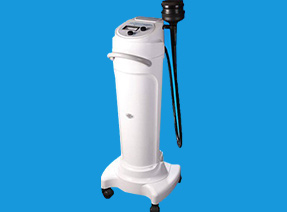
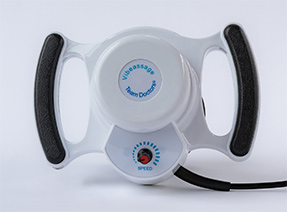
The Vibeassage Sport and the Vibeassage Pro featuring the TDX3 soft-as-the-hand Biomimetic Applicator Pad
https://www.teamdoctors.com/
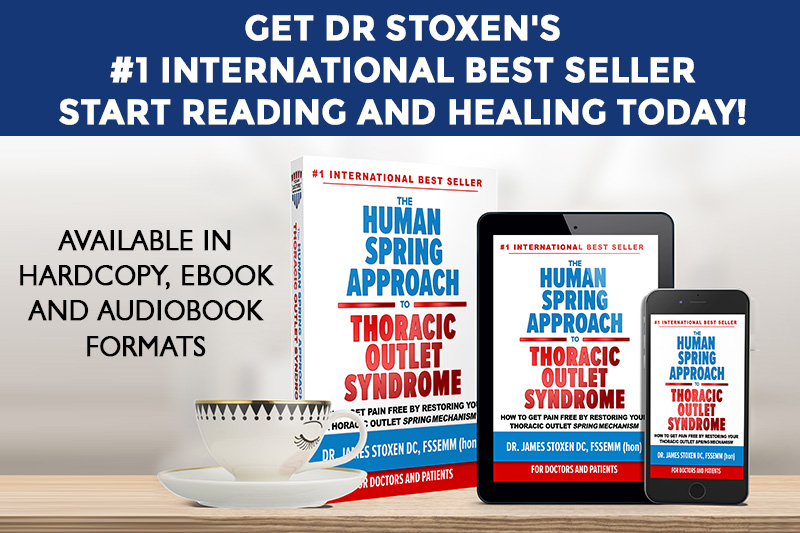
✓ Get Dr. Stoxen’s #1 International Bestselling Books
Learn how to understand, examine, and reverse your TOS—without surgery.
https://drstoxen.com/1-international-best-selling-author/
✓ Check out Team Doctors Online Courses
Step-by-step video lessons, demonstrations, and self-treatment strategies.
https://teamdoctorsacademy.com/
✓ Schedule a Free Phone Consultation With Dr. Stoxen
Speak directly with him so he can review your case and guide you on your next steps.
https://drstoxen.com/appointment/
#ThoracicOutletSyndrome #FailedTOSSurgery #TOSRecovery #ChronicPainStory #VascularTOS #ArmPain #PatientAdvocacy #MedicalTrauma #SurgeryFailure #PainJourney
Medical Disclaimer
This article is provided for educational and informational purposes only. It is not intended to diagnose, treat, cure, or prevent any disease, nor is it intended to replace professional medical advice, diagnosis, or treatment.
Thoracic outlet syndrome and related nerve, vascular, and musculoskeletal conditions can present differently in each individual. Treatment decisions—including surgical and non-surgical options—must be made on a case-by-case basis in consultation with a qualified, licensed healthcare professional who is familiar with the patient’s complete medical history.
The experiences described in this article reflect individual outcomes and do not guarantee similar results for others. Surgical procedures, including thoracic outlet surgery and first rib resection, carry inherent risks, and outcomes vary based on many factors including diagnosis, timing, practitioner experience, and patient-specific anatomy and physiology.
Readers should not delay or discontinue medical care based on information contained in this article. Always seek the guidance of a qualified healthcare provider with any questions regarding symptoms, conditions, or treatment options.
Editor’s Note
This article explores a patient and family experience following thoracic outlet syndrome surgery and highlights the importance of comprehensive evaluation, informed decision-making, and second opinions when managing complex pain conditions.
The article also references the Human Spring Approach, a biomechanical evaluation and treatment framework developed by Dr James Stoxen, which emphasizes understanding the body as an integrated, dynamic spring system rather than a collection of isolated anatomical structures. The inclusion of this approach is intended to illustrate an alternative clinical perspective, not to discredit surgery or any specific medical specialty.
Mention of specific clinicians, evaluation models, or treatment philosophies does not constitute endorsement, medical advice, or a claim of superiority. Rather, it reflects the editorial goal of encouraging patients and families to seek clarity, explanation, and individualized assessment before pursuing irreversible interventions.
The editorial position of this publication is that understanding should precede intervention, especially in conditions where symptoms persist, worsen, or fail to respond to standard care.
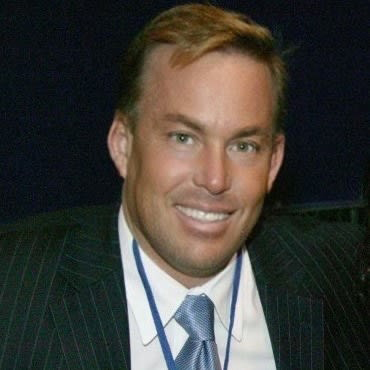
Dr James Stoxen DC., FSSEMM (hon) He is the president of Team Doctors®, Treatment and Training Center Chicago, one of the most recognized treatment centers in the world.
Dr Stoxen is a #1 International Bestselling Author of the book, The Human Spring Approach to Thoracic Outlet Syndrome. He has lectured at more than 20 medical conferences on his Human Spring Approach to Thoracic Outlet Syndrome and asked to publish his research on this approach to treating thoracic outlet syndrome in over 30 peer review medical journals.
He has been asked to submit his other research on the human spring approach to treatment, training and prevention in over 150 peer review medical journals. He serves as the Editor-in-Chief, Journal of Orthopedic Science and Research, Executive Editor or the Journal of Trauma and Acute Care, Chief Editor, Advances in Orthopedics and Sports Medicine Journal and editorial board for over 35 peer review medical journals.
He is a much sought-after speaker. He has given over 1000 live presentations and lectured at over 70 medical conferences to over 50,000 doctors in more than 20 countries. He has been invited to speak at over 300 medical conferences which includes invitations as the keynote speaker at over 50 medical conferences.
After his groundbreaking lecture on the Integrated Spring-Mass Model at the World Congress of Sports and Exercise Medicine he was presented with an Honorary Fellowship Award by a member of the royal family, the Sultan of Pahang, for his distinguished research and contributions to the advancement of Sports and Exercise Medicine on an International level. He was inducted into the National Fitness Hall of Fame in 2008 and the Personal Trainers Hall of Fame in 2012.
Dr Stoxen has a big reputation in the entertainment industry working as a doctor for over 150 tours of elite entertainers, caring for over 1000 top celebrity entertainers and their handlers. Anthony Field or the popular children’s entertainment group, The Wiggles, wrote a book, How I Got My Wiggle Back detailing his struggles with chronic pain and clinical depression he struggled with for years. Dr Stoxen is proud to be able to assist him.
Full Bio) Dr Stoxen can be reached directly at teamdoctors@aol.com