Thoracic Outlet Syndrome is often discussed as a localized problem of nerves and blood vessels in the shoulder region, but this view misses how forces move through the entire body. In my clinical experience, symptoms commonly appear where mechanical stress concentrates rather than where it begins. This perspective requires understanding biomechanics as a system, not as isolated parts.
Early models of human movement focused primarily on the lower body. These frameworks viewed the body as a series of rigid segments rather than an elastic structure. As a result, they could not fully explain symptom patterns seen in Thoracic Outlet Syndrome.
One influential concept was the spring-mass model, which described how the lower limbs store and release energy during walking and running. This model emphasized motion from the hip to the foot. While valuable, it did not include the upper body as an active contributor to elastic behavior.
The human spring model expands this idea by recognizing that multiple regions act as springs. These include the foot arches, spine, and shoulder complex. Patients often report symptoms when these regions fail to coordinate.
A more complete framework is the integrated spring-mass model, which treats the body as a connected elastic system from the feet to the head. This model accounts for how stress travels upward into the thoracic outlet region.
During normal movement, the stretch-shortening cycle allows tissues to lengthen under load and then recoil. This cycle is essential for efficient motion. When disrupted, excessive tension may develop around neurovascular structures.
Healthy motion depends on elastic energy storage in muscles and connective tissues. When this capacity is reduced, force is redirected elsewhere. Many individuals describe shoulder or neck tightness following lower-body dysfunction.
Force transmission occurs along predictable paths through the body. In a connected system, forces entering through the feet travel upward. If the spine or shoulder suspension fails to absorb these loads, stress may concentrate near the thoracic outlet.
The body relies on shock absorption to protect delicate tissues. This function is distributed across joints and soft tissues. When one region stiffens, other regions must compensate.
Efficient load distribution prevents localized overload. In Thoracic Outlet Syndrome, altered distribution may increase compression risk around nerves and vessels.
The kinetic chain links foot mechanics to shoulder function. Dysfunction at one link can affect distant regions. This is a pattern I commonly see during movement assessment.
Effective movement requires precise neuromuscular control. When timing between muscles is disrupted, protective tension may increase around the shoulder girdle.
Joint behavior varies between joint compliance and rigidity. Excessive compliance or stiffness can both disrupt force flow. Balanced motion is essential.
Too much joint stiffness reduces energy absorption. This can redirect forces toward softer tissues, including those within the thoracic outlet.
Muscles, tendons, and fascia behave as viscoelastic tissues. Their response depends on speed and load. Chronic tension alters this response over time.
Each step generates ground reaction forces that travel upward. If these forces are not dissipated, they may influence upper-body structures.
Altered gait mechanics can change how forces enter the body. Many individuals describe symptom flares after changes in walking patterns or footwear.
Maintaining postural stability requires coordinated spring behavior. Poor posture often reflects underlying mechanical imbalance rather than weakness alone.
Early biomechanics described walking using the inverted pendulum model. This approach treated the body as a rigid mass vaulting over the stance leg. While historically important, it ignored elastic recoil.
Modern views recognize the body as a suspension system. The shoulders are suspended from the spine and rib cage, not stacked rigidly.
Understanding connective tissue mechanics helps explain why tension can spread across regions. Fascia transmits force efficiently over distance.
Chronic myofascial tension often reflects protective responses to abnormal loading. This tension may narrow available space in the thoracic outlet.
The spine functions as an elastic column governed by spinal biomechanics. Loss of spinal spring behavior alters load transfer to the shoulders.
The shoulder girdle operates as a shoulder suspension, not a fixed joint. This suspension protects nerves and vessels during movement.
The feet play a critical role through foot arch mechanics. Collapsed or rigid arches change how force enters the kinetic chain.
Sensory feedback from joints and muscles supports proprioception. When feedback is altered, coordination may suffer.
Effective balance control depends on elastic responses across the body. Poor balance often coincides with excessive muscle guarding.
Efficient movement minimizes energy loss, improving energy efficiency. Compensatory tension increases energy demands.
Smooth motion reflects good movement economy. Disrupted spring behavior leads to inefficient patterns and fatigue.
Under load, tissues undergo tissue deformation. Repeated deformation without recovery may contribute to irritation.
Every system has a natural mechanical resonance. When movement frequencies mismatch tissue properties, stress accumulates.
Earlier biomechanical models described the body’s spring behavior as originating primarily from the hip down to the foot. These models did not include a true representation of the human footprint. They also failed to incorporate the spinal spring and the shoulder suspension spring.
Because these components were missing, earlier frameworks could not explain how forces pass through the upper body. Upper-body load transfer, neural protection, and suspension-based shock absorption were poorly described.
Giovanni Alfonso Borelli remains historically important for his contributions to biomechanics. His inverted pendulum-style concepts reflected the scientific limits of his time. They laid groundwork for later models.
Modern evidence supports a whole-body spring system that extends beyond the lower extremity. This system includes the spine and shoulder complex as active participants in force management.
In my clinical experience, Thoracic Outlet Syndrome often reflects failure of this integrated system rather than a single local cause. Patients often report symptom changes when posture, gait, or loading patterns shift.
Education focused on whole-body mechanics helps individuals understand why symptoms may fluctuate. Recognizing these patterns supports more informed conversations about movement and posture.
This biomechanical perspective does not replace medical evaluation. It provides a framework for understanding how forces interact within the body.
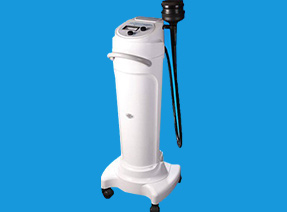
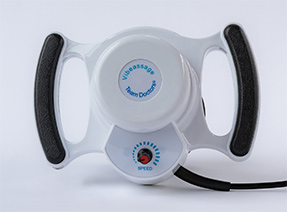
Team Doctors® educational materials often emphasize system-wide mechanics rather than isolated structures. Tools such as the Vibeassage® Sport and Vibeassage® Pro featuring the TDX3 soft-as-the-hand Biomimetic Applicator Pad are discussed in this educational context only.
Understanding Thoracic Outlet Syndrome through biomechanics highlights the importance of connected motion. The body functions best when its springs work together rather than in isolation.
Team Doctors Resources
✓ Check out the Team Doctors Recovery Tools
The Vibeassage Sport and the Vibeassage Pro featuring the TDX3 soft-as-the-hand Biomimetic Applicator Pad
https://www.teamdoctors.com/
✓ Get Dr. Stoxen’s #1 International Bestselling Books
Learn how to understand, examine, and reverse your TOS—without surgery.
https://drstoxen.com/1-international-best-selling-author/
✓ Check out Team Doctors Online Courses
Step-by-step video lessons, demonstrations, and self-treatment strategies.
https://teamdoctorsacademy.com/
✓ Schedule a Free Phone Consultation With Dr. Stoxen
Speak directly with him so he can review your case and guide you on your next steps.
https://drstoxen.com/appointment/
#ThoracicOutletSyndrome #TOS #Biomechanics #HumanMovement #PostureMechanics #KineticChain #SpinalBiomechanics #ShoulderMechanics #GaitAnalysis #MovementScience #ClinicalBiomechanics #OrthopedicEducation #NeurovascularAnatomy #ForceTransmission #MyofascialSystem #SpringMechanics #MovementHealth #PainScience #AnatomyEducation #TeamDoctors
References
- Borelli, Giovanni Alfonso. De Motu Animalium. Rome, 1680.
- McMahon, T. A., and G. C. Cheng. “The Mechanics of Running.” Journal of Biomechanics 23, no. 1 (1990): 65–78. https://doi.org/10.1016/0021-9290(90)90042-2
- Lieberman, D. E. “Human Locomotion and the Evolution of the Spring-Like Leg.” Nature 432 (2004): 345–352. https://doi.org/10.1038/nature03052
- Latash, M. L. Neurophysiological Basis of Movement. Champaign, IL: Human Kinetics, 2008.

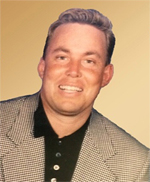
Dr James Stoxen DC., FSSEMM (hon) He is the president of Team Doctors®, Treatment and Training Center Chicago, one of the most recognized treatment centers in the world.
Dr Stoxen is a #1 International Bestselling Author of the book, The Human Spring Approach to Thoracic Outlet Syndrome. He has lectured at more than 20 medical conferences on his Human Spring Approach to Thoracic Outlet Syndrome and asked to publish his research on this approach to treating thoracic outlet syndrome in over 30 peer review medical journals.
He has been asked to submit his other research on the human spring approach to treatment, training and prevention in over 150 peer review medical journals. He serves as the Editor-in-Chief, Journal of Orthopedic Science and Research, Executive Editor or the Journal of Trauma and Acute Care, Chief Editor, Advances in Orthopedics and Sports Medicine Journal and editorial board for over 35 peer review medical journals.
He is a much sought-after speaker. He has given over 1000 live presentations and lectured at over 70 medical conferences to over 50,000 doctors in more than 20 countries. He has been invited to speak at over 300 medical conferences which includes invitations as the keynote speaker at over 50 medical conferences.
After his groundbreaking lecture on the Integrated Spring-Mass Model at the World Congress of Sports and Exercise Medicine he was presented with an Honorary Fellowship Award by a member of the royal family, the Sultan of Pahang, for his distinguished research and contributions to the advancement of Sports and Exercise Medicine on an International level. He was inducted into the National Fitness Hall of Fame in 2008 and the Personal Trainers Hall of Fame in 2012.
Dr Stoxen has a big reputation in the entertainment industry working as a doctor for over 150 tours of elite entertainers, caring for over 1000 top celebrity entertainers and their handlers. Anthony Field or the popular children’s entertainment group, The Wiggles, wrote a book, How I Got My Wiggle Back detailing his struggles with chronic pain and clinical depression he struggled with for years. Dr Stoxen is proud to be able to assist him.
Full Bio) Dr Stoxen can be reached directly at teamdoctors@aol.com