France to Chicago to See a TOS Expert: A Nurse’s Recovery Without Surgery
For most of his adult life, Olivia Se trusted his body.
He was a nurse working in a large hospital in the south of France, accustomed to long shifts, physical demands, and responsibility for others’ health. His profession required endurance, precision, and strength, and for years his body met those demands without hesitation. Outside of work, he lived actively, with a particular love for fishing—especially fly fishing, which demanded coordinated shoulder movement, grip strength, and sustained arm control.
That life changed in March of 2020.
After a long fishing trip, Olivia noticed a burning discomfort beneath his left chest and shoulder. At first, it felt like a strain—something temporary, the kind of soreness that follows repetitive movement. But this pain behaved differently. Instead of fading, it intensified. Within days, the discomfort evolved into burning shoulder pain that spread over the top of his biceps and into his arm.
As weeks passed, the symptoms multiplied.
What began as mild discomfort became chronic shoulder and arm pain. The pain was no longer occasional. It was constant arm pain, present from the moment he woke until he tried—often unsuccessfully—to sleep. His shoulder blade began to ache deeply, accompanied by pain between neck and shoulder that radiated unpredictably. He developed severe muscle tightness in the neck and tight neck and shoulder muscles that resisted stretching, massage, and rest.
At work, the consequences became impossible to ignore.
Reaching, lifting, and stabilizing patients triggered sharp arm nerve pain and a deep shoulder ache that lingered long after each movement. His arm felt unusually heavy, as if weighed down—an unmistakable heavy arm sensation paired with constant arm pressure sensation. His shoulder felt unstable, as though it were slipping downward under its own weight. More than once, he caught himself thinking that his shoulder felt pulled down, no longer suspended properly by the muscles meant to support it.
Sleep offered no refuge.
Night after night, he woke with arm pain when sleeping, sometimes accompanied by random arm numbness or a fully numb arm while sleeping. He noticed subtle but disturbing changes—his left arm often felt colder than the right, a sign he could not explain but instinctively knew was wrong. On some mornings, he woke with severe upper chest pain near shoulder, as if something were compressing deep structures beneath the surface.
By late 2020, his hand began to weaken.
Tasks that once required no thought became difficult. He struggled with fine motor control and experienced loss of hand strength during routine duties. He dropped objects unexpectedly, even simple tools. On several occasions, he found himself dropping things from a weak hand, a frightening experience for someone responsible for patient care.
Driving became unbearable.
Holding the steering wheel triggered intense arm pain when driving, forcing him to adjust positions constantly or pull over. Sitting or standing for more than thirty minutes caused escalating pain near the collarbone and first rib—pain near first rib paired with collarbone pain and numbness that spread into his arm and fingers.
By January 2021, exhausted and desperate, Olivia agreed to shoulder surgery.
An acromioplasty on his left shoulder was recommended as the solution. He was told the procedure would relieve pressure, create space, and resolve the pain. He entered surgery hopeful.
The opposite happened.
Instead of relief, the pain intensified dramatically. Within weeks, his condition deteriorated. He experienced electric shock–like sensations radiating across his clavicle. Severe shoulder nerve pain shot into his arm. Tingling developed in the fourth and fifth fingers of his left hand, accompanied by worsening weakness. His arm felt swollen, heavy, and unstable. His breathing became restricted as spasms seized the muscles between his ribs.
By February, the pain dominated every aspect of his life.
He could no longer work as a nurse. He struggled to sit, stand, or lie down without pain. The condition began affecting his right side as well, creating fear that the problem was spreading. He lived in constant anxiety, consumed by chronic nerve pain frustration and the growing realization that nothing he had tried was helping.
In May 2021, after consultations with multiple physiotherapists, osteopaths, and physicians, he finally received a diagnosis:
Severe thoracic outlet syndrome.
The diagnosis did not bring relief.
Instead, he was told surgery was his only remaining option—a first rib resection and scalenectomy. The words echoed relentlessly in his mind: Is surgery my only option? He was warned about risks, complications, and recovery, but also told there was no alternative.
He felt trapped in his own body.
His arm pain was disabling. His shoulder pain affected every aspect of daily life. He feared permanent nerve damage risk, worried that ignoring the condition could lead to end stage thoracic outlet syndrome. He wondered if this was now his life—living with thoracic outlet syndrome, unable to use his arm without pain.
Then, late one night, searching desperately for answers, he found something different.
A video.
A calm explanation of why chronic arm pain no diagnosis happens. Why surgeries often fail. Why restoring mechanics matters more than cutting anatomy. For the first time in years, Olivia felt something he had nearly forgotten.
Hope.
After the diagnosis, Olivia Se entered what many patients describe as the most dangerous phase of illness—not because the condition suddenly worsens, but because certainty disappears.
He had a name for his suffering now: severe thoracic outlet syndrome. But the name came without a solution. Doctors spoke in absolutes. They explained anatomy in static terms, pointing to bones and muscles on imaging, yet none could explain why his pain behaved the way it did—why it shifted, intensified, spread, or worsened with activity rather than rest.
He asked questions they could not answer.
Why did his arm feel heavy even when he wasn’t using it?
Why did his shoulder feel as if it were being pulled downward?
Why did his symptoms worsen at night?
Why did his right arm begin to feel strained as well?
The answers were always the same.
“You’ve tried everything.”
“This is the last option for thoracic outlet syndrome.”
“Surgery is your only way out.”
He heard the phrase repeatedly: is surgery my only option.
As a nurse, Olivia understood surgery. He understood risk. He understood that removing the first rib and cutting the scalene muscles would permanently alter the structure of his body. What frightened him most was not the operation itself, but the uncertainty of the outcome.
No one could guarantee relief.
In fact, no one could even explain why his condition had progressed so rapidly after shoulder surgery. The acromioplasty was supposed to help. Instead, it had accelerated his decline. His constant shoulder pain intensified. The arm feels weak sensation worsened. His grip strength continued to fade.
He began to fear the worst.
Doctors warned him that prolonged nerve compression could lead to chronic nerve compression damage and permanent nerve damage risk. He read about cases where thoracic outlet syndrome progressed to vascular involvement, clot formation, or irreversible nerve injury. He learned what happens when TOS becomes dangerous, when compression is ignored or misunderstood.
The fear was not abstract.
He lived with constant arm pain that refused to stop. He couldn’t lift his arm without pain. He couldn’t use his arm without pain. His career—built on physical capability—was slipping away. This wasn’t discomfort anymore. It was arm pain disability.
He entered a cycle familiar to many chronic pain patients.
Hope.
Treatment.
Failure.
Despair.
Physiotherapy sessions left him worse. Strength exercises aggravated symptoms. Stretching increased numbness. Manual therapies helped briefly, then failed. He found himself thinking, I’ve tried everything—arm pain won’t stop.
His mental health suffered.
He experienced arm pain anxiety, constant hypervigilance about movement, posture, and positioning. He feared sleeping. He feared driving. He feared dropping objects. He feared the quiet moments when pain had nothing to distract it.
This was life with constant arm pain.
At his lowest point, Olivia stopped thinking in weeks or months. He thought in minutes—how long could he sit before the pain forced him to move? How long could he stand before the pressure became unbearable? How long before the numbness spread again?
He began to burn out.
Chronic pain burnout crept in slowly, then all at once. The exhaustion wasn’t just physical—it was cognitive and emotional. He questioned his future, his profession, and his identity. He wondered if this was the beginning of a permanent decline.
Late at night, unable to sleep due to arm pain when sleeping, he searched online—not for reassurance, but for understanding.
That’s when he found something different.
Not a clinic advertisement.
Not a surgical explanation.
But an educational video.
The speaker wasn’t promising miracles. He wasn’t minimizing pain. He was explaining mechanics—how the shoulder is supposed to be suspended, how nerves require dynamic space, how compression is often a load-management problem, not a fixed anatomical defect.
The explanation resonated immediately.
For the first time, Olivia heard someone explain why nothing works for my shoulder pain when treatment ignores mechanics. Why cutting tissue without restoring function can make symptoms worse. Why surgery sometimes fails to relieve nerve compression.
He watched more.
He listened to discussions about restoring shoulder suspension, addressing muscular guarding, and releasing the twelve muscles that define the thoracic outlet. He learned why a non-surgical human spring approach to thoracic outlet syndrome vs vascular TOS specialist debates often miss the point when no one evaluates function.
He booked a video consultation.
During that consultation, something changed.
The doctor didn’t rush. He asked detailed questions about posture, sleep position, symptom timing, and movement patterns. He listened. Then he did something no one else had done.
He gave Olivia a timeline.
Three days.
Three days to relieve the left-sided pain and radiation. Three days to address the right side. No surgery. No cutting. No permanent alterations.
The confidence was calm—not arrogant.
It was the confidence of someone who understood why the arm wouldn’t heal and how to reverse the process.
The decision was not easy.
Traveling more than 7,000 kilometers from the warm south of France to freezing cold Chicago meant commitment, expense, and risk. But Olivia realized something important.
He was already living with risk.
The risk of worsening nerve damage.
The risk of permanent loss of function.
The risk of never returning to work.
Compared to that, travel was small.
He booked the trip.
A car.
A train.
A plane.
Fifteen hours to hope.
When Olivia Se arrived in Chicago, the cold struck him first.
It was a sharp contrast to the warm climate of southern France—a cold that cut through clothing and seemed to settle into the joints. Under different circumstances, he might have worried the weather would worsen his pain. But at that point, pain had already taken everything it could take. The temperature didn’t matter.
What mattered was finally being in front of someone who understood.
From the moment the evaluation began, Olivia knew this experience was different. This was not a rushed consultation or a checklist-based exam. The assessment was deliberate, detailed, and functional. Instead of focusing solely on imaging or surgical history, the doctor observed how Olivia moved, stood, breathed, and compensated.
Then came the moment that changed everything.
Within minutes, the true problem was identified.
Olivia’s left shoulder was dislocated—not dramatically, not visibly, but mechanically. The joint had lost its suspension. Instead of being supported and centered, the shoulder had dropped downward, narrowing the space where nerves and vessels were meant to pass safely. This explained everything: the shoulder feels unstable, the sensation that the shoulder feels pulled down, the pain where neck meets shoulder, the pressure near the collarbone, and the relentless nerve symptoms.
No one had ever found this before.
Not before surgery.
Not after surgery.
Not during years of treatment.
The acromioplasty had never addressed the real issue. In fact, it had worsened it by removing tissue without restoring shoulder stability. The result was increased compression, not relief.
Once the diagnosis was clear, treatment began immediately.
The first step was releasing the extreme muscle guarding that had developed over years of pain. Olivia’s body had been protecting itself, tightening muscles in response to nerve irritation and inflammation. Those protective contractions were now part of the problem.
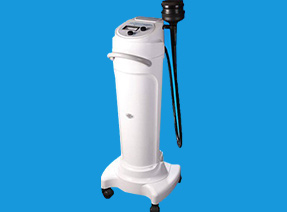
Using a full-body vibration device, inflammation was reduced while circulation and lymphatic flow were restored. This alone created a noticeable change. The pressure in his arm decreased. The heaviness softened. His breathing felt easier.
Then came the precision work.
Every muscle of the thoracic outlet was addressed—methodically, deliberately, and thoroughly. The deep muscles above the collarbone, the scalenes, the pectoralis minor, the subclavius, the intercostals, and the stabilizers of the shoulder girdle. Areas that had been ignored for years were finally treated with intention.
When the shoulder joint was gently reset and properly suspended, the result was immediate.
The severe left shoulder pain vanished.
Not diminished.
Not reduced.
Gone.
The burning shoulder pain, the sharp arm nerve pain, the throbbing arm pain—they disappeared in a matter of moments.
Olivia sat still, stunned, waiting for the pain to return.
It didn’t.
Over the next three days, the progress continued exactly as promised.
Each day, symptoms receded further. The heavy arm sensation resolved. The arm pressure sensation disappeared. Tingling in the fingers faded. Strength returned. His grip became firm again, stable and reliable. He could hold objects without fear of dropping them.
True to the original estimate, by the third day his left-sided symptoms were completely gone.
Then attention shifted to the right side.
Though less severe, the right shoulder had begun compensating for years. It carried its own tension and instability. Over the next three days, the same approach was applied—restore suspension, release compression, normalize movement.
Again, the result was exact.
Three days later, the right shoulder pain was gone.
For the first time in years, Olivia slept through the night without pain. No arm pain when sleeping. No numbness. No waking in panic. His arm temperature normalized. His posture changed naturally, without effort.
His father, who had accompanied him on the journey, watched the transformation in disbelief.
He had seen his son deteriorate—physically, emotionally, professionally. Now he saw him move freely, breathe easily, and smile again. When it became clear the nightmare was over, his father couldn’t hold back tears.
Neither could Olivia.
This wasn’t just pain relief. It was the return of identity.
Before leaving Chicago, Olivia learned how to protect what he had regained. He was taught how to exercise the muscles that suspend the thoracic outlet, how to walk properly to reduce upper-body strain, how posture and footwear influence nerve space, and how to self-treat inflammation before it could rebuild.
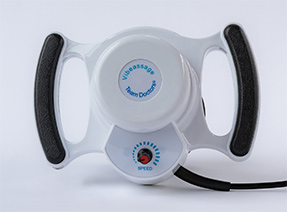
He purchased a portable vibration device. The Vibeassage Sport to continue treatment at home, understanding that maintenance—not surgery—was the key to long-term recovery. He even bought another for a family member, knowing firsthand how transformative proper care could be.
As he prepared to return to France, Olivia reflected on what he had learned.
Distance no longer seemed like a barrier. Expertise mattered more than geography. Confidence mattered more than fear. And understanding mechanics mattered more than removing anatomy.
He had lived with severe thoracic outlet syndrome.
He had faced the recommendation of irreversible surgery.
He had been told there was no alternative.
And yet—he healed.
Today, Olivia shares his story so others know they are not alone. When arm pain won’t stop, when nothing helps, when surgery feels like the only option—there may still be another path.
He is living proof.
3 Practical Tips to Improve Your Health
Address biomechanics before anatomy
If you have chronic shoulder and arm pain, seek evaluation that looks at posture, joint suspension, and movement patterns—not just imaging or anatomy.
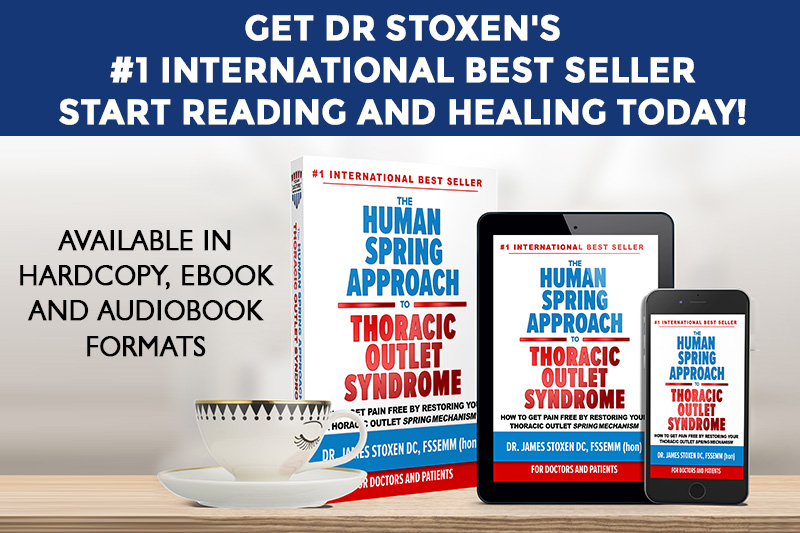
Chapter 1 & 2 Learn the anatomy and biomechanics of human spring in chapter 1 and two of the book, Human Spring Approach to Thoracic Outlet Syndrome
Reduce inflammation and muscle guarding early
Persistent muscle tightness feeds nerve compression. Use tools and techniques that restore circulation and calm protective muscle contractions.
Chapter 13 of the book, Human Spring Approach to Thoracic Outlet Syndrome
Strengthen what supports space
Long-term recovery depends on restoring strength to the muscles that suspend the shoulder and protect nerve pathways—not cutting them away.
Chapter 14 of the book, Human Spring Approach to Thoracic Outlet Syndrome
Team Doctors Resources
✓ Check out the Team Doctors Recovery Tools
The Vibeassage Sport and the Vibeassage Pro featuring the TDX3 soft-as-the-hand Biomimetic Applicator Pad
https://www.teamdoctors.com/
✓ Get Dr. Stoxen’s #1 International Bestselling Books
Learn how to understand, examine, and reverse your TOS—without surgery.
https://drstoxen.com/1-international-best-selling-author/
✓ Check out Team Doctors Online Courses
Step-by-step video lessons, demonstrations, and self-treatment strategies.
https://teamdoctorsacademy.com/
✓ Schedule a Free Phone Consultation With Dr. Stoxen
Speak directly with him so he can review your case and guide you on your next steps.
https://drstoxen.com/appointment/
#ThoracicOutletSyndrome #ChronicArmPain #ShoulderNervePain #AvoidSurgery #NonSurgicalRecovery #NerveCompression #TOSRecovery #ArmPainRelief #ChronicPainJourney #FunctionalMedicine
Medical Disclaimer
This article is provided for educational and informational purposes only. It is not intended to diagnose, treat, cure, or prevent any disease, nor is it intended to replace professional medical advice, diagnosis, or treatment.
Thoracic outlet syndrome and related nerve, vascular, and musculoskeletal conditions can present differently in each individual. Treatment decisions—including surgical and non-surgical options—must be made on a case-by-case basis in consultation with a qualified, licensed healthcare professional who is familiar with the patient’s complete medical history.
The experiences described in this article reflect individual outcomes and do not guarantee similar results for others. Surgical procedures, including thoracic outlet surgery and first rib resection, carry inherent risks, and outcomes vary based on many factors including diagnosis, timing, practitioner experience, and patient-specific anatomy and physiology.
Readers should not delay or discontinue medical care based on information contained in this article. Always seek the guidance of a qualified healthcare provider with any questions regarding symptoms, conditions, or treatment options.
Editor’s Note
This article explores a patient and family experience following thoracic outlet syndrome surgery and highlights the importance of comprehensive evaluation, informed decision-making, and second opinions when managing complex pain conditions.
The article also references the Human Spring Approach, a biomechanical evaluation and treatment framework developed by Dr James Stoxen, which emphasizes understanding the body as an integrated, dynamic spring system rather than a collection of isolated anatomical structures. The inclusion of this approach is intended to illustrate an alternative clinical perspective, not to discredit surgery or any specific medical specialty.
Mention of specific clinicians, evaluation models, or treatment philosophies does not constitute endorsement, medical advice, or a claim of superiority. Rather, it reflects the editorial goal of encouraging patients and families to seek clarity, explanation, and individualized assessment before pursuing irreversible interventions.
The editorial position of this publication is that understanding should precede intervention, especially in conditions where symptoms persist, worsen, or fail to respond to standard care.
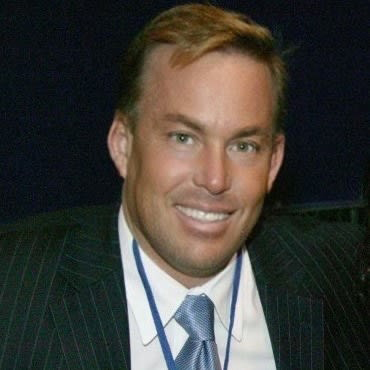
Dr James Stoxen DC., FSSEMM (hon) He is the president of Team Doctors®, Treatment and Training Center Chicago, one of the most recognized treatment centers in the world.
Dr Stoxen is a #1 International Bestselling Author of the book, The Human Spring Approach to Thoracic Outlet Syndrome. He has lectured at more than 20 medical conferences on his Human Spring Approach to Thoracic Outlet Syndrome and asked to publish his research on this approach to treating thoracic outlet syndrome in over 30 peer review medical journals.
He has been asked to submit his other research on the human spring approach to treatment, training and prevention in over 150 peer review medical journals. He serves as the Editor-in-Chief, Journal of Orthopedic Science and Research, Executive Editor or the Journal of Trauma and Acute Care, Chief Editor, Advances in Orthopedics and Sports Medicine Journal and editorial board for over 35 peer review medical journals.
He is a much sought-after speaker. He has given over 1000 live presentations and lectured at over 70 medical conferences to over 50,000 doctors in more than 20 countries. He has been invited to speak at over 300 medical conferences which includes invitations as the keynote speaker at over 50 medical conferences.
After his groundbreaking lecture on the Integrated Spring-Mass Model at the World Congress of Sports and Exercise Medicine he was presented with an Honorary Fellowship Award by a member of the royal family, the Sultan of Pahang, for his distinguished research and contributions to the advancement of Sports and Exercise Medicine on an International level. He was inducted into the National Fitness Hall of Fame in 2008 and the Personal Trainers Hall of Fame in 2012.
Dr Stoxen has a big reputation in the entertainment industry working as a doctor for over 150 tours of elite entertainers, caring for over 1000 top celebrity entertainers and their handlers. Anthony Field or the popular children’s entertainment group, The Wiggles, wrote a book, How I Got My Wiggle Back detailing his struggles with chronic pain and clinical depression he struggled with for years. Dr Stoxen is proud to be able to assist him.
Full Bio) Dr Stoxen can be reached directly at teamdoctors@aol.com