Most patients are told there are “four types” of Thoracic Outlet Syndrome. These labels usually include neurogenic, venous, arterial, and disputed categories. While this framework may sound organized, it often fails to explain why symptoms fluctuate from day to day.
In my clinical experience, individuals frequently report that one day their symptoms feel nerve-related, another day vascular, and another day positional. This variability leads to confusion, repeated testing, and frustration.
The real issue is not which structure is compressed on a given day. The real issue is why the thoracic outlet is collapsing in the first place.
Trying to classify Thoracic Outlet Syndrome by the irritated structure is like describing a house fire by which room is burning. The important question is what started the fire and why it keeps spreading.
The thoracic outlet is not defined by four diseases. It is defined by three anatomical chokepoints that can collapse independently or together.
These chokepoints include the interscalene triangle, the costoclavicular space, and the subcoracoid compression zone involving the pectoralis minor, subclavius, and coracobrachialis.
Each of these regions is governed by posture, muscle tone, and inflammatory load. When muscle tone shifts into involuntary guarding, the available space narrows and compression emerges.
When one chokepoint collapses, symptoms may be mild or localized. When two collapse, symptoms escalate. When all three collapse, individuals often experience severe and rapidly progressing dysfunction.
This explains why symptoms rotate. One day nerve irritation dominates. Another day venous congestion becomes noticeable. Another day arterial restriction produces coldness or weakness.
The labels change, but the mechanism does not.
Many individuals are never told that the true driver is the spinal cord splinting–guarding reflex. This reflex is not voluntary and cannot be controlled through willpower.
The reflex begins with everyday habits. Looking down at a phone, holding the arm forward for long periods, leaning back with the head projected forward, or maintaining sustained shoulder positions all create micro-damage.
These behaviors produce swelling and deep muscular inflammation within muscle fibers. The nerves detect this irritation and send warning signals to the spinal cord.
The spinal cord responds by contracting surrounding muscles to stabilize the area. This is protective in the short term but destructive when it becomes constant.
Once activated, the system shifts from intermittent overload to 24-hour compression. Muscles never fully relax, circulation is compromised, and recovery cannot keep pace.
This accelerates collapse far faster than most people expect. Symptoms may appear suddenly, even though the underlying process has been building for months or years.
Collapse can occur at any of the three chokepoints or all of them simultaneously. This produces a wide range of presentations.
Patients may report cold hands, swelling, heaviness, numbness, tingling, Raynaud-like color changes, or positional weakness. These symptoms fluctuate based on posture and activity.
They are then labeled as neurogenic, venous, or arterial Thoracic Outlet Syndrome. Unfortunately, these labels do not identify the root cause.
Because the focus stays on structures rather than mechanisms, many individuals are funneled toward invasive procedures intended to decompress nerves or vessels.
However, removing tissue does not stop the guarding reflex that tightens muscles around all three chokepoints.
A more accurate framework asks different questions.
Which chokepoint is collapsing first? Which daily habits are feeding the reflex? Which muscles are storing inflammation and maintaining tone?
Once these patterns are identified, the mechanical overload driving progression becomes clear.
In my clinical experience, reducing inflammatory load with deep tissue techniques and low-amplitude vibration therapy can help quiet the guarding reflex without destabilizing the system.
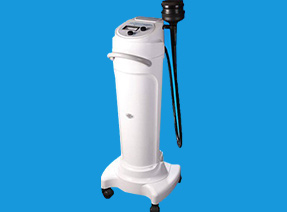
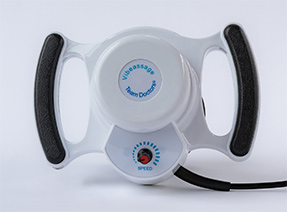
Tools such as Vibeassage® Sport or Vibeassage® Pro, featuring the TDX3 soft-as-the-hand Biomimetic Applicator Pad, are used to mobilize fluid and improve circulation within inflamed tissue.
As inflammatory signaling decreases, muscle tone begins to normalize. This allows the thoracic outlet spaces to reopen dynamically rather than being forced open surgically.
When individuals understand this model, symptoms often become more predictable. Patterns emerge, and flare-ups make sense instead of feeling random.
This understanding restores a sense of control. People stop chasing labels and start addressing the process that drives collapse.
If you have seen multiple specialists and still feel stuck, you are not alone. Many individuals spend years searching for answers because the wrong question is being asked.
The key is not identifying which structure hurts today. The key is understanding why the thoracic outlet keeps collapsing.
Once that question is answered, the cycle can finally be interrupted.
Team Doctors Resources
✓ Check out the Team Doctors Recovery Tools
The Vibeassage Sport and the Vibeassage Pro featuring the TDX3 soft-as-the-hand Biomimetic Applicator Pad
https://www.teamdoctors.com/
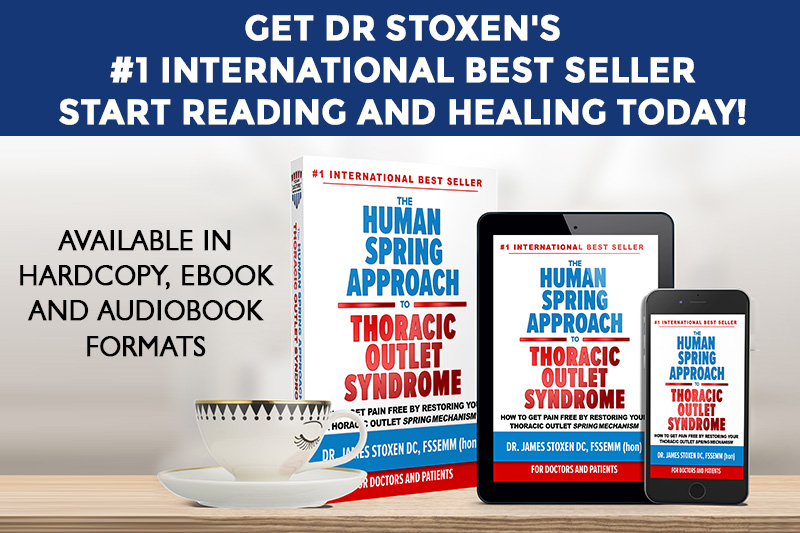
✓ Get Dr. Stoxen’s #1 International Bestselling Books
Learn how to understand, examine, and reverse your TOS—without surgery.
https://drstoxen.com/1-international-best-selling-author/
✓ Check out Team Doctors Online Courses
Step-by-step video lessons, demonstrations, and self-treatment strategies.
https://teamdoctorsacademy.com/
✓ Schedule a Free Phone Consultation With Dr. Stoxen
Speak directly with him so he can review your case and guide you on your next steps.
https://drstoxen.com/appointment/
#ThoracicOutletSyndrome #TOSEducation #WhatIsTOS #TOSCauses #NeurogenicTOS #VascularTOS #MuscleGuarding #ChronicInflammation #PostureMechanics #UpperBodyCompression #PainScience #Biomechanics #ChronicPainPatterns #MisdiagnosedPain #TOSAwareness #MovementHealth #AnatomyEducation #RehabilitationScience #PatientEducation #ChokepointModel
References
- Roos, D. B. “Thoracic Outlet Syndrome Is Underdiagnosed.” Muscle & Nerve 22, no. 1 (1999): 126–129.
- Sanders, Richard J., and Neal S. Pearce. “Neurogenic Thoracic Outlet Syndrome.” Journal of Vascular Surgery 36, no. 3 (2002): 669–676.
- Urschel, Harold C., and R. B. Razzuk. “The Neurovascular Compression Syndromes of the Thoracic Outlet.” Annals of Thoracic Surgery 50, no. 3 (1990): 484–490.

Dr James Stoxen DC., FSSEMM (hon) He is the president of Team Doctors®, Treatment and Training Center Chicago, one of the most recognized treatment centers in the world.
Dr Stoxen is a #1 International Bestselling Author of the book, The Human Spring Approach to Thoracic Outlet Syndrome. He has lectured at more than 20 medical conferences on his Human Spring Approach to Thoracic Outlet Syndrome and asked to publish his research on this approach to treating thoracic outlet syndrome in over 30 peer review medical journals.
He has been asked to submit his other research on the human spring approach to treatment, training and prevention in over 150 peer review medical journals. He serves as the Editor-in-Chief, Journal of Orthopedic Science and Research, Executive Editor or the Journal of Trauma and Acute Care, Chief Editor, Advances in Orthopedics and Sports Medicine Journal and editorial board for over 35 peer review medical journals.
He is a much sought-after speaker. He has given over 1000 live presentations and lectured at over 70 medical conferences to over 50,000 doctors in more than 20 countries. He has been invited to speak at over 300 medical conferences which includes invitations as the keynote speaker at over 50 medical conferences.
After his groundbreaking lecture on the Integrated Spring-Mass Model at the World Congress of Sports and Exercise Medicine he was presented with an Honorary Fellowship Award by a member of the royal family, the Sultan of Pahang, for his distinguished research and contributions to the advancement of Sports and Exercise Medicine on an International level. He was inducted into the National Fitness Hall of Fame in 2008 and the Personal Trainers Hall of Fame in 2012.
Dr Stoxen has a big reputation in the entertainment industry working as a doctor for over 150 tours of elite entertainers, caring for over 1000 top celebrity entertainers and their handlers. Anthony Field or the popular children’s entertainment group, The Wiggles, wrote a book, How I Got My Wiggle Back detailing his struggles with chronic pain and clinical depression he struggled with for years. Dr Stoxen is proud to be able to assist him.
Full Bio) Dr Stoxen can be reached directly at teamdoctors@aol.com