Thoracic Outlet Syndrome, often abbreviated as Thoracic Outlet Syndrome, is traditionally explained using static anatomical compression models. These models focus on bones, muscles, and soft tissues as fixed structures that compress nerves or blood vessels.
While this explanation is simple, it does not fully reflect how the human body actually moves in real life. Human motion is dynamic, elastic, and governed by physical laws that describe how forces travel through living tissues.
Modern biomechanics examines how the body responds to load, movement, and repeated stress over time. Instead of treating the body like a rigid frame, biomechanics studies how tissues deform, absorb energy, and recover during motion. When Thoracic Outlet Syndrome is viewed through this lens, many long-standing assumptions begin to break down.
Human motion is best understood through human movement science, which integrates anatomy, physics, and motion analysis. Every step, reach, or lift involves coordinated movement across multiple joints. These movements are influenced by gravity, momentum, and elastic recoil. Static compression models fail to account for this complexity.
From a mechanical standpoint, kinematics describes how joints move through space, while kinetics explains the forces that create those movements. In the shoulder and neck region, even small changes in movement timing can alter force flow through the thoracic outlet. This helps explain why symptoms often fluctuate with posture, activity, and fatigue.
The thoracic outlet is not a fixed tunnel. It is a dynamic space influenced by force transmission across the shoulder girdle and spine. When force is poorly managed, tissues experience abnormal loading. Over time, this leads to changes in tone, stiffness, and coordination that may narrow functional space.
As forces move through the body, joint loading becomes uneven. Certain joints absorb more stress than they are designed to handle. In the neck and shoulder, this can lead to protective muscle contraction and altered movement patterns. These changes are adaptive at first but may become problematic when sustained.
Soft tissues respond to load through deformation. Excessive or repetitive tissue stress can change how muscles and connective tissues behave. Instead of lengthening and shortening smoothly, tissues may stiffen or guard. This alters how space is maintained around nerves and vessels.
Efficient movement depends on mechanical efficiency, meaning the body can perform tasks with minimal wasted energy. When efficiency drops, compensations occur. These compensations often increase strain in the thoracic outlet region, especially during repetitive tasks like typing or overhead work.
Healthy motion relies on smooth energy transfer from the ground through the body. If energy is blocked or redirected improperly, it accumulates in vulnerable regions. This accumulation often shows up as tension or fatigue in the neck and shoulders.
Clinicians often rely on static tests, but true understanding requires movement analysis. Observing how a person walks, reaches, or breathes provides insight into how forces move through the thoracic outlet. These observations often reveal patterns not visible on imaging.
Many traditional explanations rely heavily on lever mechanics, treating bones as rigid levers rotating around joints. While useful for simple analysis, this model does not reflect the elastic behavior of living tissues. Muscles and fascia behave more like springs than rigid rods.
Body balance depends on managing the center of mass over the base of support. Poor control of the center of mass increases demand on the neck and shoulders. Over time, this demand may influence thoracic outlet mechanics.
When the foot contacts the ground, ground reaction forces travel upward through the body. These forces must be absorbed and redirected efficiently. If absorption fails, higher structures such as the shoulder complex experience increased load.
The body is designed for shock absorption through coordinated joint motion and tissue elasticity. Loss of this ability increases peak forces in the upper body. This helps explain why lower-body dysfunction can influence upper-body symptoms.
Effective motion control allows joints to move within safe ranges. When control is lost, tissues may be exposed to excessive strain. This strain can alter how space is maintained in the thoracic outlet.
The interaction of bones, muscles, and connective tissues defines musculoskeletal mechanics. These mechanics are adaptive and responsive to load. Ignoring this adaptability oversimplifies the causes of thoracic outlet symptoms.
Clinicians often assess functional movement to understand how the body organizes motion. Dysfunctional patterns often involve excessive rigidity or collapse, both of which alter force flow through the shoulder and neck.
Healthy bodies distribute forces evenly. Poor load distribution concentrates stress in specific regions. Over time, this concentration may contribute to symptoms associated with thoracic outlet dysfunction.
From an engineering perspective, injury biomechanics explains how repetitive microstress can lead to tissue irritation. This process does not require dramatic trauma and often develops gradually.
Efficient motion minimizes effort. Loss of movement efficiency increases muscular demand and fatigue. Fatigued muscles are more likely to guard, influencing thoracic outlet dynamics.
An alternative framework views the body as a spring-based system rather than a lever system. The human spring model emphasizes elasticity, recoil, and energy management. This approach aligns more closely with observed human movement.
Within this framework, the spring mass model describes how mass is supported and moved using elastic tissues. This model is widely used in locomotion research and offers insights into upper-body mechanics.
Elastic tissues allow for elastic energy storage, reducing muscular effort. When this storage capacity is lost, muscles must work harder to maintain posture and movement.
Healthy movement involves energy recycling, where stored energy is released to assist subsequent motion. Disruption of this process increases strain on the neck and shoulders.
Muscles, tendons, and fascia function as biological springs. Their ability to stretch and recoil maintains joint space dynamically.
Joint health depends on appropriate joint compliance. Too much stiffness or laxity disrupts force flow. In the thoracic outlet, altered compliance affects how space adapts during movement.
Every spring has optimal spring stiffness. Changes in stiffness alter how forces are absorbed and released. Excessive stiffness increases peak stress on surrounding tissues.
When forces exceed tissue capacity, force deformation occurs. Repeated deformation can change tissue behavior and movement patterns.
The body normally manages impact through shock attenuation. Loss of this function increases load transfer to the upper body.
During efficient movement, stored energy is released through elastic recoil. This recoil reduces muscular effort and maintains smooth motion.
Traditional explanations rely on rigid models, but spring based biomechanics better reflect living systems. This approach explains variability and adaptability in human motion.
Rejecting rigid assumptions leads to non lever biomechanics, which acknowledge that tissues deform and recover continuously. This view aligns with modern physics.
Stability during movement is dynamic. Dynamic stability depends on timing and coordination rather than rigidity. Poor timing increases strain in transitional regions like the thoracic outlet.
The shoulder complex behaves as a spring suspension system, allowing the arm to hang and move with minimal compression. Disruption of this suspension alters tunnel space.
Healthy tissues exhibit movement elasticity, adapting to load without excessive strain. Loss of elasticity increases guarding and stiffness.
Efficient bodies follow principles of energy conservation in movement. When conservation fails, compensatory tension develops.
During daily activities, the body must manage impact dissipation. Failure to dissipate impact increases stress in the cervical and shoulder regions.
Walking and running rely on spring driven locomotion, where energy is stored and released cyclically. Upper-body posture adapts to support this process.
The concept of functional spring mechanics explains how joints maintain space during motion. This is particularly relevant to neurovascular pathways.
The integrated spring mass model combines elasticity, mass, and coordination into a unified explanation of human movement. Applied to the thoracic outlet, it explains symptom variability better than static models.
Understanding Thoracic Outlet Syndrome through modern biomechanics does not dismiss anatomy or imaging. Instead, it places these findings within a dynamic context. Imaging shows structure, but movement reveals function.
This perspective helps explain why symptoms change with posture, activity, and fatigue. It also explains why static findings do not always correlate with symptoms.
Educational models that respect physics and biology offer a clearer understanding of complex conditions. By viewing the thoracic outlet as a dynamic system rather than a fixed tunnel, clinicians and patients can better understand observed patterns [1][2][3][4].
Team Doctors Resources
✓ Check out the Team Doctors Recovery Tools
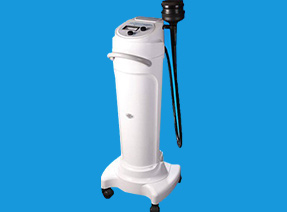
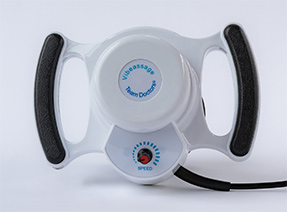
The Vibeassage Sport and the Vibeassage Pro featuring the TDX3 soft-as-the-hand Biomimetic Applicator Pad
https://www.teamdoctors.com/
✓ Get Dr. Stoxen’s #1 International Bestselling Books
Learn how to understand, examine, and reverse your TOS—without surgery.
https://drstoxen.com/1-international-best-selling-author/
✓ Check out Team Doctors Online Courses
Step-by-step video lessons, demonstrations, and self-treatment strategies.
https://teamdoctorsacademy.com/
✓ Schedule a Free Phone Consultation With Dr. Stoxen
Speak directly with him so he can review your case and guide you on your next steps.
https://drstoxen.com/appointment/
References
- Kibler, W. Ben, et al. “The Role of the Scapula in Athletic Shoulder Function.” The American Journal of Sports Medicine 34, no. 2 (2006): 325–337. https://journals.sagepub.com/doi/10.1177/0363546505281794
- Latash, Mark L. Neurophysiological Basis of Movement. Champaign, IL: Human Kinetics, 2008. https://us.humankinetics.com/products/neurophysiological-basis-of-movement-2nd-edition
- McGill, Stuart M. Low Back Disorders: Evidence-Based Prevention and Rehabilitation. Champaign, IL: Human Kinetics, 2015. https://us.humankinetics.com/products/low-back-disorders-3rd-edition
- Winter, David A. Biomechanics and Motor Control of Human Movement. Hoboken, NJ: Wiley, 2009. https://onlinelibrary.wiley.com/doi/book/10.1002/9780470549148

Dr James Stoxen DC., FSSEMM (hon) He is the president of Team Doctors®, Treatment and Training Center Chicago, one of the most recognized treatment centers in the world.
Dr Stoxen is a #1 International Bestselling Author of the book, The Human Spring Approach to Thoracic Outlet Syndrome. He has lectured at more than 20 medical conferences on his Human Spring Approach to Thoracic Outlet Syndrome and asked to publish his research on this approach to treating thoracic outlet syndrome in over 30 peer review medical journals.
He has been asked to submit his other research on the human spring approach to treatment, training and prevention in over 150 peer review medical journals. He serves as the Editor-in-Chief, Journal of Orthopedic Science and Research, Executive Editor or the Journal of Trauma and Acute Care, Chief Editor, Advances in Orthopedics and Sports Medicine Journal and editorial board for over 35 peer review medical journals.
He is a much sought-after speaker. He has given over 1000 live presentations and lectured at over 70 medical conferences to over 50,000 doctors in more than 20 countries. He has been invited to speak at over 300 medical conferences which includes invitations as the keynote speaker at over 50 medical conferences.
After his groundbreaking lecture on the Integrated Spring-Mass Model at the World Congress of Sports and Exercise Medicine he was presented with an Honorary Fellowship Award by a member of the royal family, the Sultan of Pahang, for his distinguished research and contributions to the advancement of Sports and Exercise Medicine on an International level. He was inducted into the National Fitness Hall of Fame in 2008 and the Personal Trainers Hall of Fame in 2012.
Dr Stoxen has a big reputation in the entertainment industry working as a doctor for over 150 tours of elite entertainers, caring for over 1000 top celebrity entertainers and their handlers. Anthony Field or the popular children’s entertainment group, The Wiggles, wrote a book, How I Got My Wiggle Back detailing his struggles with chronic pain and clinical depression he struggled with for years. Dr Stoxen is proud to be able to assist him.
Full Bio) Dr Stoxen can be reached directly at teamdoctors@aol.com