Many people seek answers because of shoulder blade pain that seems to appear without a clear injury.
In my clinical experience, this discomfort is often linked to sustained muscle tension rather than sudden trauma.
Over time, what begins as mild irritation can evolve into chronic shoulder pain that no longer responds to rest.
Patients often report that the pain feels deeper and more persistent than expected.
When discussing left shoulder pain causes, posture and prolonged arm positioning frequently emerge as contributors.
Many individuals describe symptoms that worsen during computer or smartphone use.
For some, left shoulder pain is accompanied by a sense of heaviness or tightness across the upper chest.
This pattern is commonly associated with compression-sensitive regions near the shoulder girdle.
A growing number of cases involve thoracic outlet syndrome shoulder pain related to sustained muscular contraction.
This is a pattern I commonly see in individuals with desk-based or device-heavy routines.
People often notice left shoulder and neck pain developing together rather than in isolation.
This reflects how closely connected the cervical spine and shoulder complex truly are.
In cases involving thoracic outlet syndrome shoulder blade pain, symptoms may spread across the upper back.
The shoulder blade region becomes a common site of referred discomfort.
Many patients describe TOS shoulder pain as dull, aching, or pressure-like rather than sharp.
This quality often points toward vascular or neural sensitivity rather than tissue damage.
The term thoracic shoulder pain is frequently used when discomfort spans the chest, back, and shoulder together.
Such distribution suggests involvement of shared anatomical pathways.
Some individuals explore external supports such as a thoracic outlet syndrome shoulder brace to limit motion.
While braces change posture temporarily, they do not address sustained muscle contraction patterns.
Persistent upper shoulder pain often reflects overactivity of the trapezius and levator scapulae muscles.
These muscles remain active during prolonged arm elevation.
Patients researching tos shoulder blade pain frequently report worsening symptoms during typing or texting.
Sustained forward head posture increases load on the shoulder girdle.
A prior TOS shoulder injury may sensitize tissues, making them reactive to everyday positions.
Over time, protective reflexes can become ingrained.
The phrase symptoms shoulder often includes stiffness, heaviness, and limited motion rather than sharp pain.
These signs reflect altered neuromuscular control.
With thoracic shoulder blade pain, individuals may feel pressure between the shoulder blades.
This area often mirrors tension patterns in the upper ribs.
The broader term thoracic shoulder describes how the chest and shoulder function as a unit.
Restriction in one area affects the other.
Many patients simply say, my shoulder hurts, without being able to pinpoint a cause.
This nonspecific complaint often reflects cumulative overload.
Discomfort described as under shoulder pain may involve rib or neurovascular structures.
These regions are sensitive to sustained compression.
The shorthand tos shoulder is often used by patients searching for explanations online.
They are typically seeking patterns rather than diagnoses.
The phrase thoracic shoulder syndrome reflects how multiple tissues contribute to symptoms.
Muscles, nerves, and vessels all play a role.
Beyond the shoulder, neck pain frequently coexists in these cases.
The cervical spine shares muscular and neural connections with the shoulder.
Combined neck shoulder pain often worsens during prolonged screen use.
This is a common modern presentation.
Some individuals report neck pain and headaches linked to sustained muscle guarding.
Upper cervical tension can influence head symptoms.
When exploring neck pain causes, posture and repetitive tasks are frequently identified.
These factors rarely act alone.
Long-standing chronic neck pain may reflect nervous system adaptation to constant tension.
Over time, relaxation mechanisms become less effective.
Stiffness described as neck stiffness often appears upon waking.
This can indicate overnight muscle guarding.
Radiating neck and arm pain may follow nerve-sensitive pathways.
These sensations are often positional.
People with combined neck and back pain often struggle to find a single source.
This reflects interconnected spinal mechanics.
Discomfort labeled collarbone neck pain may involve structures beneath the clavicle.
This area is sensitive to compression.
Localized collarbone pain near neck can feel superficial or deep.
Patients often describe pressure rather than sharp pain.
When collarbone neck and shoulder pain occur together, arm positioning is often a factor.
Sustained elevation increases load on the region.
Some individuals experience neck pain and dizziness during prolonged static postures.
This may relate to altered cervical muscle activity.
Radiating collarbone and arm pain can feel unsettling.
Patients often worry about circulation or nerves.
Persistent constant neck pain suggests ongoing neuromuscular activation.
The body may no longer recognize a relaxed baseline.
Tender neck muscle pain is commonly found on examination.
These muscles often test hypertonic rather than weak.
Pressure-like chest pain around collar bone may accompany shoulder symptoms.
This can reflect shared fascial connections.
Discomfort described as chest pain under the collarbone often changes with posture.
Arm position plays a key role.
Some patients report tingling in collarbone regions during sustained tasks.
This sensation is often transient but concerning.
Localized pain above collarbone may reflect tension in surrounding tissues.
These areas are sensitive to load changes.
Combined arm neck pain often worsens with prolonged device use.
This reflects modern behavioral patterns.
From a biomechanical perspective, sustained contraction limits blood flow to working muscles.
As circulation decreases, metabolic byproducts accumulate.
Over time, chemical irritation reinforces protective reflexes.
The nervous system adapts to maintain tension.
This is why modern shoulder, neck, and arm pain often feels resistant.
The issue is no longer purely mechanical.
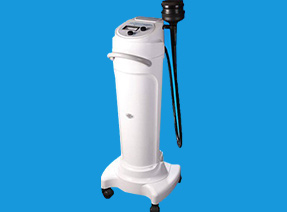
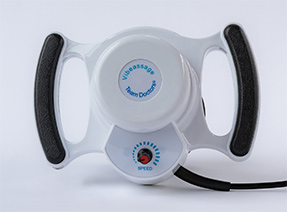
Educational discussions often include tools such as Vibeassage® for sensory input.
Within Team Doctors®, these tools are framed for learning about tissue response.
The Vibeassage® Sport and Vibeassage® Pro are often referenced in educational contexts.
They are described alongside the TDX3 soft-as-the-hand Biomimetic Applicator Pad.
These references focus on understanding how vibration interacts with muscle tone.
No outcomes are implied.
In summary, modern shoulder and neck pain patterns reflect sustained behavior-driven tension.
Understanding these patterns is the first step toward informed decision-making.
Team Doctors Resources
✓ Check out the Team Doctors Recovery Tools
The Vibeassage Sport and the Vibeassage Pro featuring the TDX3 soft-as-the-hand Biomimetic Applicator Pad
https://www.teamdoctors.com/
✓ Get Dr. Stoxen’s #1 International Bestselling Books
Learn how to understand, examine, and reverse your TOS—without surgery.
https://drstoxen.com/1-international-best-selling-author/
✓ Check out Team Doctors Online Courses
Step-by-step video lessons, demonstrations, and self-treatment strategies.
https://teamdoctorsacademy.com/
✓ Schedule a Free Phone Consultation With Dr. Stoxen
Speak directly with him so he can review your case and guide you on your next steps.
https://drstoxen.com/appointment/
#thoracicoutletsyndrome #TOS #shoulderpain #neckpain #posture #biomechanics #ergonomics #chronicpain #upperbodypain #scalenemuscles #brachialplexus #claviclepain #shoulderbladepain #neckstiffness #armpain #modernposture #deskwork #smartphoneuse #muscleguarding #inflammation
References
- Sanders, R. J., & Hammond, S. L. “Thoracic Outlet Syndrome: A Review.” Neurologic Clinics 31, no. 2 (2013): 523–536. https://doi.org/10.1016/j.ncl.2013.02.004
- Wilbourn, A. J. “Thoracic Outlet Syndrome Is Overdiagnosed.” Muscle & Nerve 19, no. 8 (1996): 1006–1009. https://doi.org/10.1002/(SICI)1097-4598(199608)19:8<1006::AID-MUS11>3.0.CO;2-7
- Urschel, H. C., & Razzuk, M. A. “Neurovascular Compression in the Thoracic Outlet.” Annals of Thoracic Surgery 64, no. 5 (1997): 1447–1452. https://doi.org/10.1016/S0003-4975(97)00907-3
- Roos, D. B. “Congenital Anomalies Associated with Thoracic Outlet Syndrome.” American Journal of Surgery 132, no. 6 (1976): 771–778. https://doi.org/10.1016/0002-9610(76)90471-8

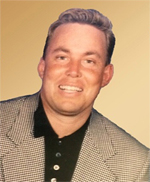
Dr James Stoxen DC., FSSEMM (hon) He is the president of Team Doctors®, Treatment and Training Center Chicago, one of the most recognized treatment centers in the world.
Dr Stoxen is a #1 International Bestselling Author of the book, The Human Spring Approach to Thoracic Outlet Syndrome. He has lectured at more than 20 medical conferences on his Human Spring Approach to Thoracic Outlet Syndrome and asked to publish his research on this approach to treating thoracic outlet syndrome in over 30 peer review medical journals.
He has been asked to submit his other research on the human spring approach to treatment, training and prevention in over 150 peer review medical journals. He serves as the Editor-in-Chief, Journal of Orthopedic Science and Research, Executive Editor or the Journal of Trauma and Acute Care, Chief Editor, Advances in Orthopedics and Sports Medicine Journal and editorial board for over 35 peer review medical journals.
He is a much sought-after speaker. He has given over 1000 live presentations and lectured at over 70 medical conferences to over 50,000 doctors in more than 20 countries. He has been invited to speak at over 300 medical conferences which includes invitations as the keynote speaker at over 50 medical conferences.
After his groundbreaking lecture on the Integrated Spring-Mass Model at the World Congress of Sports and Exercise Medicine he was presented with an Honorary Fellowship Award by a member of the royal family, the Sultan of Pahang, for his distinguished research and contributions to the advancement of Sports and Exercise Medicine on an International level. He was inducted into the National Fitness Hall of Fame in 2008 and the Personal Trainers Hall of Fame in 2012.
Dr Stoxen has a big reputation in the entertainment industry working as a doctor for over 150 tours of elite entertainers, caring for over 1000 top celebrity entertainers and their handlers. Anthony Field or the popular children’s entertainment group, The Wiggles, wrote a book, How I Got My Wiggle Back detailing his struggles with chronic pain and clinical depression he struggled with for years. Dr Stoxen is proud to be able to assist him.
Full Bio) Dr Stoxen can be reached directly at teamdoctors@aol.com