Chest discomfort is one of the most alarming sensations a person can experience.
Many individuals describe sudden pressure, tightness, or aching across the chest as a sign of a serious medical emergency.
In my clinical experience, musculoskeletal and biomechanical factors can sometimes create sensations that closely resemble cardiac distress.
One condition frequently associated with this confusion is Thoracic Outlet Syndrome, often abbreviated as TOS.
Thoracic Outlet Syndrome involves mechanical compromise of nerve or vascular structures as they travel from the neck into the upper extremity.
The thoracic outlet is a narrow anatomical space bordered by the clavicle, first rib, cervical spine, and surrounding soft tissues.
Changes in posture, muscle tone, or rib position can significantly alter this space.
When these structures are stressed, symptoms may appear far from their original source.
One of the most misunderstood presentations involves chest pain that feels deep, heavy, or crushing.
Patients often report a sensation that mirrors classic descriptions of cardiac discomfort.
This overlap in symptom presentation is one reason TOS is sometimes mistaken for heart-related conditions.
Understanding the biomechanical contributors can help clarify why this occurs.
The scalene muscles play a central role in this pattern.
These muscles attach from the cervical spine to the first and second ribs at the top of the rib cage.
When the scalenes remain in a chronically contracted state, they can exert an upward pull on the ribs.
Over time, this sustained tension alters rib alignment and chest wall mechanics.
Because the ribs are interconnected through joints and soft tissue attachments, elevation of one rib often influences adjacent ribs.
This collective movement can cause the entire upper rib cage to rise.
The result may be a rigid, elevated chest position that interferes with normal breathing mechanics.
Many individuals describe restricted inhalation and a feeling of tightness across the chest.
Altered rib mechanics can produce thoracic chest pain that intensifies with movement, breathing, or sustained postures.
In this position, the chest wall loses its natural ability to expand and recoil.
This mechanical stiffness increases internal pressure and can amplify discomfort signals sent to the nervous system.
In some cases, the sensation is not isolated to the chest alone.
Patients often report chest pain and arm pain occurring together.
This combination is particularly alarming because it closely resembles angina patterns commonly associated with cardiac ischemia.
The overlap can lead to emergency evaluations even when cardiac testing is normal.
The explanation lies beneath the elevated ribs.
Nerve structures, including components of the brachial plexus, pass between the scalene muscles and over the first rib.
When rib elevation reduces the available space, these nerves may become irritated or mechanically stressed.
Nerve irritation can produce sharp, shooting, or radiating sensations into the shoulder, arm, or hand.
This is why chest pain with arm pain is frequently reported in individuals with thoracic outlet involvement.
The pain pathway follows neurological distribution rather than cardiac referral patterns.
However, without a biomechanical perspective, the distinction can be difficult to recognize.
Another common presentation includes chest pain and neck pain occurring simultaneously.
The cervical spine, scalene muscles, and upper ribs function as a coordinated unit.
Restrictions or tension in one area often influence the others.
Sustained neck muscle contraction can reinforce rib elevation and perpetuate chest wall stiffness.
Postural factors further complicate this pattern.
Forward head posture, rounded shoulders, and prolonged seated positions can increase scalene activation.
Over time, this contributes to chronic elevation of the upper rib cage.
Many individuals are unaware that habitual posture can influence chest symptoms so dramatically.
When chest discomfort presents alongside neurological symptoms, concern naturally escalates.
Patients often describe chest pains that vary in intensity, sometimes worsening with stress or physical activity.
Unlike cardiac conditions, these sensations may fluctuate with body position or movement, offering an important clinical clue.
The thoracic spine also contributes to symptom development.
Restrictions in thoracic joint mobility can alter load distribution across the rib cage.
This may lead to thoracic pain that feels deep and poorly localized.
Thoracic stiffness reduces the spine’s ability to rotate and extend, further stressing rib attachments.
Understanding thoracic pain causes requires examining both muscular and joint components.
Muscle tension, joint hypomobility, and altered breathing patterns all interact.
These factors rarely exist in isolation, making comprehensive evaluation essential.
Symptoms associated with thoracic outlet involvement often extend beyond pain alone.
Many individuals describe thoracic pain symptoms such as pressure, burning, or aching that spreads across the chest or into the back.
These sensations may intensify with overhead activity or sustained arm positions.
Laterality is another distinguishing feature.
Some patients report thoracic pain right side discomfort that aligns with dominant arm use or asymmetric posture.
Unilateral symptoms often reflect uneven muscle activation or rib positioning rather than systemic disease.
The posterior rib cage is not immune to these effects.
Thoracic back pain symptoms may accompany anterior chest discomfort.
This pattern reflects the circumferential nature of rib mechanics, where restriction in one area influences the entire ring structure.
Muscle tissue itself can become a primary pain generator.
Thoracic muscle pain frequently arises from prolonged contraction or overload.
Muscles deprived of normal lengthening cycles may develop tenderness and altered sensory signaling.
Educational discussions of thoracic muscle pain treatment focus on restoring normal movement patterns rather than suppressing symptoms.
Movement variability, breathing mechanics, and postural awareness are commonly emphasized in biomechanical models.
Clavicular relationships further contribute to chest discomfort.
The collarbone acts as a strut connecting the upper limb to the axial skeleton.
Altered rib height can influence clavicular position, leading to chest pain around collar bone sensations that feel superficial yet persistent.
Some individuals localize discomfort as chest pain under the collarbone, particularly during arm elevation.
This area overlies neurovascular structures that may be sensitive to compression or tension changes.
Descriptions such as chest pain by the collarbone highlight how localized symptoms can still originate from deeper mechanical factors.
Surface pain often reflects deeper tissue stress patterns.
Right-sided presentations, including chest pain below collar bone right side, are commonly associated with dominant-hand activity or asymmetric work demands.
These patterns reinforce the role of repetitive movement and posture in symptom development.
In cases involving injury history, thoracic injury symptoms may persist long after tissue healing.
Altered movement strategies adopted during recovery can become habitual, perpetuating muscle tension and rib elevation.
Movement education often includes gentle thoracic pain exercises designed to encourage mobility and coordination.
These exercises emphasize controlled rotation, extension, and breathing rather than forceful stretching.
Myofascial contributions are frequently discussed under the term thoracic myalgia, which describes muscle-related pain in the thoracic region.
This term underscores the muscular origin of symptoms without implying pathology.
Breathing mechanics deserve special attention in thoracic outlet presentations.
Elevated ribs limit diaphragmatic excursion, encouraging accessory muscle use.
Over time, reliance on neck muscles for breathing reinforces scalene overactivity and rib elevation.
This cycle illustrates how chest discomfort can feel systemic even when rooted in localized mechanics.
Many individuals describe a constant awareness of chest pressure that fluctuates throughout the day.
These sensations can be distressing despite normal medical testing.
It is important to note that symptom perception is influenced by the nervous system.
Persistent mechanical irritation can sensitize neural pathways, amplifying pain signals.
This does not imply tissue damage but reflects altered sensory processing.
In educational contexts, distinguishing musculoskeletal chest pain from cardiac causes relies on pattern recognition.
Pain that changes with posture, breathing, or arm movement often points toward a mechanical origin.
However, comprehensive medical evaluation is always appropriate when chest symptoms arise.
Thoracic Outlet Syndrome remains a diagnosis of exclusion for many clinicians.
Its varied presentations challenge traditional diagnostic frameworks.
Understanding rib mechanics, muscle tone, and posture provides valuable insight into why symptoms can appear cardiac in nature.
In my clinical experience, patients often report relief when they understand the mechanical basis of their symptoms.
Education alone can reduce anxiety and improve body awareness.
This highlights the importance of clear, anatomy-based explanations.
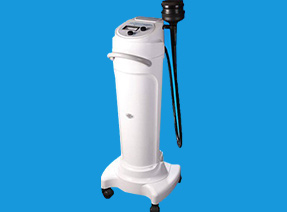
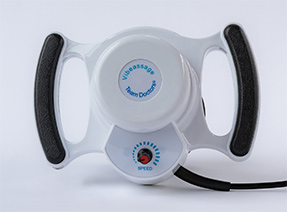
Tools such as the Vibeassage® Sport and Vibeassage® Pro featuring the TDX3 soft-as-the-hand Biomimetic Applicator Pad are often discussed in educational settings as examples of devices designed to interact with soft tissue mechanics.
Their role is presented within a broader discussion of movement and tissue interaction rather than as treatment claims.
Team Doctors® emphasizes education focused on biomechanics, posture, and movement variability.
Understanding how daily habits influence rib position empowers individuals to make informed decisions about their physical routines.
Thoracic outlet-related chest symptoms remind us that the body functions as an integrated system.
Localized tension can produce distant sensations that feel unrelated at first glance.
Appreciating these connections deepens our understanding of human biomechanics.
When chest pain mimics a heart attack, fear is a natural response.
Clear anatomical education helps differentiate mechanical patterns from systemic disease.
This knowledge supports informed conversations between patients and healthcare providers.
Thoracic Outlet Syndrome illustrates how complex symptom patterns can arise from relatively small mechanical changes.
Rib elevation, muscle tension, and posture interact in ways that challenge simplistic explanations.
Continued research and education remain essential.
If you want this exported as a Word doc, Google Doc, HTML blog file, or CMS-ready format, say the word and I’ll deliver it exactly to spec.
Team Doctors Resources
✓ Check out the Team Doctors Recovery Tools
The Vibeassage Sport and the Vibeassage Pro featuring the TDX3 soft-as-the-hand Biomimetic Applicator Pad
https://www.teamdoctors.com/
✓ Get Dr. Stoxen’s #1 International Bestselling Books
Learn how to understand, examine, and reverse your TOS—without surgery.
https://drstoxen.com/1-international-best-selling-author/
✓ Check out Team Doctors Online Courses
Step-by-step video lessons, demonstrations, and self-treatment strategies.
https://teamdoctorsacademy.com/
✓ Schedule a Free Phone Consultation With Dr. Stoxen
Speak directly with him so he can review your case and guide you on your next steps.
https://drstoxen.com/appointment/
#ThoracicOutletSyndrome #TOS #ChestPain #ArmPain #RibElevation #ScaleneMuscles #BrachialPlexus #ThoracicPain #PostureMechanics #Biomechanics #ChestDiscomfort #MuscleGuarding #NerveCompression #ThoracicSpine #RibCage #NeckPain #ShoulderPain #EducationalHealth #HumanMovement #AnatomyEducation
References
- Sanders, Richard J., and Neal S. Pearce. “Thoracic Outlet Syndrome: A Common Sequela of Neck Injuries.” Journal of Vascular Surgery 55, no. 3 (2012): 897–902. https://doi.org/10.1016/j.jvs.2011.08.065
- Atasoy, Erol. “Thoracic Outlet Compression Syndrome.” Orthopedic Clinics of North America 27, no. 2 (1996): 265–303. https://doi.org/10.1016/S0030-5898(20)30546-0
- Gillard, Jonathan, et al. “Thoracic Outlet Syndrome: A Review.” Journal of Orthopaedic Surgery and Research 6, no. 1 (2011): 28. https://doi.org/10.1186/1749-799X-6-28
- Hooper, Timothy L., et al. “Thoracic Outlet Syndrome: A Controversial Clinical Condition. Part 1: Anatomy, and Clinical Examination/Diagnosis.” Journal of Manual & Manipulative Therapy 18, no. 2 (2010): 74–83. https://doi.org/10.1179/106698110X12640740712734

Dr James Stoxen DC., FSSEMM (hon) He is the president of Team Doctors®, Treatment and Training Center Chicago, one of the most recognized treatment centers in the world.
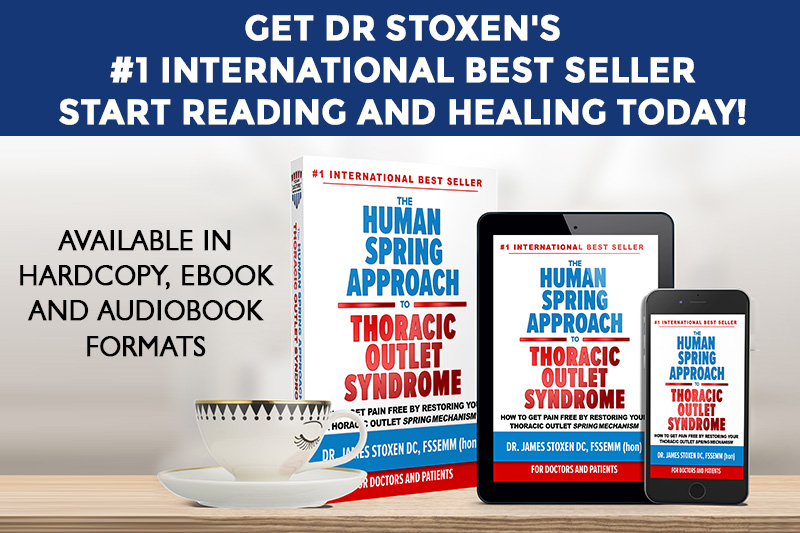
Dr Stoxen is a #1 International Bestselling Author of the book, The Human Spring Approach to Thoracic Outlet Syndrome. He has lectured at more than 20 medical conferences on his Human Spring Approach to Thoracic Outlet Syndrome and asked to publish his research on this approach to treating thoracic outlet syndrome in over 30 peer review medical journals.
He has been asked to submit his other research on the human spring approach to treatment, training and prevention in over 150 peer review medical journals. He serves as the Editor-in-Chief, Journal of Orthopedic Science and Research, Executive Editor or the Journal of Trauma and Acute Care, Chief Editor, Advances in Orthopedics and Sports Medicine Journal and editorial board for over 35 peer review medical journals.
He is a much sought-after speaker. He has given over 1000 live presentations and lectured at over 70 medical conferences to over 50,000 doctors in more than 20 countries. He has been invited to speak at over 300 medical conferences which includes invitations as the keynote speaker at over 50 medical conferences.
After his groundbreaking lecture on the Integrated Spring-Mass Model at the World Congress of Sports and Exercise Medicine he was presented with an Honorary Fellowship Award by a member of the royal family, the Sultan of Pahang, for his distinguished research and contributions to the advancement of Sports and Exercise Medicine on an International level. He was inducted into the National Fitness Hall of Fame in 2008 and the Personal Trainers Hall of Fame in 2012.
Dr Stoxen has a big reputation in the entertainment industry working as a doctor for over 150 tours of elite entertainers, caring for over 1000 top celebrity entertainers and their handlers. Anthony Field or the popular children’s entertainment group, The Wiggles, wrote a book, How I Got My Wiggle Back detailing his struggles with chronic pain and clinical depression he struggled with for years. Dr Stoxen is proud to be able to assist him.
Full Bio) Dr Stoxen can be reached directly at teamdoctors@aol.com