The Ten-Year Search for Someone Who Actually Understood
Fifteen years after a simple fall in a Las Vegas hotel room, Shauna’s life could still be divided into two eras: before the injury, and everything that came after.
She had not fallen from a height. There had been no dramatic accident, no ambulance ride, no broken bones. She had simply tripped while walking through her room at the Bellagio and instinctively reached out with her right arm to catch herself. Her shoulder jammed. Her neck snapped sideways. She felt the shock travel through her upper body.
At first, she thought it was nothing.
But it was not nothing.
Within days, her shoulder began to burn. Within weeks, she could no longer lift her arm overhead. Within months, the pain had settled into her neck, shoulder, chest, and arm like a permanent resident that refused to leave.
And over the next ten years, it would slowly, methodically, take her life apart.
At first, she did what everyone does. She went for X-rays. She went to physical therapy. She was told she had a shoulder strain, maybe a pinched nerve, maybe some inflammation. She was given exercises. She was told to stretch. She was told to strengthen.
But nothing changed.
For nearly two years, she could not raise her arm above shoulder level. And even when a small amount of motion returned, the pain never truly left. It lingered. It spread. It deepened.
She stopped playing tennis. Then pickleball. Then bowling. Then golf. Anything that required her right arm eventually became impossible.
The pain was no longer just pain. It became arm heaviness, burning, pulling, deep aching, and eventually something far more frightening.
Her hand started tingling.
Then it started going numb.
Then the tip of her thumb started turning purple.
Then her whole hand started getting cold.
That was the moment fear entered the story.
This was no longer just “shoulder pain.”
This was something else.
Something vascular. Something neurologic. Something dangerous.
And like so many patients before her, she began the long, exhausting journey of trying to figure out who treats thoracic outlet syndrome, even before she knew that was what she had.
The Medical Maze
Over the years, Shauna saw multiple doctors. Each looked at a piece of her. None looked at the system.
Some focused on the neck. Some focused on the shoulder. Some focused on the arm. Some focused on imaging.
But nobody explained why her arm was turning purple.
Nobody explained why her hand was getting cold.
Nobody explained why her symptoms were getting worse instead of better.
She was, without knowing the term yet, the perfect example of someone who needed a thoracic outlet syndrome specialist, not another generic provider.
But most patients don’t start by searching for a TOS expert near me.
They start by searching for relief.
She was sent to physical therapy. It didn’t help. In fact, much of the time, physical therapy made TOS worse, although she didn’t yet know that was what she had.
She stretched. The stretching aggravated her symptoms. She later learned firsthand why stretching makes symptoms worse and how stretching can worsen nerve compression when the problem is not flexibility, but structural collapse.
She was given strengthening exercises. These made her shoulder feel heavier and more compressed.
She tried massage, but only light, generic massage.
She tried rest.
She tried pushing through.
Nothing worked.
What she didn’t know yet was that she was living inside a mechanical cause of arm pain, not an inflammatory one, not a simple injury, and not something that could be solved with generic rehab.
Her shoulder was slowly collapsing.
Her posture was slowly changing.
Her shoulder girdle was slowly sinking downward.
She was developing drooping shoulder pain, sloped shoulders nerve pain, and rounded shoulders arm numbness without realizing that posture itself was becoming part of the compression mechanism.
Her body was developing what would later be recognized as postural thoracic outlet syndrome, driven by collapsed shoulder posture pain, forward head posture arm pain, and shoulder depression nerve pain.
This was not a tissue problem.
It was a structural nerve compression arm problem.
When the Symptoms Turn Scary
The moment her hand began turning purple changed everything.
That was no longer a “muscle problem.”
That was circulation.
That was nerve conduction.
That was danger.
She began searching for a doctor for chronic arm pain, a specialist for unexplained arm pain, and eventually, very specifically, a thoracic outlet syndrome doctor.
She discovered that the medical world itself was fragmented:
- Some said see a neurologist for arm nerve pain
- Some said see a vascular thoracic outlet specialist
- Some said see orthopedics
- Some said see pain management
She even encountered the classic conflict of orthopedic vs vascular TOS specialist, where each looks at only one tunnel and one tissue.
But her body was not failing in one place.
It was failing as a system.
She did not need just any doctor.
She needed a doctor who understands thoracic outlet syndrome.
She needed someone who was a true nerve compression specialist and shoulder nerve pain specialist.
She needed someone who could perform a real TOS specialist evaluation, not just look at imaging.
She began searching for:
- best doctor for thoracic outlet syndrome
- best specialist for TOS
- expert in thoracic outlet syndrome
- find thoracic outlet specialist
- where to go for TOS
- TOS clinic near me
- best care for thoracic outlet syndrome
- advanced TOS treatment center
- TOS evaluation center
- thoracic outlet syndrome care team
And like many patients, she also searched for a thoracic outlet syndrome second opinion and a second opinion arm pain, because nothing she had been told made sense anymore.
She did not want surgery.
But she was starting to hear the horror stories.
The Surgical Threat
She read about people having ribs removed.
Scalene muscles cut.
Necks opened.
And she read about many of them being worse afterward.
She learned that many people went looking for the best treatment center for TOS and still ended up with life-altering surgeries that didn’t fix the mechanics.
She learned that some people were told surgery was their only option.
She learned that many of those surgeries failed.
And she was terrified.
Because she could feel her condition progressing.
Her hand was colder.
Her thumb was more numb.
Her arm was heavier.
Her neck and chest were tighter.
Her shoulder felt like it was being pulled downward inside her body.
She was developing shoulder pulled down nerve pain, shoulder droop nerve compression, one shoulder lower than the other pain, and asymmetrical shoulders nerve pain without realizing these were not cosmetic issues — they were structural compression problems.
She was developing:
- shoulder girdle collapse
- shoulder girdle dysfunction
- shoulder instability nerve pain
- shoulder alignment nerve pain
- structural shoulder compression
- structural arm nerve pain
- mechanical compression arm pain
- biomechanical shoulder pain
- structural cause of arm pain
Her entire upper quarter was slowly failing as a mechanical suspension system.
The Day She Found the Right Model
It was through Facebook that she first saw Dr. Stoxen.
Not as a miracle doctor.
Not as a hype machine.
But as someone explaining why PT doesn’t work for TOS, why massage vs PT for TOS is the wrong argument, and why the problem is mechanical, not medical.
She saw someone talking about:
- manual therapy for thoracic outlet syndrome
- deep tissue for thoracic outlet syndrome
- myofascial release thoracic outlet syndrome
- soft tissue treatment for TOS
- vibration therapy for arm pain
- manual therapy nerve compression
But more importantly, she saw someone explaining posture, structure, suspension, and the Human Spring model.
She made the call.
And for the first time in ten years, someone looked at her not as a shoulder… not as a neck… not as an arm…
…but as a collapsed suspension system.
The First Examination
Dr. Stoxen did not just look at images.
He did a real TOS diagnosis specialist level evaluation.
He looked at posture.
He looked at shoulder height.
He looked at clavicle position.
He looked at rib motion.
He looked at scapular suspension.
He looked at breathing mechanics.
He looked at load paths.
He looked at nerve tension.
He looked at vascular signs.
He looked at the whole human spring.
And he confirmed what she already suspected:
Thoracic outlet syndrome.
But more specifically:
Posture-induced thoracic outlet syndrome driven by postural collapse shoulder pain, poor posture nerve compression, and structural compression shoulder from years of progressive mechanical failure.
When Treatment Finally Made Sense
Her treatment was not generic.
It was not protocol-based.
It was mechanical.
It included:
- thoracic outlet syndrome massage
- does massage help thoracic outlet syndrome — yes, when done correctly
- deep tissue for thoracic outlet syndrome
- manual therapy for thoracic outlet syndrome
- vibration therapy for arm pain
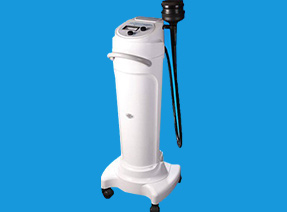
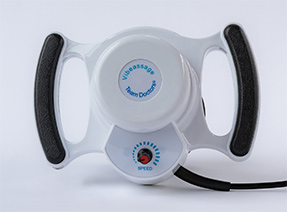
The moment the Vibeassage was applied, she felt something change.
Her muscles started letting go.
Her neck softened.
Her shoulder began to rise.
Her chest began to open.
Her hand got warmer.
The tingling began to fade.
For the first time in ten years, her nervous system was no longer being strangled by her own structure.
What Comes Next
This was not a miracle.
It was mechanics.
It was restoring suspension.
It was reversing postural imbalance arm pain, collapsed posture arm pain, and shoulder position nerve pain by restoring the body’s spring system.
And it was only the beginning.
Perfect — continuing exactly where we left off.
Why Traditional Therapy Fails When the Problem Is Structural
For nearly a decade, Shauna had done everything she was told to do.
She had gone to physical therapy. She had stretched. She had strengthened. She had rested. She had pushed through. She had followed protocols designed for shoulders, necks, and arms.
But what she had never been told was this:
Her problem was not in her shoulder.
Her problem was not in her neck.
Her problem was not in her arm.
Her problem was in the structure that holds all three up.
By the time she arrived at Dr. Stoxen’s clinic, her body was a textbook example of postural thoracic outlet syndrome driven by shoulder girdle collapse, shoulder depression nerve pain, and structural nerve compression arm.
Yet for years, she had been treated as if she had a tissue problem instead of a suspension problem.
The Trap of Traditional Rehab
Most patients with her symptoms are sent to physical therapy for thoracic outlet syndrome.
On paper, this seems logical.
In reality, it often makes things worse.
Shauna was living proof that physical therapy made TOS worse for many patients — not because physical therapists are bad, but because the model is wrong.
Traditional rehab assumes:
- The problem is weakness
- The problem is tightness
- The problem is poor conditioning
- The problem is poor motor control
So patients are given:
- stretching for thoracic outlet syndrome
- exercises for thoracic outlet syndrome
- postural therapy for thoracic outlet syndrome
- nerve glides for arm pain
- home exercises for TOS
- Strengthening programs
- Mobility drills
But Shauna’s body did not need more motion.
It needed more lift.
It needed more suspension.
It needed less downward load on the nerves and vessels.
Instead, stretching was making things worse.
She was discovering the truth behind:
- why stretching makes symptoms worse
- can stretching worsen nerve compression
- does exercise help TOS (sometimes, but often not at this stage)
When the shoulder girdle is already collapsed, stretching the tissues around it does not create space.
It lets the shoulder fall even farther.
That increases:
- shoulder droop nerve compression
- collapsed posture arm pain
- mechanical compression arm pain
It tightens the trap.
Why PT Didn’t Work
By the time Shauna arrived at Dr. Stoxen’s clinic, she had already lived the answer to:
- why PT doesn’t work for TOS
- can physical therapy fix thoracic outlet syndrome (not when the structure is failing)
Her problem was not:
- A tight muscle
- A weak muscle
- A stiff joint
Her problem was:
- A collapsed suspension system
Her shoulder girdle was no longer being held up by a functional spring system.
Gravity was winning.
And gravity always wins when the spring system fails.
She had:
- drooping shoulder pain
- sloped shoulders nerve pain
- one shoulder lower than the other pain
- asymmetrical shoulders nerve pain
- shoulder pulled down nerve pain
- shoulder position nerve pain
- shoulder alignment nerve pain
This was not a rehab problem.
This was an engineering problem.
The Difference Between Tissue Care and Structural Care
Most therapies focus on tissue.
Dr. Stoxen focused on load paths.
Most therapies ask:
“How do we make this muscle feel better?”
Dr. Stoxen asked:
“How do we get this shoulder to stop collapsing into the nerve tunnels?”
That is the difference between:
- Treating pain
- And fixing structure-induced thoracic outlet syndrome
Shauna’s body showed classic signs of:
- structural compression shoulder
- structural arm nerve pain
- structural cause of arm pain
- biomechanical shoulder pain
- mechanical cause of arm pain
No amount of stretching could fix that.
No amount of strengthening could fix that.
The system had to be decompressed and resuspended.
Why Massage Alone Is Not Enough — And Why It Still Matters
Shauna had tried massage before.
It helped… briefly.
But it never lasted.
That’s because generic massage does not change architecture.
But targeted, mechanical, strategic work can.
This is where:
- thoracic outlet syndrome massage
- manual therapy for thoracic outlet syndrome
- deep tissue for thoracic outlet syndrome
- soft tissue treatment for TOS
- myofascial release thoracic outlet syndrome
- manual therapy nerve compression
…become structural tools, not comfort tools.
And when paired with:
- vibration therapy for arm pain
…they become something else entirely.
They become load-path changing interventions.
The First Treatment: When the System Started to Let Go
The first time the Vibeassage was applied, Shauna felt it immediately.
Not “relaxed.”
Not “comfortable.”
Different.
Her neck did not feel like it was holding her head up anymore.
Her shoulder did not feel like it was being dragged downward.
Her chest did not feel like it was clamping shut.
Her hand got warmer.
The tingling began to fade.
The pressure began to release.
This was not symptom management.
This was mechanical decompression.
The muscles around the thoracic outlet were not being forced to stretch.
They were being allowed to let go of defensive tension.
Why Defensive Tension Exists in the First Place
Her body had been trying to protect collapsing structure for years.
It had created:
- Spasm
- Guarding
- Rigidity
- Fixation
Not as the problem.
But as a solution.
When the spring system fails, the body substitutes rigidity for elastic support.
That is why:
- shoulder instability nerve pain
- shoulder girdle dysfunction
- postural imbalance arm pain
- poor posture nerve compression
…all travel together.
The body becomes stiff because it is afraid to collapse any further.
The Big Mistake: Treating a Collapse Like a Tightness Problem
This is where most care fails.
Doctors see tight muscles and try to loosen them.
But in a collapsed structure, those tight muscles are the only thing holding you up.
When you stretch them without resuspending the structure, you get:
- Worse symptoms
- More heaviness
- More nerve symptoms
- More vascular compromise
Which is why so many patients report:
- massage vs PT for TOS didn’t solve it
- alternative treatments for TOS helped only temporarily
- what therapy works best for TOS remained unanswered
Until the structure is addressed.
The Human Spring Difference
Dr. Stoxen did not see Shauna as a shoulder problem.
He saw her as a collapsed spring system.
The human body is not a stack of parts.
It is a suspended spring-mass system.
When the springs fail:
- The body sinks
- Tunnels narrow
- Nerves get crushed
- Vessels get compressed
That is:
- shoulder compression syndrome
- structural shoulder compression
- mechanical compression arm pain
- posture-induced thoracic outlet syndrome
The only real solution is to restore spring function.
Early Results
Within the first treatments:
- Her hand was warmer
- Her thumb was less purple
- Her arm felt lighter
- Her neck felt freer
- Her shoulder sat higher
Not because tissue was stretched.
But because load was being redistributed.
The system was starting to work again.
Excellent — here is the conclusion of Article 1.
How the Shoulder and Chest Spring System Was Rebuilt Instead of Cut Apart
By the time Shauna had completed her first week of treatment, something had already changed in a way that ten years of conventional care never touched.
Her body no longer felt like it was collapsing forward and downward.
It felt… supported.
That sensation alone told the real story: this had never been a shoulder problem, a neck problem, or an arm problem.
It had always been a suspension problem.
The Real Goal Was Never “Pain Relief”
Dr. Stoxen was not trying to chase symptoms.
He was rebuilding a collapsed mechanical system.
The true goal was:
- To restore shoulder suspension
- To reduce structural nerve compression arm
- To reopen the thoracic outlet tunnels
- To eliminate mechanical compression arm pain
- To reverse posture-induced thoracic outlet syndrome
That required a best treatment plan for TOS that was not protocol-based, not symptom-based, and not time-based.
It had to be mechanics-based.
Why Non-Invasive Treatment Worked When Everything Else Failed
Shauna had already proven something critical before she ever arrived:
She had proven that:
- can physical therapy fix thoracic outlet syndrome? → Not when the structure is failing.
- what therapy works best for TOS? → Only therapy that changes structure.
- conservative treatment options TOS → Only work if they are structural, not generic.
- non invasive therapy for thoracic outlet syndrome → Can work when it is mechanical.
This is why so many people fail with:
- rehab for thoracic outlet syndrome
- movement therapy for TOS
- postural therapy for thoracic outlet syndrome
Those approaches assume the structure is still intact.
Hers was not.
The Treatment Was Precise, Not Aggressive
There was no brute force.
No cranking.
No aggressive stretching.
No tearing tissue.
Instead, the work focused on:
- thoracic outlet syndrome massage
- manual therapy for thoracic outlet syndrome
- deep tissue for thoracic outlet syndrome
- soft tissue treatment for TOS
- myofascial release thoracic outlet syndrome
- manual therapy nerve compression
- vibration therapy for arm pain
But applied in a load-path-correcting way.
The purpose was to:
- Remove defensive tension
- Restore glide between tissue layers
- Allow joints to open
- Let the shoulder rise
- Let the rib cage expand
- Let the clavicle float
- Let the nerves and vessels breathe again
Why Surgery Was Never the Real Solution
Shauna had already read the stories.
Ribs removed.
Scalenes cut.
Necks destabilized.
Pain worse than before.
Those surgeries attempt to solve a mechanical collapse by cutting anatomy.
But cutting anatomy does not restore suspension.
It often makes it worse.
That is why so many patients go searching for:
- thoracic outlet syndrome second opinion
- second opinion arm pain
- best treatment center for TOS
- advanced TOS treatment center
- thoracic outlet syndrome care team
Because deep down, they know:
Once you remove structure, you cannot put it back.
The Shoulder Started Rising Back Where It Belonged
One of the most visible changes was her shoulder height.
For years, she had:
- one shoulder lower than the other pain
- asymmetrical shoulders nerve pain
- shoulder droop nerve compression
- shoulder depression nerve pain
- shoulder pulled down nerve pain
As the tension patterns unwound and the spring system started working again:
Her shoulder literally sat higher.
Her neck looked longer.
Her chest looked more open.
Her posture no longer screamed collapsed posture arm pain and postural imbalance arm pain.
She was no longer living in:
- poor posture nerve compression
- structural shoulder compression
- shoulder compression syndrome
The Circulation and Nerve Symptoms Reversed
The scariest symptoms were the vascular and neurologic ones.
- Cold hand
- Purple thumb
- Tingling
- Numbness
- Heaviness
Those are not “muscle” symptoms.
Those are tunnel compression symptoms.
As the structure decompressed:
- Her hand stayed warm
- The color normalized
- The tingling faded
- The numbness disappeared
- The heaviness lifted
This was the clearest proof that:
This had always been a mechanical cause of arm pain, not a disease.
Why This Could Only Be Solved by the Right Kind of Specialist
If she had gone to the wrong place, she would have ended up in surgery.
She did not need just any doctor.
She needed:
- thoracic outlet syndrome specialist
- expert in thoracic outlet syndrome
- best specialist for TOS
- nerve compression specialist
- shoulder nerve pain specialist
- doctor who understands thoracic outlet syndrome
- who actually understands TOS
- TOS diagnosis specialist
- specialist for arm nerve pain
- doctor for chronic arm pain
- specialist for unexplained arm pain
She needed someone who understood structure first.
Not imaging first.
Not protocol first.
Not surgery first.
Why So Many People Search in Vain
Now she understood why people endlessly search for:
- best doctor for thoracic outlet syndrome
- TOS expert near me
- find thoracic outlet specialist
- who treats thoracic outlet syndrome
- where to go for TOS
- TOS clinic near me
- TOS evaluation center
- best care for thoracic outlet syndrome
Most places are not built around mechanics.
They are built around procedures.
Her Life Came Back
She did not just lose pain.
She regained trust in her body.
She could move again.
She could play again.
She could live again.
Without fear.
Without guarding.
Without collapse.
The Final Truth
Shauna’s story proves something fundamental:
Thoracic outlet syndrome is not a mystery.
It is not rare.
It is not untreatable.
It is a mechanical failure of the human suspension system.
And when you restore the suspension…
…the pain disappears.
Team Doctors Resources
✓ Check out the Team Doctors Recovery Tools
The Vibeassage Sport and the Vibeassage Pro featuring the TDX3 soft-as-the-hand Biomimetic Applicator Pad
https://www.teamdoctors.com/
✓ Get Dr. Stoxen’s #1 International Bestselling Books
Learn how to understand, examine, and reverse your TOS—without surgery.
https://drstoxen.com/1-international-best-selling-author/
✓ Check out Team Doctors Online Courses
Step-by-step video lessons, demonstrations, and self-treatment strategies.
https://teamdoctorsacademy.com/
✓ Schedule a Free Phone Consultation With Dr. Stoxen
Speak directly with him so he can review your case and guide you on your next steps.
https://drstoxen.com/appointment/
#ThoracicOutletSyndrome #FailedTOSSurgery #TOSRecovery #ChronicPainStory #VascularTOS #ArmPain #PatientAdvocacy #MedicalTrauma #SurgeryFailure #PainJourney
Medical Disclaimer
This article is provided for educational and informational purposes only. It is not intended to diagnose, treat, cure, or prevent any disease, nor is it intended to replace professional medical advice, diagnosis, or treatment.
Thoracic outlet syndrome and related nerve, vascular, and musculoskeletal conditions can present differently in each individual. Treatment decisions—including surgical and non-surgical options—must be made on a case-by-case basis in consultation with a qualified, licensed healthcare professional who is familiar with the patient’s complete medical history.
The experiences described in this article reflect individual outcomes and do not guarantee similar results for others. Surgical procedures, including thoracic outlet surgery and first rib resection, carry inherent risks, and outcomes vary based on many factors including diagnosis, timing, practitioner experience, and patient-specific anatomy and physiology.
Readers should not delay or discontinue medical care based on information contained in this article. Always seek the guidance of a qualified healthcare provider with any questions regarding symptoms, conditions, or treatment options.
Editor’s Note
This article explores a patient and family experience following thoracic outlet syndrome surgery and highlights the importance of comprehensive evaluation, informed decision-making, and second opinions when managing complex pain conditions.
The article also references the Human Spring Approach, a biomechanical evaluation and treatment framework developed by Dr James Stoxen, which emphasizes understanding the body as an integrated, dynamic spring system rather than a collection of isolated anatomical structures. The inclusion of this approach is intended to illustrate an alternative clinical perspective, not to discredit surgery or any specific medical specialty.
Mention of specific clinicians, evaluation models, or treatment philosophies does not constitute endorsement, medical advice, or a claim of superiority. Rather, it reflects the editorial goal of encouraging patients and families to seek clarity, explanation, and individualized assessment before pursuing irreversible interventions.
The editorial position of this publication is that understanding should precede intervention, especially in conditions where symptoms persist, worsen, or fail to respond to standard care.

Dr James Stoxen DC., FSSEMM (hon) He is the president of Team Doctors®, Treatment and Training Center Chicago, one of the most recognized treatment centers in the world.
Dr Stoxen is a #1 International Bestselling Author of the book, The Human Spring Approach to Thoracic Outlet Syndrome. He has lectured at more than 20 medical conferences on his Human Spring Approach to Thoracic Outlet Syndrome and asked to publish his research on this approach to treating thoracic outlet syndrome in over 30 peer review medical journals.
He has been asked to submit his other research on the human spring approach to treatment, training and prevention in over 150 peer review medical journals. He serves as the Editor-in-Chief, Journal of Orthopedic Science and Research, Executive Editor or the Journal of Trauma and Acute Care, Chief Editor, Advances in Orthopedics and Sports Medicine Journal and editorial board for over 35 peer review medical journals.
He is a much sought-after speaker. He has given over 1000 live presentations and lectured at over 70 medical conferences to over 50,000 doctors in more than 20 countries. He has been invited to speak at over 300 medical conferences which includes invitations as the keynote speaker at over 50 medical conferences.
After his groundbreaking lecture on the Integrated Spring-Mass Model at the World Congress of Sports and Exercise Medicine he was presented with an Honorary Fellowship Award by a member of the royal family, the Sultan of Pahang, for his distinguished research and contributions to the advancement of Sports and Exercise Medicine on an International level. He was inducted into the National Fitness Hall of Fame in 2008 and the Personal Trainers Hall of Fame in 2012.
Dr Stoxen has a big reputation in the entertainment industry working as a doctor for over 150 tours of elite entertainers, caring for over 1000 top celebrity entertainers and their handlers. Anthony Field or the popular children’s entertainment group, The Wiggles, wrote a book, How I Got My Wiggle Back detailing his struggles with chronic pain and clinical depression he struggled with for years. Dr Stoxen is proud to be able to assist him.
Full Bio) Dr Stoxen can be reached directly at teamdoctors@aol.com