The Human Spring Approach: Why Tests Don’t Always Tell the Whole Story
January 23, 2026
I’m in Hong Kong right now, on my way to a conference in Singapore on orthopedics. Long flights are good for thinking. They give you time to look back over your work and ask an important question:
“What do patients really need to understand?”
As I reviewed the chapter in my book about diagnostic testing, I realized something very important.
This may be one of the most important chapters you ever read if you have neck pain, shoulder pain, arm pain, numbness, tingling, weakness, or unexplained fatigue in your upper body.
This chapter is not here to tell you that tests are bad.
Tests can be very helpful.
But this chapter is here to explain something much more important:
Tests do not think. Doctors do. And sometimes tests are misunderstood.
I have seen many people over the years who were sent down the wrong path because of a test result. Some were told they needed surgery. Some had surgery. Some had more than one surgery.
And afterward?
They still had the same problem.
Others were told, “Your tests are normal. There’s nothing wrong with you.”
But they were still in pain.
This chapter exists to help protect you from that.
The Body Is Not a Machine Made of Parts
Most of modern medicine looks at the body like a machine made of parts.
A shoulder is a shoulder.
A neck is a neck.
A nerve is a nerve.
A disc is a disc.
So when something hurts, the system tries to find which part is “broken.”
But your body is not built like a car.
Your body is more like a living spring system.
Everything is connected. Everything affects everything else.
This is the foundation of what I call the Human Spring Approach.
Instead of seeing the body as a collection of stiff levers, I see it as a system of living springs that are meant to:
- Absorb force
- Store energy
- Release energy
- And protect nerves and blood vessels by maintaining space
When this spring system is working well, movement feels easy and light.
When it is not working well, the body becomes stiff, tight, compressed, and painful.
And this is where many tests can become confusing.
Why So Many People Get Conflicting Test Results
Many patients come into my office carrying thick folders full of test reports.
They’ve had:
- MRI scans
- Ultrasound scans
- X-rays
- Electrical tests
- And sometimes many more
Some were told, “This is definitely your problem.”
Others were told, “Your tests look normal.”
But their symptoms are still very real.
This happens because tests do not measure the spring system.
Most tests look at:
- Structure
- Shape
- Or electrical signals
They do not directly measure:
- Tension
- Spring stiffness
- Loss of elasticity
- Or how the body behaves under real-life load
The Role of Electrical Nerve Tests
Some of the most common tests people are sent for are nerve tests.
You may have heard of an EMG Test or Nerve Conduction Studies.
Sometimes these are called Motor Nerve Conduction Studies or Diagnostic – EMG tests.
These tests look at how electrical signals travel through nerves and muscles.
They can be helpful.
But they have limits.
I have seen many patients told:
“Your thoracic outlet syndrome EMG is normal.”
Or, “Your Thoracic outlet syndrome EMG didn’t show anything.”
Or even, “Your thoracic outlet syndrome emg test is negative.”
So they are told, “You don’t have a problem.”
But their arm still hurts. Their hand still goes numb. Their shoulder still burns. Their neck is still tight.
Why?
Because these tests mainly measure nerve damage, not nerve irritation, not dynamic compression, and not positional tension.
A nerve can be suffering without being “dead.”
Compression That Comes and Goes
One of the biggest misunderstandings in medicine is this:
Not all compression is constant.
Some compression only happens:
- When you lift your arm
- When you carry weight
- When you sit at a computer
- When your posture changes
- When muscles tighten from stress or fatigue
This is why tests like the Brachial plexus compression test were created—to try to reproduce positions that stress the system.
But even these tests cannot fully show what happens to your body over hours and days of living.
Special Nerve Sensory Tests
Some doctors use more detailed studies such as Mac Studies – Medial Antebrachial Cutaneous Sensory Studies to look at specific sensory nerve branches.
Again, these can be helpful.
But they still measure signals, not space, not tension, and not spring function.
A garden hose can be partly stepped on and still let water through.
But the pressure is not normal.
Your nerves work the same way.
The World of Imaging: MRI, X-Ray, Ultrasound
Many patients are sent for imaging.
You may have had:
- thoracic outlet syndrome MRI
- MRI thoracic outlet syndrome
- thoracic outlet MRI
- Or MRI for thoracic outlet syndrome using a Thoracic Outlet Syndrome MRI protocol
You may also have had:
- thoracic outlet syndrome ultrasound
- thoracic outlet ultrasound
- Or other forms of thoracic outlet syndrome imaging
Some patients get:
- thoracic outlet syndrome x ray view
- Or a Thoracic Outlet Syndrome Xray
- Especially if a cervical rib MRI or x ray of cervical rib is being considered
All of this falls under what doctors call thoracic outlet syndrome radiology, and you’ll often see thoracic outlet syndrome images, thoracic outlet images, or thoracic ultrasound reports.
Sometimes doctors also use Duplex Imaging to look at blood flow changes.
And in many charts, these are grouped under:
- Diagnostic Tests – MRI
- Diagnostic Tests x-ray
- Or Diagnostic – Ultrasound
Here Is the Big Problem
Images show shapes. They do not show function.
An MRI is a photograph.
An X-ray is a photograph.
An ultrasound is a moving picture.
But none of them show:
- How stiff your muscles are
- How tight your connective tissue is
- How much tension is stored in your spring system
- Or how your body behaves under load
You can have a scary-looking image and very little pain.
You can also have a “normal” image and terrible pain.
The Human Spring Perspective
In the Human Spring Approach, we ask different questions.
Instead of only asking:
“What structure looks wrong?”
We also ask:
- Where is the body stiff instead of elastic?
- Where has the spring system lost its ability to move?
- Where is tension stealing space from nerves and blood vessels?
- Where is the body behaving like a rusted spring instead of a living one?
This is why two people with the same MRI can feel completely different.
Why This Matters So Much
Because once a test is given a label, that label often becomes a life sentence.
“You have a disc problem.”
“You have a shoulder problem.”
“You have a nerve problem.”
Then everything is treated as if that label is the whole story.
Sometimes that leads to:
- The wrong treatment
- Or treatment in the wrong place
- Or treatment that never addresses the real mechanical problem
And sometimes it leads to surgery that does not solve the underlying spring system problem.
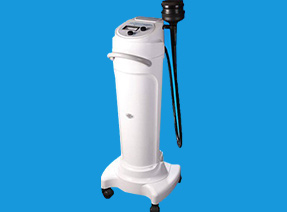
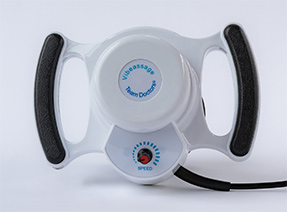
The Vibeassage Pro and Vibeassage Sport: Supporting the Spring System
In my own work, I use tools like the Vibeassage Pro and Vibeassage Sport.
These are not medical cures.
They are self-care and professional-use tools designed to help:
- Relax overworked muscles
- Improve comfort
- Support circulation
- And help tissues feel more mobile and less guarded
When tissues are less guarded, the spring system can begin to move more normally again.
And when the spring system moves better, many people feel better and function better.
Not because something was “fixed” on an MRI.
But because tension was reduced and movement was restored.
The Big Idea to Remember
Tests are tools. They are not truth machines.
They must be interpreted inside a whole-body, whole-person, movement-based model.
Why “Normal” Tests Can Still Mean Real Pain — And “Bad” Images Can Mean Nothing
One of the most confusing things for patients is this:
Two people can get the same test and have completely different lives.
One person gets an MRI and is told, “Your spine looks terrible,” yet they play tennis, garden, travel, and sleep just fine.
Another person gets an MRI and is told, “Everything looks normal,” yet they can barely sit at a desk, raise their arm, or sleep through the night.
How is that possible?
It’s possible because pictures do not show how the spring system works.
Abnormal Images Are Common — Even in People With No Pain
As people get older, their bodies change.
Just like hair gets gray and skin gets wrinkles, joints and tissues also change.
If you took 100 people who feel fine and did:
- Diagnostic Tests – MRI
- Diagnostic Tests x-ray
- Or Diagnostic – Ultrasound
You would find:
- Bulging discs
- Narrow spaces
- Arthritic changes
- “Degeneration”
- And all kinds of scary words in the reports
Yet many of those people have no pain at all.
This is not an opinion.
This is a well-known fact in medicine.
So if a report says, “We found something,” that does not automatically mean it is the cause of your problem.
Normal Tests Are Also Common — Even in People With Real Symptoms
The opposite is also true.
Many people have:
- Arm pain
- Neck pain
- Shoulder pain
- Tingling
- Weakness
- Or heaviness
And their tests come back “normal.”
They may have had:
- An EMG Test
- Nerve Conduction Studies
- Or even Motor Nerve Conduction Studies
And they are told, “Everything looks fine.”
But they do not feel fine.
This happens because many problems in the human body are mechanical and dynamic, not static and structural.
The spring system can be too tight, too stiff, or poorly coordinated without showing up as “damage” on a test.
The “Snapshot” Problem
Think of imaging like taking a single photo of a highway.
If traffic is flowing at that exact second, the picture looks fine.
But what if every day at 5:30 pm, that highway becomes a traffic jam?
The photo did not lie.
It just did not tell the whole story.
Tests like:
- thoracic outlet syndrome MRI
- thoracic outlet ultrasound
- Thoracic Outlet Syndrome Xray
- Or other thoracic outlet syndrome imaging
are snapshots in time.
They do not show what happens:
- After hours at a computer
- After carrying groceries
- After holding a phone
- After stress
- After fatigue
Why Position Matters So Much
Many nerve and blood vessel problems only show up in certain positions.
This is why some doctors use things like the Brachial plexus compression test or special arm positions during exams.
But even these are short tests.
They cannot copy your entire day.
You might feel fine for five minutes in a test room.
But not fine after five hours of life.
The Confusion Around Thoracic Outlet Testing
People who are told they may have thoracic outlet problems often go through many tests.
They may have:
- MRI thoracic outlet syndrome
- thoracic outlet MRI
- Or MRI for thoracic outlet syndrome using a Thoracic Outlet Syndrome MRI protocol
They may also have:
- thoracic outlet syndrome ultrasound
- thoracic outlet ultrasound
- Or thoracic ultrasound
Some even have:
- cervical rib MRI
- Or an x ray of cervical rib
And their charts fill up with thoracic outlet syndrome images and thoracic outlet images from thoracic outlet syndrome radiology.
Sometimes they also get Duplex Imaging to look at blood flow.
Then they may get:
- A Diagnostic – EMG
- Or Mac Studies – Medial Antebrachial Cutaneous Sensory Studies
And after all of that, they are told one of three things:
- “Yes, this explains everything.”
- “No, this doesn’t explain anything.”
- Or, “We’re not sure.”
Why Doctors Disagree
Doctors are not bad people.
They are trained in different models.
Some think in terms of:
- Anatomy
- Structures
- And things to cut or remove
Others think in terms of:
- Function
- Movement
- And mechanics
When you look at the body as a spring system, you realize something important:
Many problems are caused by loss of motion and excess tension, not by broken parts.
But tension and stiffness do not show up well on most tests.
The “If We See It, We Must Fix It” Trap
Modern medicine is very good at this:
“If we see something, we should fix it.”
But remember:
Seeing something does not prove it is the cause.
This is how people end up with:
- Surgery for things that were not the real problem
- Or procedures that do not change their symptoms
Because the spring system was never addressed.
The Human Spring Question Is Different
Instead of only asking:
“What looks wrong on the image?”
We ask:
- Where is motion lost?
- Where is the body too stiff?
- Where is tension stealing space?
- Where is the spring system failing to absorb and release load?
These are movement questions, not picture questions.
Why People Feel Better Without Changing the Image
This is one of the strangest and most hopeful things.
Many people feel much better, yet their MRI, X-ray, or ultrasound looks exactly the same.
Why?
Because:
- Muscles relaxed
- Tension dropped
- Movement improved
- Coordination improved
- The spring system started working better
The picture did not change.
The person did.
Where Tools Like Vibeassage Fit In
Tools like the Vibeassage Pro and Vibeassage Sport are not about “fixing images.”
They are about helping the body:
- Feel more relaxed
- Feel less guarded
- Move more freely
- And support daily self-care
When tissues are calmer, the nervous system often becomes calmer too.
And when that happens, movement usually improves.
A Very Important Warning
This is not an argument to ignore tests.
Tests are important.
They help rule out:
- Dangerous conditions
- Serious disease
- Or problems that really do need medical procedures
But they should be used as:
Guides, not dictators.
The Big Idea
Your body is not a picture.
Your body is a living, moving spring system.
And living systems cannot be fully understood by snapshots.
How Modern Life Slowly Breaks the Spring System
Most people do not wake up one day with severe pain.
Pain usually grows slowly.
First there is:
- A little stiffness
- A little tightness
- A little fatigue
Then:
- Less motion
- More tension
- Less endurance
And one day, something simple — reaching, lifting, or turning — suddenly hurts.
From the Human Spring point of view, this is not mysterious at all.
It is what happens when a living spring system slowly turns into a stiff one.
The Body Is Designed to Be Elastic
A healthy body is not stiff.
It is springy.
When you walk, your tissues stretch and rebound.
When you run, your body stores and releases energy.
When you move your arms, your shoulder, neck, and chest all share the load.
This is how the system protects:
- Joints
- Nerves
- Blood vessels
When the spring system works, no one structure is overloaded.
What Modern Life Does to the Spring System
Modern life asks the body to do things it was not designed to do all day:
- Sit for hours
- Look down at screens
- Hold the arms forward
- Stay tense under stress
- Sleep poorly
- Move in very few directions
Over time, the body adapts.
But it adapts in a bad way.
Muscles become:
- Shorter
- Tighter
- More protective
Connective tissue becomes:
- Thicker
- Less stretchy
- Less elastic
Joints begin to:
- Move less
- Glide less
- And share load poorly
This is how a spring system slowly becomes a stiff system.
The Problem of Muscle Guarding
One of the most important ideas to understand is muscle guarding.
When the body senses stress, strain, or irritation, it does something very smart:
It tightens muscles to protect you.
At first, this is helpful.
But if the stress continues day after day, that protection never turns off.
The muscles stay tight.
The area becomes stiff.
Movement becomes limited.
And the spring system cannot open and close normally anymore.
How This Creates the Feeling of Compression
Nerves and blood vessels do not usually get crushed by bones.
They get crowded by tight tissues.
When muscles and connective tissue lose their elasticity:
- Spaces get smaller
- Tunnels get tighter
- And movement pulls on sensitive structures
This is why people can feel:
- Heaviness
- Tightness
- Numbness
- Tingling
- Or burning
Even when tests do not show “damage.”
Why This Often Looks Like Thoracic Outlet Problems
The area between the neck, shoulder, and chest is full of important structures.
It also has to move a lot.
When the spring system here becomes stiff, people may be sent for:
- thoracic outlet syndrome MRI
- thoracic outlet syndrome ultrasound
- Or other thoracic outlet syndrome imaging
They may get:
- A Thoracic Outlet Syndrome Xray
- Or a thoracic outlet syndrome x ray view
They may even be checked for a cervical rib MRI or an x ray of cervical rib.
And their file fills up with thoracic outlet syndrome images and thoracic outlet images from thoracic outlet syndrome radiology.
Sometimes Duplex Imaging is added to look at circulation changes.
Sometimes nerve tests like Nerve Conduction Studies or a Diagnostic – EMG are added.
But the Real Issue Is Often the Spring System
The images may show:
- Shapes
- Variations
- Or “narrowing”
But they do not show:
- How stiff the tissues are
- How guarded the muscles are
- How poorly the system is sharing load
This is why two people with similar-looking images can feel completely different.
Why Posture Matters So Much
Posture is not about looking good.
It is about how load is carried.
When the head is forward and the shoulders are rounded:
- Some tissues are always stretched
- Some tissues are always shortened
- And some areas never get a break
Over time, this reprograms the spring system to be stiff instead of elastic.
Stress and the Nervous System
Stress does not just live in the mind.
It lives in the body.
A stressed nervous system keeps muscles:
- Slightly turned on
- Slightly tight
- Slightly guarded
All day.
All night.
That is not enough to cause injury in one day.
But over months and years, it changes the entire mechanical behavior of the body.
Why People Feel “Weak” Even When Muscles Are Not Weak
Many people are told:
“You need to strengthen this.”
But often, the problem is not weakness.
It is over-tension.
A muscle that cannot relax cannot work well.
A spring that cannot open cannot store energy.
So the body feels tired, heavy, and weak — even if the muscles are not truly weak.
The Human Spring Strategy
Instead of only chasing:
- Labels
- Images
- Or test results
The Human Spring Approach focuses on:
- Reducing unnecessary tension
- Improving tissue motion
- Restoring joint movement
- And helping the spring system work again
When this happens:
- Movement feels lighter
- Endurance improves
- And the body feels more “free”
Where Daily Self-Care Fits In
This is where tools like the Vibeassage Pro and Vibeassage Sport can be helpful.
They are not “fixes.”
They are support tools.
They help people:
- Relax tight areas
- Calm overworked tissues
- And make daily self-care easier to do
When used as part of a bigger movement and posture strategy, they can support better comfort and better motion.
A Very Important Safety Reminder
None of this means:
- “Ignore doctors.”
- “Ignore tests.”
- Or “Everything is just tight muscles.”
Serious problems exist.
Tests are important.
But most long-term pain problems live in the gray zone between structure and function.
That is the zone the Human Spring Approach focuses on.
How to Use Tests Wisely — Without Letting Them Control Your Life
By now, you understand something very important:
Your body is not a picture.
It is a living, moving spring system.
And living systems cannot be fully understood by snapshots alone.
This does not mean tests are useless.
It means tests must be used wisely.
The Right Role of Diagnostic Tests
Tests exist to answer specific questions, such as:
- Is something dangerous going on?
- Is there a serious disease?
- Is there a fracture, tumor, infection, or other condition that needs urgent care?
In those cases, tests like:
- Diagnostic Tests – MRI
- Diagnostic Tests x-ray
- Or Diagnostic – Ultrasound
are extremely important.
They help doctors protect you.
Where Tests Get Overused or Misused
Problems happen when tests are used to answer questions they were never designed to answer.
Most imaging and nerve tests cannot tell us:
- How stiff your tissues are
- How well your joints glide
- How much tension your nervous system is holding
- Or how your spring system behaves during real life
Yet these are exactly the things that often matter most in chronic pain and movement problems.
The Label Trap
Once a test result gets a name, that name becomes a label.
“You have this.”
“You have that.”
Soon, everything is explained through that one word.
But remember:
A label is not a full explanation.
It is just a short description of what someone saw or measured.
How People Get Locked Into the Wrong Path
Here is a very common story:
- Someone has pain.
- They get a scan or a test.
- The scan shows something common and age-related.
- That finding gets blamed for the pain.
- Treatment is aimed only at that finding.
- The person does not really improve.
- Now they are told they need something more serious.
This is not because anyone is trying to hurt them.
It is because the spring system was never part of the thinking.
Using Tests as Guards, Not Bosses
Tests should act like guardrails on a road.
They keep you from going somewhere dangerous.
But they should not drive the car.
Your symptoms, your movement, your daily function, and your quality of life matter just as much as any picture or report.
How This Applies to Thoracic Outlet Testing
People who are told they may have thoracic outlet problems often go through a long testing journey.
They may have:
- thoracic outlet syndrome MRI
- MRI thoracic outlet syndrome
- thoracic outlet MRI
- Or MRI for thoracic outlet syndrome using a Thoracic Outlet Syndrome MRI protocol
They may also have:
- thoracic outlet syndrome ultrasound
- thoracic outlet ultrasound
- Or thoracic ultrasound
They may have:
- thoracic outlet syndrome x ray view
- Or a Thoracic Outlet Syndrome Xray
Sometimes:
- A cervical rib MRI
- Or an x ray of cervical rib
Their records may include:
- thoracic outlet syndrome radiology reports
- thoracic outlet syndrome images
- And many thoracic outlet images
Sometimes circulation tests like Duplex Imaging are added.
Sometimes nerve tests are added, such as:
- An EMG Test
- Nerve Conduction Studies
- Motor Nerve Conduction Studies
- Or a Diagnostic – EMG
Sometimes even more specific tests like Mac Studies – Medial Antebrachial Cutaneous Sensory Studies are used.
And sometimes physical exams include things like the Brachial plexus compression test.
All of these can be useful.
But none of them, by themselves, tell the whole story.
The Human Spring Way of Thinking About Diagnosis
Instead of asking only:
“What did the test show?”
The Human Spring Approach also asks:
- How does the person move?
- Where is motion lost?
- Where is the body stiff instead of elastic?
- What makes symptoms worse or better?
- How does the body respond to gentle changes in tension and motion?
This creates a bigger and more accurate picture.
Why Some People Improve Without “Fixing” the Image
Many people are surprised when they feel much better, yet their MRI or X-ray is unchanged.
But this makes perfect sense when you remember:
The problem was not the picture.
The problem was the behavior of the spring system.
When:
- Muscles relax
- Movement improves
- Tension drops
- And coordination improves
The person feels better — even if the image looks the same.
Where Self-Care Tools Fit In
Tools like the Vibeassage Pro and Vibeassage Sport are not medical treatments.
They are support tools for daily self-care and comfort.
They help many people:
- Feel more relaxed
- Feel less guarded
- And support daily movement and recovery routines
They do not replace doctors.
They do not replace diagnosis.
They simply help people take better care of their own tissues.
Becoming an Active Partner in Your Own Health
One of the most important ideas in the Human Spring Approach is this:
Your body is not something that just gets “fixed.”
It is something you learn to work with.
That means:
- Paying attention to posture
- Paying attention to stress
- Paying attention to movement habits
- And supporting your body instead of fighting it
A Final, Honest Safety Message
Some conditions do require medical procedures.
Some conditions do require surgery.
Some conditions do show up clearly on tests.
This chapter is not anti-medicine.
It is pro-understanding.
It exists to help you:
- Avoid unnecessary fear
- Avoid unnecessary labels
- And avoid being pushed into paths that do not match your real problem
The Big Idea of the Whole Chapter
You are not an image.
You are not a test result.
You are a living, adaptive, moving spring system.
And when that system is understood and respected, better decisions usually follow.
Closing Thought
If reading this chapter makes you ask better questions, think more clearly, and feel more confident about your choices, then it has done its job.
That is the real purpose of the Human Spring Approach.
Team Doctors Resources
✓ Check out the Team Doctors Recovery Tools
The Vibeassage Sport and the Vibeassage Pro featuring the TDX3 soft-as-the-hand Biomimetic Applicator Pad
https://www.teamdoctors.com/
✓ Get Dr. Stoxen’s #1 International Bestselling Books
Learn how to understand, examine, and reverse your TOS—without surgery.
https://drstoxen.com/1-international-best-selling-author/
✓ Check out Team Doctors Online Courses
Step-by-step video lessons, demonstrations, and self-treatment strategies.
https://teamdoctorsacademy.com/
✓ Schedule a Free Phone Consultation With Dr. Stoxen
Speak directly with him so he can review your case and guide you on your next steps.
https://drstoxen.com/appointment/
#ThoracicOutletSyndrome #TOSRecovery #NonSurgicalHealing #PainFreedom #ChronicPainHelp #RebuildYourBody #NervousSystemReset #InflammationRelief #HumanSpringApproach #BodyRestoration #FunctionalHealth #PainRehab #HealthJourney #GetYourLifeBack #TeamDoctors

Dr James Stoxen DC., FSSEMM (hon) He is the president of Team Doctors®, Treatment and Training Center Chicago, one of the most recognized treatment centers in the world.
Dr Stoxen is a #1 International Bestselling Author of the book, The Human Spring Approach to Thoracic Outlet Syndrome. He has lectured at more than 20 medical conferences on his Human Spring Approach to Thoracic Outlet Syndrome and asked to publish his research on this approach to treating thoracic outlet syndrome in over 30 peer review medical journals.
He has been asked to submit his other research on the human spring approach to treatment, training and prevention in over 150 peer review medical journals. He serves as the Editor-in-Chief, Journal of Orthopedic Science and Research, Executive Editor or the Journal of Trauma and Acute Care, Chief Editor, Advances in Orthopedics and Sports Medicine Journal and editorial board for over 35 peer review medical journals.
He is a much sought-after speaker. He has given over 1000 live presentations and lectured at over 70 medical conferences to over 50,000 doctors in more than 20 countries. He has been invited to speak at over 300 medical conferences which includes invitations as the keynote speaker at over 50 medical conferences.
After his groundbreaking lecture on the Integrated Spring-Mass Model at the World Congress of Sports and Exercise Medicine he was presented with an Honorary Fellowship Award by a member of the royal family, the Sultan of Pahang, for his distinguished research and contributions to the advancement of Sports and Exercise Medicine on an International level. He was inducted into the National Fitness Hall of Fame in 2008 and the Personal Trainers Hall of Fame in 2012.
Dr Stoxen has a big reputation in the entertainment industry working as a doctor for over 150 tours of elite entertainers, caring for over 1000 top celebrity entertainers and their handlers. Anthony Field or the popular children’s entertainment group, The Wiggles, wrote a book, How I Got My Wiggle Back detailing his struggles with chronic pain and clinical depression he struggled with for years. Dr Stoxen is proud to be able to assist him.
Full Bio) Dr Stoxen can be reached directly at teamdoctors@aol.com