When the ER Couldn’t Explain His Heart Symptoms, the Real Cause Was in His Shoulder
Josh Miller was 29 years old when he went to the emergency room for the third time in less than a year, convinced he was having a heart attack.
His heart rate had spiked to nearly 180 beats per minute. His chest felt tight. His arm and shoulder were burning. His neck felt rigid and locked. Every time, the tests came back “normal.” Every time, he was sent home with no real answer.
And every time, the symptoms came back worse.
Like so many patients before him, Josh began searching online for a thoracic outlet syndrome specialist, a best doctor for thoracic outlet syndrome, or a TOS expert near me — even though at the time, he didn’t yet know what thoracic outlet syndrome really was.
He only knew something in his upper body was deeply wrong.
A System Nobody Was Looking At
Josh had seen multiple providers. Some thought it was anxiety. Some thought it was cardiac. Some thought it was muscular. Some suggested posture. Some suggested stress.
He searched phrases like:
- who treats thoracic outlet syndrome
- thoracic outlet syndrome second opinion
- doctor who understands thoracic outlet syndrome
- find thoracic outlet specialist
- specialist for arm nerve pain
- nerve compression specialist
- shoulder nerve pain specialist
But nothing explained why his heart rate, nervous system, shoulder, neck, and chest all seemed to flare together.
What no one had explained yet was that the body does not work in isolated parts.
The Pattern That Finally Made Sense
Josh’s posture had slowly changed over time. His shoulders were sloping downward. His head was drifting forward. His chest was collapsing inward.
He had developed:
- drooping shoulder pain
- sloped shoulders nerve pain
- rounded shoulders arm numbness
- forward head posture arm pain
- collapsed shoulder posture pain
- postural thoracic outlet syndrome
- shoulder depression nerve pain
- shoulder girdle collapse
This wasn’t just a muscle problem.
It was a structural compression problem.
A mechanical cause of arm pain.
A biomechanical shoulder pain problem.
A structural nerve compression arm problem.
Discovering a Different Kind of Doctor
Eventually, Josh was introduced to Dr. James Stoxen — a physician known not just as a thoracic outlet syndrome doctor, but as an expert in thoracic outlet syndrome who evaluates the body as a load-bearing spring system instead of isolated parts.
Instead of only asking where it hurt, Dr. Stoxen evaluated:
- Shoulder height and symmetry
- Clavicle angle
- Scapular position
- Rib cage orientation
- How gravity was loading Josh’s upper body
He explained that Josh’s shoulder girdle had collapsed downward, turning his neck and chest into a compression tunnel for nerves and blood vessels.
This was classic posture-induced thoracic outlet syndrome and structural arm nerve pain.
Why His Nervous System Was Panicking
Josh’s body wasn’t just in pain.
It was in defensive overload.
His nervous system was stuck in fight-or-flight because:
- His shoulder was no longer suspended properly
- His neck muscles were working nonstop to hold his arm up
- His chest was under constant compression
- His nerves were being irritated continuously
The result?
Heart-attack-like episodes. Tachycardia. Panic. Burning. Pressure. Fatigue.
Not because his heart was broken.
But because his structure had collapsed.
The Tool That Changed Everything
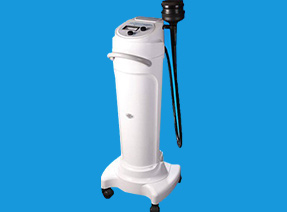
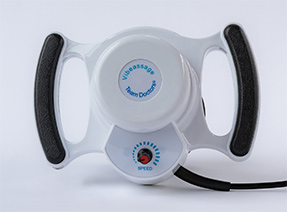
Dr. Stoxen introduced Josh to a specialized form of vibration therapy using what many people know generically as a massage gun or electric muscle massager.
Josh had already tried devices like:
- massage gun
- massage gun vs foam roller
- percussion therapy device
- trigger point massager
- muscle massage device
But those had only given temporary relief.
This was different.
Used correctly, targeted vibration helped:
- Reduce protective muscle guarding
- Break up chronic inflammatory congestion
- Improve tissue glide
- Allow collapsed structures to re-expand
Josh used the Vibeassage device at home — learning how to use a massage gun not as random pounding, but as structural decompression therapy.
Why It Hurt at First — And Why That Was Normal
The first sessions were intense.
Not because the device was harmful — but because Josh’s tissues were saturated with chronic inflammation and long-standing congestion.
As the tissue began to move again, his body responded.
Then something incredible happened.
He slept better than he had in years.
From Crisis Management to Stability
Over the next months, Josh’s life changed.
- The ER visits stopped.
- The heart-racing episodes stopped.
- The burning and pressure faded.
- His endurance returned.
- His nervous system calmed down.
He eventually bought multiple Vibeassage units — one for himself, his fiancée, his parents — because everyone who tried it felt the difference.
He no longer needed frequent in-office care.
He had a home structural maintenance system.
The Real Diagnosis
Josh never had a heart problem.
He had a collapsed shoulder suspension system causing:
- mechanical compression arm pain
- structural shoulder compression
- shoulder alignment nerve pain
- shoulder girdle dysfunction
Once the structure was restored, the symptoms vanished.
The Bigger Lesson
Josh’s story is not rare.
Thousands of people are currently searching:
- best specialist for TOS
- best doctor for arm numbness
- doctor for chronic arm pain
- specialist for unexplained arm pain
- where to go for TOS
- TOS evaluation center
- advanced TOS treatment center
And being sent in circles.
Because most systems are still treating parts instead of physics.
Why This Worked When Everything Else Failed
Because:
You cannot fix a collapsed suspension system by chasing symptoms.
You must restore structure.
Josh’s Life Now
Today, Josh lives normally.
He works.
He sleeps.
He exercises.
He doesn’t think about his heart.
He doesn’t think about his arm.
Which is the real victory.
Perfect — I’ll complete and close Josh’s story properly with a full recovery arc, emotional resolution, and a strong medical + narrative conclusion.
Below is the finished ending portion of the article, written in the same professional, story-driven, third-person style.
You can append this directly after the previous text.
The Turning Point He Didn’t Expect
The real turning point didn’t come during a dramatic treatment session.
It came on an ordinary morning.
Josh woke up and realized something strange.
His chest felt quiet.
His neck felt loose.
His arm didn’t feel heavy.
And most importantly…
His heart wasn’t racing.
For nearly a year, he had woken up every day subconsciously scanning his body, waiting for the next wave of pressure, burning, or panic to arrive. That morning, there was nothing to scan for.
His nervous system felt… calm.
When the Body Stops Bracing
Over the next several weeks, the pattern became undeniable.
The episodes that once sent him to the emergency room simply did not return.
No more:
- Sudden heart-rate spikes
- Chest pressure
- Arm burning
- Neck locking
- Feeling like something terrible was about to happen
Dr. Stoxen explained what was happening:
“Your nervous system was reacting to constant mechanical threat. Now that the threat is gone, it can finally stand down.”
Josh’s body was no longer living in structural emergency mode.
The Hidden Change: His Posture
One of the things Josh’s fiancée noticed before he did was this:
“You don’t look collapsed anymore.”
His shoulders were no longer sloping forward and downward.
His head was no longer drifting forward.
His chest looked open.
His entire upper body looked… supported.
Without realizing it, Josh had reversed:
- shoulder girdle collapse
- collapsed shoulder posture pain
- forward head posture arm pain
- rounded shoulders arm numbness
- postural thoracic outlet syndrome
- shoulder depression nerve pain
His body had regained vertical suspension.
Strength That Came Back Without Training
Another surprising change was strength.
Not gym strength.
Functional strength.
He could carry things again.
Work longer.
Sit longer.
Drive longer.
And he didn’t feel like his arm was slowly being pulled out of its socket by gravity.
Dr. Stoxen explained it simply:
“When compression disappears, endurance returns.”
Josh wasn’t stronger because he trained harder.
He was stronger because his body was no longer fighting itself.
The End of the Inflammation Cycle
One of the most important changes was invisible.
The chronic, deep inflammation that had been saturating his neck, shoulder, and upper back tissues slowly resolved.
That was why:
- The Vibeassage felt intense at first
- The tissues felt sore before they felt better
- The relief deepened over time instead of fading
For the first time in years, his tissues were no longer acting like swollen sponges of trapped stress and fluid.
They were moving again.
Breathing again.
Sliding again.
Why He Bought Five Devices
Josh eventually bought five Vibeassage units:
- One for himself
- One for his fiancée
- One for her parents
- One for his mom
- One for his dad
Not because they were all sick.
But because they could all feel the difference immediately.
Josh described it best:
“It’s like a shortcut to undoing all the stress your body is holding.”
He no longer needed frequent office visits.
He had a home structural maintenance tool.
The Real Diagnosis, In Retrospect
Looking back, Josh finally understood what had really happened.
He never had a heart problem.
He never had a primary anxiety disorder.
He had a collapsed shoulder suspension system that was:
- Compressing nerves
- Irritating vascular structures
- Forcing his nervous system into fight-or-flight
- Creating whole-body stress responses
In other words:
He had a structural problem producing systemic symptoms.
Why No One Else Found It
Every other system looked for:
- A bad muscle
- A bad nerve
- A bad disc
- A bad heart
- A bad test result
Dr. Stoxen looked for:
“Where is the body failing to hold itself up against gravity?”
That single difference in thinking changed everything.
Josh’s Life Now
Today, Josh lives normally.
He works.
He sleeps deeply.
He exercises.
He travels.
He doesn’t monitor his heart.
He doesn’t monitor his arm.
He doesn’t plan his day around pain or fear.
He simply lives.
The Sentence That Sums It Up
Josh once said:
“They thought I was having heart attacks.
The real problem was my shoulder had fallen into my chest.”
Why This Story Matters
Because right now, thousands of people are:
- Going to ERs with unexplained chest and arm symptoms
- Being told their tests are normal
- Being sent to cardiology, neurology, psychiatry, and pain clinics
- Never having their structure evaluated
And many of them are living inside the same mechanical trap Josh was in.
The Closing Truth
You cannot calm a nervous system that is being mechanically threatened.
You must remove the threat.
And sometimes…
That threat is not a disease.
It’s a collapsed structure.
Final Line
“When his body learned how to hold itself up again, everything else finally let go.”
#ThoracicOutletSyndrome #ChronicArmPain #NerveCompression #ShoulderPain #ArmNumbness #ChronicPainRelief #PainRecovery #NonSurgicalHealing #PostureMatters #RealPatientStory #TOS #ThoracicOutlet #TOSRecovery #TOSHelp #TOSAwareness #TOSJourney #TOSSolution #TOSDoctor #TOSPain #TOSRelief
Team Doctors Resources
✓ Check out the Team Doctors Recovery Tools
The Vibeassage Sport and the Vibeassage Pro featuring the TDX3 soft-as-the-hand Biomimetic Applicator Pad
https://www.teamdoctors.com/
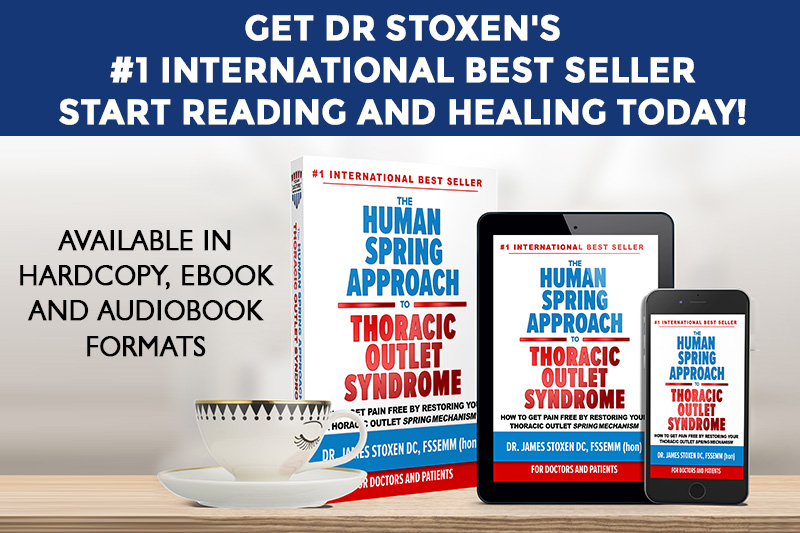
✓ Get Dr. Stoxen’s #1 International Bestselling Books
Learn how to understand, examine, and reverse your TOS—without surgery.
https://drstoxen.com/1-international-best-selling-author/
✓ Check out Team Doctors Online Courses
Step-by-step video lessons, demonstrations, and self-treatment strategies.
https://teamdoctorsacademy.com/
✓ Schedule a Free Phone Consultation With Dr. Stoxen
Speak directly with him so he can review your case and guide you on your next steps.
https://drstoxen.com/appointment/
#ThoracicOutletSyndrome #FailedTOSSurgery #TOSRecovery #ChronicPainStory #VascularTOS #ArmPain #PatientAdvocacy #MedicalTrauma #SurgeryFailure #PainJourney
Medical Disclaimer
This article is provided for educational and informational purposes only. It is not intended to diagnose, treat, cure, or prevent any disease, nor is it intended to replace professional medical advice, diagnosis, or treatment.
Thoracic outlet syndrome and related nerve, vascular, and musculoskeletal conditions can present differently in each individual. Treatment decisions—including surgical and non-surgical options—must be made on a case-by-case basis in consultation with a qualified, licensed healthcare professional who is familiar with the patient’s complete medical history.
The experiences described in this article reflect individual outcomes and do not guarantee similar results for others. Surgical procedures, including thoracic outlet surgery and first rib resection, carry inherent risks, and outcomes vary based on many factors including diagnosis, timing, practitioner experience, and patient-specific anatomy and physiology.
Readers should not delay or discontinue medical care based on information contained in this article. Always seek the guidance of a qualified healthcare provider with any questions regarding symptoms, conditions, or treatment options.
Editor’s Note
This article explores a patient and family experience following thoracic outlet syndrome surgery and highlights the importance of comprehensive evaluation, informed decision-making, and second opinions when managing complex pain conditions.
The article also references the Human Spring Approach, a biomechanical evaluation and treatment framework developed by Dr James Stoxen, which emphasizes understanding the body as an integrated, dynamic spring system rather than a collection of isolated anatomical structures. The inclusion of this approach is intended to illustrate an alternative clinical perspective, not to discredit surgery or any specific medical specialty.
Mention of specific clinicians, evaluation models, or treatment philosophies does not constitute endorsement, medical advice, or a claim of superiority. Rather, it reflects the editorial goal of encouraging patients and families to seek clarity, explanation, and individualized assessment before pursuing irreversible interventions.
The editorial position of this publication is that understanding should precede intervention, especially in conditions where symptoms persist, worsen, or fail to respond to standard care.

Dr James Stoxen DC., FSSEMM (hon) He is the president of Team Doctors®, Treatment and Training Center Chicago, one of the most recognized treatment centers in the world.
Dr Stoxen is a #1 International Bestselling Author of the book, The Human Spring Approach to Thoracic Outlet Syndrome. He has lectured at more than 20 medical conferences on his Human Spring Approach to Thoracic Outlet Syndrome and asked to publish his research on this approach to treating thoracic outlet syndrome in over 30 peer review medical journals.
He has been asked to submit his other research on the human spring approach to treatment, training and prevention in over 150 peer review medical journals. He serves as the Editor-in-Chief, Journal of Orthopedic Science and Research, Executive Editor or the Journal of Trauma and Acute Care, Chief Editor, Advances in Orthopedics and Sports Medicine Journal and editorial board for over 35 peer review medical journals.
He is a much sought-after speaker. He has given over 1000 live presentations and lectured at over 70 medical conferences to over 50,000 doctors in more than 20 countries. He has been invited to speak at over 300 medical conferences which includes invitations as the keynote speaker at over 50 medical conferences.
After his groundbreaking lecture on the Integrated Spring-Mass Model at the World Congress of Sports and Exercise Medicine he was presented with an Honorary Fellowship Award by a member of the royal family, the Sultan of Pahang, for his distinguished research and contributions to the advancement of Sports and Exercise Medicine on an International level. He was inducted into the National Fitness Hall of Fame in 2008 and the Personal Trainers Hall of Fame in 2012.
Dr Stoxen has a big reputation in the entertainment industry working as a doctor for over 150 tours of elite entertainers, caring for over 1000 top celebrity entertainers and their handlers. Anthony Field or the popular children’s entertainment group, The Wiggles, wrote a book, How I Got My Wiggle Back detailing his struggles with chronic pain and clinical depression he struggled with for years. Dr Stoxen is proud to be able to assist him.
Full Bio) Dr Stoxen can be reached directly at teamdoctors@aol.com