Your Body Is Not a Machine Made of Sticks — It Is a Living Spring
Most people are taught to think about their body like it is a machine made of hard parts. Bones are seen like sticks. Joints are seen like hinges. Muscles are seen like ropes that pull on levers. In this way of thinking, if something hurts, then something must be “broken,” “worn out,” or “pinched” and probably needs to be cut, removed, or forced back into place.
Dr. James Stoxen has spent decades challenging that idea.
He teaches something very different. He teaches that the human body works more like a spring system than a lever system. Springs do not just move things. Springs store energy, absorb shock, protect space, and return energy smoothly. Your feet, your legs, your spine, your rib cage, your shoulders, and even your neck are all part of a living spring system that is supposed to float, suspend, and decompress your nerves and blood vessels as you move.
When that spring system works well, movement feels easy. Breathing feels easy. Standing feels easy. Walking feels easy. Your arms can lift and work without strange burning, tingling, weakness, or heaviness.
When that spring system starts to collapse or stiffen, the body does not fall apart all at once. It slowly loses its ability to keep space open inside itself.
And space is everything.
Inside your chest, neck, and shoulders live very important neurovascular structures. These include nerves, arteries, veins, and parts of the sympathetic chain that help control circulation, temperature, and stress responses. Together, these form what doctors often call the neurovascular bundle. These structures are soft. They are not made to be squeezed, stretched, or crushed.
They are meant to float inside open space.
When that space becomes narrowed, twisted, or collapsed, the result can be neurovascular compression syndrome. People may develop neurovascular compression syndrome symptoms such as pain, tingling, numbness, weakness, heaviness, or strange sensations in the arm, shoulder, chest, or neck.
Very often, the nerves involved come from a very important nerve network called the brachial plexus.
The Brachial Plexus: The Nerve Highway to Your Arm
The brachial plexus is a large bundle of nerves that comes out of your neck and travels into your shoulder and arm. These nerves control feeling and strength in your arm and hand. When something irritates or squeezes these nerves, a person may be told they have a brachial plexus injury or even brachial plexus injuries if more than one nerve branch is involved.
Some people are told they have brachial plexus neuropathy. Others are told they have brachial plexus compression syndrome. Some hear the term brachial plexus outlet syndrome, brachial plexus thoracic outlet syndrome, or simply brachial plexus TOS.
In more severe or traumatic cases, doctors may even discuss brachial plexus surgery, or procedures such as brachial plexus neurolysis, which is meant to free a nerve from scar tissue.
People who suffer from these problems often report classic brachial plexus injury symptoms:
burning, aching, tingling, numbness, weakness, clumsiness, or a feeling that the arm is heavy or not fully “connected” to the body.
But here is the key idea Dr. Stoxen teaches:
In most everyday, non-traumatic cases, the nerve itself is not “broken.”
It is being crowded because the body has lost its natural suspension system.
This crowding can also be described as thoracic nerve compression, thoracic nerve impingement, or thoracic nerve entrapment, and people often search for some kind of thoracic nerve pain treatment to fix it.
But the real question should be:
Why did the space collapse in the first place?
The Thoracic Outlet: A Tunnel That Must Stay Open
The thoracic outlet is not a single bone or a single hole. It is a space between the neck, collarbone, ribs, and shoulder where nerves and blood vessels pass from the chest into the arm.
When this space becomes too tight, twisted, or stiff, nerves can become irritated. This is often labeled neurologic thoracic outlet syndrome.
Doctors may try to study this using tools like MRI, EMG studies, or Nerve conduction studies. They may also perform physical tests such as Adson’s test, Roos test, Wright’s test, Allen test, EAST (Elevated Arm Stress Test), EAST (3-minute Elevated Arm Stress Test), the Upper Limb Tension Test, or the Cervical rotation lateral flexion test.
These tests can be helpful for understanding symptoms and ruling out other problems. But very often, they do not explain why the space collapsed.
Dr. Stoxen’s work focuses on that deeper “why.”
He explains that the body is designed to hold the shoulder and rib cage up like a suspension bridge, not let them sink down and forward like a broken tent.
When posture changes, when feet weaken, when joints stiffen, when breathing becomes shallow, and when movement becomes limited, the spring system of the body slowly loses its ability to hold things up and apart.
The result is not usually a sudden injury.
It is a slow, quiet collapse of space.
A Clear Clinical Position on Neurologic Thoracic Outlet Syndrome
Dr. Stoxen has a very strong and very clear position about this, based on more than three decades of clinical experience.
Here is his position, cleaned up and presented in a clear, professional, book-ready form:
January 15, 2026
Neurologic Thoracic Outlet Syndrome is, at its core, a problem of nerve compression. A nerve is being irritated because the thoracic outlet space has been narrowed or distorted.
If you identify what is compressing the outlet and correct that, the nerve is no longer pinched—and the symptoms resolve.
That is why so many people are told they “need surgery.” The assumption is that something must be cut out or removed to open the space.
But for true neurologic TOS, that is almost never necessary.
In my practice, I will not recommend surgery for neurologic TOS unless there is a true limb-threatening condition. In more than 32 years, I have never seen that situation in a pure neurologic case.
So when I hear that someone has undergone surgery for neurologic TOS, I honestly shake my head and think, “Why did they do that?”
In most cases, the problem is not structural damage that needs to be removed. It is a functional collapse of the suspension system that needs to be restored.
This does not say surgery is never appropriate for any condition. It simply explains that in pure neurologic compression cases, the real problem is usually loss of space from loss of spring function, not something that needs to be cut out.
The Human Spring Approach: Restoring Function Instead of Removing Parts
The Human Spring Approach does not try to “force bones into place.” It does not try to “stretch nerves.” It does not try to “cut away” structures to make room.
Instead, it focuses on helping the body relearn how to hold itself up.
It looks at:
- How the feet load the ground
- How the joints move and rebound
- How the rib cage floats
- How the shoulders suspend
- How breathing helps keep space open
- How movement keeps tissues healthy and elastic
When these systems work together, the body naturally protects its own neurovascular bundle and keeps the neurovascular structures from being crowded.
This is not a quick fix. It is a re-education of how the body uses itself.
Where Self-Care Tools Fit In
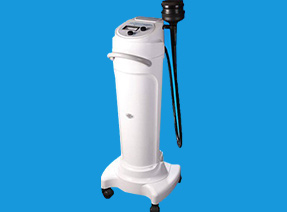
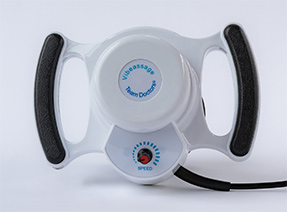
In Dr. Stoxen’s clinic and teaching work, tools like the Vibeassage Pro and Vibeassage Sport are used as support tools for self-care and tissue relaxation.
They are not described as medical treatments. They are not described as cures. They are not described as devices that diagnose or fix disease.
They are simply tools that can help:
- Relax tight tissues
- Improve comfort
- Help people feel more aware of their body
- Support daily self-care routines
- Help prepare the body for movement and exercise
- Help people participate more easily in their rehabilitation and movement programs
In other words, they are personal wellness and recovery tools that people can use at home as part of taking care of their bodies.
Why This Perspective Is So Different
Most people are taught to hunt for a “bad structure.”
Dr. Stoxen teaches people to look for a bad system.
When a spring system collapses, nothing may look broken on a scan. An MRI might look “normal.” EMG studies and Nerve conduction studies might be confusing or inconsistent. Physical tests like Roos test or EAST (Elevated Arm Stress Test) might reproduce symptoms without clearly explaining the cause.
That is because the real problem is often how the body is using itself — not a single damaged part.
How Space Slowly Collapses in the Body (And Why Symptoms Seem to Come and Go)
One of the most confusing things for people who live with arm, neck, shoulder, or upper-back discomfort is that the symptoms do not always stay the same.
Some days the arm feels heavy.
Some days it tingles.
Some days it burns.
Some days the hand feels weak or clumsy.
Some days the neck feels tight and the chest feels full or pressured.
Then, just as strangely, some days feel better.
This makes many people wonder if the problem is “in their head” or if doctors are missing something serious. They may go through test after test, including MRI, EMG studies, and Nerve conduction studies, hoping for a clear answer.
They may also go through many physical exams that include Adson’s test, Wright’s test, Allen test, the Roos test, the Upper Limb Tension Test, the Cervical rotation lateral flexion test, or the EAST (Elevated Arm Stress Test), sometimes also called the EAST (3-minute Elevated Arm Stress Test).
Sometimes these tests reproduce symptoms. Sometimes they do not. Sometimes one test is positive and another is not. This can be very frustrating.
The Human Spring Approach offers a simple explanation for this confusing pattern:
When the problem is loss of space from loss of spring function, symptoms change depending on posture, fatigue, breathing, stress, and how the body is being used that day.
The Body Is Always Adapting (Until It Can’t)
Your body is not stiff like a statue. It is always adapting.
If one joint becomes stiff, another joint moves more.
If one area gets weak, another area works harder.
If one part of the spring system stops helping, another part tries to take over.
At first, this works pretty well. You may not notice anything wrong for a long time.
But over months or years, the system slowly becomes less elastic and more compressed.
This is how space begins to disappear in important areas like the neck, shoulder, and chest.
The Role of the Brachial Plexus in Changing Symptoms
Remember, the brachial plexus is a bundle of nerves that travels from the neck into the arm.
When space around these nerves changes, symptoms can change too.
On one day, the nerves may be slightly crowded, leading to mild tingling or fatigue.
On another day, the same nerves may be more crowded, leading to burning, aching, or weakness.
This is why some people are told they might have a brachial plexus injury, or brachial plexus neuropathy, or brachial plexus compression syndrome, or brachial plexus outlet syndrome, or brachial plexus thoracic outlet syndrome, or brachial plexus TOS.
These names describe where the symptoms are felt, not always why the space is disappearing.
In more serious or traumatic situations, there can be true brachial plexus injuries that require specialized care and sometimes even brachial plexus surgery or brachial plexus neurolysis. But most everyday, non-accident cases are not caused by torn or cut nerves.
They are caused by crowding.
Crowding Can Affect More Than Just Nerves
The thoracic outlet does not only contain nerves.
It also contains blood vessels and parts of the sympathetic chain, which is involved in regulating blood flow, temperature, and stress responses.
Together, these form the neurovascular bundle and other important neurovascular structures.
When space becomes tight, a person may develop what doctors call neurovascular compression syndrome and experience neurovascular compression syndrome symptoms such as:
- Changes in color or temperature in the arm or hand
- Heaviness or fatigue with use
- Swelling or pressure feelings
- Strange sensations that do not follow a simple nerve pattern
Again, this does not always mean something is “damaged.” Very often, it means something is crowded.
This is also why some people hear terms like thoracic nerve compression, thoracic nerve impingement, or thoracic nerve entrapment, and go searching for some form of thoracic nerve pain treatment.
The Quiet Role of Posture and Breathing
One of the biggest reasons space slowly disappears in the upper body is how modern life changes posture and breathing.
Many people:
- Sit for long hours
- Look down at screens
- Breathe shallowly
- Rarely move their arms overhead freely
- Rarely twist, reach, or move in wide, elastic ways
Over time, the rib cage becomes stiff. The shoulders drift forward and down. The head moves forward. The chest loses its natural lift.
This changes the shape of the thoracic outlet.
It does not happen in one day. It happens little by little.
The Hidden Role of the Feet
This surprises many people, but the story does not start in the neck or shoulder.
It often starts in the feet.
Your feet are the first springs that meet the ground. If they become stiff, weak, or collapsed, the shock of walking and standing travels upward into the knees, hips, spine, rib cage, and shoulders.
Over time, the whole body becomes more compressed and less springy.
When that happens, the shoulders and rib cage slowly lose their ability to stay suspended.
And when suspension is lost, space is lost.
Why Scans and Tests Can Be Confusing
People often expect an MRI to show a clear problem.
But remember: loss of space from loss of spring function is a dynamic problem. It changes with posture, position, breathing, and movement.
That is why EMG studies and Nerve conduction studies can sometimes look normal or only slightly abnormal, even when a person feels very real symptoms.
That is also why physical tests like Adson’s test or the Roos test or the EAST (Elevated Arm Stress Test) may be positive one day and less clear another day.
The body is not a frozen picture. It is a moving system.
The Difference Between Damage and Deconditioning
One of the most important ideas in the Human Spring Approach is the difference between:
- Something that is damaged
- Something that has lost function
A damaged structure often needs repair.
A deconditioned or stiffened system often needs restoration of movement, space, and elasticity.
Many people are told scary words like “compression,” “entrapment,” or “impingement” and assume something is being crushed and must be cut out.
But very often, the problem is that the body has forgotten how to hold itself up.
Where Self-Care Fits Into This Picture
This is where daily self-care tools, such as the Vibeassage Pro and Vibeassage Sport, are used in Dr. Stoxen’s teaching and educational programs.
Again, these are not presented as medical treatments or cures.
They are presented as support tools that can help people:
- Relax tight areas
- Improve comfort
- Become more aware of stiff or guarded parts of their body
- Make it easier to move and exercise
- Support consistency in daily body care routines
When tissues feel less guarded and more comfortable, people are often more willing and able to move — and movement is a key part of restoring spring function.
A Simple Way to Think About the Process
You can think of it like this:
At first, the body is like a new mattress — springy, supportive, and resilient.
Over time, with poor use, stress, and lack of movement, it becomes like an old mattress — saggy in some places, stiff in others, and no longer good at supporting space.
The solution is not to cut pieces out of the mattress.
The solution is to restore the support system.
Why Symptoms Can Seem So Serious
When nerves from the brachial plexus or parts of the neurovascular bundle are irritated, symptoms can feel alarming.
People may worry about permanent brachial plexus injury symptoms or fear that they are getting worse and worse.
But in many non-traumatic cases, what is changing is how crowded the space is, not whether the nerve is being destroyed.
This is a very important difference.
Learning to Take Care of Your Spring System for Life
By now, you can see that the Human Spring Approach is not about chasing one painful spot. It is not about “fixing” one joint, one muscle, or one nerve.
It is about how you use your whole body every day.
Your body is not something that gets repaired once and then forgotten. It is something you live in. How you stand, how you walk, how you sit, how you breathe, how you move, and how you rest all shape what happens inside your tissues.
This is especially true in sensitive areas like the neck, shoulders, and chest, where important neurovascular structures and the neurovascular bundle pass through narrow spaces.
Why a Long-Term View Matters
Many people hope for a single test, a single treatment, or a single procedure to “solve” everything.
That is why people often go through many evaluations, including MRI, EMG studies, and Nerve conduction studies. They may also go through repeated physical exams using Adson’s test, Wright’s test, Allen test, the Roos test, the Upper Limb Tension Test, the Cervical rotation lateral flexion test, or the EAST (Elevated Arm Stress Test), sometimes also called the EAST (3-minute Elevated Arm Stress Test).
These tests can be useful for understanding and ruling out certain problems. But they do not teach your body how to move, support itself, or stay springy.
The Human Spring Approach is about changing how the system works over time.
Understanding the Language Without Being Frightened by It
People often hear serious-sounding terms such as:
- Brachial plexus injury or brachial plexus injuries
- Brachial plexus neuropathy
- Brachial plexus compression syndrome
- Brachial plexus outlet syndrome
- Brachial plexus thoracic outlet syndrome or brachial plexus TOS
- Thoracic nerve compression, thoracic nerve impingement, or thoracic nerve entrapment
- Neurovascular compression syndrome and neurovascular compression syndrome symptoms
In severe trauma cases, these labels can describe real tissue damage and may involve discussions about brachial plexus surgery or brachial plexus neurolysis.
But in most everyday, non-accident situations, these words often describe irritation from crowding, not destruction.
Crowding is usually a functional problem — meaning a problem with how the body is being held and used.
The Role of the Sympathetic Chain and Stress
Another piece of the puzzle is the sympathetic chain, which is part of the nervous system that helps control stress responses, blood flow, and muscle tone.
When people are under long-term stress, breathe shallowly, or hold a lot of tension, the body often becomes more guarded and stiff.
Guarding reduces movement.
Reduced movement reduces elasticity.
Reduced elasticity reduces space.
This is one more way the spring system slowly loses its ability to protect the nerves and blood vessels.
What “Progress” Really Looks Like
Progress in a spring-based system is not always a straight line.
People often notice:
- Some days feel easier
- Some days feel stiff again
- Some activities improve before others
- Some symptoms fade while others come and go
This does not mean nothing is changing. It means the whole system is learning new habits.
Just like learning better posture, better walking, or better breathing, this is a process, not a switch.
Where the Vibeassage Pro and Vibeassage Sport Fit In
In Dr. Stoxen’s educational work, tools like the Vibeassage Pro and Vibeassage Sport are described as personal wellness and recovery tools.
They are not presented as medical devices that diagnose, treat, or cure disease.
They are used to help support:
- Daily comfort
- Tissue relaxation
- Body awareness
- Easier movement
- Consistency in self-care routines
When people feel less tight and less guarded, they are often more willing to move. And movement is one of the main ways the body keeps its spring system alive.
These tools are simply one small part of a bigger lifestyle approach.
The Big Picture: How All the Parts Work Together
The Human Spring Approach looks at:
- How your feet interact with the ground
- How your joints move and rebound
- How your spine and rib cage stay lifted
- How your shoulders stay suspended
- How your breathing keeps the chest elastic
- How your daily habits shape your posture
When these systems work together, the body naturally helps protect the neurovascular bundle and the sensitive nerves of the brachial plexus.
When they do not work together, the body slowly becomes more compressed.
A Calm Way to Think About Symptoms
When someone feels arm pain, tingling, heaviness, or weakness, it is easy to imagine that something is being “crushed” or “destroyed.”
But in many non-traumatic cases, the better mental picture is:
The body has lost some of its internal lift and spacing.
That is a very different and much less frightening idea.
Why This Approach Is Conservative and Careful
The Human Spring Approach does not rush to remove parts. It does not assume that structure must be sacrificed to create space.
It starts with the simplest and safest question:
“Can we help the body hold itself up better?”
Only in rare, truly limb-threatening situations would more extreme measures even be discussed.
What This Means for Real Life
In real life, this approach looks like:
- Paying attention to posture
- Moving more often and in more ways
- Breathing more fully
- Avoiding long periods of stiffness
- Using simple self-care tools consistently
- Thinking in months and years, not days
It is not dramatic. It is not extreme. It is practical and sustainable.
A Final, Simple Way to Think About Your Body
Your body is not a stack of blocks.
It is a living spring system.
When springs are healthy, they:
- Absorb stress
- Protect space
- Return energy
- Make movement easier
When springs lose their function, the body becomes:
- Stiffer
- Heavier
- More compressed
- More easily irritated
The goal is not to chase symptoms.
The goal is to support the system.
A Reassuring Closing Thought
Many people who have been told they have things like brachial plexus compression syndrome, brachial plexus thoracic outlet syndrome, or neurovascular compression syndrome feel scared and trapped by the words.
But in many everyday cases, what those words really describe is a body that has forgotten how to stay lifted and springy.
That is something that can be worked on, practiced, and improved over time.
The Big Takeaway
The Human Spring Approach is:
- Educational
- Conservative
- Whole-body focused
- Based on function, not fear
- Focused on long-term body use, not quick fixes
And tools like the Vibeassage Pro and Vibeassage Sport are simply support tools to help people take better daily care of their bodies.
The Most Important Message of All
Your body is not fragile.
It is adaptable.
When you treat it like a living spring instead of a broken machine, you start to think differently, move differently, and care for it differently.
And that change in thinking is often the first step toward changing how the whole system works.
Team Doctors Resources
✓ Check out the Team Doctors Recovery Tools
The Vibeassage Sport and the Vibeassage Pro featuring the TDX3 soft-as-the-hand Biomimetic Applicator Pad
https://www.teamdoctors.com/
✓ Get Dr. Stoxen’s #1 International Bestselling Books
Learn how to understand, examine, and reverse your TOS—without surgery.
https://drstoxen.com/1-international-best-selling-author/
✓ Check out Team Doctors Online Courses
Step-by-step video lessons, demonstrations, and self-treatment strategies.
https://teamdoctorsacademy.com/
✓ Schedule a Free Phone Consultation With Dr. Stoxen
Speak directly with him so he can review your case and guide you on your next steps.
https://drstoxen.com/appointment/
#ThoracicOutletSyndrome #TOS #ArmNumbness #ShoulderPain #NerveCompression #PostureMatters #UpperExtremity #ChronicPainEducation #Biomechanics #MovementHealth #NeckPain #HandTingling #ClinicalObservation #ConservativeCare #RehabEducation #SoftTissue #VascularSymptoms #NeurologicalSymptoms #PatientEducation #TeamDoctors

Dr James Stoxen DC., FSSEMM (hon) He is the president of Team Doctors®, Treatment and Training Center Chicago, one of the most recognized treatment centers in the world.
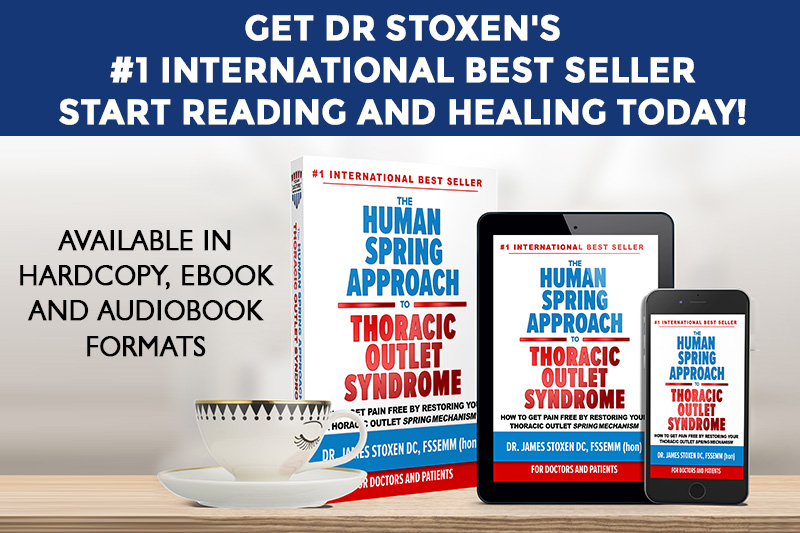
Dr Stoxen is a #1 International Bestselling Author of the book, The Human Spring Approach to Thoracic Outlet Syndrome. He has lectured at more than 20 medical conferences on his Human Spring Approach to Thoracic Outlet Syndrome and asked to publish his research on this approach to treating thoracic outlet syndrome in over 30 peer review medical journals.
He has been asked to submit his other research on the human spring approach to treatment, training and prevention in over 150 peer review medical journals. He serves as the Editor-in-Chief, Journal of Orthopedic Science and Research, Executive Editor or the Journal of Trauma and Acute Care, Chief Editor, Advances in Orthopedics and Sports Medicine Journal and editorial board for over 35 peer review medical journals.
He is a much sought-after speaker. He has given over 1000 live presentations and lectured at over 70 medical conferences to over 50,000 doctors in more than 20 countries. He has been invited to speak at over 300 medical conferences which includes invitations as the keynote speaker at over 50 medical conferences.
After his groundbreaking lecture on the Integrated Spring-Mass Model at the World Congress of Sports and Exercise Medicine he was presented with an Honorary Fellowship Award by a member of the royal family, the Sultan of Pahang, for his distinguished research and contributions to the advancement of Sports and Exercise Medicine on an International level. He was inducted into the National Fitness Hall of Fame in 2008 and the Personal Trainers Hall of Fame in 2012.
Dr Stoxen has a big reputation in the entertainment industry working as a doctor for over 150 tours of elite entertainers, caring for over 1000 top celebrity entertainers and their handlers. Anthony Field or the popular children’s entertainment group, The Wiggles, wrote a book, How I Got My Wiggle Back detailing his struggles with chronic pain and clinical depression he struggled with for years. Dr Stoxen is proud to be able to assist him.
Full Bio) Dr Stoxen can be reached directly at teamdoctors@aol.com