Thoracic Outlet Syndrome is commonly described as a compression problem involving nerves and blood vessels traveling from the neck into the arm.
Many individuals describe symptoms that appear unrelated until the entire mechanical system is examined together.
In my clinical experience, the misunderstanding begins with how the body is modeled mechanically.
Most medical education views the body as a system of rigid levers rather than a living suspension system.
When patients search for a thoracic outlet syndrome specialist, they are often confused by conflicting opinions and explanations.
This confusion reflects deeper disagreement about how the thoracic outlet actually functions.
The thoracic outlet is not a single structure.
It is a dynamic tunnel formed by the clavicle, first rib, cervical spine, and surrounding soft tissues.
Patients often report arm pain, numbness, weakness, or vascular symptoms without a clear injury.
These patterns suggest a mechanical failure rather than isolated tissue damage.
The concept of a best doctor for thoracic outlet syndrome varies widely because examination models differ.
Some providers emphasize imaging, while others focus on posture or strength.
In many cases, individuals search online for a TOS expert near me after months or years of unresolved symptoms.
This search often follows inconclusive tests and inconsistent diagnoses.
The question of who treats thoracic outlet syndrome depends on whether the provider understands tunnel mechanics.
Without that understanding, treatment becomes fragmented.
Many individuals seek a thoracic outlet syndrome second opinion after being told nothing is wrong.
This is a pattern I commonly see in patients with dynamic compression.
A doctor who understands thoracic outlet syndrome must recognize that the tunnel is suspended, not fixed.
Suspension systems behave differently than rigid joints.
When people try to find thoracic outlet specialist, they are rarely informed about mechanical models.
Yet mechanics determine whether space is preserved or lost.
A proper TOS specialist evaluation examines movement, load transfer, and elastic recoil.
Static tests alone cannot explain dynamic narrowing.
Claims of a best treatment center for TOS are meaningless without biomechanical clarity.
Facilities vary widely in how they conceptualize the problem.
Patients often say they want someone who actually understands TOS.
What they mean is someone who explains why symptoms change with posture and activity.
A thoracic outlet syndrome doctor must consider the rib cage as a moving platform.
The first rib is not a fixed floor but part of a spring system.
Many patients also seek a specialist for arm nerve pain because symptoms radiate unpredictably.
Nerves respond to tension, compression, and movement.
Being labeled the best specialist for TOS requires understanding both nerve and vascular behavior.
Tunnel dimensions change under load.
A nerve compression specialist must evaluate elastic compliance.
Stiff tissues behave differently than adaptable tissues.
People with shoulder symptoms often consult a shoulder nerve pain specialist.
However, shoulder position is inseparable from rib cage mechanics.
A vascular thoracic outlet specialist may focus on blood flow changes.
Yet vascular compression often reflects underlying spring failure.
Some patients see a neurologist for arm nerve pain.
Neurological testing may be normal when compression is intermittent.
The debate of orthopedic vs vascular TOS specialist misses the core issue.
Both disciplines may overlook suspension mechanics.
A true TOS diagnosis specialist understands why symptoms fluctuate with breathing and load.
Breathing alters rib cage position.
Patients frequently ask where to go for TOS after inconclusive evaluations.
The answer depends on mechanical understanding, not specialty labels.
Searching for a TOS clinic near me reflects frustration with inconsistent explanations.
Clinics differ in examination depth.
A request for second opinion arm pain usually follows unresolved tunnel symptoms.
Pain is often a downstream effect.
Finding the best care for thoracic outlet syndrome requires integrated thinking.
No single test defines the condition.
A doctor for chronic arm pain must consider elastic recoil loss.
Chronic tension reduces tunnel space.
A specialist for unexplained arm pain should examine spring stiffness.
Unexplained pain often reflects mechanical mismatch.
An expert in thoracic outlet syndrome recognizes the shoulder as a suspended mass.
Suspension failure increases load on nerves and vessels.
A TOS evaluation center should assess dynamic movement patterns.
Static imaging misses transient compression.
An advanced TOS treatment center must understand why lever-based models fail.
Levers concentrate force rather than disperse it.
A true thoracic outlet syndrome care team integrates anatomy, mechanics, and movement.
Fragmented care often leads to misinterpretation.
Patients seeking the best doctor for arm numbness are often experiencing tunnel narrowing.
Numbness reflects transient ischemia or nerve tension.
The thoracic outlet functions like a spring-supported corridor.
Its walls shift with posture, breathing, and load.
Lever-based models assume rigid bones and isolated joints.
This assumption breaks down in suspended regions.
The shoulder girdle hangs from muscles rather than resting on bone.
This design allows force absorption.
When force enters the system, springs distribute energy.
Levers amplify stress at endpoints.
Resistance training emphasizes lever loading.
Biomimetic movement emphasizes elastic recoil.
The rib cage forms the floor of the thoracic outlet.
The clavicle acts as a moving beam.
Muscles such as the scalenes, subclavius, and pectoralis minor behave like springs.
They adjust length under load.
When these springs stiffen, tunnel dimensions change.
Compression follows stiffness, not weakness.
In football, shoulder impact is absorbed through elastic suspension.
This protects underlying structures.
Loss of spring compliance increases injury risk.
Rigid systems fail under dynamic load.
This is why Thoracic Outlet Syndrome cannot be fully understood through lever mechanics.
It requires spring-based thinking.
Dr. Stoxen’s work emphasizes this distinction.
His analysis reframes examination strategies.
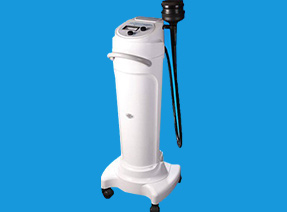
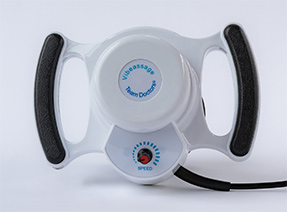
Tools such as Vibeassage® Sport and Vibeassage® Pro are designed to interact with tissue compliance.
They are not force-based devices.
The TDX3 soft-as-the-hand Biomimetic Applicator Pad reflects hand-like interaction with tissue.
Its design follows biomimetic principles.
Team Doctors® emphasizes education around mechanics rather than isolated pathology.
Understanding precedes decision-making.
Thoracic Outlet Syndrome symptoms often worsen with sustained posture.
Static load stiffens springs.
Dynamic movement restores elastic behavior.
Movement reintroduces recoil.
Breathing mechanics influence tunnel space.
Restricted breathing increases compression risk.
The cervical spine contributes to suspension height.
Loss of cervical mobility affects shoulder position.
Imaging may appear normal when the system is unloaded.
Compression often occurs only under stress.
This explains diagnostic confusion.
Tests do not reproduce real-world conditions.
Understanding Thoracic Outlet Syndrome as a spring system clarifies variability.
Symptoms fluctuate because springs adapt.
Without restoring elastic behavior, interventions focus on symptoms.
This leads to temporary relief.
Spring-based analysis explains why some patients improve unexpectedly.
Small changes in compliance alter space.
This model also explains failure of rigid stabilization strategies.
Stability without elasticity increases compression.
Thoracic Outlet Syndrome is therefore not a single injury.
It is a mechanical state.
Education empowers patients to understand patterns.
Understanding reduces fear.
The goal of examination is clarity.
Clarity guides rational decisions.
Team Doctors Resources
✓ Check out the Team Doctors Recovery Tools
The Vibeassage Sport and the Vibeassage Pro featuring the TDX3 soft-as-the-hand Biomimetic Applicator Pad
https://www.teamdoctors.com/
✓ Get Dr. Stoxen’s #1 International Bestselling Books
Learn how to understand, examine, and reverse your TOS—without surgery.
https://drstoxen.com/1-international-best-selling-author/
✓ Check out Team Doctors Online Courses
Step-by-step video lessons, demonstrations, and self-treatment strategies.
https://teamdoctorsacademy.com/
✓ Schedule a Free Phone Consultation With Dr. Stoxen
Speak directly with him so he can review your case and guide you on your next steps.
https://drstoxen.com/appointment/
#ThoracicOutletSyndrome #TOS #TOSEducation #ThoracicOutlet #Biomechanics #HumanSpring #BrachialPlexus #NerveCompression #VascularCompression #ShoulderMechanics #PostureScience #MovementMedicine #ClinicalBiomechanics #SportsMedicine #PainScience #AnatomyEducation #MedicalEducation #TeamDoctors #DrStoxen #TOSAwareness
References:
- Sanders, Richard J., and Neal M. Rao. “Thoracic Outlet Syndrome: A Review.” Neurologic Clinics 29, no. 2 (2011): 511–528. https://doi.org/10.1016/j.ncl.2011.01.002
- Illig, Karl A., et al. “Thoracic Outlet Syndrome.” Journal of Vascular Surgery 55, no. 3 (2012): 895–900. https://doi.org/10.1016/j.jvs.2011.10.116
- Hooper, Timothy L., et al. “Thoracic Outlet Syndrome: A Controversial Clinical Condition.” Journal of Manual & Manipulative Therapy 18, no. 2 (2010): 74–83. https://doi.org/10.1179/106698110X12640740712734
- Wilbourn, A. J. “Thoracic Outlet Syndrome Is Overdiagnosed.” Muscle & Nerve 19, no. 5 (1996): 596–597. https://doi.org/10.1002/(SICI)1097-4598(199605)19:5<596::AID-MUS16>3.0.CO;2-Q

Dr James Stoxen DC., FSSEMM (hon) He is the president of Team Doctors®, Treatment and Training Center Chicago, one of the most recognized treatment centers in the world.
Dr Stoxen is a #1 International Bestselling Author of the book, The Human Spring Approach to Thoracic Outlet Syndrome. He has lectured at more than 20 medical conferences on his Human Spring Approach to Thoracic Outlet Syndrome and asked to publish his research on this approach to treating thoracic outlet syndrome in over 30 peer review medical journals.
He has been asked to submit his other research on the human spring approach to treatment, training and prevention in over 150 peer review medical journals. He serves as the Editor-in-Chief, Journal of Orthopedic Science and Research, Executive Editor or the Journal of Trauma and Acute Care, Chief Editor, Advances in Orthopedics and Sports Medicine Journal and editorial board for over 35 peer review medical journals.
He is a much sought-after speaker. He has given over 1000 live presentations and lectured at over 70 medical conferences to over 50,000 doctors in more than 20 countries. He has been invited to speak at over 300 medical conferences which includes invitations as the keynote speaker at over 50 medical conferences.
After his groundbreaking lecture on the Integrated Spring-Mass Model at the World Congress of Sports and Exercise Medicine he was presented with an Honorary Fellowship Award by a member of the royal family, the Sultan of Pahang, for his distinguished research and contributions to the advancement of Sports and Exercise Medicine on an International level. He was inducted into the National Fitness Hall of Fame in 2008 and the Personal Trainers Hall of Fame in 2012.
Dr Stoxen has a big reputation in the entertainment industry working as a doctor for over 150 tours of elite entertainers, caring for over 1000 top celebrity entertainers and their handlers. Anthony Field or the popular children’s entertainment group, The Wiggles, wrote a book, How I Got My Wiggle Back detailing his struggles with chronic pain and clinical depression he struggled with for years. Dr Stoxen is proud to be able to assist him.
Full Bio) Dr Stoxen can be reached directly at teamdoctors@aol.com