Why So Many People Are Misdiagnosed
Every week, patients come into my clinic scared because their MRI shows a “herniated disc.” Many are told this explains all their pain, numbness, tingling, or weakness in the neck, shoulder, or arm.
But here is the part most people never hear. A herniated disc on an MRI does not automatically mean it is the cause of your symptoms. In fact, disc bulges and herniations are very common in people who feel perfectly fine.
This leads to one of the biggest problems I see in practice. People are treated, and sometimes rushed into surgery, for the wrong problem. All the while, their Thoracic Outlet Syndrome may be the real issue that continues to get worse.
What the Research Shows About “Pain-Free” Herniated Discs
A major MRI study from Japan examined 497 adults who had never experienced neck or back pain. Not once. Yet the results were shocking:
- 34% had large lumbar disc herniations
- 27% had posterior cervical disc protrusions
- 17% had anterior disc protrusions
- 6% had disc herniations so large they pressed on the spinal cord — with zero symptoms
Cervical Spine Study
Matsumoto, Morio; Fujimura, Y.; Suzuki, N.; Nishi, Y.; Nakamura, M.; Yabe, Y.; Shiga, H.
“MRI of Cervical Intervertebral Discs in Asymptomatic Subjects.” Journal of Bone & Joint Surgery – British Volume 80, no. 1 (1998): 19–24.
https://doi.org/10.1302/0301-620X.80B1.7929
These findings tell us something very important. A disc herniation on an MRI does not prove the disc is causing your symptoms. It might have been there long before the pain started. This is where many people are misdiagnosed with a disc problem when the true cause is TOS.
Why This Leads to Missed TOS Diagnoses
When you have pain, numbness, tingling, arm heaviness, or hand weakness, many doctors look at the MRI and assume, “Your disc is the problem.” But these same symptoms are extremely common in neurogenic TOS, where nerves are irritated or compressed as they pass from the neck into the arm.
In some people, blood flow is also involved. This can be seen in vascular TOS or even more rare forms like arterial TOS. In all of these, the problem comes from pressure on nerves or vessels in the thoracic outlet area, not from the disc itself.
This means many patients are treated for a disc issue that may have been present for years, while the real source — brachial plexus compression — goes unrecognized.
The Overlooked Question No One Asks
Before blaming the disc, we must ask an important question: “How do we know this disc wasn’t already there long before the symptoms started?”
MRIs show structure, not function. They do not show:
- If nerves are irritated by muscle tension
- If blood flow is restricted
- If the clavicle is dropping
- If the first rib is elevated
- If the nerves are under thoracic outlet compression
These are functional problems, often tied to first rib elevation, scalene tightness, and pectoralis minor compression. They are common drivers of Thoracic Outlet Syndrome and cannot be diagnosed by MRI alone.
Common TOS Symptoms That Mimic a Herniated Disc
Many people are surprised to learn that TOS symptoms can look almost identical to a disc problem. You might notice:
- Arm numbness
- Hand tingling
- Shoulder blade pain
- Neck tightness
- Weak grip
- Heaviness down the arm
- Symptoms that get worse with posture or certain activities
If doctors focus only on the MRI, these patterns are easy to miss. That is how thousands of patients end up with the wrong label and sometimes the wrong plan, while a correct TOS diagnosis is never made.
The Hidden Cost of Misdiagnosis
When the real problem is Thoracic Outlet Syndrome, disc-focused treatment often does not give lasting relief. Patients may try:
- Medications
- Injections
- Physical therapy focused only on the neck
- Even surgery
Yet the symptoms still remain. This is not always because the care was poor. Many times, it is because the diagnosis was not correct, and a full TOS evaluation was never done in the first place.
What a Proper TOS Evaluation Should Include
A complete evaluation for Thoracic Outlet Syndrome must go far beyond imaging. It looks at the whole movement system, not just the discs. A good exam should include:
- Posture analysis
- Muscle tension patterns
- Clavicle movement
- First rib mobility
- Nerve tension testing
- Arm fatigue patterns
- Blood flow changes
- How symptoms respond to position or motion
When we look at all these factors together, the real cause becomes much clearer. That is when a more focused TOS treatment plan can be built around your specific pattern.
Why So Many Doctors Miss TOS
There are several reasons why what mimics TOS is often treated while the true condition is ignored. TOS is not taught in detail in most schools. Many doctors rely heavily on MRI findings because discs are easy to see on images. Functional compression is harder to measure.
On top of that, many TOS signs show up only during certain movements or positions. Symptoms overlap with neck problems, shoulder problems, nerve problems, and vascular problems. All of this allows Thoracic Outlet Syndrome to hide in plain sight.
Key Takeaway
A herniated disc on MRI does not prove it is the cause of your symptoms. It might be harmless, it might have been there for years, and it might not match your real pain pattern at all.
If your symptoms involve your neck, shoulder, arm, or hand, and your MRI does not seem to match what you feel, you may not have a disc problem at all. You may have Thoracic Outlet Syndrome that has never been fully evaluated.
STUDIES WITH LINKS INSERTED
Cervical Spine Study
Matsumoto, Morio; Fujimura, Y.; Suzuki, N.; Nishi, Y.; Nakamura, M.; Yabe, Y.; Shiga, H.
“MRI of Cervical Intervertebral Discs in Asymptomatic Subjects.”
Journal of Bone & Joint Surgery – British Volume 80, no. 1 (1998): 19–24.
https://doi.org/10.1302/0301-620X.80B1.7929
Lumbar Spine Study
Kanayama, Masahiro; Togawa, Daisuke; Takahashi, Chihiro; Terai, Tomoya; Hashimoto, Tomoyuki. “Cross-Sectional Magnetic Resonance Imaging Study of Lumbar Disc Degeneration in 200 Healthy Individuals.” Journal of Neurosurgery: Spine 11, no. 4 (2009): 501–507.
https://doi.org/10.3171/2009.5.SPINE08675
Team Doctors Resources
✓ Check out the Team Doctors Recovery Tools
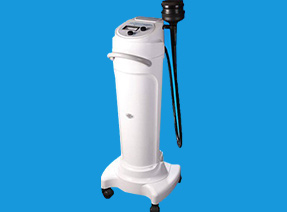
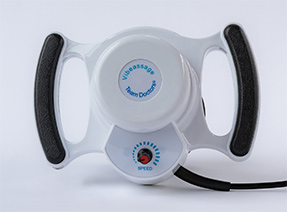
The Vibeassage Sport and the Vibeassage Pro featuring the TDX3 soft-as-the-hand Biomimetic Applicator Pad
https://www.teamdoctors.com
✓ Get Dr. Stoxen’s #1 International Bestselling Books
Learn how to understand, examine, and reverse your TOS—without surgery.
https://drstoxen.com/1-international-best-selling-author
✓ Check out Team Doctors Online Courses
Step-by-step video lessons, demonstrations, and self-treatment strategies.
https://teamdoctorsacademy.com
✓ Schedule a Free Phone Consultation With Dr. Stoxen
Speak directly with him so he can review your case and guide you on your next steps.
https://drstoxen.com/appointment
#ThoracicOutletSyndrome #TOS #HerniatedDisc #MRI #NeckPain #ArmNumbness #ArmTingling #ShoulderPain #BrachialPlexus #NerveCompression #Posture #ChronicPain #Misdiagnosis #TeamDoctors #DrStoxen #VascularTOS #NeurogenicTOS #FirstRib #ScaleneMuscles #FunctionalAssessment

Dr James Stoxen DC., FSSEMM (hon) He is the president of Team Doctors®, Treatment and Training Center Chicago, one of the most recognized treatment centers in the world.
Dr Stoxen is a #1 International Bestselling Author of the book, The Human Spring Approach to Thoracic Outlet Syndrome. He has lectured at more than 20 medical conferences on his Human Spring Approach to Thoracic Outlet Syndrome and asked to publish his research on this approach to treating thoracic outlet syndrome in over 30 peer review medical journals.
He has been asked to submit his other research on the human spring approach to treatment, training and prevention in over 150 peer review medical journals. He serves as the Editor-in-Chief, Journal of Orthopedic Science and Research, Executive Editor or the Journal of Trauma and Acute Care, Chief Editor, Advances in Orthopedics and Sports Medicine Journal and editorial board for over 35 peer review medical journals.
He is a much sought-after speaker. He has given over 1000 live presentations and lectured at over 70 medical conferences to over 50,000 doctors in more than 20 countries. He has been invited to speak at over 300 medical conferences which includes invitations as the keynote speaker at over 50 medical conferences.
After his groundbreaking lecture on the Integrated Spring-Mass Model at the World Congress of Sports and Exercise Medicine he was presented with an Honorary Fellowship Award by a member of the royal family, the Sultan of Pahang, for his distinguished research and contributions to the advancement of Sports and Exercise Medicine on an International level. He was inducted into the National Fitness Hall of Fame in 2008 and the Personal Trainers Hall of Fame in 2012.
Dr Stoxen has a big reputation in the entertainment industry working as a doctor for over 150 tours of elite entertainers, caring for over 1000 top celebrity entertainers and their handlers. Anthony Field or the popular children’s entertainment group, The Wiggles, wrote a book, How I Got My Wiggle Back detailing his struggles with chronic pain and clinical depression he struggled with for years. Dr Stoxen is proud to be able to assist him.
Full Bio) Dr Stoxen can be reached directly at teamdoctors@aol.com