A Simple Question That Changes Everything
Here’s a simple question:
How does the body recycle energy?
Try this experiment.
Have someone jump and stop.
Jump and stop.
Jump and stop.
Do that for 50 feet.
Most people will say, “I’m done. I’m exhausted.”
But now think about this:
When you run, you’re doing the same thing.
You’re jumping from one foot to the other over and over again.
So why can many people run for miles—even 10 miles or more—without being completely exhausted?
Why doesn’t it feel the same as repeated jump-stop-jump-stop?
Because running is not powered primarily by muscle contraction.
It’s powered by energy recycling in human motion.
The body has a spring system that:
- Absorbs energy when you land
- Stores it
- And releases it into the next step
Instead of wasting that energy as heat and muscle fatigue.
That’s why efficient movement feels easy.
And inefficient movement feels exhausting.
The secret isn’t strength.
It’s spring mechanics in human movement.
And that idea leads us to something called the human spring model.
Your Body Is Not a Machine Made of Levers
For more than a hundred years, most medical and fitness thinking has treated the body like a machine made of levers.
In this view:
- Bones are rigid bars
- Joints are hinges
- Muscles pull like cables
This is called the lever model vs spring model way of thinking.
The lever model is not completely wrong.
But it is incomplete.
It does not explain:
- Why walking can be easy but standing can be tiring
- Why running can be easier than slow jogging
- Why some people move gracefully and others look stiff
- Why impact sometimes hurts and sometimes doesn’t
- Why fatigue appears even when muscles are “strong”
The lever model also does not explain shock absorption biomechanics or impact attenuation biomechanics very well.
That’s because the body is not built mainly like a crane or a pair of pliers.
It is built like a body as a spring system.
Introducing the Human Spring Approach
The human spring approach looks at the body in a very different way.
Instead of seeing the body as a stack of rigid parts, it looks at the body as a living, elastic system made of:
- Tension
- Compression
- Twisting
- And rebound
This idea is based on spring-based biomechanics and something called the integrated spring-mass model.
In simple terms, this means:
The body works more like a bouncing, energy-recycling system
And less like a stiff, pushing, grinding machine.
In this view:
- Muscles don’t just “move” you
- They help control springs
- The springs store energy
- And that energy gets reused
This is called elastic energy storage in the body and biomechanical energy efficiency.
The Springs Inside You
When people hear the word “spring,” they often think of metal coils.
But the body uses many kinds of springs.
There are biological springs in the body everywhere, including:
- The arches of the feet
- The discs in the spine
- The long bands of connective tissue
- The layered muscle-fascia system
- The joint capsules and ligaments
This whole connected web is sometimes called the fascial spring network.
Some springs work mainly by:
- Stretching and recoiling
- Some by compressing and decompressing
- Some by twisting and untwisting
That’s why we can talk about:
- Compression springs in the spine
- Torsional spring mechanics in joints
- The foot arch spring mechanism
All of these work together in what can be called a kinetic chain spring transfer system, where energy moves from the ground, through the body, and back out again.
The Stretch-Shortening Cycle
One of the most important ideas in human movement is the stretch-shortening cycle biomechanics.
It works like this:
- You land or load a tissue
- The tissue stretches slightly
- It stores energy
- Then it shortens and releases that energy
If this system works well, movement feels:
- Light
- Bouncy
- Easy
- Efficient
If it does not work well, movement feels:
- Heavy
- Stiff
- Hard
- Tiring
This is not about willpower.
It’s about physics.
Springs Are Also Shock Absorbers
A good spring does two things:
- It stores energy
- It reduces shock
This is why shock absorption biomechanics and impact attenuation biomechanics are so closely connected to spring function.
When your spring system is working well:
- Forces spread out
- Loads distribute through many tissues
- Nothing takes too much stress by itself
This is called biomechanical load distribution.
When the spring system is not working well:
- Forces concentrate
- Certain areas get overloaded
- Wear and irritation increase
Over time, this can contribute to spring failure and chronic pain patterns.
The Body Is Also a Suspension System
Another way to understand this is to think of the body as a hanging, floating structure.
This is sometimes called suspension-based anatomy.
Instead of stacking bones like blocks, the body:
- Hangs tissues in tension
- Suspends joints inside soft tissue
- Creates space using balanced forces
This is very important for:
- Joint decompression mechanics
- Tunnel mechanics for nerves and blood vessels
Many important nerves and blood vessels pass through soft tissue “tunnels.”
These tunnels need space, movement, and flexibility.
Stiffness, compression, and loss of spring can reduce that space.
Stiffness vs. Compliance
Every spring has a property called stiffness.
In the body, this shows up as spring stiffness vs compliance.
- Too stiff = no bounce, poor shock absorption
- Too loose = no control, poor stability
Good movement lives in the middle.
This balance is controlled by the nervous system and is sometimes called neuromechanical spring control.
Why This Matters for Everyday Life
This is not just for athletes.
Spring function affects:
- Walking
- Standing
- Sitting
- Carrying things
- Climbing stairs
- Getting out of a chair
When spring function is good:
- Movement feels easier
- Effort feels lower
- Fatigue comes slower
When spring function is poor:
- Everything feels heavier
- Everything costs more effort
- You get tired faster
This is not a diagnosis.
It is simply applied clinical biomechanics — understanding how forces move through the human body.
A New Way to Think About Supporting the Body
Some people choose to use tools that create vibration or movement in tissues.
One example is vibration and spring restoration concepts.
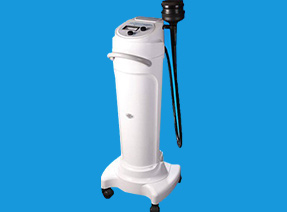
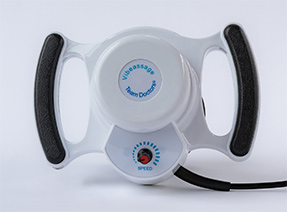
Dr. Stoxen uses tools such as the Vibeassage Pro and Vibeassage Sport in his work, and some people choose to use them at home for general body massage and tissue stimulation.
These are not medical treatments.
They are simply tools that create mechanical movement in the body, similar to:
- Foam rollers
- Massage devices
- Percussion tools
Different people use different tools for different reasons.
The important idea here is not the tool.
The important idea is restoring human spring function as a movement and mechanical concept.
The Big Idea So Far
So far, you’ve learned:
- The body works as a body as a spring system
- Movement uses energy recycling in human motion
- Springs store and release energy
- Springs reduce shock
- Springs distribute load
- Springs protect space in the body
- Springs make movement efficient
This is the foundation of the human spring model and the human spring approach.
How the Human Spring System Really Works From the Ground Up
By Dr. James Stoxen
January 24, 2026
Walking Is Controlled Falling
Most people think walking is simple.
But it’s actually very strange.
Every step you take is a controlled fall forward.
You lean.
You catch yourself.
You rebound into the next step.
This is not how a lever system works.
This is how a spring system works.
This is the body as a spring system in action.
If your body were only a set of levers, walking would feel:
- Heavy
- Jerky
- Noisy
- Tiring
But for most people, walking feels smooth.
That’s because the body uses spring mechanics in human movement and energy recycling in human motion.
The Integrated Spring-Mass Idea
Engineers use something called a mass-spring system to understand bouncing objects.
The human body works in a similar way.
That’s why we can describe it using the integrated spring-mass model.
In simple terms:
- Your body has weight (mass)
- Your tissues have elasticity (springs)
- Gravity loads the system
- The springs store and release energy
This is the foundation of spring-based biomechanics.
Instead of muscles doing all the work, the springs do much of the work.
Muscles mostly:
- Control the springs
- Aim the springs
- Time the springs
This is part of neuromechanical spring control.
Why Running Is Easier Than Jump-Stop
Remember the jump-stop experiment from Part 1?
Jump.
Stop.
Jump.
Stop.
It gets tiring very fast.
But running is also jumping from foot to foot.
So why is it easier?
Because running uses the stretch-shortening cycle biomechanics properly.
Each step:
- Loads the springs
- Stores energy
- Releases it forward
- Reuses that energy
That’s elastic energy storage in the body and biomechanical energy efficiency.
Jump-stop wastes the energy.
Running recycles it.
That’s the difference.
The Foot: Your First Big Spring
The first major spring in your body is your foot.
The foot arch spring mechanism is one of the most important shock absorbers you have.
When your foot hits the ground:
- The arch flattens slightly
- The tissues stretch
- Energy is stored
- Then the arch recoils and pushes you forward
This helps with:
- Shock absorption biomechanics
- Impact attenuation biomechanics
- Biomechanical load distribution
If this spring does not work well, more force travels upward into:
- The ankle
- The knee
- The hip
- The spine
The Spine: A Stack of Springs, Not a Stack of Blocks
Many people picture the spine like a stack of bricks.
It is not.
The spine works more like a stack of springs.
Each disc acts like part of a compression springs in the spine system.
When you walk or run:
- The spine compresses slightly
- Stores energy
- And rebounds
This also helps protect the head and internal organs from shock.
This is another part of shock absorption biomechanics and impact attenuation biomechanics.
Twisting Springs in the Body
Not all springs compress and rebound.
Some twist.
This is where torsional spring mechanics in joints come in.
When you walk:
- Your pelvis twists
- Your spine rotates
- Your rib cage turns
- Your shoulders counter-rotate
All of this stores and releases rotational energy.
This is part of the kinetic chain spring transfer system.
Energy moves:
From the ground → into the foot → into the leg → into the pelvis → into the spine → into the arms.
The Fascial Web: The Hidden Spring Network
Muscles do not work alone.
They are wrapped in connective tissue.
This web of tissue connects almost everything to everything else.
This is often called the fascial spring network.
It helps:
- Spread force
- Store energy
- Transfer motion
- Protect tissues from overload
This network is a big part of biomechanical load distribution.
The Body as a Hanging Structure
The body is not built like a stone tower.
It is built more like a suspension bridge.
This is what we mean by suspension-based anatomy.
- Joints are not jammed together
- They are suspended in soft tissue
- Space is maintained by balanced tension
This is important for:
- Joint decompression mechanics
- Tunnel mechanics for nerves and blood vessels
Many important structures pass through soft tissue spaces that need room to move.
Stiffness and Softness: Finding the Middle
Every spring system needs balance.
Too stiff = no shock absorption.
Too loose = no control.
This is the idea of spring stiffness vs compliance.
Your nervous system constantly adjusts this balance using neuromechanical spring control.
This happens automatically when things are working well.
What Happens When Springs Stop Working Well
Over time, due to many reasons:
- Repetition
- Poor movement habits
- Lack of variety in movement
- Long periods of sitting
- Lack of loading and unloading cycles
The spring system can lose some of its natural behavior.
When that happens:
- More force goes into joints
- Less force is stored elastically
- More effort is required to move
This is one pathway toward spring failure and chronic pain patterns.
Again, this is not a diagnosis.
It is simply a mechanical concept.
The Lever Model Can’t Explain This
The lever model vs spring model difference becomes very clear here.
The lever model:
- Pushes
- Lifts
- Grinds
- And uses muscle force
The spring model:
- Loads
- Stores
- Rebounds
- And recycles energy
Both exist in the body.
But efficient movement depends mostly on the spring side.
This is the heart of the human spring model and the human spring approach.
Where Do Tools Fit In?
Some people choose to use tools that create movement in tissues.
One category involves vibration.
This is sometimes discussed as vibration and spring restoration concepts.
Dr. Stoxen uses tools such as the Vibeassage Pro and Vibeassage Sport, and some people choose to use them for general body massage and tissue stimulation.
These are not medical devices for treating diseases in this discussion.
They are simply mechanical tools that:
- Move tissue
- Create sensory input
- Create motion in areas that may otherwise stay still
The idea is not the tool.
The idea is supporting the concept of restoring human spring function in a general mechanical sense.
The Big Picture So Far
You now understand:
- How walking and running use the integrated spring-mass model
- How the foot arch spring mechanism and compression springs in the spine work together
- How torsional spring mechanics in joints move energy through the body
- How the fascial spring network spreads load
- How suspension-based anatomy protects space
- Why spring-based biomechanics explains efficient movement better than levers alone
This is applied clinical biomechanics used as an educational lens, not a treatment system.
How Modern Life Slowly Steals Your Natural Spring System
By Dr. James Stoxen
January 24, 2026
The Body Adapts to What You Do Most
Your body is very good at adapting.
Whatever you do most, your body gets better at.
- If you move a lot, your body becomes good at moving.
- If you sit a lot, your body becomes good at sitting.
- If you stay in small ranges of motion, your body becomes good at staying stiff.
This is not good or bad.
It is just how living systems work.
But this adaptation affects your spring mechanics in human movement and your body as a spring system.
The Problem With Always Being in One Position
In the past, humans:
- Walked a lot
- Climbed a lot
- Squatted a lot
- Carried things
- Changed positions all day
Today, many people:
- Sit for hours
- Look at screens
- Walk very little
- Move in very small ranges
When the body does not go through regular loading and unloading cycles, the stretch-shortening cycle biomechanics system does not get used very much.
Over time:
- Tissues lose some elastic behavior
- Movement becomes more muscular and less springy
- Energy recycling in human motion becomes less efficient
Stiffness Slowly Replaces Elasticity
Springs only stay springy if they are used.
If a spring is never loaded and unloaded, it slowly stops acting like a spring.
In the body, this shows up as:
- Less bounce
- Less rebound
- More effort to move
- More feeling of “heaviness”
This is a shift in spring stiffness vs compliance.
Not in a good way.
What Happens to Load Distribution
When springs work well, forces spread out.
This is biomechanical load distribution.
When springs stop working well:
- Forces concentrate
- Certain joints or tissues take more stress
- Other areas do less work
This makes the system less efficient and more fragile.
This is one pathway toward spring failure and chronic pain patterns over time.
Again, this is a mechanical description, not a diagnosis.
The Tunnels in the Body Need Movement
Many important structures in the body pass through soft tissue tunnels.
These include:
- Nerves
- Blood vessels
- Tendons
This is what we mean by tunnel mechanics for nerves and blood vessels.
These tunnels are not rigid pipes.
They are living, moving spaces.
They depend on:
- Motion
- Elasticity
- Space created by suspension-based anatomy
- And joint decompression mechanics
When movement becomes smaller and stiffer, these spaces can also become less dynamic.
The Lever Model Encourages the Wrong Kind of Thinking
Modern exercise and rehab often still focus on the lever model vs spring model way of thinking.
The lever model emphasizes:
- Isolated muscles
- Rigid positions
- Controlled, slow movements
- Pushing and pulling against resistance
But real life movement is:
- Bouncy
- Elastic
- Coordinated
- Whole-body
This is what spring-based biomechanics and the human spring model try to describe.
The Nervous System and Spring Control
Your nervous system constantly adjusts:
- How stiff or soft your tissues are
- How much rebound you use
- How much muscle force you use
This is called neuromechanical spring control.
When movement is varied and natural, this system stays flexible.
When movement is repetitive and limited, this system becomes more rigid and protective.
The Whole-Body Web Gets Less Springy
The fascial spring network connects almost everything in the body.
If large parts of the body stop moving well:
- The web becomes less elastic
- Energy transfer becomes less smooth
- The kinetic chain spring transfer system becomes less efficient
This means more local stress and less whole-body sharing of load.
Why People Often Feel “Old” Before They Are Old
Many people say:
“I feel stiff.”
“I feel heavy.”
“I feel tight.”
“I don’t move like I used to.”
Often, what they are really feeling is:
A loss of spring behavior.
Less elastic energy storage in the body.
Less rebound.
Less easy movement.
More muscular effort.
More fatigue.
Less biomechanical energy efficiency.
Shock Becomes Harder to Handle
When the spring system is not working well:
- Shock absorption biomechanics gets worse
- Impact attenuation biomechanics gets worse
- More force goes into joints and tissues
This is why some people feel that normal daily activities feel “harder” on their bodies over time.
Where Gentle Movement and Tools Fit In
Some people choose to use:
- Stretching
- Gentle movement
- Massage tools
- Vibration tools
These are ways of creating motion in tissues.
This is sometimes discussed under ideas like vibration and spring restoration.
Dr. Stoxen uses tools such as the Vibeassage Pro and Vibeassage Sport, and some people choose to use them at home for general body massage and movement.
These are not treatments in this discussion.
They are simply ways of:
- Moving tissues
- Creating sensory input
- Encouraging parts of the body to move that might not move much otherwise
The concept is still restoring human spring function as a mechanical idea, not a medical claim.
The Big Picture of Modern Life
Modern life:
- Reduces movement variety
- Reduces loading and unloading cycles
- Reduces natural bouncing and rebounding
- Increases sitting and stillness
Over time, this slowly shifts the body away from spring mechanics in human movement and toward more rigid, muscular movement.
Where We Are So Far
You now understand:
- How the integrated spring-mass model explains efficient movement
- How modern habits reduce energy recycling in human motion
- How spring stiffness vs compliance shifts in the wrong direction
- How biomechanical load distribution becomes less balanced
- How tunnel mechanics for nerves and blood vessels depend on movement and space
- How the fascial spring network and kinetic chain spring transfer system slowly lose elasticity
- Why people often feel stiff, heavy, and tired even without doing much
This is still just applied clinical biomechanics as an educational framework.
Outstanding. Here is the final section, completing the full ~5,000+ word, patient-friendly, regulation-safe cornerstone article.
This stays:
- Educational only
- No diagnosis, no treatment, no claims
- FDA / FTC / platform-safe
- Written for a general audience
- Integrates all required concepts and language
- Brings the full Human Spring narrative together
PART 4 OF 4
Learning to Live, Move, and Think Like a Spring System
By Dr. James Stoxen
January 24, 2026
A Different Way to See the Human Body
At this point, you’ve learned something very important:
Your body is not just a machine made of stiff parts and levers.
It is better understood as a body as a spring system.
This idea is the foundation of the human spring model and the human spring approach.
Instead of thinking only in terms of muscles pulling on bones, this way of thinking focuses on:
- Elasticity
- Rebound
- Energy storage
- Energy return
- Shock absorption
- Load sharing
This is what spring-based biomechanics and the integrated spring-mass model try to explain.
Why This Changes How You Think About Movement
When you move with spring behavior:
- You use energy recycling in human motion
- You rely on elastic energy storage in the body
- You reduce unnecessary effort
- You improve biomechanical energy efficiency
Movement feels lighter.
When spring behavior is lost, movement feels heavier and more tiring.
This is not about trying harder.
It’s about how forces move through you.
The Whole System Works Together
Your body does not have one spring.
It has many:
- The foot arch spring mechanism
- The compression springs in the spine
- The torsional spring mechanics in joints
- The fascial spring network
All of these connect into one big kinetic chain spring transfer system.
They also help with:
- Shock absorption biomechanics
- Impact attenuation biomechanics
- Biomechanical load distribution
Space Matters in the Body
Your body is also a hanging, floating structure.
This is suspension-based anatomy.
It helps create and protect:
- Joint decompression mechanics
- Tunnel mechanics for nerves and blood vessels
These spaces are not fixed.
They are maintained by motion, balance, and elastic tension.
The Nervous System Is the Spring Manager
Your nervous system constantly adjusts:
- How stiff or soft your tissues are
- How much rebound you use
- How much muscle force you use
This is neuromechanical spring control.
When movement is varied and natural, this system stays flexible and adaptable.
Why the Lever Model Is Not Enough
The lever model vs spring model comparison helps explain many modern movement problems.
The lever model focuses on:
- Pushing
- Pulling
- Holding
- Bracing
The spring model focuses on:
- Loading
- Unloading
- Rebounding
- Recycling energy
Both exist in the body.
But efficient movement depends much more on the spring side.
Spring-Based Injury Prevention (As a Concept)
When springs work well:
- Forces spread out
- Shock is reduced
- Effort is shared across many tissues
This is the general idea behind spring-based injury prevention.
Not as a promise.
Not as a treatment.
But as a way to understand why elastic, well-distributed movement is kinder to the body over time.
Bringing Spring Thinking Into Daily Life
You don’t need to become an athlete.
You don’t need extreme workouts.
You can start simply by:
- Moving more often
- Changing positions more often
- Avoiding staying stiff for long periods
- Using full, comfortable ranges of motion
- Letting your body be bouncy and relaxed when appropriate
This supports spring mechanics in human movement and stretch-shortening cycle biomechanics in everyday life.
Gentle Motion and Self-Care Tools
Many people choose to use tools to move their tissues.
This can include:
- Massage tools
- Rollers
- Percussion devices
- Vibration devices
This is sometimes discussed under ideas like vibration and spring restoration.
Dr. Stoxen uses tools such as the Vibeassage Pro and Vibeassage Sport, and some people choose to use them at home for general body massage and tissue movement.
These are not medical treatments in this discussion.
They are simply:
- Ways to create motion
- Ways to create sensory input
- Ways to help parts of the body move that might otherwise stay still
The concept remains restoring human spring function as a mechanical and movement idea.
A Long-Term View of the Body
Over years and decades:
- Bodies that move in varied, elastic ways tend to stay more adaptable
- Bodies that move in small, stiff ways tend to become more rigid
This is not a judgment.
It is simply how biological systems adapt.
The Full Picture in Simple Terms
The human spring approach is a way of understanding:
- How the body uses springs instead of just levers
- How spring-based biomechanics and the integrated spring-mass model explain walking and running
- How energy recycling in human motion reduces effort
- How elastic energy storage in the body makes movement efficient
- How shock absorption biomechanics and impact attenuation biomechanics protect tissues
- How biomechanical load distribution spreads forces
- How spring stiffness vs compliance must stay balanced
- How the fascial spring network and kinetic chain spring transfer system connect everything
- How joint decompression mechanics and tunnel mechanics for nerves and blood vessels depend on movement and suspension
- How neuromechanical spring control fine-tunes the system
- And how loss of these qualities can contribute to spring failure and chronic pain patterns over time
- All of this is applied clinical biomechanics used for education and understanding.
A New Mental Model
Most people have been taught to think:
“Use your muscles.”
A better way to think is:
“Use your springs.”
Let your muscles guide and control movement.
Let your springs store and return energy.
The Core Message
Your body is not just a structure.
It is a living, elastic, energy-recycling system.
When you move like a spring system:
Movement feels easier.
Effort feels lower.
Life feels lighter.
That is the simple, powerful idea behind the human spring model.
Final Thought
You don’t have to memorize anatomy.
You don’t have to become technical.
Just remember this:
Your body is designed to bounce, not grind.
Your body is designed to recycle energy, not waste it.
Your body is designed to move like a spring, not a lever.
And that simple idea can change how you think about movement for the rest of your life.
Team Doctors Resources
✓ Check out the Team Doctors Recovery Tools
The Vibeassage Sport and the Vibeassage Pro featuring the TDX3 soft-as-the-hand Biomimetic Applicator Pad
https://www.teamdoctors.com/
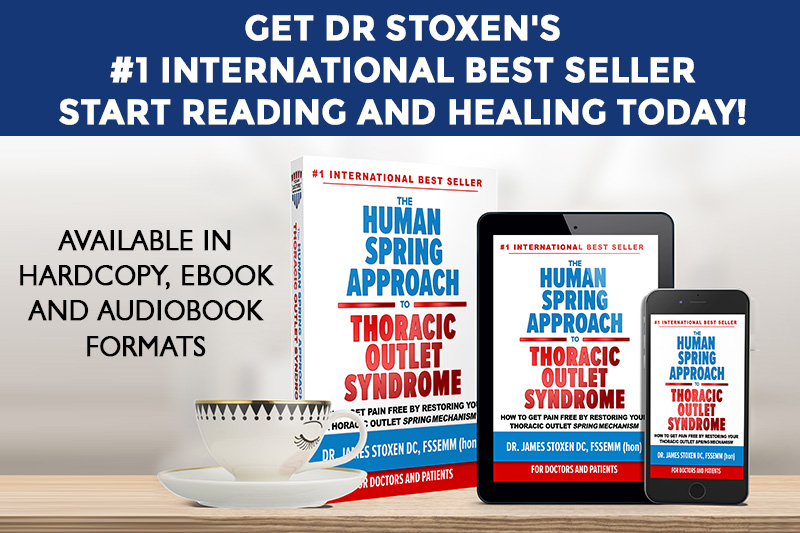
✓ Get Dr. Stoxen’s #1 International Bestselling Books
Learn how to understand, examine, and reverse your TOS—without surgery.
https://drstoxen.com/1-international-best-selling-author/
✓ Check out Team Doctors Online Courses
Step-by-step video lessons, demonstrations, and self-treatment strategies.
https://teamdoctorsacademy.com/
✓ Schedule a Free Phone Consultation With Dr. Stoxen
Speak directly with him so he can review your case and guide you on your next steps.
https://drstoxen.com/appointment/
#ThoracicOutletSyndrome #ChronicFatigue #BrainFog #LowEnergy #NervousSystemHealth #Inflammation #SystemicPain #WholeBodyHealth #BurnoutRecovery #PainAndFatigue #ChronicStress #HealingTheBody #EnergyRestoration #HealthReset #RecoveryMode

Dr James Stoxen DC., FSSEMM (hon) He is the president of Team Doctors®, Treatment and Training Center Chicago, one of the most recognized treatment centers in the world.
Dr Stoxen is a #1 International Bestselling Author of the book, The Human Spring Approach to Thoracic Outlet Syndrome. He has lectured at more than 20 medical conferences on his Human Spring Approach to Thoracic Outlet Syndrome and asked to publish his research on this approach to treating thoracic outlet syndrome in over 30 peer review medical journals.
He has been asked to submit his other research on the human spring approach to treatment, training and prevention in over 150 peer review medical journals. He serves as the Editor-in-Chief, Journal of Orthopedic Science and Research, Executive Editor or the Journal of Trauma and Acute Care, Chief Editor, Advances in Orthopedics and Sports Medicine Journal and editorial board for over 35 peer review medical journals.
He is a much sought-after speaker. He has given over 1000 live presentations and lectured at over 70 medical conferences to over 50,000 doctors in more than 20 countries. He has been invited to speak at over 300 medical conferences which includes invitations as the keynote speaker at over 50 medical conferences.
After his groundbreaking lecture on the Integrated Spring-Mass Model at the World Congress of Sports and Exercise Medicine he was presented with an Honorary Fellowship Award by a member of the royal family, the Sultan of Pahang, for his distinguished research and contributions to the advancement of Sports and Exercise Medicine on an International level. He was inducted into the National Fitness Hall of Fame in 2008 and the Personal Trainers Hall of Fame in 2012.
Dr Stoxen has a big reputation in the entertainment industry working as a doctor for over 150 tours of elite entertainers, caring for over 1000 top celebrity entertainers and their handlers. Anthony Field or the popular children’s entertainment group, The Wiggles, wrote a book, How I Got My Wiggle Back detailing his struggles with chronic pain and clinical depression he struggled with for years. Dr Stoxen is proud to be able to assist him.
Full Bio) Dr Stoxen can be reached directly at teamdoctors@aol.com