The Human Spring: The Only Way to Understand The Engineering of your Thoracic Outlet Tunnel
By Dr. James Stoxen
A Quick, Honest Note Before We Begin
This article is for education only.
It does not diagnose anything.
It does not treat anything.
It does not promise anything.
It does not replace your doctor.
What it does do is help you understand your body in a simpler, more mechanical, more logical way—so you can think better, ask better questions, and make better decisions.
The Moment I Realized This Message Had Gone Worldwide
On January 25, 2026, something really hit me.
Not long before that, I took ten days off and did a whirlwind international lecture tour.
I started in Istanbul, Turkey, where I gave a lecture.
Then I flew to Scotland and lectured there for two days.
Then I flew to Tokyo, Japan, where I spent three days lecturing.
After that, I flew to Dubai.
In Dubai, I gave a lecture at 10:00 in the morning.
Then I got in a taxi, went to another hotel, and gave another lecture at 1:00 in the afternoon—this time to a group of surgeons.
Every single one of these talks was a keynote.
Later, someone sent me the statistics comparing before the book and after the book.
The difference was dramatic.
And honestly, the numbers were pretty incredible.
That’s when it really hit me:
This way of explaining the human body had gone global.
Not because it was trendy.
Not because it was fancy.
But because it was simple, logical, and easy to understand.
The Thoracic Outlet Tunnel: How It Is Engineered Like a Spring System
Most people think of the body like a stack of parts.
A bone here.
A muscle there.
A nerve passing through a hole.
But the human body is not built like a machine made of rigid parts.
It is built more like a suspension bridge.
Or even better:
It is built like a system of springs.
This is especially true in a very important area of the body called the thoracic outlet.
What Is the Thoracic Outlet (In Simple Words)?
The thoracic outlet is a tunnel-like space between the neck and the shoulder.
Through this space pass:
- Important nerves
- Important blood vessels
- Structures that supply the arm and hand
This tunnel sits between:
- The neck
- The chest
- The shoulder
- The arm
It is not a hard pipe.
It is not a fixed hole.
It is a dynamic space that changes shape as you move.
Why This Tunnel Cannot Be Rigid
If this tunnel were a hard, fixed tube:
- You would not be able to raise your arms
- You would not be able to rotate your shoulders
- You would not be able to reach, throw, lift, or climb
So the body did something much smarter.
It built this tunnel as a suspended, floating, adjustable space.
That means:
- The walls can move
- The ceiling can lift
- The floor can shift
- The size of the space can change
This is spring engineering, not pipe engineering.
The Shoulder Is Not Hanging From the Neck — It Is Suspended Like a Spring
Most people imagine the shoulder sitting on the rib cage like a block on a shelf.
That is not how it works.
The arm and shoulder are hung from the body using:
- Muscles
- Fascia
- Ligaments
- Soft tissues
This is called a suspension system.
Just like a car’s suspension:
- It absorbs force
- It allows movement
- It protects important structures
The thoracic outlet tunnel exists inside this suspension system.
The Spring Job of This Area
The job of the thoracic outlet region is to:
- Keep space open
- Adjust to movement
- Absorb load
- Prevent stretching or crushing of delicate structures
- Let the arm move freely in many directions
To do this, the system must be:
- Elastic
- Responsive
- Balanced
- Able to change shape
In other words:
It must behave like a spring, not like a rigid frame.
What Actually Holds This Tunnel Open?
It is not held open by bone alone.
It is held open by:
- The position of the rib cage
- The position of the shoulder blade
- The tone and balance of many muscles
- The elasticity of the connective tissues
When these structures are:
- Balanced
- Mobile
- Elastic
…the tunnel stays open, flexible, and adaptable.
A Very Important Mechanical Truth
Space in the body is not created by cutting things away.
Space in the body is created by suspension and alignment.
Just like:
- A bridge stays open because of tension and balance
- A tent stays open because of ropes and poles
- A parachute stays open because of suspension lines
The thoracic outlet stays open because of spring tension and balance.
What Happens When the Spring System Weakens?
Over time, many things can weaken the suspension system:
- Too much sitting
- Too little overhead movement
- Poor posture habits
- Collapsed rib cage position
- Forward head position
- Rounded shoulders
- Lack of full-body motion
When this happens:
- The shoulder complex slowly sags
- The rib cage slowly drops
- The head slowly drifts forward
Now the tunnel is no longer being held open by springs.
It starts being compressed by gravity.
This Is a Load-Distribution Problem, Not a “Broken Part” Problem
In many people, nothing is “broken.”
What has happened instead is:
- The spring system is no longer carrying load properly
- The body has shifted into a support-on-structure strategy instead of support-on-suspension
Think of it like a bridge whose cables have gone slack.
The bridge doesn’t fall apart immediately.
But the load starts going into places it was never meant to go.
Why Symptoms Often Change With Posture and Position
Have you ever noticed that:
- Some positions feel worse
- Some positions feel better
- Some arm movements change how things feel
- Some head positions change how things feel
That happens because:
This is a dynamic space controlled by a spring system, not a fixed hole in bone.
Change the spring tension — and you change the space.
The Human Spring Perspective
From the Human Spring point of view, the goal is not to think in terms of:
“What can we remove?”
But instead:
“What can we re-suspend, re-balance, and re-load properly?”
The body was designed to float the arm and shoulder from the torso.
When it does that well, the thoracic outlet tunnel:
- Maintains its space naturally
- Adapts to movement
- Protects the structures passing through it
Where Self-Care Tools Fit Into This Idea
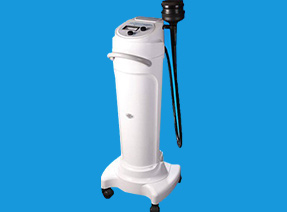
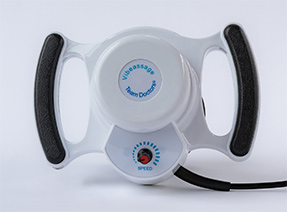
Tools like Vibeassage Pro and Vibeassage Sport are not structural fixes.
They do not “open tunnels.”
They are simply tools that can help:
- Relax overly tight tissues
- Improve comfort
- Improve awareness of tight or overloaded areas
- Support movement and recovery routines
Think of them as:
- Ways to help calm the system
- Ways to help restore better motion
- Ways to help the spring system work more smoothly
The Big Takeaway
The thoracic outlet is not a pipe.
It is not a hole drilled through the body.
It is a space created and maintained by a living suspension system.
And that suspension system works on:
Spring mechanics, not rigid mechanics.
When the spring system is healthy:
- Space is maintained naturally
- Movement feels free
- The body feels lighter and more supported
When the spring system weakens:
- Gravity starts winning
- Structures start bearing loads they were never meant to carry
- The system starts feeling crowded, tight, and heavy
Coming Next
In the next section, we can explain:
- How the foot, hips, and rib cage directly affect the neck and shoulder suspension system
- Why problems far away often show up in the neck and arm
- How the whole body works as one connected spring system
If you want, I can now:
- Integrate this directly into your larger Human Spring / Thoracic Outlet chapter, or
- Expand this into a full illustrated chapter section, or
- Write the next section: “How the Foot and Rib Cage Control the Shoulder Suspension System.”
The Big Problem With How Most People Think About the Body
Most people think of the body like this:
- A neck
- A back
- A shoulder
- A hip
- A knee
Like a stack of separate parts.
But that is not how the body actually works.
Your body works more like a connected suspension system.
Or, even better:
Your body works like a system of springs.
What a Spring Does (In Simple Words)
A spring does four main things:
- It absorbs force
- It stores energy
- It releases energy
- It protects structures from being crushed or overloaded
Your body is designed to do the same thing.
Your:
- Feet
- Ankles
- Knees
- Hips
- Spine
- Ribs
- Shoulders
- Neck
…are all supposed to share load and spread forces out.
When that system works well:
- Movement feels easy
- Your body feels lighter
- You don’t feel “jammed” or “compressed”
- You recover faster from activity
When the Spring System Stops Working Well
Over time, many things slowly stiffen the system:
- Too much sitting
- Too little varied movement
- Stress and tension
- Old injuries
- Poor movement habits
- Modern shoes and surfaces
- Too much screen time and forward head posture
None of these break the body all at once.
They slowly make parts of the system:
- Stiffer
- Weaker
- Less elastic
- Less able to share load
When that happens, other areas have to work too hard.
That’s when people start feeling:
- Tightness
- Heaviness
- Fatigue
- Pressure
- A sense of “compression”
Why the Neck So Often Gets Blamed
The neck is:
- Small
- Mobile
- Holds up the head
- Connected to the eyes, jaw, shoulders, and arms
When the lower body and rib cage stop absorbing force well, the neck often becomes a load-bearing post instead of a balanced spring.
It wasn’t designed for that job.
So it complains.
A Very Important Idea
Pain does not always mean:
“Something is broken.”
Very often it means:
“Something is overloaded, overworked, or no longer sharing forces properly.”
That is a mechanical problem, not a “you are falling apart” problem.
The Human Spring Way of Looking at the Body
Instead of asking:
“What part is damaged?”
The Human Spring Approach asks:
“Where has the system lost its ability to absorb and distribute force?”
Instead of seeing the body as:
- Hinges
- Levers
- Stacked blocks
It sees the body as:
- A living suspension bridge
- A connected spring system
- A force-sharing structure
Why “Compression” Is Often a Whole-Body Problem
Imagine a tent.
If:
- One rope gets too tight
- Another rope gets too loose
- One pole leans
- Another pole sinks
The whole tent becomes unstable.
Your body is the same way.
If:
- Your feet don’t absorb force well
- Your hips don’t move well
- Your rib cage is stiff
- Your shoulders roll forward
- Your head drifts forward
Then the neck ends up carrying loads it was never meant to carry.
Where Vibeassage Pro and Vibeassage Sport Fit In
Vibeassage Pro and Vibeassage Sport are self-care tools.
They are not medical devices for diagnosis.
They are not treatments.
They do not cure anything.
They are tools meant to help with:
- Relaxing tight tissues
- Improving comfort
- Improving body awareness
- Supporting recovery routines
- Helping people feel and explore their own bodies more easily
Think of them like:
- A foam roller
- A massage ball
- A stretching strap
They are maintenance tools for the human body.
The Real Goal of the Human Spring Idea
The goal is simple:
Your body should feel supported by the ground, not crushed by gravity.
When the spring system works better:
- Standing feels easier
- Walking feels lighter
- Sitting feels less tiring
- Movement feels smoother
This is not about forcing anything.
It is about:
- Restoring motion
- Reducing overload
- Improving load sharing
- Letting the body do what it was designed to do
How the Foot, Hips, and Rib Cage Control the Shoulder and Neck Spring System
A Strange But True Fact About the Human Body
Most people think neck and shoulder problems start in the neck and shoulder.
Very often, they do not.
Very often, they start:
- In the feet
- In the hips
- In the rib cage
- In the way the body interacts with the ground
This may sound strange at first.
But it makes perfect sense when you remember one simple idea:
The human body is a connected spring system.
The Body Works From the Ground Up
Every step you take sends force:
- From the ground
- Into the feet
- Up through the legs
- Into the hips
- Through the spine
- Into the rib cage
- Into the shoulders
- And finally into the neck and head
If the lower springs do their job well:
- They absorb force
- They spread force out
- They protect the upper body
If the lower springs do not do their job well:
- The force travels upward
- It looks for somewhere else to go
- The neck and shoulders often end up paying the price
The Foot: The First Spring
The foot is not just a flat platform.
It is:
- A shock absorber
- A balance system
- A spring-loaded structure
A healthy foot:
- Compresses slightly when you step
- Stores energy
- Rebounds
- Sends you forward smoothly
When the foot becomes:
- Stiff
- Weak
- Collapsed
- Or trapped in thick, rigid shoes
It stops acting like a spring.
Now the force goes upward instead of being absorbed downward.
What Happens When the Foot Stops Being a Spring
When the foot does not absorb force well:
- The knee gets more load
- The hip gets more load
- The spine gets more load
- The rib cage gets more load
- The shoulder and neck get more load
The body is still trying to move.
But now it is moving with less suspension and more impact.
The Hips: The Big Power Springs
The hips are some of the largest and strongest springs in the body.
They are supposed to:
- Rotate
- Shift
- Load
- Unload
- Share force between the legs and the spine
If the hips become:
- Stiff
- Tight
- Locked in one position
- Afraid to move
Then the body loses a huge part of its shock-absorbing system.
The Rib Cage: The Floating Platform
Most people think the rib cage is a solid box.
It is not.
It is designed to:
- Expand
- Shrink
- Rotate
- Tilt
- Move with breathing and movement
It is the platform that the shoulders hang from.
If the rib cage becomes:
- Collapsed
- Stiff
- Held in a constant “down and forward” position
Then the shoulder suspension system loses its support.
Now Let’s Connect This to the Neck and Thoracic Outlet Area
Remember:
The shoulder and arm are suspended from the body.
They are not stacked on top of the ribs.
If:
- The foot stops absorbing force
- The hips stop rotating and shifting
- The rib cage stops moving and lifting
Then the shoulder suspension system:
- Starts to sag
- Starts to hang instead of float
- Starts to rely on tension instead of balance
That changes the shape and behavior of the thoracic outlet tunnel.
Why the Neck Starts to Feel “Crowded” or “Heavy”
The head weighs about as much as a bowling ball.
It is supposed to be:
- Balanced
- Floated
- Carried by the spring system
When the lower springs are not doing their job:
- The neck muscles start working overtime
- The shoulders start bracing
- The upper body starts holding itself up instead of being suspended
This is tiring.
And tired systems get:
- Tight
- Rigid
- Less adaptable
A Simple Analogy: A Building on Bad Shock Absorbers
Imagine a building in an earthquake zone.
If the base:
- Has good shock absorbers → the building stays calm
- Has bad shock absorbers → the top shakes violently
Your neck is the top of the building.
Your feet, hips, and rib cage are the shock absorbers.
Why Symptoms Can Appear Far Away From the Real Cause
You can have:
- A foot problem that shows up as hip tension
- A hip problem that shows up as rib stiffness
- A rib cage problem that shows up as shoulder and neck tension
The body always tries to keep you upright and moving.
It will compensate for years.
Until one day, it can’t do it comfortably anymore.
This Is Why the Human Spring Model Looks at the Whole Body
Instead of asking:
“Where does it hurt?”
The Human Spring Approach asks:
“Where did the spring system stop working properly?”
Pain is often:
- The last link in a long chain
- Not the first problem
Where Self-Care Tools Fit Into This Bigger Picture
Tools like Vibeassage Pro and Vibeassage Sport are not “fixes.”
They are helpers.
They can:
- Help relax overloaded areas
- Help calm guarded tissues
- Help people feel where they are tight or stiff
- Support movement and recovery routines
They are part of daily body maintenance, like brushing your teeth is part of daily mouth maintenance.
The Big Takeaway of Part 3
Your neck and shoulders do not live in isolation.
They are the top of a full-body spring system.
If the lower springs:
- Stop absorbing force
- Stop moving well
- Stop sharing load
Then the upper body has to work too hard.
And over time, it gets tired, tight, and overloaded.
From Springy to Stiff — And How to Help Your Body Find Its Way Back
The Slow Change That Almost Nobody Notices
Most people do not wake up one day suddenly stiff.
It happens:
- A little bit each year
- A little bit after each injury
- A little bit after each stressful period
- A little bit after each year of sitting, screens, and less movement
Because it happens slowly, people think:
“This is just normal aging.”
Very often, it is not aging.
It is gradual loss of spring.
What a “Locked Spring” Means in the Body
A healthy spring:
- Compresses
- Expands
- Rebounds
- Shares load
A locked spring:
- Does not move well
- Does not absorb force well
- Does not share load well
In the body, a “locked spring” can be:
- A stiff joint
- A rigid rib cage
- A hip that doesn’t rotate
- A foot that doesn’t bend and rebound
- A stiff area of the spine
When one part stops moving well, the body does not give up.
It adapts.
How the Body Tries to Protect a Locked Spring
When a joint or area becomes stiff, the body often:
- Tightens muscles around it
- Holds it more rigid
- Tries to “splint” it
This is not the body being broken.
This is the body being protective.
The muscles are saying:
“This area doesn’t move well anymore, so we’re going to hold it still and guard it.”
The Problem With Long-Term Guarding
Guarding is useful in the short term.
But if it lasts for months or years:
- Muscles stay tight
- Blood flow feels restricted
- Movement becomes more limited
- Other areas have to work harder
Now the whole spring system starts to lose flexibility.
How One Locked Spring Creates Many Problems
Let’s say:
- A hip stops rotating well
Then:
- The low back moves more
- The rib cage stiffens
- The shoulder suspension system changes
- The neck starts carrying more load
One small loss of motion can slowly turn into a whole-body compensation pattern.
Why People Start Feeling “Heavy” Instead of “Light”
When your spring system is working:
- Your body feels buoyant
- Steps feel easy
- Movements feel smooth
When springs start locking up:
- Movements feel effortful
- Your body feels heavy
- Standing feels tiring
- You feel like you are holding yourself up instead of being supported
That is a spring problem, not a willpower problem.
Where Vibeassage Fits Into This Picture
Vibeassage Pro and Vibeassage Sport are not devices that fix joints.
They do not “unlock” bones.
They do not realign structures.
They do not cure conditions.
What they can do is much simpler and much more realistic:
They can help relax the muscles and tissues that are guarding stiff or locked springs.
Why Relaxing Guarding Muscles Matters
Remember:
When an area is stiff, the body often:
- Tightens muscles around it
- Holds it rigid
- Reduces movement even more
This creates a cycle:
- Stiff area → tight muscles → even less movement → more stiffness
If you can help:
- Calm the muscles
- Reduce protective tension
- Improve comfort
Then:
- Movement feels easier
- The body becomes less afraid to move
- The system becomes more adaptable
What Vibeassage Is Really For (In Plain Words)
Vibeassage is a self-care relaxation and recovery tool.
People use it to:
- Help tight areas relax
- Improve comfort
- Improve circulation feeling
- Improve body awareness
- Support stretching and movement routines
It is like:
- A more advanced foam roller
- A more comfortable massage tool
- A daily maintenance tool for tired tissues
An Important Honest Truth
Relaxing muscles does not fix a stiff joint by itself.
But it can:
- Make movement easier
- Make stretching more comfortable
- Make activity feel less guarded
- Make the body more willing to move
And movement is what keeps springs healthy.
Think of It Like This
If a rusty hinge is surrounded by:
- Tight rubber bands pulling on it from all sides
You will never get it to move well.
First, you have to:
- Loosen the rubber bands
Then:
- The hinge can start moving again
The muscles are the “rubber bands.”
The Real Long-Term Strategy
The Human Spring idea is not about:
- One tool
- One trick
- One treatment
It is about:
- Keeping joints moving
- Keeping tissues elastic
- Keeping the body sharing load
- Keeping gravity from slowly crushing the system
The Big Picture
Your body was designed to:
- Absorb force
- Store energy
- Release energy
- Stay light and resilient
Stiffness is not your destiny.
It is usually:
- A slow loss of motion
- A slow loss of spring
- A slow buildup of guarding and tension
The Final Takeaway
Your body is not a machine made of rigid parts.
It is a living spring system.
When springs move:
- The body feels light
- Movement feels easy
- Life feels easier
When springs lock:
- Muscles guard
- Movement feels heavy
- Everything feels harder
Tools like Vibeassage are simply helpers in daily body care — helping relax the tissues around stiff or locked springs so movement can feel easier again.
The Real Message of the Human Spring
Take care of your springs.
Keep them moving.
Keep them elastic.
And your body will serve you better for a very long time.
Team Doctors Resources
✓ Check out the Team Doctors Recovery Tools
The Vibeassage Sport and the Vibeassage Pro featuring the TDX3 soft-as-the-hand Biomimetic Applicator Pad
https://www.teamdoctors.com/
✓ Get Dr. Stoxen’s #1 International Bestselling Books
Learn how to understand, examine, and reverse your TOS—without surgery.
https://drstoxen.com/1-international-best-selling-author/
✓ Check out Team Doctors Online Courses
Step-by-step video lessons, demonstrations, and self-treatment strategies.
https://teamdoctorsacademy.com/
✓ Schedule a Free Phone Consultation With Dr. Stoxen
Speak directly with him so he can review your case and guide you on your next steps.
https://drstoxen.com/appointment/
#ThoracicOutletSyndrome #TOSExplained #PainScience #Biomechanics #NervousSystemHealth #VascularCompression #NerveCompression #HumanBody #MedicalEducation #PatientEducation #HealthExplained #ChronicPainScience #RehabEducation #MovementTherapy #FunctionalAnatomy

Dr James Stoxen DC., FSSEMM (hon) He is the president of Team Doctors®, Treatment and Training Center Chicago, one of the most recognized treatment centers in the world.
Dr Stoxen is a #1 International Bestselling Author of the book, The Human Spring Approach to Thoracic Outlet Syndrome. He has lectured at more than 20 medical conferences on his Human Spring Approach to Thoracic Outlet Syndrome and asked to publish his research on this approach to treating thoracic outlet syndrome in over 30 peer review medical journals.
He has been asked to submit his other research on the human spring approach to treatment, training and prevention in over 150 peer review medical journals. He serves as the Editor-in-Chief, Journal of Orthopedic Science and Research, Executive Editor or the Journal of Trauma and Acute Care, Chief Editor, Advances in Orthopedics and Sports Medicine Journal and editorial board for over 35 peer review medical journals.
He is a much sought-after speaker. He has given over 1000 live presentations and lectured at over 70 medical conferences to over 50,000 doctors in more than 20 countries. He has been invited to speak at over 300 medical conferences which includes invitations as the keynote speaker at over 50 medical conferences.
After his groundbreaking lecture on the Integrated Spring-Mass Model at the World Congress of Sports and Exercise Medicine he was presented with an Honorary Fellowship Award by a member of the royal family, the Sultan of Pahang, for his distinguished research and contributions to the advancement of Sports and Exercise Medicine on an International level. He was inducted into the National Fitness Hall of Fame in 2008 and the Personal Trainers Hall of Fame in 2012.
Dr Stoxen has a big reputation in the entertainment industry working as a doctor for over 150 tours of elite entertainers, caring for over 1000 top celebrity entertainers and their handlers. Anthony Field or the popular children’s entertainment group, The Wiggles, wrote a book, How I Got My Wiggle Back detailing his struggles with chronic pain and clinical depression he struggled with for years. Dr Stoxen is proud to be able to assist him.
Full Bio) Dr Stoxen can be reached directly at teamdoctors@aol.com