The Shoulder That Turned Blue: A Journey Into a Medical Mystery
Richard had spent most of his adult life in the gym.
He was lean, disciplined, and meticulous about his training. He knew his body well—knew what normal soreness felt like, knew what fatigue felt like, and knew the difference between discomfort and injury. That was why the first sign felt so unsettling.
One day, after a workout, he noticed something strange in the mirror.
His left shoulder looked… blue.
At first, he thought it was just lighting. Or maybe temporary congestion from training. But as he looked closer, he saw something else: the veins across his chest and shoulder were far more swollen and protruding than usual. He was lean, so veins weren’t new to him—but this was different. This was asymmetric. This was alarming.
Over the next two months, things got worse.
After workouts, his left arm would swell and stay swollen for nearly a full day. The veins across his chest and shoulder became more distended and more visible. The entire left side would sometimes take on a bluish or purplish tone. Then came the deeper problem: progressively less mobility and strength in the shoulder.
What started as a strange visual change turned into chronic shoulder pain, weakness, and an increasing sense that something was deeply wrong.
This was no longer just left shoulder pain. This was his body sending a warning.
The First Medical Dead Ends
Like many patients who eventually end up with thoracic outlet syndrome shoulder pain, Richard’s first thought was simple:
“This feels like a blood flow problem.”
So he went to urgent care.
He remembers clearly what happened.
The doctor looked at his arm. Looked at the color. Looked at the veins. And said… he wasn’t worried.
No scan. No deep investigation. Just reassurance.
When the symptoms didn’t improve, Richard went to his primary care physician. He explained the swelling, the color changes, the pain, the weakness, the strange tightness in his chest and shoulder.
He was told it was “normal” and that he’d get better with physical therapy.
So he went.
The physical therapist examined him, moved his arm, tested his shoulder, and then said something that stuck in Richard’s mind:
“I’ve never seen anything like this. I don’t know how to help you.”
That was the first moment Richard realized he might be entering a much longer journey.
Normal Tests, Abnormal Body
He kept pushing for answers.
He had a diagnostic ultrasound.
It showed nothing.
He had an MRI.
It showed nothing.
He had another MRI.
This time, it showed something different: about 50% reduced blood flow on the left side.
Finally, he was sent to a vascular surgeon.
The diagnosis came quickly:
Thoracic Outlet Syndrome.
The recommendation came even faster:
Surgery.
The surgeon recommended removing the first rib and cutting muscles in the neck—a procedure known as first rib resection and scalenectomy.
In other words, the standard solution: cut anatomy out.
This was presented as the answer to what Richard now understood was a form of TOS shoulder injury, involving compression of blood vessels and nerves in the thoracic outlet.
But something didn’t sit right.
When the Story Doesn’t Add Up
Richard had a growing list of symptoms:
- Thoracic shoulder pain
- Thoracic outlet syndrome shoulder blade pain
- Upper shoulder pain
- Left shoulder and neck pain
- Shoulder blade pain
- Under shoulder pain
- Chronic shoulder pain
- Visible venous congestion
- Weakness and instability
In other words, classic symptoms shoulder patterns seen in thoracic shoulder syndrome and tos shoulder cases.
But no one had ever explained why this was happening in a way that made mechanical sense.
No one had:
- Tested how his shoulder actually moved under load
- Evaluated stability vs mobility
- Checked how the joint behaved dynamically
- Asked why the veins were still congested even at rest
They had simply identified a narrow space and proposed cutting.
That’s when Richard did something that changed everything.
He started researching.
Discovering Another Way to Think About the Body
That search led him to Dr. James Stoxen’s book:
The Human Spring Approach to Thoracic Outlet Syndrome
For the first time, he encountered an explanation that didn’t treat the body like a pile of parts—but like a dynamic mechanical system.
He learned something that immediately made sense:
The shoulder is not a hinge.
It is a suspension system.
Just like a car’s suspension absorbs impact, the shoulder is designed to absorb force, distribute load, and protect the nerves and blood vessels passing through it.
When football players tackle, they lead with the shoulder. The impact is not supposed to crush structures. It is supposed to be absorbed like a spring.
The book explained something even more important:
Muscles exist in three states of tone:
- Normal tone
- Hypertonic (too tight)
- Hypotonic (too loose or unstable)
In normal tone, the thoracic outlet remains open, allowing safe passage of nerves and vessels.
In hypertonic states, muscles contract when they shouldn’t, narrowing the outlet and causing compression.
In hypotonic states, the system becomes unstable.
Suddenly, Richard had a new framework to understand his problem.
A New Hypothesis: Not Structure — Function
The book proposed that in many cases, people don’t need surgery.
That it is possible to:
- avoid thoracic outlet surgery
- Use thoracic outlet syndrome without surgery
- Apply natural treatment for thoracic outlet syndrome
- Follow non-surgical treatment for TOS
- Use the best therapy for thoracic outlet syndrome
- Rely on conservative treatment for thoracic outlet syndrome
- And that thoracic outlet syndrome can heal naturally
It explained how to fix thoracic outlet syndrome without cutting:
Through:
- Manual therapy for TOS
- Movement-based treatment TOS
- Postural correction for TOS
- Physical rehabilitation for TOS
- Conservative care for TOS
- Non-invasive TOS treatment
It reframed the entire problem.
Richard realized something critical:
If his vein was compressed because muscles were in spasm, then restoring normal tone should restore space.
So he tried it.
The Self-Treatment Phase
Using the book, Richard and his girlfriend began months of deep tissue work on the muscles controlling the thoracic outlet.
Their goal was simple:
- Take hypertonic muscles
- Normalize their tone
- Reduce compression without surgery
- Relieve nerve compression naturally
- Improve blood flow without surgery
- Restore shoulder space naturally
Slowly, many things improved.
Pain decreased.
Mobility improved.
Function felt better.
In many ways, he was experiencing what could be called non-surgical recovery TOS using home treatment for thoracic outlet syndrome and self-treatment for thoracic outlet syndrome.
But one thing didn’t make sense.
The veins in his chest and shoulder were still protruding.
And his shoulder still didn’t feel right.
Something deeper was being missed.
When Good Progress Isn’t Good Enough
Despite all the improvement, Richard noticed:
- Persistent venous congestion
- Ongoing instability
- A strange sense that the shoulder didn’t “sit” right
He also had a habit he barely noticed:
He was constantly stretching and scratching his neck, chest, shoulder, and arm.
Every day.
That’s when he decided to do something that would change the entire trajectory of his case:
He went to Chicago to see Dr. Stoxen in person.
The Examination That Changed Everything
Richard arrived in Chicago carrying something heavier than his luggage.
He carried years of confusion, months of fear, and a growing distrust in a system that had offered him scans, labels, and surgery—but never a mechanical explanation that made sense.
He had already done more than most patients ever do. He had:
- Researched obsessively
- Followed a conservative approach to TOS
- Applied natural ways to treat TOS
- Used functional treatment for TOS
- Practiced manual therapy for TOS
- Focused on movement-based treatment TOS
- Tried avoiding surgery for arm pain
- And committed fully to treat TOS without surgery
Yet something was still wrong.
The visible venous congestion across his chest and shoulder remained. His arm still didn’t feel stable. And deep down, he knew the story wasn’t finished.
A Very Different Kind of Appointment
Dr. Stoxen didn’t start by looking at scans.
He started by looking at Richard move.
He examined the shoulder the way an engineer examines a suspension system—not as a single joint, but as part of an integrated mechanical chain.
He tested:
- Every major and minor muscle
- Joint play
- Neurological response
- Vascular response
- Dynamic movement under load
- Postural behavior
- Stability vs mobility
The exam took a long time.
Much longer than Richard had ever experienced in a medical office.
This wasn’t a rushed, checklist-style evaluation. This was applied clinical biomechanics in real time.
Then came the moment that changed everything.
The Hidden Problem No Scan Had Shown
While Richard was lying on his back, Dr. Stoxen placed his thumb on top of the shoulder and pressed down.
Richard felt something shift.
Not a little.
A lot.
His shoulder dropped at least an inch and a half downward.
Right into the thoracic outlet.
In that instant, the truth became obvious:
The shoulder itself was partially dislocated and collapsing into the outlet.
It wasn’t just a tight-space problem.
It wasn’t just a muscle problem.
It was a suspension failure problem.
A Rare Diagnosis
Dr. Stoxen explained that Richard had an extremely rare form of thoracic outlet compression caused by inferior and anterior shoulder instability.
In simple terms:
- The shoulder was not being held up properly by its stabilizing system
- It was sagging downward and forward
- And it was physically collapsing into the tunnel where the nerves and blood vessels pass
This explained everything:
- The venous congestion
- The color change
- The pressure
- The weakness
- The strange instability
- The incomplete response to muscle release
The outlet wasn’t just being squeezed.
It was being invaded by a displaced joint.
The Genetic Factor No One Checked
Dr. Stoxen asked Richard a critical question:
“Have you always been very flexible?”
Yes. Very.
He explained that Richard had genetically loose joint capsules.
In other words:
- His ligaments and stabilizing structures were naturally more compliant
- This gave him more flexibility
- But also made him more vulnerable to instability
Then came the second critical insight:
Richard had been stretching his neck and shoulder constantly.
For years.
In someone with already loose joints, this was slowly:
- Stretching out the joint capsule
- Increasing instability
- Allowing the shoulder to migrate downward
- And eventually letting it fall into the thoracic outlet itself
The very thing he thought was helping was actually making the problem worse.
Why Muscles Were Still Tight
Dr. Stoxen explained something crucial:
The muscles around the outlet were not tight because they were “short.”
They were tight because they were protecting an unstable joint.
The nervous system had detected:
- Micro-instability
- Tissue irritation
- Inflammation
- And mechanical threat
And it responded the only way it knows how:
By reflexively contracting the surrounding muscles to splint and protect the area.
That contraction:
- Narrowed the outlet
- Compressed nerves and vessels
- Created thoracic outlet syndrome shoulder pain
- Produced TOS shoulder blade pain
- Caused left shoulder and neck pain
- And worsened chronic shoulder pain patterns
This was not a structural rib problem.
This was a control system problem.
The Shocking Surgical Implication
Then came the sentence that made Richard’s stomach drop:
“If they remove your rib and cut those muscles, they will destabilize your shoulder and neck even more.”
In other words:
- The surgery would remove critical stabilizers
- It would increase the shoulder’s tendency to drop
- It would worsen the very mechanism causing the compression
- And it could make his condition permanently worse
This wasn’t speculation.
Dr. Stoxen explained that in thousands of patients, he had only seen three cases like this.
Richard was one of them.
And remarkably:
The other two patients also had no idea their shoulder was partially dislocated.
They also had:
- Hypermobile joints
- A habit of excessive stretching or scratching
- And unexplained vascular compression
The Real Diagnosis: A Failed Suspension System
This was not just thoracic outlet syndrome.
This was a failure of:
- Suspension-based anatomy
- Joint decompression mechanics
- Biomechanical load distribution
- And neuromechanical spring control
The shoulder was no longer being held up in space the way it should.
It was sagging.
And sagging structures compress tunnels.
The First Treatment: Resetting the System
Dr. Stoxen immediately began treatment.
He focused on:
- Releasing the protective muscle contractions
- Reducing inflammation
- Using vibration and spring restoration techniques
- And manually repositioning the shoulder
Each time the shoulder was reset:
- It slipped less
- It stayed higher
- It behaved more like a suspended structure again
Over several days of intensive work, the system began to change.
But treatment was only half the solution.
The New Rules: Stop Stretching, Start Stabilizing
Richard was given very specific instructions:
- Stop stretching the neck and shoulder
- Stop pulling on already-loose structures
- Begin strength training through strict ranges of motion
- Retrain the muscles to hold the shoulder in the socket
- Restore active stability, not passive looseness
This was a complete reversal of everything he had been told before.
But for the first time, the explanation made mechanical sense.
Why This Was Still a Non-Surgical Case
Despite how complex and rare his condition was, Dr. Stoxen was clear:
This was still a case of:
- Alternatives to thoracic outlet surgery
- Best non-surgical TOS treatment
- Holistic treatment for thoracic outlet syndrome
- Conservative care for TOS
- Non-invasive TOS treatment
- And natural recovery from thoracic outlet syndrome
But now, the treatment had to address:
- Stability
- Control
- Suspension
- And load management
Not just muscle tightness.
A Different Kind of Recovery Begins
Richard left Chicago with:
- A new understanding of his body
- A new training plan
- A new treatment strategy
- And for the first time, a diagnosis that explained everything
He was no longer just trying to relieve nerve compression naturally.
He was rebuilding the entire support system of his shoulder.
The Human Spring: Why This Case Could Never Be Solved With a Scalpel
To understand why Richard’s case could be fixed without surgery—and why surgery might have permanently damaged him—you have to understand a simple but radical idea:
The human body is not built like a lever machine.
It is built like a spring system.
This is the foundation of Dr. James Stoxen’s human spring model and the clinical framework known as the human spring approach.
And it is exactly what every previous doctor had missed.
The Body Is Not a Stack of Parts
Traditional medicine tends to see the body as:
- Bones stacked on bones
- Muscles pulling like ropes
- Joints acting like hinges
- And problems as isolated structural defects
Dr. Stoxen sees something very different:
He sees the body as a spring system governed by spring-based biomechanics and an integrated spring-mass model.
In this model:
- Movement is not created by rigid levers
- Impact is not absorbed by joints grinding together
- And space for nerves and blood vessels is not maintained by cutting things out
Instead, the body relies on:
- spring mechanics in human movement
- elastic energy storage in the body
- energy recycling in human motion
- And shock absorption biomechanics
This is how humans run, jump, throw, tackle, and land without destroying themselves.
Biological Springs Everywhere
According to Dr. Stoxen, the body is full of biological springs in the body:
- The foot uses a foot arch spring mechanism
- The spine behaves like stacked compression springs in the spine
- Joints rely on torsional spring mechanics in joints
- Fascia forms a continuous fascial spring network
- The entire body works through kinetic chain spring transfer
- The spring suspension mechanism of the shoulder suspended over the rib cage
This is how forces are:
- Absorbed
- Distributed
- Recycled
- And safely redirected
This is impact attenuation biomechanics in action.
Why Space Exists in the First Place
One of the most important ideas in the Human Spring Approach is this:
Tunnels for nerves and blood vessels are not held open by bones.
They are held open by suspension-based anatomy and spring tension.
In other words, the thoracic outlet is not just a hole between structures.
It is a dynamic tunnel maintained by:
- joint decompression mechanics
- biomechanical load distribution
- And tunnel mechanics for nerves and blood vessels
When the spring system is working:
- The shoulder is suspended
- The clavicle floats
- The rib cage expands and recoils
- And the tunnel stays open
When the spring system fails:
- Structures sag
- Joints collapse
- Tunnels narrow
- And compression begins
This is exactly what happened to Richard.
Spring Stiffness vs. Spring Compliance
Another key concept is spring stiffness vs compliance.
- Too stiff = no shock absorption, no adaptability
- Too loose = instability, collapse, loss of space
Richard had genetically high compliance (loose joints).
Then he:
- Stretched constantly
- Over-lengthened stabilizing tissues
- Lost suspension integrity
- And allowed the shoulder to drop
This wasn’t a tightness problem anymore.
It was a spring control problem.
The Nervous System Controls the Springs
In Dr. Stoxen’s model, stability is governed by neuromechanical spring control.
When the nervous system detects:
- Instability
- Micro-injury
- Inflammation
- Or tissue stress
It reflexively:
- Increases muscle tone
- Creates splinting
- And stiffens the region
This is protective.
But that protection also:
- Narrows tunnels
- Increases compression
- And creates spring failure and chronic pain
This is why Richard had:
- Thoracic outlet syndrome shoulder pain
- Thoracic outlet syndrome shoulder blade pain
- TOS shoulder pain
- Thoracic shoulder pain
- Upper shoulder pain
- Chronic shoulder pain
- Left shoulder pain causes that no scan could explain
The Lever Model vs Spring Model
Traditional orthopedic thinking follows a lever model vs spring model view of the body.
The lever model assumes:
- Muscles pull bones like rigid bars
- Stability comes from passive structures
- And problems are solved by removing obstacles
The spring model recognizes:
- The body is elastic
- Stability is active and dynamic
- And removing load-bearing structures destroys system integrity
In Richard’s case, removing his rib and cutting his scalenes would have:
- Further collapsed suspension
- Increased instability
- Worsened compression
- And likely created permanent dysfunction
Why Vibration and Spring Restoration Matter
Dr. Stoxen uses vibration and spring restoration as a way to:
- Reduce abnormal muscle tone
- Improve circulation
- Flush inflammation
- Reset neuromuscular control
- And restore elastic behavior
This is part of restoring human spring function.
Combined with:
- Manual therapy
- Precise strengthening
- And movement retraining
It allows the body to:
- Rebuild suspension
- Re-center joints
- And reopen tunnels without cutting anything
This is spring-based injury prevention and recovery at the same time.
Applied Clinical Biomechanics in Real Life
What makes Dr. Stoxen different is not theory alone.
It is applied clinical biomechanics.
He doesn’t just name structures.
He asks:
- How does this joint carry load?
- How does this system absorb impact?
- How does this tunnel stay open during motion?
- Where is energy being stored and released?
- Where is the spring failing?
This is the biomechanical energy efficiency perspective.
And it’s why he could see what no scan showed:
A failed suspension system, not a rib problem.
Why Richard Is Getting Better
Today, Richard is:
- Strengthening instead of stretching
- Stabilizing instead of loosening
- Using vibration and precise manual work
- Rebuilding suspension instead of cutting anatomy
He is no longer chasing symptoms.
He is rebuilding the system.
And for the first time in years:
- His shoulder feels more centered
- His instability is improving
- His function is returning
- And his fear of surgery is gone
The Real Lesson of This Case
Richard’s story proves something profound:
Some of the most complex “surgical” problems are actually spring system failures.
And spring systems are not fixed with scalpels.
They are fixed by:
- Restoring control
- Restoring suspension
- Restoring elastic function
- And restoring intelligent load management
Why This Case Represents the Future
This is not just a story about one man.
It is a story about:
- Non-surgical recovery TOS
- Functional treatment for TOS
- Conservative treatment for thoracic outlet syndrome
- Best non-surgical TOS treatment
- And a new way of thinking about the human body
Richard didn’t need his anatomy removed.
He needed his spring system restored.
Final Words
Had Richard followed the original recommendation, he might have:
- Lost stabilizers
- Increased collapse
- Worsened compression
- And entered a lifetime of chronic dysfunction
Instead, he found a doctor who understood:
The human body is not a pile of parts.
It is a living spring system.
And when you fix the spring…
Everything changes.
Team Doctors Resources
✓ Check out the Team Doctors Recovery Tools
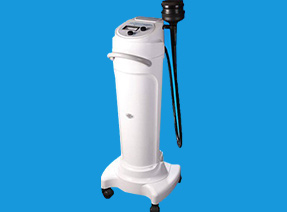
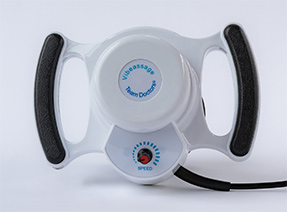
The Vibeassage Sport and the Vibeassage Pro featuring the TDX3 soft-as-the-hand Biomimetic Applicator Pad
https://www.teamdoctors.com/
✓ Get Dr. Stoxen’s #1 International Bestselling Books
Learn how to understand, examine, and reverse your TOS—without surgery.
https://drstoxen.com/1-international-best-selling-author/
✓ Check out Team Doctors Online Courses
Step-by-step video lessons, demonstrations, and self-treatment strategies.
https://teamdoctorsacademy.com/
✓ Schedule a Free Phone Consultation With Dr. Stoxen
Speak directly with him so he can review your case and guide you on your next steps.
https://drstoxen.com/appointment/
#ThoracicOutletSyndrome #TOS #VascularCompression #VenousCongestion #SubclavianVeinCompression #ArmSwelling #BlueArm #CirculationProblems #NerveCompression #ShoulderCompression
Medical Disclaimer
This article is provided for educational and informational purposes only. It is not intended to diagnose, treat, cure, or prevent any disease, nor is it intended to replace professional medical advice, diagnosis, or treatment.
Thoracic outlet syndrome and related nerve, vascular, and musculoskeletal conditions can present differently in each individual. Treatment decisions—including surgical and non-surgical options—must be made on a case-by-case basis in consultation with a qualified, licensed healthcare professional who is familiar with the patient’s complete medical history.
The experiences described in this article reflect individual outcomes and do not guarantee similar results for others. Surgical procedures, including thoracic outlet surgery and first rib resection, carry inherent risks, and outcomes vary based on many factors including diagnosis, timing, practitioner experience, and patient-specific anatomy and physiology.
Readers should not delay or discontinue medical care based on information contained in this article. Always seek the guidance of a qualified healthcare provider with any questions regarding symptoms, conditions, or treatment options.
Editor’s Note
This article explores a patient and family experience following thoracic outlet syndrome surgery and highlights the importance of comprehensive evaluation, informed decision-making, and second opinions when managing complex pain conditions.
The article also references the Human Spring Approach, a biomechanical evaluation and treatment framework developed by Dr James Stoxen, which emphasizes understanding the body as an integrated, dynamic spring system rather than a collection of isolated anatomical structures. The inclusion of this approach is intended to illustrate an alternative clinical perspective, not to discredit surgery or any specific medical specialty.
Mention of specific clinicians, evaluation models, or treatment philosophies does not constitute endorsement, medical advice, or a claim of superiority. Rather, it reflects the editorial goal of encouraging patients and families to seek clarity, explanation, and individualized assessment before pursuing irreversible interventions.
The editorial position of this publication is that understanding should precede intervention, especially in conditions where symptoms persist, worsen, or fail to respond to standard care.

Dr James Stoxen DC., FSSEMM (hon) He is the president of Team Doctors®, Treatment and Training Center Chicago, one of the most recognized treatment centers in the world.
Dr Stoxen is a #1 International Bestselling Author of the book, The Human Spring Approach to Thoracic Outlet Syndrome. He has lectured at more than 20 medical conferences on his Human Spring Approach to Thoracic Outlet Syndrome and asked to publish his research on this approach to treating thoracic outlet syndrome in over 30 peer review medical journals.
He has been asked to submit his other research on the human spring approach to treatment, training and prevention in over 150 peer review medical journals. He serves as the Editor-in-Chief, Journal of Orthopedic Science and Research, Executive Editor or the Journal of Trauma and Acute Care, Chief Editor, Advances in Orthopedics and Sports Medicine Journal and editorial board for over 35 peer review medical journals.
He is a much sought-after speaker. He has given over 1000 live presentations and lectured at over 70 medical conferences to over 50,000 doctors in more than 20 countries. He has been invited to speak at over 300 medical conferences which includes invitations as the keynote speaker at over 50 medical conferences.
After his groundbreaking lecture on the Integrated Spring-Mass Model at the World Congress of Sports and Exercise Medicine he was presented with an Honorary Fellowship Award by a member of the royal family, the Sultan of Pahang, for his distinguished research and contributions to the advancement of Sports and Exercise Medicine on an International level. He was inducted into the National Fitness Hall of Fame in 2008 and the Personal Trainers Hall of Fame in 2012.
Dr Stoxen has a big reputation in the entertainment industry working as a doctor for over 150 tours of elite entertainers, caring for over 1000 top celebrity entertainers and their handlers. Anthony Field or the popular children’s entertainment group, The Wiggles, wrote a book, How I Got My Wiggle Back detailing his struggles with chronic pain and clinical depression he struggled with for years. Dr Stoxen is proud to be able to assist him.
Full Bio) Dr Stoxen can be reached directly at teamdoctors@aol.com