The Search for Someone Who Actually Understands Thoracic Outlet Syndrome
In early 2021, Anastasia never imagined she was about to begin a desperate search for what felt like an impossible thing to find: a doctor who understands thoracic outlet syndrome.
At the time, like millions of other people, she was working from home. Her makeshift office was a kitchen counter. The setup was awkward. Her body twisted slightly to one side. Her arms worked at uneven angles. Her head leaned forward toward the screen for hours each day. It felt uncomfortable, but not alarming—at least not at first.
Then the tension started.
It began as tightness in her shoulders and neck. Soon, her collarbone area felt constantly loaded, as if a heavy weight were hanging from her upper body. Within weeks, that tension turned into tingling. Then numbness. Then burning pain traveling down her arm. It was the kind of pain that made no sense and followed no simple rule.
At the same time, Anastasia was already seeing chiropractors for low back issues. So she did what most patients do: she asked them to look at her neck and shoulder too. Adjustments were tried. Then more adjustments. Then different chiropractors. Nothing worked.
Instead, everything got worse.
Within two weeks, her symptoms accelerated. Playing with her kids on the floor, lifting her head repeatedly, reading in bed with her phone held at a bad angle—each small, innocent movement quietly added fuel to the fire. Soon her upper back, sternum, shoulders, and collarbone region felt like they were burning from the inside out.
Sleep became impossible.
Her chest felt tight. Her breathing felt restricted. Her entire upper body felt locked into a state of hypertonic tension. The sensation was so frightening that anxiety set in. Then fear. Then panic.
One night, convinced she might be having a heart attack, Anastasia went to the emergency room.
They ran tests. MRIs. Scans. An EKG. The verdict: not a heart attack. But beyond that—no answers.
She went home still in pain, still numb, still terrified, and still completely lost.
A Journey Through the Medical Maze
Like so many patients before her, Anastasia began searching online. She wasn’t just looking for pain relief anymore. She was looking for who treats thoracic outlet syndrome. She was looking for a thoracic outlet syndrome specialist. She was looking for the best doctor for thoracic outlet syndrome, or at least someone who could explain what was happening to her body.
Every search felt like a dead end.
Some sites said she needed a neurologist. Others said she needed a vascular surgeon. Others said orthopedic. She saw terms like vascular thoracic outlet specialist, neurologist for arm nerve pain, and debates about orthopedic vs vascular TOS specialist. But none of it answered the real question: Who actually understands TOS?
She kept searching phrases like TOS expert near me, find thoracic outlet specialist, and where to go for TOS. She found lists of doctors, clinics, and hospitals claiming to be the best treatment center for TOS or a TOS evaluation center or an advanced TOS treatment center. But the more she read, the more confused she became.
She wasn’t just in pain. She was trapped inside a system that didn’t seem designed for complex problems.
She realized she needed a thoracic outlet syndrome second opinion. Then maybe a third.
Her symptoms didn’t fit neatly into a single box. She had arm numbness. Shoulder pain. Neck pain. Chest tightness. Breathing restriction. She didn’t just need a thoracic outlet syndrome doctor. She needed a specialist for unexplained arm pain, a doctor for chronic arm pain, maybe even a nerve compression specialist or shoulder nerve pain specialist.
But every appointment felt fragmented.
One doctor focused on her neck. Another on her shoulder. Another on her arm. No one looked at the entire system.
She began to understand what so many TOS patients eventually realize: finding the best care for thoracic outlet syndrome isn’t about finding a building or a department. It’s about finding a person—an expert in thoracic outlet syndrome—who can see the whole picture.
The Therapy Trap
Before she understood what was really happening, Anastasia tried everything that was supposed to help.
She tried physical therapy for thoracic outlet syndrome. She tried stretching for thoracic outlet syndrome. She tried exercises for thoracic outlet syndrome. She tried massage. She tried posture work. She tried more adjustments.
Nothing worked.
In fact, some things made her worse.
She started asking questions that terrified her:
- Does massage help thoracic outlet syndrome?
- Can physical therapy fix thoracic outlet syndrome?
- Does chiropractic help TOS?
- Why PT doesn’t work for TOS?
- Why stretching makes symptoms worse?
- Can stretching worsen nerve compression?
In her case, the answer became painfully clear.
Every time she stretched, her symptoms flared. Every time she tried certain exercises, the burning and numbness increased. Even manual therapy for thoracic outlet syndrome, deep tissue for thoracic outlet syndrome, and myofascial release thoracic outlet syndrome gave only temporary or negative results.
She began to understand that not all conservative treatment options TOS are equal. Some forms of rehab for thoracic outlet syndrome and movement therapy for TOS can help. Others can quietly make the compression worse.
Her body wasn’t just tight.
It was structurally collapsing.
When Posture Becomes a Mechanical Trap
As Anastasia’s condition progressed, the pattern became obvious.
Her shoulders were drooping. Her head was forward. Her chest was collapsed.
She had classic forward head posture arm pain, rounded shoulders arm numbness, drooping shoulder pain, and sloped shoulders nerve pain. One shoulder sat lower than the other—one shoulder lower than the other pain. It wasn’t just cosmetic. It was mechanical.
She was living with postural thoracic outlet syndrome.
Her entire shoulder girdle was sinking downward. This created shoulder depression nerve pain, shoulder pulled down nerve pain, and shoulder droop nerve compression. The result was structural compression shoulder, structural nerve compression arm, and mechanical compression arm pain.
This wasn’t random inflammation.
It was biomechanical shoulder pain caused by shoulder girdle dysfunction, shoulder girdle collapse, and postural collapse shoulder pain. It was a mechanical cause of arm pain and a structural cause of arm pain.
Her body had become a collapsing framework.
Every hour at the computer reinforced the poor posture nerve compression. Every day increased the postural imbalance arm pain. Every week worsened the shoulder alignment nerve pain and shoulder instability nerve pain.
This wasn’t just pain.
It was a system failure.
The Fear of Surgery
As her symptoms continued, Anastasia began hearing words she never wanted to hear: disc, nerve, surgery.
She started searching for a doctor who helps avoid cervical surgery and a cervical surgery second opinion doctor. She looked for a non-surgical neck pain specialist, a doctor who treats neck pain without surgery, and an alternative to cervical spine surgery doctor.
She saw phrases like cervical disc herniation non-surgical doctor, doctor who treats pinched nerve without surgery, and doctor who treats cervical radiculopathy without surgery.
She wasn’t ready to let someone cut into her neck without understanding the real cause.
She needed a neck pain specialist conservative treatment approach. A functional spine specialist. A manual therapy doctor for neck pain. A movement-based neck pain specialist. Someone who practiced integrative spine care.
Someone who was focused on non-invasive neck pain treatment.
Someone who could be the best doctor to avoid neck surgery.
The Book That Changed Everything
Late one night, exhausted and scared, Anastasia searched again.
That’s when she found Dr. James Stoxen’s book: The Human Spring Approach to Thoracic Outlet Syndrome.
As she read, something shocking happened.
The book described her symptoms exactly.
It explained that the body is not a lever system—it is a spring system. That when muscles are stuck in hypertonic contraction, the body loses its ability to absorb load. That space collapses. That nerves and vessels get compressed. That pain, numbness, and burning follow.
For the first time, she felt understood.
For the first time, she felt hope.
She realized she wasn’t just looking for a TOS diagnosis specialist or a TOS clinic near me.
She was looking for who actually understands TOS.
And she had finally found him.
The Doctor Who Got on a Plane
By the time Anastasia finished Dr. James Stoxen’s book, she wasn’t just emotionally exhausted—she was mentally certain of one thing.
What she was dealing with was not random. It was not psychological. It was not mysterious. It was mechanical.
And it had a name.
Thoracic outlet syndrome.
But knowing the name of the problem didn’t solve the most important question: What do you do when no one around you knows how to fix it?
She had already learned the hard way that simply finding a thoracic outlet syndrome specialist on a website or a TOS expert near me on Google didn’t mean that person actually knew how to solve the problem. Titles were easy to claim. Understanding was not.
She needed more than a thoracic outlet syndrome doctor. She needed a doctor who understands thoracic outlet syndrome. A true expert in thoracic outlet syndrome. Someone who could perform a real TOS specialist evaluation—not just look at scans.
So she did something she had never done before.
She emailed the author.
To her shock, Dr. Stoxen replied the same day. Not with a form response. Not with a referral. With a real message. Then he gave her his personal number.
They spoke for a long time.
He listened.
He explained.
He described the Human Spring model and how the body’s suspension system collapses when muscles lock into chronic protective contraction. He explained how this leads to structural arm nerve pain, mechanical compression arm pain, and progressive shoulder girdle dysfunction. He explained why her posture, her workstation, and her stress patterns had quietly produced posture-induced thoracic outlet syndrome.
Most importantly, he told her something no one else had:
“This is fixable.”
There was only one problem.
He was in Chicago.
She was in Kansas City.
She could barely sleep. Barely breathe deeply. Barely lie down without symptoms exploding. Traveling felt impossible.
When she explained this, he didn’t hesitate.
“I’ll get on a plane,” he said.
She thought she misunderstood.
He hadn’t.
They agreed on the details.
And the next day, he arrived.
A Different Kind of Doctor
When Dr. Stoxen walked in, Anastasia realized immediately that this was not a typical medical visit.
He didn’t bring a clipboard.
He brought a treatment table.
He brought his tools.
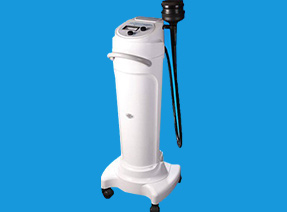
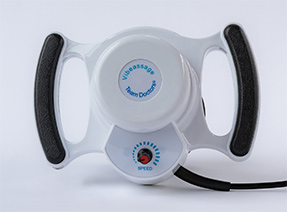
He brought his equipment—including the vibration therapy devices he uses in his clinical work.
He had turned her home into a mobile thoracic outlet syndrome care team.
What followed was the most thorough evaluation she had experienced in her life.
Not just a look at her neck.
Not just her shoulder.
Not just her arm.
He examined everything.
Every joint.
Every muscle.
Every movement.
Every breathing pattern.
Every compensation.
This was not a rushed consult. This was not symptom-chasing. This was a full-system investigation—the kind done by a true TOS diagnosis specialist and nerve compression specialist who understands how the entire body works as a spring-loaded suspension system.
By the end of the evaluation, he confirmed what she already suspected:
She had a severe case of thoracic outlet syndrome driven by structural collapse, postural depression, and global muscle hypertonicity.
Her shoulders were being pulled downward. Her clavicle space was closing. Her neck and upper chest were locked. Her rib cage couldn’t expand properly.
It wasn’t just pain.
It was mechanical failure.
The Treatment That Didn’t Look Like “Treatment”
They started immediately.
And nothing about it looked like what Anastasia had tried before.
This wasn’t generic physical therapy for thoracic outlet syndrome.
This wasn’t a stretching program that asked her to “open up” tissues that were already under too much tension.
This wasn’t random massage vs PT for TOS experimentation.
This was a precise, methodical process of unloading, decompressing, and restoring spring function to a body that had forgotten how to move elastically.
Dr. Stoxen worked long hours.
He worked slowly.
He worked meticulously.
He treated muscles that had been locked in protective contraction for months. He worked on the rib cage, the neck, the chest, the shoulders, the back, and the hips—because in the Human Spring model, everything is connected.
He used manual therapy nerve compression techniques, soft tissue treatment for TOS, and targeted mechanical unloading. He used vibration therapy for arm pain to help reset hypertonic muscle tone and restore circulation and nerve glide.
This was not aggressive.
It was intelligent.
It was strategic.
It was respectful of the nervous system.
The First Signs of Hope
The first change was subtle.
After two days, Anastasia noticed something strange.
Her arm wasn’t going numb as quickly.
Then she noticed she could lie down without immediate panic.
Then she slept.
Really slept.
For the first time in weeks.
By the third and fourth day, the burning had decreased. The tightness in her chest had eased. Her breathing felt deeper. Her shoulders felt lighter—literally.
She wasn’t cured yet.
But she was clearly moving in the right direction.
And for someone who had been living in fear, that meant everything.
A System, Not a One-Time Fix
On the fifth day, Dr. Stoxen sat down with Anastasia and her husband.
He explained something critical:
What he had done was not a “treatment.”
It was a system reset.
If her body went back to the same postural patterns, the same mechanical loading, and the same muscle guarding strategies, the problem could come back.
So he gave them a plan.
They acquired the same vibration therapy device he had used.
He taught them how to use it.
He gave her a precise, progressive movement and strengthening program—not generic home exercises for TOS, but specific drills designed to rebuild her spring suspension system.
This was not about forcing range of motion.
This was about restoring elastic support.
This was not about stretching for thoracic outlet syndrome.
This was about teaching her body to carry load again.
The Moment Everything Changed
By the time he left, Anastasia was no longer in crisis.
She could breathe.
She could sleep.
Her arm felt like her arm again.
And most importantly—she felt safe in her own body.
She knew she still had work to do.
But for the first time since this nightmare started, she knew she was going to be okay.
Two Years Later: Life After Thoracic Outlet Syndrome
Recovery does not usually announce itself with fireworks.
Most of the time, it arrives quietly.
For Anastasia, it began with something almost insignificant: a morning where she realized she hadn’t thought about her arm yet.
No burning.
No numbness.
No panic.
Just… normal.
That was the first sign that her body was no longer in survival mode.
From Crisis to Confidence
In the weeks after Dr. Stoxen returned to Chicago, Anastasia followed the program exactly as instructed.
She didn’t chase pain.
She didn’t over-stretch.
She didn’t try to “force” her body open.
Instead, she focused on rebuilding support, strength, and elastic control.
She used the vibration therapy device regularly. She did the specific exercises that had one purpose: to teach her body how to behave like a spring again.
Slowly, the changes compounded.
Her breathing became deeper and easier.
Her shoulders no longer felt like they were being pulled downward by gravity.
Her neck stopped feeling like a fragile structure that could “go out” at any moment.
And most importantly—her arm stayed normal.
Weeks turned into months.
Months turned into a year.
Then two years passed.
And the symptoms never came back.
The Hidden Lesson of Thoracic Outlet Syndrome
Looking back, Anastasia now understands something she couldn’t see at the beginning:
Thoracic outlet syndrome is not a “neck problem.”
It’s not an “arm problem.”
It’s not even a “shoulder problem.”
It’s a system problem.
Her body had lost its suspension.
Her muscles had locked into chronic protective contraction.
Her posture had collapsed.
Her rib cage had stopped moving.
Space disappeared.
And nerves paid the price.
No MRI could show that.
No single test could explain it.
Only a biomechanical model that understood the body as a dynamic spring system could.
Why She Warns Others About Surgery
Today, when Anastasia meets people who are being told they might need surgery, she feels a responsibility to speak up.
She tells them:
“Please, get a second opinion.”
She tells them to look for a doctor who understands thoracic outlet syndrome, not just someone who operates on it.
She explains that many people are pushed toward rib resections, scalenectomies, or neck surgeries without ever having their mechanical suspension system evaluated.
She explains that cutting tissue does not fix a collapsing structure.
She explains that her case was not caused by a bone.
It was caused by function.
And function can be restored.
What Actually Fixed the Problem
It wasn’t luck.
It wasn’t time.
It wasn’t rest.
It wasn’t generic therapy.
What fixed her was:
- Understanding that the body is a spring system, not a lever system
- Restoring load-bearing capacity instead of chasing pain
- Decompressing nerves by restoring posture and muscle function
- Teaching the body to support itself again
The Human Spring Approach didn’t just remove symptoms.
It rebuilt the system.
A Normal Life, Quietly Restored
Today, Anastasia works.
She plays with her kids.
She travels.
She sleeps.
She lives.
And she doesn’t think about thoracic outlet syndrome anymore.
Which, she now understands, is the real definition of healing.
Her Message to Others
When asked what she would say to someone who is where she once was, she doesn’t hesitate:
“Don’t assume surgery is the answer.
Don’t assume imaging tells the whole story.
And don’t assume that because something is common, it’s correct.”
She tells them to look for someone who understands biomechanics.
Someone who understands the spring system.
Someone who treats causes, not just structures.
The Journey That Changed Everything
Two years ago, she was afraid to breathe.
Today, she barely remembers that life.
And that is the quiet miracle of getting your body back.
Team Doctors Resources
✓ Check out the Team Doctors Recovery Tools
The Vibeassage Sport and the Vibeassage Pro featuring the TDX3 soft-as-the-hand Biomimetic Applicator Pad
https://www.teamdoctors.com/
✓ Get Dr. Stoxen’s #1 International Bestselling Books
Learn how to understand, examine, and reverse your TOS—without surgery.
https://drstoxen.com/1-international-best-selling-author/
✓ Check out Team Doctors Online Courses
Step-by-step video lessons, demonstrations, and self-treatment strategies.
https://teamdoctorsacademy.com/
✓ Schedule a Free Phone Consultation With Dr. Stoxen
Speak directly with him so he can review your case and guide you on your next steps.
https://drstoxen.com/appointment/
#ThoracicOutletSyndrome #FailedTOSSurgery #TOSRecovery #ChronicPainStory #VascularTOS #ArmPain #PatientAdvocacy #MedicalTrauma #SurgeryFailure #PainJourney
Medical Disclaimer
This article is provided for educational and informational purposes only. It is not intended to diagnose, treat, cure, or prevent any disease, nor is it intended to replace professional medical advice, diagnosis, or treatment.
Thoracic outlet syndrome and related nerve, vascular, and musculoskeletal conditions can present differently in each individual. Treatment decisions—including surgical and non-surgical options—must be made on a case-by-case basis in consultation with a qualified, licensed healthcare professional who is familiar with the patient’s complete medical history.
The experiences described in this article reflect individual outcomes and do not guarantee similar results for others. Surgical procedures, including thoracic outlet surgery and first rib resection, carry inherent risks, and outcomes vary based on many factors including diagnosis, timing, practitioner experience, and patient-specific anatomy and physiology.
Readers should not delay or discontinue medical care based on information contained in this article. Always seek the guidance of a qualified healthcare provider with any questions regarding symptoms, conditions, or treatment options.
Editor’s Note
This article explores a patient and family experience following thoracic outlet syndrome surgery and highlights the importance of comprehensive evaluation, informed decision-making, and second opinions when managing complex pain conditions.
The article also references the Human Spring Approach, a biomechanical evaluation and treatment framework developed by Dr James Stoxen, which emphasizes understanding the body as an integrated, dynamic spring system rather than a collection of isolated anatomical structures. The inclusion of this approach is intended to illustrate an alternative clinical perspective, not to discredit surgery or any specific medical specialty.
Mention of specific clinicians, evaluation models, or treatment philosophies does not constitute endorsement, medical advice, or a claim of superiority. Rather, it reflects the editorial goal of encouraging patients and families to seek clarity, explanation, and individualized assessment before pursuing irreversible interventions.
The editorial position of this publication is that understanding should precede intervention, especially in conditions where symptoms persist, worsen, or fail to respond to standard care.