The Industry That Operates First and Thinks Later
There is a moment in almost every long medical journey when the patient realizes something terrifying: the system that is supposed to save them does not actually have a map.
Anna Tori Smith reached that moment long before she ever boarded a train to Chicago.
By the time she did, she had already lived through more than a decade inside a medical machine that did not understand her problem, could not explain her decline, and had only one tool left in its toolbox: escalation.
More specialists. More procedures. More risk.
And eventually, more cutting.
What made her case uncomfortable for the system was not that it was rare. It was that it was honest.
Her body did not fail suddenly. It failed logically.
After the car accident in 2012, her body began doing what all injured systems do: it adapted. It shifted load. It redistributed stress. It protected unstable areas by tightening others. Over time, that protection became compression. That compression became inflammation. And that inflammation became a full-body mechanical and physiological crisis.
But the system she was in does not treat systems.
It treats parts.
So she was passed from one specialist to another. Each one saw a piece. Each one offered a fix for that piece. None of them were responsible for how the pieces interacted.
This is how people end up with ten surgeries and no answers.
By the time her chest was filling with fluid, her blood pressure was spiking into lethal ranges, and her nervous system was in constant overdrive, the narrative had already shifted.
She was no longer being asked, “Why is this happening?”
She was being told, “Here’s what we’re going to remove next.”
This is how patients get funneled toward thoracic outlet surgery without anyone ever proving that anatomy is the actual cause of their compression.
This is how thoracic outlet syndrome surgery becomes a default rather than a last resort.
And this is how people end up losing a perfectly healthy first rib in a procedure that assumes the body is built like plumbing rather than like a suspension bridge.
No one had ever shown Anna a real mechanical model of her body.
No one had ever explained how force travels through her frame.
No one had ever asked whether her problem was not obstruction—but collapse.
Instead, she was introduced to the surgical vocabulary of inevitability: first rib resection, TOS surgery, transaxillary first rib resection — phrases spoken with the confidence of tradition rather than the humility of uncertainty.
She was told about thoracic outlet surgery success rate, but not about how “success” is defined.
She was warned about thoracic outlet surgery complications, but only as statistical footnotes, not as logical consequences of removing load-bearing structures.
She was shown diagrams. She was not shown physics.
The uncomfortable truth is this: the body does not create space by removing parts.
It creates space by suspending itself.
When you cut pieces out of a suspension system, you do not restore function.
You redistribute failure.
This is why so many people struggle with thoracic outlet syndrome surgery recovery, thoracic outlet syndrome surgery recovery time, and first rib resection recovery that seems to stretch on indefinitely.
It is why thoracic outlet syndrome surgery results are so inconsistent.
It is why thoracic outlet syndrome surgery risks and first rib resection complications are not rare flukes, but predictable outcomes of a flawed model.
And it is why the internet is full of people searching for thoracic outlet surgery video testimonials that look more like survival stories than success stories.
Anna had already lived this pattern in other parts of her body.
She knew, instinctively, that cutting more out of her was not going to save her.
What finally broke the illusion was not theory.
It was her lungs filling with clots.
Ten days after her last surgery, she nearly died from pulmonary embolisms.
That is not a “complication.”
That is a system screaming that something is fundamentally wrong.
And yet, even then, the solution offered was not understanding.
It was medication.
“Go home and heal.”
That is what they tell you when they don’t know what else to do.
Her blood pressure continued to spike. Ambulance rides continued. Emergency rooms continued. And the quiet, unspoken reality continued to loom: the next escalation would not be survivable.
This is the part of modern medicine no one likes to talk about.
There is a point where intervention becomes momentum.
And momentum does not stop itself.
It took Anna stepping outside the system to realize that her problem was not that she needed a better surgeon.
Her problem was that she needed a doctor who treats cervical spine compression naturally — someone who understood that compression is not a thing you remove, but a condition you reverse.
When she found Dr. Stoxen, she did not find a man offering a new procedure.
She found a man questioning the entire premise.
He did not ask, “What should we cut?”
He asked, “Why is this body no longer able to hold itself up?”
He did not see a candidate for neurogenic thoracic outlet syndrome surgery.
He saw a global collapse of the human suspension system.
He did not talk about structures being “in the way.”
He talked about structures no longer being supported.
This is a fundamentally different worldview.
One treats the body like a pile of parts.
The other treats it like an engineered system.
And only one of those worldviews explains why Anna’s body was dying.
Why Operating on Anatomy Fails Mechanical Spring Problems
The modern surgical narrative is built on a simple idea: if something hurts, something must be in the way. And if something is in the way, it should be removed.
This logic feels intuitive. It is also deeply flawed.
Anna Tori Smith’s body was living proof.
By the time she was being pushed toward thoracic outlet syndrome surgery, her problem was no longer a single compressed nerve or vessel. Her entire upper body suspension system had lost its ability to hold space under load. But the system she was in had no language for that.
So it reached for the only language it knew.
Cut.
She was shown imaging. She was told about narrow spaces. She was told about crowding. And inevitably, she was told about first rib resection as if removing a structural beam from a suspension bridge could somehow make the bridge stronger.
This is how patients get sold TOS surgery without anyone ever proving that the rib is the cause rather than the victim.
The first rib does not create compression.
It responds to collapse.
But the dominant model does not understand collapse. It only understands obstruction.
So it offers thoracic outlet surgery and frames it as decompression, even though mechanically it is destruction.
And then it is surprised when people struggle with thoracic outlet surgery recovery.
Or when they develop thoracic outlet surgery complications.
Or when they discover that the thoracic outlet surgery success rate depends entirely on how “success” is defined.
If success means “we removed the rib,” the success rate is nearly 100%.
If success means “the person’s body works again,” the numbers become far less impressive.
Patients are warned about thoracic outlet syndrome surgery risks, but not about the deeper truth: that the operation does nothing to restore the load-bearing function of the system that failed in the first place.
They are told about thoracic outlet syndrome surgery recovery time, but not that many never truly recover at all.
They are told about first rib surgery, but not about why first rib resection recovery is often long, painful, and incomplete.
They are not told that thoracic outlet syndrome surgery results are wildly inconsistent because the surgery does not address the real problem.
They are certainly not told how common thoracic outlet syndrome surgery complications and first rib resection complications actually are.
And if things go badly, they are shown their thoracic outlet surgery scars and told that at least the compression is gone — even if the function is not back.
This is how the system protects itself.
It defines success in ways that cannot be falsified.
Anna was already on this conveyor belt.
She had been told that neurogenic thoracic outlet syndrome surgery might be the next logical step. She had heard about transaxillary first rib resection as if it were a technical upgrade rather than the same conceptual mistake performed through a different doorway.
She had watched thoracic outlet surgery video testimonials where “improvement” meant “slightly less terrible.”
But her body was not failing because of a rib.
Her body was failing because the entire suspension system had lost its ability to maintain space.
This is the part that the surgical model cannot see.
Space in the body is not carved out.
It is created dynamically by spring-like, load-sharing structures.
When those structures become stiff, guarded, inflamed, and neurologically locked, the body collapses inward. Tunnels narrow. Pressure rises. Circulation backs up. Nerves become irritable. The system becomes self-strangling.
And cutting out a piece of that system does not reverse that process.
It makes it more fragile.
This is why people who undergo thoracic outlet syndrome surgery recovery often find that their symptoms migrate rather than disappear. The load simply finds a new weak point.
Anna had already lived this pattern elsewhere in her body.
She was not willing to repeat it in her neck and chest.
What she needed was not another operation.
She needed someone who understood that her problem was mechanical, not anatomical.
She needed a doctor who helps avoid cervical surgery.
She needed a non-surgical spine doctor near me who actually understood why her body was collapsing.
She needed a doctor who avoids cervical fusion and a spine specialist focused on non-surgical care.
Instead of being sent to a surgeon, she needed a neck pain specialist before surgery who could explain whether surgery even made sense.
What she eventually found was something radically different: a doctor who treats cervical radiculopathy without surgery, a doctor who treats disc problems without surgery, and a doctor who treats pinched nerve without surgery because he does not start by assuming that cutting is the answer.
Dr. Stoxen did not approach her like a surgical candidate.
He approached her like a failed mechanical system.
He did not offer treatment – general symptom management.
He did not offer treatment – physical therapy in the generic sense.
He did not offer treatment – adjustments as a ritual.
And he certainly did not offer treatment – first rib in the form of a saw.
He offered a complete re-engineering of how her body handled load, pressure, and space.
This is why her care did not look like home treatment or at-home treatment for thoracic outlet syndrome. It was not casual. It was not superficial. It was not optional.
It was rescue engineering.
He explained to her that there is no true cure for thoracic outlet syndrome if you keep using a model that cannot see the real problem. But there is a way to restore the conditions that make the syndrome disappear.
That path looks like non-surgical treatment for thoracic outlet syndrome, but not in the watered-down sense most people imagine.
It looks like thoracic outlet syndrome holistic treatment and alternative treatment for thoracic outlet syndrome only because the dominant system is stuck in the wrong century.
It looks like fixing thoracic outlet syndrome by restoring physics instead of cutting anatomy.
It looks like conservative treatment of thoracic outlet syndrome and conservative management that is anything but conservative in its thinking.
And yes, it eventually includes exercises for thoracic outlet syndrome treatment and physical therapy exercises for thoracic outlet syndrome — but only after the system can actually tolerate load again.
This is the difference between treating a system and abusing a structure.
Anna’s body did not start to recover because something was removed.
It started to recover because something was restored.
The Human Spring: Why the Body Is Not a Lever and Not a Pipe
The most dangerous assumption in modern musculoskeletal medicine is not that surgery can help.
It is the assumption that the body is built like plumbing.
Everything that failed Anna Tori Smith was built on that assumption.
Find the narrow spot. Remove what’s in the way. Widen the pipe.
That is how you think if you believe the body is a rigid structure with things running through it.
But the human body is not rigid.
It is suspended.
It is elastic.
It is a living spring system.
Dr. James Stoxen’s Human Spring Approach begins with a premise so simple that it is almost embarrassing the medical system missed it:
The body creates space by tension, not by absence.
Nerves and blood vessels are not protected because bones are gone.
They are protected because the system is holding itself open.
In a healthy body, joints, fascia, muscles, and connective tissues behave like a complex, interlinked suspension bridge. Load comes in. It is absorbed. It is distributed. It is released. Space is preserved dynamically.
In a failing body, that spring system becomes stiff.
When stiffness increases, compliance disappears.
When compliance disappears, the body cannot distribute load.
When the body cannot distribute load, it collapses inward.
And when it collapses inward, tunnels narrow, pressure rises, circulation backs up, and nerves become irritable.
That is not a structural obstruction problem.
That is a spring failure problem.
This is why Dr. Stoxen does not start by asking what to remove.
He starts by asking what is no longer carrying load.
He does not look at the thoracic outlet as a hole in a wall.
He looks at it as a space suspended by a system.
And in Anna’s case, that system had been failing for over a decade.
Her body had been surviving by bracing, guarding, stiffening, and locking down.
Every surgery she had undergone made that stiffness worse.
Every intervention that treated her like a machine part made her more mechanically fragile.
By the time she arrived in Chicago, she was not dealing with a local problem.
She was dealing with a global spring-system collapse.
Dr. Stoxen’s work that first week was not “treatment” in the conventional sense.
It was decompression engineering.
He worked to:
- Restore joint play
- Restore tissue glide
- Restore lymphatic movement
- Restore pressure gradients
- Restore circulation pathways
- Restore neurological calm
- Restore mechanical compliance
Only after that does anything resembling treatment – physical therapy make sense.
Only after that does treatment – adjustments actually hold.
Only after that does any form of treatment – general rehabilitation stop being guesswork.
And critically, only after that does the first rib stop behaving like a guillotine and start behaving like a suspension strut again — without any need for treatment – first rib by removal.
This is why Anna did not need surgery.
Not because she was “lucky.”
But because her problem was never a missing-space problem.
It was a lost-suspension problem.
Under the Human Spring Model, the goal is not to force the body into a shape.
The goal is to restore the body’s ability to hold its own shape under load.
This is why her care did not look like standard rehab.
It looked like system reboot.
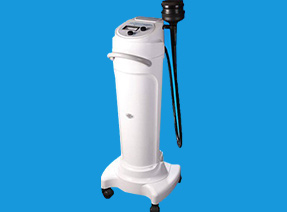
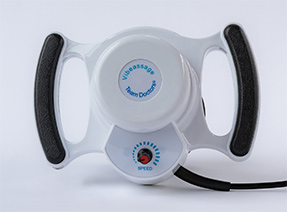
The Vibeassage was not used as a massage tool.
It was used as a mechanical compliance restoration tool.
The lymphatic drainage was not spa therapy.
It was pressure unloading for a system that was drowning in itself.
The long hours were not indulgence.
They were necessary to reverse years of protective locking and fluid congestion.
And when that spring system started to come back online, something remarkable happened:
Her blood pressure began to normalize.
Her swelling began to recede.
Her breathing became easier.
Her circulation improved.
Her nervous system began to calm.
Her body stopped preparing for death.
Not because something was cut out.
But because something started working again.
This is the part that makes the surgical paradigm deeply uncomfortable.
Because if this model is correct — and Anna’s body is evidence that it is — then a huge percentage of compression syndromes are not surgical diseases at all.
They are mechanical failure syndromes.
They are not solved by removing parts.
They are solved by restoring function.
They are not looking for magic.
They are looking for someone who understands how the body actually works.
Dr. Stoxen is not a “no surgery ever” ideologue.
He is something far more threatening to the system:
He is a mechanics-first doctor.
He insists that the body be given every chance to restore its own suspension system before anything is sacrificed.
He insists that function be measured before anatomy is blamed.
He insists that collapse be reversed before parts are removed.
And in Anna’s case, that insistence is almost certainly why she is alive.
Her story is not a miracle story.
It is a model-change story.
She did not get better because she found a better procedure.
She got better because she found a better way of understanding the human body.
The Human Spring Approach does not compete with surgery.
It makes most of it unnecessary.
Team Doctors Resources
✓ Check out the Team Doctors Recovery Tools
The Vibeassage Sport and the Vibeassage Pro featuring the TDX3 soft-as-the-hand Biomimetic Applicator Pad
https://www.teamdoctors.com/
✓ Get Dr. Stoxen’s #1 International Bestselling Books
Learn how to understand, examine, and reverse your TOS—without surgery.
https://drstoxen.com/1-international-best-selling-author/
✓ Check out Team Doctors Online Courses
Step-by-step video lessons, demonstrations, and self-treatment strategies.
https://teamdoctorsacademy.com/
✓ Schedule a Free Phone Consultation With Dr. Stoxen
Speak directly with him so he can review your case and guide you on your next steps.
https://drstoxen.com/appointment/
#ThoracicOutletSyndrome #FailedTOSSurgery #TOSRecovery #ChronicPainStory #VascularTOS #ArmPain #PatientAdvocacy #MedicalTrauma #SurgeryFailure #PainJourney
Medical Disclaimer
This article is provided for educational and informational purposes only. It is not intended to diagnose, treat, cure, or prevent any disease, nor is it intended to replace professional medical advice, diagnosis, or treatment.
Thoracic outlet syndrome and related nerve, vascular, and musculoskeletal conditions can present differently in each individual. Treatment decisions—including surgical and non-surgical options—must be made on a case-by-case basis in consultation with a qualified, licensed healthcare professional who is familiar with the patient’s complete medical history.
The experiences described in this article reflect individual outcomes and do not guarantee similar results for others. Surgical procedures, including thoracic outlet surgery and first rib resection, carry inherent risks, and outcomes vary based on many factors including diagnosis, timing, practitioner experience, and patient-specific anatomy and physiology.
Readers should not delay or discontinue medical care based on information contained in this article. Always seek the guidance of a qualified healthcare provider with any questions regarding symptoms, conditions, or treatment options.
Editor’s Note
This article explores a patient and family experience following thoracic outlet syndrome surgery and highlights the importance of comprehensive evaluation, informed decision-making, and second opinions when managing complex pain conditions.
The article also references the Human Spring Approach, a biomechanical evaluation and treatment framework developed by Dr James Stoxen, which emphasizes understanding the body as an integrated, dynamic spring system rather than a collection of isolated anatomical structures. The inclusion of this approach is intended to illustrate an alternative clinical perspective, not to discredit surgery or any specific medical specialty.
Mention of specific clinicians, evaluation models, or treatment philosophies does not constitute endorsement, medical advice, or a claim of superiority. Rather, it reflects the editorial goal of encouraging patients and families to seek clarity, explanation, and individualized assessment before pursuing irreversible interventions.
The editorial position of this publication is that understanding should precede intervention, especially in conditions where symptoms persist, worsen, or fail to respond to standard care.

Dr James Stoxen DC., FSSEMM (hon) He is the president of Team Doctors®, Treatment and Training Center Chicago, one of the most recognized treatment centers in the world.
Dr Stoxen is a #1 International Bestselling Author of the book, The Human Spring Approach to Thoracic Outlet Syndrome. He has lectured at more than 20 medical conferences on his Human Spring Approach to Thoracic Outlet Syndrome and asked to publish his research on this approach to treating thoracic outlet syndrome in over 30 peer review medical journals.
He has been asked to submit his other research on the human spring approach to treatment, training and prevention in over 150 peer review medical journals. He serves as the Editor-in-Chief, Journal of Orthopedic Science and Research, Executive Editor or the Journal of Trauma and Acute Care, Chief Editor, Advances in Orthopedics and Sports Medicine Journal and editorial board for over 35 peer review medical journals.
He is a much sought-after speaker. He has given over 1000 live presentations and lectured at over 70 medical conferences to over 50,000 doctors in more than 20 countries. He has been invited to speak at over 300 medical conferences which includes invitations as the keynote speaker at over 50 medical conferences.
After his groundbreaking lecture on the Integrated Spring-Mass Model at the World Congress of Sports and Exercise Medicine he was presented with an Honorary Fellowship Award by a member of the royal family, the Sultan of Pahang, for his distinguished research and contributions to the advancement of Sports and Exercise Medicine on an International level. He was inducted into the National Fitness Hall of Fame in 2008 and the Personal Trainers Hall of Fame in 2012.
Dr Stoxen has a big reputation in the entertainment industry working as a doctor for over 150 tours of elite entertainers, caring for over 1000 top celebrity entertainers and their handlers. Anthony Field or the popular children’s entertainment group, The Wiggles, wrote a book, How I Got My Wiggle Back detailing his struggles with chronic pain and clinical depression he struggled with for years. Dr Stoxen is proud to be able to assist him.
Full Bio) Dr Stoxen can be reached directly at teamdoctors@aol.com