The Arm That Became Too Heavy to Carry
By the time Daniel Brooks was forty-two, he could no longer hold his laptop in his left hand for more than a few minutes.
Not because it was heavy.
Because his arm felt like it was.
Driving made his arm go numb. Sleeping on his side made his entire hand tingle and throb. Carrying groceries felt like dragging a dead weight attached to his shoulder. Even walking through the grocery store with his arm swinging at his side felt like gravity had singled him out, pulling his shoulder downward inch by inch, hour by hour, day by day.
At first, Daniel did what most people do. He ignored it. Then he adapted. Then he compensated. And finally, one morning, he tried to lift his laptop and realized that his arm simply… wouldn’t cooperate.
That was the day he opened his browser and typed what thousands of people type every month: thoracic outlet syndrome specialist.
He didn’t even know what thoracic outlet syndrome was. He only knew that something was deeply wrong with his arm, and that whatever it was, it wasn’t behaving like a normal injury. Within days, his search history filled with phrases like best doctor for thoracic outlet syndrome, TOS expert near me, who treats thoracic outlet syndrome, and thoracic outlet syndrome second opinion. He was looking not just for a doctor, but for someone who actually understood what was happening to him.
The Long Road Through the Wrong Doors
Daniel’s path through the medical system followed a script that would later feel painfully familiar.
First came his primary care doctor, who examined his neck and said it was probably a cervical issue. Then an orthopedist suggested it might be his shoulder. A neurologist ran tests and said the nerve study was “mostly normal,” which somehow made Daniel feel worse, not better. Physical therapy was the next stop, where he was told to stretch, strengthen, and improve mobility.
He did everything they told him.
And he got worse.
So he kept searching. He looked for a TOS specialist evaluation, then the best treatment center for TOS, then who actually understands TOS. He read about finding a thoracic outlet syndrome doctor, a specialist for arm nerve pain, or a nerve compression specialist who might finally connect the dots. Every clinic had a different explanation. None of them could explain why his arm felt like it was being pulled out of its socket by gravity itself.
When the Diagnosis Finally Comes
It took nearly four years before someone finally said the words: “You probably have thoracic outlet syndrome.”
At first, Daniel felt relief. A name means hope. A name means a plan.
But that relief evaporated when the next sentence arrived: “You should talk to a vascular surgeon.”
Suddenly his searches changed. Now he was reading about vascular thoracic outlet specialists, comparing orthopedic vs vascular TOS specialists, and looking for the best place for a TOS diagnosis or a second opinion for chronic arm pain. Within a few months, he was sitting in a surgeon’s office listening to a calm, rehearsed explanation of first rib resection and scalene muscle cutting.
“We remove the first rib and cut the scalene muscles. That usually helps.”
Daniel stared at him and asked the only question that mattered.
“Is there anything else?”
The surgeon hesitated. “You can try more therapy, but it probably won’t fix it.”
The Therapy Trap
The irony was cruel. Daniel had already tried almost every conservative approach anyone could suggest. He had done physical therapy for thoracic outlet syndrome, endless stretching for thoracic outlet syndrome, carefully prescribed exercises for thoracic outlet syndrome, and more manual therapy for thoracic outlet syndrome than he could remember. He had tried deep tissue work, massage, and every variation of thoracic outlet syndrome massage that promised relief.
Sometimes he felt looser. Sometimes he felt temporarily better.
But overall, his symptoms kept progressing.
Late at night, he started searching darker questions: why physical therapy doesn’t work for TOS, why stretching makes symptoms worse, and whether stretching could actually worsen nerve compression. He found stories eerily similar to his own—people who felt worse the more they tried to “fix” themselves.
No one had told him that stretching a structure that was already collapsing could actually increase compression.
The Clue No One Measured
There was something Daniel noticed that no one ever wrote in a chart.
His left shoulder was lower than his right.
It wasn’t subtle. His shirts hung crooked. His jacket felt heavier on one side. He had what could only be described as drooping shoulder pain, with sloped shoulders and rounded posture that made his arm go numb. His head sat forward, his chest felt tight, and his entire shoulder girdle felt like it was slowly sinking into his rib cage.
It looked like posture.
It felt like gravity.
But no one treated it like structure.
The Surgeon’s Timeline
The surgeon was confident. Surgery, he explained, was the definitive fix.
Daniel went home and stared at the paperwork: remove rib, cut muscles, permanently alter anatomy.
Something about it felt wrong.
So he searched one more time: expert in thoracic outlet syndrome.
That’s when he found Dr. James Stoxen.
And something called the Human Spring Approach.
A Completely Different Language
What struck Daniel immediately was not the testimonials.
It was the language.
Dr. Stoxen wasn’t talking about trigger points or tight scalenes. He was talking about shoulder girdle dysfunction, structural compression of the shoulder, and the mechanical cause of arm pain. He described the problem in terms of biomechanical shoulder pain, structural nerve compression, and posture-induced thoracic outlet syndrome.
For the first time, Daniel saw his problem described like an engineering failure instead of a mysterious medical condition.
The Tool He Didn’t Trust
By this point, Daniel had also experimented with every gadget on the internet. He had tried an electric muscle massager, a percussion therapy device, and more than one massage gun. He knew all about massage gun benefits, massage gun vs foam roller, and whether a massage gun is safe.
They helped.
For an hour.
Then everything came back.
What he didn’t understand yet was that random percussion doesn’t change structure.
“Your Rib Is Not the Problem”
Daniel walked into Dr. Stoxen’s clinic expecting either confirmation of surgery or a softer version of the same sentence.
Instead, he heard something that unraveled six years of fear:
“Your rib is not the problem.”
Dr. Stoxen didn’t start with symptoms. He started with gravity. He measured shoulder height, scapular position, clavicle slope, rib cage angle, and how load traveled through Daniel’s arm.
The pattern was obvious within minutes.
His left shoulder girdle had collapsed downward.
“Your arm isn’t being carried,” Dr. Stoxen said. “It’s being hung.”
The Real Compression Zone
The surgeon had said the rib was compressing the nerves.
Dr. Stoxen showed him the opposite.
The rib hadn’t moved up.
The shoulder had fallen down.
The tunnel didn’t get smaller from below.
The roof had collapsed.
Why Cutting Makes No Mechanical Sense
“If the roof of a tunnel collapses,” Dr. Stoxen said, “do you lower the floor? Or lift the roof?”
First rib resection lowers the floor.
It does not restore suspension.
And Daniel finally understood why nothing had worked.
The Sentence That Changed Everything
“You don’t need something removed,” Dr. Stoxen said. “You need something restored.”
Six years of fear collapsed into one clear, mechanical truth.
His body wasn’t broken.
It was collapsed.
The Day Gravity Became the Diagnosis
Daniel had spent six years describing his problem in the language medicine had taught him. Pain. Numbness. Tingling. Weakness. Burning. Pressure. Fatigue. He had learned to talk about nerves and muscles, about discs and impingements, about inflammation and entrapment. He could recite his symptoms the way a veteran can recite old battle routes.
What he had never been asked to describe was gravity.
Dr. Stoxen didn’t ask where it hurt first. He asked where Daniel felt heavy.
It was a strange question. Daniel had to think about it. Then he realized the answer had been obvious for years.
“Here,” he said, pointing to his left shoulder. “It feels like my arm is hanging from my neck.”
That was the moment the conversation changed from medicine to mechanics.
The Measurement That Should Have Happened Years Ago
The evaluation did not begin on a treatment table. It began with Daniel standing in front of a mirror. Dr. Stoxen did not ask him to flex or rotate or resist. He asked him to stand naturally.
Then he started measuring.
Not pain.
Structure.
He measured shoulder height and clavicle angle. He looked at scapular position and rib cage orientation. He observed how Daniel’s head sat on his spine and how the weight of his arm transferred through his shoulder girdle.
The asymmetry was impossible to unsee once it was pointed out. Daniel’s left shoulder was not just lower. It was bearing load differently. The entire girdle had dropped into a depressed, forward, compressed position that turned his arm into a hanging weight instead of a carried structure.
“Your arm isn’t being carried,” Dr. Stoxen said again. “It’s being hung.”
Daniel had never heard his problem described that way. But once he did, he couldn’t unfeel it.
The Tunnel That Didn’t Shrink — The Roof That Fell
For years, every explanation Daniel had been given assumed the same thing: something inside the thoracic outlet had gotten bigger or tighter. A muscle. A rib. A band of tissue. The solution, therefore, was to remove or release something.
Dr. Stoxen turned that entire idea upside down.
“The tunnel didn’t get smaller from below,” he said. “The roof collapsed from above.”
The rib hadn’t moved upward into the nerves.
The shoulder had fallen downward onto the rib.
That one inversion explained everything: why the symptoms worsened with fatigue, why carrying weight made things worse, why stretching often aggravated the condition, and why no amount of local tissue work had ever solved the problem.
Daniel wasn’t being compressed by a structure.
He was being compressed by his own weight.
The Shoulder as a Suspension System
Dr. Stoxen pulled out a simple drawing. No anatomy textbook complexity. Just lines and forces.
The shoulder, he explained, is not meant to sit on top of the rib cage like a brick on a wall. It is meant to be suspended above it like a bridge deck, held up by a system of elastic, load-sharing structures. When that suspension system is healthy, the weight of the arm is distributed through the clavicle, scapula, and thoracic cage in a way that preserves space for nerves and blood vessels.
When that suspension system fails, the entire assembly sinks.
And when it sinks, it does not fail symmetrically.
It collapses in patterns.
Daniel’s pattern was obvious. The left side had lost its ability to hold vertical load. His nervous system had responded by turning muscles into guy wires, trying desperately to keep the structure from collapsing further. The result was chronic tension, chronic guarding, and progressive compression.
Not because the body was broken.
Because it was trying to survive.
Why the MRI Was Always “Mostly Normal”
One of the most confusing parts of Daniel’s journey had been how often he was told that his imaging didn’t look that bad. No dramatic disc herniation. No massive tumor. No obvious catastrophic lesion.
Dr. Stoxen explained why that was completely predictable.
Static imaging looks at shape.
Daniel’s problem was load.
When he was lying down in a scanner, gravity wasn’t pulling his shoulder girdle downward. The tunnel wasn’t being crushed. The roof wasn’t collapsing. The system wasn’t under stress.
But when he stood up, walked, carried weight, or sat at a computer for hours, the entire load-bearing problem came alive.
“You don’t diagnose a bridge collapse by photographing it with no traffic on it,” Dr. Stoxen said.
The Question No One Had Asked
Daniel realized something unsettling.
In six years, no one had ever asked whether his shoulder was failing to hold his arm up.
They had asked about nerves.
They had asked about discs.
They had asked about muscles.
They had never asked about suspension.
That was why every treatment had been local and every failure had been blamed on tissues.
No one had treated the architecture.
The Therapy Paradox Explained
Daniel had always been confused by how often therapy made him worse. He wasn’t fragile. He wasn’t deconditioned. He followed instructions. He did the exercises. He stretched. He strengthened.
And he deteriorated.
Now it made sense.
His system was already using muscle as scaffolding to hold up a collapsing structure. Every time therapy added load, increased tension, or demanded more from those already overworked tissues, the compression increased.
He wasn’t failing therapy.
Therapy was failing physics.
The Hidden Cost of “Stability”
One of the most sobering explanations Dr. Stoxen gave him was about what the body does when it can’t trust structure.
It substitutes tone.
Daniel’s neck muscles were always on. His chest muscles were always tight. His shoulder elevators never truly relaxed. His system had learned that if it let go, the structure would sink even further.
So it never let go.
This wasn’t weakness.
It was chronic protective splinting.
And it came with a price: pain, fatigue, nerve irritation, vascular compression, and a nervous system that never felt safe.
The Human Spring
The phrase sounded poetic when Daniel first read it online. Now he understood it was literal.
Dr. Stoxen explained that the body is not built like a stack of rigid beams. It is built like a system of springs. Its job is not just to hold shape, but to manage load elastically, to store and release energy, and to preserve space under stress.
When that spring system stiffens, collapses, or loses its recoil, the body does not just move poorly.
It compresses itself.
Daniel’s thoracic outlet problem was not a local problem.
It was a failure of global load management.
Why Cutting the Rib Misses the Point
Daniel finally understood why the surgical logic had always felt wrong.
“If the roof of a tunnel collapses,” Dr. Stoxen said again, “you don’t lower the floor. You restore the roof.”
First rib resection lowers the floor.
It does nothing to restore suspension.
Worse, it removes load-bearing structure from a system that is already failing to carry load.
“You might get temporary relief,” Dr. Stoxen said. “But you haven’t fixed the reason the tunnel collapsed in the first place.”
The Plan That Didn’t Involve Attacking Anything
The proposed plan felt almost strange in its simplicity.
They were not going to “release” anything.
They were not going to “strengthen” anything at first.
They were not going to “stretch” anything.
They were going to change how Daniel’s body related to gravity.
The first goal was not movement.
It was suspension.
The Role of Vibration, Finally Explained
Daniel admitted he had already tried every gadget imaginable, including more than one massage gun, percussion device, and electric massager. They had always helped for an hour and then failed.
Dr. Stoxen explained why.
“Random percussion doesn’t change architecture,” he said. “Targeted vibration can.”
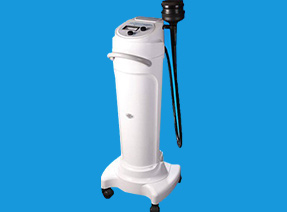
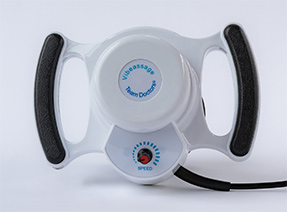
Used correctly, vibration isn’t about pounding tissue. It’s about interrupting protective tone, giving the nervous system permission to let go, and allowing structures that have been held in collapse to re-expand.
Not by force.
By neuromechanical negotiation.
For the first time, Daniel realized why all his previous experiments with gadgets had failed. They were treating sensation.
Not structure.
The First Repositioning
The first session was not dramatic.
They offloaded his shoulder. They supported it into a new position. They used vibration on the muscles that had been holding his shoulder up like desperate cables. They guided his body into a posture it had not trusted in years.
When Daniel stood up, he didn’t feel cured.
He felt lighter.
His arm didn’t feel numb.
It didn’t feel heavy.
It just… felt like an arm.
The Sentence That Reframed Six Years
Before Daniel left that day, Dr. Stoxen said something that would stay with him:
“You don’t have a tissue problem. You have a load problem.”
For the first time in six years, Daniel felt like someone had finally described the same body he was living in.
Teaching a Collapsed System to Trust Gravity Again
Daniel kept the surgeon’s card in his wallet for the first two weeks.
Not because he planned to call.
Because part of him didn’t yet believe that something so quiet, so non-invasive, and so… structural could really solve a problem that had dominated his life for six years.
He had learned not to trust hope.
The First Weeks: Nothing Magical, Everything Subtle
The first few weeks did not feel dramatic.
There was no cinematic moment where pain vanished and music swelled.
Instead, there were small, strange changes that Daniel didn’t fully trust at first.
His arm didn’t feel as heavy when he walked.
His shoulder didn’t feel like it was being pulled downward by evening.
His neck wasn’t burning every night.
His chest no longer felt like it was being cinched from the inside.
Some days felt almost normal.
Some days felt unstable.
But the baseline was shifting.
And for the first time in years, it was shifting in the right direction.
The Body Resists Before It Adapts
Around the third week, Daniel had two days that scared him.
Old symptoms flared.
The heaviness returned. The pressure under the collarbone whispered its old threat.
Panic came quickly.
Dr. Stoxen had warned him this might happen.
“Your nervous system has lived in collapse mode for years,” he had said. “It will try to return there under stress.”
They didn’t treat it like a setback.
They treated it like a reflex.
They re-established suspension. They reduced load. They reset tone. And they continued forward.
The flare faded.
It didn’t entrench itself.
That was new.
The Difference Between Healing and Repatterning
Daniel realized something important during that period.
This wasn’t healing in the way a cut heals.
It was retraining in the way a system relearns.
His body had lived in a world where gravity was an enemy. Where his shoulder couldn’t be trusted to hold his arm. Where muscle had to stay on guard because structure couldn’t be trusted.
Now that structure was slowly changing.
But the nervous system hadn’t gotten the memo yet.
It was cautious.
Suspicious.
Protective.
And that was normal.
The First Real Test: Sleep
The moment that changed everything didn’t happen in the clinic.
It happened at home.
Daniel woke up one morning and realized he had slept on his left side.
His arm was not numb.
He didn’t move at first. He was afraid to test it.
Then he rolled.
Nothing happened.
No tingling. No burning. No deep pressure under the collarbone.
He sat up.
Still nothing.
He walked to the kitchen, opened his wallet, took out the surgeon’s card, and threw it in the trash.
Reintroducing the Old Triggers
Over the next month, Daniel began doing things he had carefully avoided for years.
He drove long distances.
He worked at his computer for hours.
He carried groceries.
He reached overhead.
He even started light workouts.
Before, these things were guarantees of a flare.
Now, they were just… activities.
Not because he was being careful.
But because the structure was no longer collapsing under load.
Strength Comes Back When Compression Leaves
One of the strangest changes was how strength returned.
Not because he trained it.
But because it was no longer being suppressed.
Dr. Stoxen explained it simply:
“When compression disappears, strength reappears.”
Daniel’s nervous system no longer had to guard every movement.
So it finally allowed force production again.
The Final Measurements
At a follow-up visit, they repeated the same measurements they had taken on day one.
Shoulder height was level.
Clavicle angle had normalized.
Scapular position was stable.
Load transfer through the arm was clean.
And most importantly, they could not reproduce his symptoms under load.
The tunnel was no longer being protected.
It was being maintained.
The Real Victory
The real victory was not that Daniel avoided surgery.
It was that he stopped thinking about his arm.
No monitoring.
No bracing.
No fear.
He used it.
Trusted it.
Forgot it.
What Recovery Actually Felt Like
Daniel tried to explain it to a friend once.
“It’s not that it feels strong,” he said. “It feels normal. And I forgot how incredible that is.”
The Quiet Return to a Normal Life
Months later, Daniel realized he had gone an entire week without thinking about thoracic outlet syndrome.
Not about his shoulder.
Not about his arm.
Not about his neck.
The problem that had consumed his thoughts for six years had simply… left his life.
The Failure That Was Never in His Body
Josh did not feel like he had survived something.
He felt like he had stepped out of something.
For six years, his life had been organized around a single problem. How to sit. How to sleep. How to work. How to drive. How to carry things. How to exist without setting off the cascade of heaviness, burning, pressure, and numbness that lived in his left arm and shoulder.
And then, quietly, that problem left.
Not with a dramatic moment. Not with a declaration of cure. Not with a scar.
It simply stopped being part of his life.
The Surgery That Never Happened
Josh still remembers how close he came.
He remembers sitting in the surgeon’s office, listening to the calm, practiced explanation of first rib resection and scalene muscle cutting. He remembers the language: decompression, space creation, definitive treatment.
He remembers walking out with the paperwork.
And he remembers the unease he couldn’t quite explain.
It wasn’t fear of surgery.
It was the feeling that the logic didn’t match the problem he was living in.
Now, with distance, he understands exactly what felt wrong.
They were planning to remove parts of his body without ever measuring why his body had failed to hold itself up.
The Question That Changes Everything
Once you see the problem as a failure of suspension, you can’t unsee it.
Josh now notices it everywhere.
He sees people with one shoulder lower than the other, heads drifting forward, rib cages collapsed, arms hanging like weights from structures that no longer trust themselves to carry load.
And he wonders how many of them are being told stories about tight muscles, bad discs, or angry nerves—when the real problem is architectural.
How many people are being treated for tissue problems when they actually have load problems?
How many are being stretched, strengthened, injected, or cut before anyone asks:
“Is your structure failing to hold you up?”
Why the System Keeps Missing This
The medical system is very good at naming things.
It is very good at imaging things.
It is very good at categorizing tissues.
It is not very good at thinking in terms of load, gravity, and suspension.
Josh’s scans were never dramatic.
His tests were never catastrophic.
Because his problem wasn’t shape.
It was stress.
It only appeared when gravity was allowed to do what gravity does.
But the system mostly looks at bodies when they are unloaded.
Lying down.
Sitting.
Resting.
It almost never looks at them as weight-bearing, load-managing structures.
So the real failure stays invisible.
The Seductive Simplicity of Cutting
Surgery has a powerful emotional logic.
If something is being compressed, remove something.
If space is tight, cut something.
If a tunnel is crowded, make it bigger by subtracting parts.
But Josh now understands how often this is a mechanical misunderstanding.
If the roof of a tunnel collapses, lowering the floor does not fix the roof.
It may change symptoms.
It does not restore structure.
And once structure is removed, it cannot be put back.
The Irreversible Bet
What unsettles Josh most is not that surgery exists.
It’s that it is often offered before the body has been properly measured as a load-bearing system.
Once a rib is removed, it is gone.
Once muscles are cut, they are changed forever.
Those are irreversible bets placed on a theory.
And in Josh’s case, the theory was wrong.
Not malicious.
Not careless.
Just incomplete.
The Problem Was Never His Rib
Josh sometimes repeats the sentence that changed everything for him:
“My rib was never the problem.”
The problem was that his shoulder had fallen.
The problem was that his suspension system had failed.
The problem was that his body had been trying to survive a structural collapse by turning muscle into scaffolding.
And like any temporary scaffold, it eventually became painful, rigid, and overworked.
Why Therapy Failed Before It Succeeded
Josh also understands now why years of therapy had made him worse.
He was being asked to load a structure that could not carry load.
He was being stretched in a system that was already falling.
He was being strengthened in a pattern that was already compensating.
None of that was wrong in isolation.
It was wrong in sequence.
You do not reinforce a bridge while it is still collapsing.
You restore its supports first.
The Missing Step in Modern Care
Josh believes something simple now:
Before anyone stretches, strengthens, injects, or cuts—
They should measure whether the structure is holding itself up.
Not in a textbook way.
Not in a lying-down way.
But in a gravity way.
In a load way.
In a real-life way.
The Quiet Cost of Getting It Wrong
Josh sometimes wonders how many people are living inside problems that could have been solved years earlier if someone had simply looked at how their body was managing weight.
How many careers ended early.
How many people gave up activities they loved.
How many learned to live smaller lives.
Not because their bodies were broken.
But because they were collapsed.
The Sentence He Uses Now
When friends ask what happened, Josh doesn’t talk about thoracic outlet syndrome.
He says something much simpler:
“They lifted my shoulder instead of cutting my rib.”
The Bigger Lesson
Josh is not special.
He did not get lucky.
He got evaluated correctly.
And that is the part that should not be rare.
Why This Story Matters
Because right now, somewhere, someone is being told:
“There’s nothing else.”
“Therapy failed.”
“You need surgery.”
Without anyone ever asking:
“Is your body failing to hold itself up?”
The Ending That Should Be Normal
Josh did not win a battle.
He exited a misunderstanding.
He did not defeat his body.
He stopped fighting gravity with the wrong tools.
The Line That Says It All
“You don’t fix a falling building by removing the basement.
You fix it by restoring the structure that holds it up.”

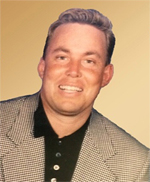
Dr James Stoxen DC., FSSEMM (hon) He is the president of Team Doctors®, Treatment and Training Center Chicago, one of the most recognized treatment centers in the world.
Dr Stoxen is a #1 International Bestselling Author of the book, The Human Spring Approach to Thoracic Outlet Syndrome. He has lectured at more than 20 medical conferences on his Human Spring Approach to Thoracic Outlet Syndrome and asked to publish his research on this approach to treating thoracic outlet syndrome in over 30 peer review medical journals.
He has been asked to submit his other research on the human spring approach to treatment, training and prevention in over 150 peer review medical journals. He serves as the Editor-in-Chief, Journal of Orthopedic Science and Research, Executive Editor or the Journal of Trauma and Acute Care, Chief Editor, Advances in Orthopedics and Sports Medicine Journal and editorial board for over 35 peer review medical journals.
He is a much sought-after speaker. He has given over 1000 live presentations and lectured at over 70 medical conferences to over 50,000 doctors in more than 20 countries. He has been invited to speak at over 300 medical conferences which includes invitations as the keynote speaker at over 50 medical conferences.
After his groundbreaking lecture on the Integrated Spring-Mass Model at the World Congress of Sports and Exercise Medicine he was presented with an Honorary Fellowship Award by a member of the royal family, the Sultan of Pahang, for his distinguished research and contributions to the advancement of Sports and Exercise Medicine on an International level. He was inducted into the National Fitness Hall of Fame in 2008 and the Personal Trainers Hall of Fame in 2012.
Dr Stoxen has a big reputation in the entertainment industry working as a doctor for over 150 tours of elite entertainers, caring for over 1000 top celebrity entertainers and their handlers. Anthony Field or the popular children’s entertainment group, The Wiggles, wrote a book, How I Got My Wiggle Back detailing his struggles with chronic pain and clinical depression he struggled with for years. Dr Stoxen is proud to be able to assist him.
Full Bio) Dr Stoxen can be reached directly at teamdoctors@aol.com