Why Cutting Bone and Muscle Fails — and Why Restoring the Body’s Spring System Works
For many people suffering from chronic neck pain, arm pain, nerve symptoms, or vascular compression, the medical journey often ends at the same frightening sentence:
“You need surgery to remove your first rib and scalene muscles.”
This procedure—commonly called first rib resection and scalenectomy—is presented as a way to “create space” for nerves and blood vessels. The idea sounds logical. If something is being squeezed, remove part of what’s doing the squeezing.
But what if this entire idea is based on a wrong understanding of how the human body is engineered?
What if your body is not a rigid structure made of levers and hinges—but a living, dynamic, elastic system designed to absorb load, store energy, recycle force, and protect delicate structures through spring-like suspension?
This is the foundation of the human spring model and the integrated spring-mass model—a way of understanding the body that explains something surgery often cannot:
Why symptoms change with posture.
Why they worsen with fatigue.
Why imaging can look “normal” while pain is severe.
Why cutting anatomy so often fails to solve the real problem.
The Big Mistake: Treating a Dynamic Problem as a Static One
Traditional surgical thinking treats compression as if it were a fixed structural defect. Something is narrow, so something must be removed. Something is crowded, so something must be cut.
But the human body does not work like a steel pipe.
Real human movement is governed by spring-based biomechanics. Walking, running, breathing, lifting, and even standing upright depend on spring mechanics in human movement, not rigid lever action.
Your body is constantly using:
- Elastic energy storage in the body
- Energy recycling in human motion
- Shock absorption biomechanics
This happens through biological springs in the body—in the spine, in the feet, in the connective tissue system, and across the entire kinetic chain.
In fact, most efficient human movement depends on the stretch-shortening cycle biomechanics: tissues gently load like a spring, store energy, and release it smoothly. This is why healthy movement feels light and effortless—and why injured movement feels heavy, stiff, and exhausting.
The Body Is Not a Stack of Parts — It Is a Suspension System
A better way to understand human anatomy is as a body as a spring system.
Instead of rigid columns, you have a suspension structure:
- The spine behaves like a series of compression springs in the spine
- The joints behave like torsional spring mechanics in joints
- The foot works as a foot arch spring mechanism
- The connective tissues form a continuous fascial spring network
- Force moves through the body via kinetic chain spring transfer
This is how healthy bodies manage impact, load, and gravity. This is impact attenuation biomechanics in action.
When this system is working, joints naturally maintain space through joint decompression mechanics. Nerves and blood vessels pass safely through moving, adaptive tunnels formed by muscles, fascia, bones, and posture. This is what we mean by suspension-based anatomy and tunnel mechanics for nerves and blood vessels.
Nothing is static. Everything adapts.
So Why Do People Develop Compression and Pain?
Here is the part most surgical models miss:
Compression usually does not start with bones.
It starts with inflammation.
Inflammation changes how the nervous system controls muscles. The brain responds to inflammation and pain by increasing protective muscle tension. This is not a choice—it is a reflex.
This is called neuromechanical spring control.
The problem is that muscle contraction does not create space. Muscle contraction compresses springs.
As muscles tighten chronically:
- Spring compliance is lost
- The system shifts toward spring stiffness vs compliance imbalance
- Load stops distributing properly
- Biomechanical load distribution fails
- Tunnels narrow dynamically
- Nerves and vessels become irritated
- And the system enters spring failure and chronic pain
This is not a bone problem. This is a mechanics and control problem.
Why Removing the First Rib Is the Wrong Solution
The first rib is not just “in the way.” It is part of the load-bearing suspension system of the upper body.
Removing it is like cutting a support beam out of a bridge because traffic is heavy.
Yes, you might change the shape of the space.
But you also:
- Alter force transmission
- Destabilize load paths
- Reduce the system’s ability to manage stress
- And often make the long-term mechanics worse, not better
This is why so many patients are shocked to discover that their symptoms persist—or return—in a different form—after surgery.
The surgery did not fix the spring system.
The Lever Model vs. The Spring Model
Most surgery is based on a lever model vs spring model misunderstanding.
The lever model assumes:
- Bones are rigid beams
- Muscles are cables
- Joints are hinges
- Compression is structural and static
But real human movement depends on:
- Biomechanical energy efficiency
- Elastic recoil
- Load sharing
- Time-based force absorption
In other words: springs.
When you remove parts instead of restoring function, you may change anatomy—but you do not restore spring-based injury prevention, energy recycling, or dynamic decompression.
Why Deep Tissue and Vibration Therapy Make Biomechanical Sense
If the real problem is inflammation-driven muscle guarding and spring collapse, the logical solution is not cutting.
The logical solution is to restore human spring function.
Deep tissue therapy works by:
- Reducing inflammatory congestion
- Breaking down fibrotic stiffness
- Restoring tissue glide
- Improving circulation
- Lowering the nervous system’s threat signals
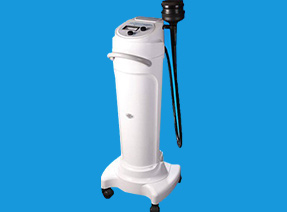
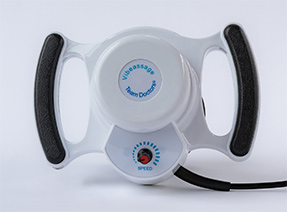
Vibration therapy adds something even more powerful: vibration and spring restoration.
Gentle, targeted vibration:
- Accelerates lymphatic and venous drainage
- Helps flush inflammatory chemicals
- Normalizes muscle tone
- Improves timing and coordination
- Helps re-establish elastic recoil in tissues
Together, they address the actual cause of the compression: the collapsed, over-guarded, stiffened spring system.
This is applied clinical biomechanics, not guesswork.
Why Function Matters More Than Anatomy
Surgery measures success by whether something was removed.
The human spring approach measures success by:
- Whether movement is easier
- Whether endurance improves
- Whether strength returns
- Whether circulation normalizes
- Whether nerves calm down
- Whether life becomes livable again
This is the difference between changing a picture and changing a system.
The Kind of Doctor Patients Should Be Looking For
This is why patients should seek a:
- Doctor who helps avoid cervical surgery
- Cervical surgery second opinion doctor
- Non-surgical neck pain specialist
- Doctor who treats neck pain without surgery
- Alternative to cervical spine surgery doctor
- Neck nerve pain specialist non-surgical
- Doctor who treats pinched nerve without surgery
- Spine specialist focused on non-surgical care
- Doctor who avoids cervical fusion
Not because surgery is evil—but because once anatomy is removed, it can never be put back.
A Simple Truth
You cannot fix a spring system with a bone saw.
You must restore the spring.
In Part 2, we will cover:
- The thoracic outlet as a dynamic spring suspension tunnel, not a rigid pipe
- Exactly how posture, fatigue, and inflammation change compression minute by minute
- Why imaging so often fails to explain symptoms
- And a clear, patient-friendly explanation of why surgery so often “almost works” but doesn’t truly solve the problem
When you’re ready, I’ll write PART 2.

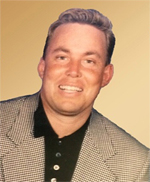
Dr James Stoxen DC., FSSEMM (hon) He is the president of Team Doctors®, Treatment and Training Center Chicago, one of the most recognized treatment centers in the world.
Dr Stoxen is a #1 International Bestselling Author of the book, The Human Spring Approach to Thoracic Outlet Syndrome. He has lectured at more than 20 medical conferences on his Human Spring Approach to Thoracic Outlet Syndrome and asked to publish his research on this approach to treating thoracic outlet syndrome in over 30 peer review medical journals.
He has been asked to submit his other research on the human spring approach to treatment, training and prevention in over 150 peer review medical journals. He serves as the Editor-in-Chief, Journal of Orthopedic Science and Research, Executive Editor or the Journal of Trauma and Acute Care, Chief Editor, Advances in Orthopedics and Sports Medicine Journal and editorial board for over 35 peer review medical journals.
He is a much sought-after speaker. He has given over 1000 live presentations and lectured at over 70 medical conferences to over 50,000 doctors in more than 20 countries. He has been invited to speak at over 300 medical conferences which includes invitations as the keynote speaker at over 50 medical conferences.
After his groundbreaking lecture on the Integrated Spring-Mass Model at the World Congress of Sports and Exercise Medicine he was presented with an Honorary Fellowship Award by a member of the royal family, the Sultan of Pahang, for his distinguished research and contributions to the advancement of Sports and Exercise Medicine on an International level. He was inducted into the National Fitness Hall of Fame in 2008 and the Personal Trainers Hall of Fame in 2012.
Dr Stoxen has a big reputation in the entertainment industry working as a doctor for over 150 tours of elite entertainers, caring for over 1000 top celebrity entertainers and their handlers. Anthony Field or the popular children’s entertainment group, The Wiggles, wrote a book, How I Got My Wiggle Back detailing his struggles with chronic pain and clinical depression he struggled with for years. Dr Stoxen is proud to be able to assist him.
Full Bio) Dr Stoxen can be reached directly at teamdoctors@aol.com