Your Body Is Not a Stack of Parts — It Is a Living Spring
Most people are taught to think about their body like a machine made of hard parts. Bones are thought of like sticks. Joints are thought of like hinges. Muscles are thought of like ropes that pull. And the spine is often pictured like a stack of blocks with little pads between them.
But the human body does not really work like that.
Dr. James Stoxen teaches something very different. He explains the body as a living spring system. Not a stiff machine. Not a stack of blocks. A spring.
A spring is not meant to be rigid. A spring is meant to compress, stretch, twist, and then rebound. A spring absorbs force and then gives it back. This is how your body is designed to work when you walk, run, lift, or even just stand and breathe.
When the spring system works well, forces move through the body.
When the spring system breaks down, forces get trapped in the body.
This idea helps explain something that confuses millions of people.
Why do so many people have scary findings on MRI scans but no pain?
And why do some people have terrible pain, but their scans don’t look that bad?
This is where we need to talk about discs.
The Truth About Discs and MRI Scans
You have small shock-absorbing pads between the bones of your spine. These are called discs. Over time, or under stress, these discs can change shape.
Doctors use many names for this:
A Herniated disc, a Disc herniation, a Bulging disc, a Slipped disc, a Ruptured disc, or a Protruding disc.
You may also hear terms like Disc protrusion, Disc extrusion, or Disc sequestration.
Sometimes the outer ring of the disc develops a small crack, called an Annular tear.
Over years, discs can also slowly wear down, which is often labeled Degenerative disc disease.
When people hear these words, they often panic.
But here is a simple and very important truth:
Structure alone does not equal pain.
Research shows that huge numbers of people walking around with MRI disc findings have no symptoms at all. This is called Asymptomatic disc herniation.
In other words, you can have a Bulging disc, a Disc herniation, or even signs of Degenerative disc disease and feel perfectly fine.
This creates what doctors call an Imaging–symptom mismatch. The picture looks bad, but the person feels okay. Or the picture looks mild, but the person feels terrible.
These are often called Incidental MRI findings — things that are seen on scans but are not actually the main cause of the person’s pain.
This is why arguments like Disc bulge vs herniation often miss the real point. The size or label does not automatically explain symptoms.
Why Some Discs Hurt and Some Do Not
Pain usually comes when pressure, inflammation, and force direction come together.
A disc can push backward and still not hurt anything.
But if swelling, muscle tension, and mechanical stress all pile into the same area, now things change.
This is when you may hear terms like:
- Nerve root compression
- Nerve impingement
- Spinal nerve irritation
If this happens in the lower back, it may cause Sciatica or Radiculopathy down the leg. This is often connected to a Lumbar disc herniation.
If it happens in the neck, it may cause arm pain or hand symptoms and may be linked to a Cervical disc herniation.
Doctors may also describe tight spaces like:
- Spinal canal narrowing
- Foraminal stenosis
- Dural sac compression
These describe space problems, not just disc shape problems.
But here is the key idea Dr. Stoxen teaches:
Pressure comes from the breakdown of the spring system, not just from the disc.
A Simple Real-Life Example
Think about a sprained ankle.
When you twist your ankle, tiny tissues tear. The ankle swells. It turns black and blue. It hurts badly.
That is not because the ankle is “out of alignment.”
It hurts because of inflammation and pressure.
Three weeks later, you are walking again.
Did the tissues tear? Yes.
Did the body adapt and calm the inflammation? Also yes.
Structure alone did not decide pain. Pressure and inflammation did.
The same thing happens in the spine.
A disc can be changed in shape and still not hurt.
But when muscle tension, swelling, and poor load movement keep pushing force into the same area, pain can appear.
This is often the difference between:
- Mechanical back pain (how forces move)
- Inflammatory back pain (how irritated tissues are)
- Discogenic pain (pain coming from the disc area itself)
Why the “Broken Part” Model Fails
Most people are taught to think this way:
“Find the bad part. Fix or remove the bad part.”
But the body is not a car.
Your spine does not work like stacked bricks. It works like a spring tower.
If the spring system is stiff, weak, or jammed, forces stop flowing smoothly. They concentrate in certain areas.
Over time, that concentration of force can irritate tissues, tighten muscles, and increase pressure in small spaces.
That is when symptoms may appear.
This is why two people can have the same Herniated disc and completely different lives:
- One has no pain.
- One can barely walk.
The Human Spring Model in Simple Words
Dr. Stoxen’s Human Spring model says:
Your body is designed to:
- Absorb force
- Spread force
- Release force
- Recycle energy
When the system is working well, no single area gets overloaded.
When the system breaks down, certain areas become pressure traps.
Over time, those pressure traps may show up as:
- Back pain
- Neck pain
- Arm or leg symptoms
- Stiffness
- Fatigue
- Burning
- Tingling
- Weakness
And yes, sometimes these pressure traps exist near discs that show changes on MRI.
But the disc is often not the original cause. It is more like the place where stress finally shows up.
Why Pictures Don’t Tell the Whole Story
An MRI is a camera.
It shows shape.
It does not show:
- How force moves
- How muscles are pulling
- How stiff or flexible your spring system is
- How much inflammation is present today
- How your nervous system is reacting
That is why MRI disc findings must always be understood in context.
Otherwise, people are told:
“This is your problem.”
Even when that same “problem” exists in millions of people with no pain at all.
Where the Vibeassage Fits Into This Idea
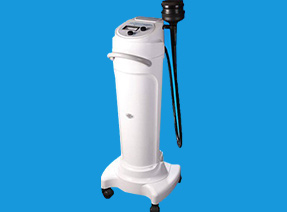
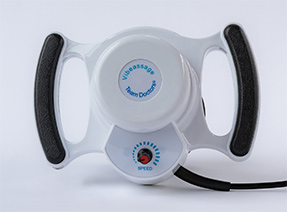
Dr. Stoxen uses tools like the Vibeassage Pro and Vibeassage Sport as self-care tools to help people:
- Relax tight tissues
- Improve circulation
- Reduce stiffness
- Improve body awareness
- Support daily recovery habits
These tools are not medical treatments and not cures. They are part of a daily body-care routine, like stretching, walking, or breathing exercises.
In the Human Spring idea, helping tissues relax and move better can help the spring system move more freely.
When tissues are less stiff, forces are less likely to get trapped in one small area.
The Big Idea to Remember
A disc shape does not automatically equal pain.
Pain usually comes from:
- Pressure
- Inflammation
- Load direction
- And how well (or poorly) your spring system is working
This is why Non-surgical disc treatment conversations are really about how the whole body is functioning, not just what one picture shows.
How the Human Spring System Slowly Breaks Down
The human body is designed to move like a spring. But springs do not break all at once. They slowly lose their bounce.
This happens to people too.
Very few people wake up one day and suddenly have a Herniated disc or Disc herniation. Long before anyone sees a Bulging disc, Protruding disc, or Disc protrusion on a scan, the spring system has usually been stiffening for years.
This stiffness changes how force moves through the body.
Instead of force being spread out and recycled, it starts to pile up in certain places.
That is when some people begin to hear words like Degenerative disc disease, Annular tear, or even Ruptured disc or Slipped disc.
But again, these words describe shape. They do not explain why pressure is building.
The Slow Stiffening of the Spring
Modern life is very hard on the human spring.
We sit more.
We move less.
We walk on flat, stiff surfaces.
We wear stiff shoes.
We bend less.
We twist less.
We play less.
Over time, the body adapts to this by becoming:
- Stiffer
- Tighter
- Less elastic
- Less able to absorb shock
When this happens, forces stop flowing smoothly through the spring system.
Instead, they start hitting the same spots over and over.
Those spots often end up being:
- The lower back
- The neck
- The shoulders
- The hips
This is where many people start to experience Mechanical back pain — not because something is “broken,” but because the spring is no longer spreading load well.
Pressure Changes Everything
A disc can change shape and still not hurt.
But when pressure builds, everything changes.
Pressure can come from:
- Tight muscles
- Swollen tissues
- Poor movement patterns
- Long-term stiffness
- Fatigue and overload
When pressure builds near a nerve, doctors may use terms like:
- Nerve root compression
- Nerve impingement
- Spinal nerve irritation
If this happens in the lower back, pain may travel into the leg. This is often called Sciatica or Radiculopathy, and sometimes linked to Lumbar disc herniation.
If it happens in the neck, symptoms may travel into the arm or hand and may be associated with Cervical disc herniation.
Doctors may also describe space problems such as:
- Spinal canal narrowing
- Foraminal stenosis
- Dural sac compression
But again, these are descriptions of crowded space, not explanations of why the space became crowded.
The Real Question Is Not “What Is Touching What?”
The real question is:
Why is so much pressure being pushed into this area?
This is where the Human Spring idea changes everything.
Instead of asking:
“Which part is bad?”
It asks:
“Why is the system no longer spreading force properly?”
Why MRI Pictures Can Be So Confusing
People are often shocked when they get an MRI.
They see words like:
- Disc extrusion
- Disc sequestration
- Annular tear
- Degenerative disc disease
They are told:
“This is your problem.”
But research shows that many people with MRI disc findings have no pain at all. This is called Asymptomatic disc herniation.
This is another example of Imaging–symptom mismatch.
These are often Incidental MRI findings — things that are real, but not the main reason someone hurts.
This is also why debates like Disc bulge vs herniation often miss the point. Both can exist with or without pain.
Inflammation: The Volume Knob of Pain
Think of inflammation like a volume knob.
You can have a structural issue with the volume turned down and feel almost nothing.
Turn the volume up, and suddenly everything hurts.
This is why Inflammatory back pain feels so different from simple stiffness.
Inflammation makes tissues:
- More sensitive
- More swollen
- More reactive
- More painful to pressure
This can turn a quiet disc issue into Discogenic pain or nerve-related symptoms.
But inflammation itself is often a reaction to overload and poor force movement, not the original cause.
How the Spring Breakdown Leads to “Crowding”
When the body loses its springiness:
- Joints don’t open as well
- Tissues don’t glide as well
- Muscles stay tight longer
- Shock is not absorbed well
Over time, this creates a crowding effect.
That crowding is what shows up on scans as:
- Spinal canal narrowing
- Foraminal stenosis
- Dural sac compression
But the scan only shows the result, not the process.
Why This Takes Years
This is not usually an overnight problem.
It is more like:
- 10 years of stiffening
- 15 years of poor load movement
- 20 years of shrinking movement options
And then one day:
- You bend
- You lift
- You twist
- You wake up
And suddenly, the system can’t handle the pressure anymore.
That is when someone is told:
“You have a Herniated disc.”
But the story started decades earlier.
Where Self-Care Tools Fit In
In the Human Spring idea, daily care of tissues matters.
Not as a medical treatment.
Not as a cure.
But as support for movement and recovery.
Tools like the Vibeassage Pro and Vibeassage Sport are used as:
- Relaxation tools
- Recovery tools
- Circulation-support tools
- Stiffness-reduction tools
When tissues are less stiff, the spring system can move more freely.
When the spring moves more freely, forces are less likely to concentrate in one small area.
This is a long-term body-care habit, like walking, stretching, or breathing better.
The Big Shift in Thinking
The old way of thinking says:
“Find the damaged part.”
The Human Spring way asks:
“Why is the system no longer sharing load properly?”
That is a completely different question.
And it leads to completely different decisions.
Why “Fixing the Part” Often Fails
When people are in pain, they want answers. And they usually want those answers to be simple.
They want someone to point to a picture and say:
“There. That’s the problem.”
If the picture shows a Herniated disc, Disc herniation, Bulging disc, or Protruding disc, it feels logical to assume that must be the cause.
But as you now understand, millions of people walk around with MRI disc findings like these and have no pain at all. This is why doctors talk about Asymptomatic disc herniation, Imaging–symptom mismatch, and Incidental MRI findings.
The picture alone does not tell the story.
The “Whack-a-Mole” Problem
Here is what often happens:
Someone has back pain or leg pain.
They get a scan.
It shows a Disc protrusion, Disc extrusion, or maybe even Disc sequestration.
So everyone focuses on that one spot.
But the real issue is often how force is moving through the entire system.
If the spring system is still stiff, still jammed, and still overloaded, the body simply finds another place to store stress later.
That is why people so often experience:
- Recurring pain
- New pain in new places
- Cycles of “better” and “worse”
The location changes, but the system problem stays.
Why Pressure Keeps Coming Back
Remember: pain usually needs pressure and inflammation.
Pressure often comes from:
- Tight muscles that never fully relax
- Stiff joints that never fully open
- Poor movement habits
- A spring system that no longer spreads load
This pressure can show up as:
- Mechanical back pain
- Inflammatory back pain
- Or even Discogenic pain
And when nerves are involved, people may hear terms like:
- Nerve root compression
- Nerve impingement
- Spinal nerve irritation
- Radiculopathy or Sciatica
In the lower back, this is often linked to Lumbar disc herniation.
In the neck, it may be linked to Cervical disc herniation.
But again, the disc is often where pressure shows up, not where the pressure started.
Why “Making Space” Is a Whole-Body Problem
Doctors often talk about:
- Spinal canal narrowing
- Foraminal stenosis
- Dural sac compression
These are all ways of saying:
“Things are crowded.”
But the real question is:
Why is the body no longer creating space for itself?
A healthy spring system naturally creates and releases space as you move.
A stiff system collapses into itself.
That collapse can make any disc change more sensitive.
The Fear Trap
Once someone is told:
“You have Degenerative disc disease,”
“You have a Ruptured disc,”
“You have a Slipped disc,”
“You have an Annular tear,”
They often start to move less.
They protect.
They brace.
They avoid.
Over time, this makes the spring system even stiffer.
Stiffer means:
- Worse load sharing
- More pressure in fewer places
- Less confidence in movement
And ironically, this often increases symptoms, even though the person is trying to be careful.
Why Structural Thinking Is So Tempting
Structural thinking feels safe because it sounds precise.
“This bone is touching this.”
“This disc is pushing here.”
“This space is too small.”
But the body is not a statue.
It is a moving, adapting, living spring system.
A frozen picture cannot show:
- How you load your body
- How you move
- How you breathe
- How tense your muscles are
- How well your joints open and close
That is why structure-only thinking so often fails to explain why pain comes and goes.
The Real Pattern Behind Chronic Problems
Many long-term problems follow this pattern:
- The spring system slowly stiffens over years
- Load stops spreading well
- Pressure builds in certain areas
- Inflammation turns the volume up
- Symptoms appear
- Attention focuses on the “bad spot”
- The system problem remains
That is why people can fix one spot and later develop problems in another.
Where Daily Body Care Fits In
In the Human Spring idea, daily care is not about “fixing” anything.
It is about:
- Helping tissues relax
- Helping movement feel easier
- Helping circulation
- Helping stiffness not accumulate
This is where tools like the Vibeassage Pro and Vibeassage Sport fit into a personal recovery routine.
They are used the same way people use:
- Stretching
- Walking
- Heat
- Gentle movement
- Breathing exercises
They are support tools, not medical treatments.
When tissues are less tight, the spring system can move more freely.
When the spring system moves more freely, pressure is less likely to concentrate in one place.
The Shift That Changes Everything
The old question:
“What part is bad?”
The better question:
“Why is my body no longer sharing load well?”
That question leads to:
- Better movement habits
- Better body awareness
- Better long-term decisions
Learning to Trust Your Body Again
By now, you have seen a very different way of thinking about your body.
Not as a fragile stack of parts.
Not as something that is “wearing out.”
But as a living spring system that adapts, changes, and responds to how you use it.
This change in thinking is especially important if you have ever been told you have a Herniated disc, Disc herniation, Bulging disc, Slipped disc, Ruptured disc, Protruding disc, or Disc protrusion.
These words sound scary. But as you now understand, they describe shapes, not your future.
Many people live full, active lives with MRI disc findings like these and never have pain. This is called Asymptomatic disc herniation, and it is one of the clearest examples of Imaging–symptom mismatch and Incidental MRI findings.
The picture is not the story.
Your function is the story.
Understanding Your Symptoms Without Fear
Pain does not usually come from shape alone.
Pain usually comes from:
- Pressure
- Inflammation
- Fatigue
- And poor load sharing in the spring system
That is why someone can have a Disc extrusion or even Disc sequestration and feel fine, while someone else can have much smaller changes and feel terrible.
When symptoms do appear, they may be described as:
- Mechanical back pain
- Inflammatory back pain
- Discogenic pain
If nerves become irritated, people may hear terms like:
- Nerve root compression
- Nerve impingement
- Spinal nerve irritation
- Radiculopathy or Sciatica
If the issue is in the lower back, it may be associated with Lumbar disc herniation.
If it is in the neck, it may be associated with Cervical disc herniation.
Doctors may also describe space issues such as:
- Spinal canal narrowing
- Foraminal stenosis
- Dural sac compression
Again, these describe crowding, not destiny.
Why the Body Is More Resilient Than You Were Told
The human body is not a weak structure.
It is designed to:
- Adapt
- Remodel
- Redistribute stress
- Learn new movement patterns
Even when there are changes like Degenerative disc disease or an Annular tear, the body can often continue to function very well when pressure and inflammation are managed and movement improves.
This is why people so often discover that their worst pain comes and goes — even though their scans do not change.
The system changes. The picture often does not.
A Calmer Way to Think About Your Spine
Instead of thinking:
“My spine is damaged.”
It is often more helpful to think:
“My spring system is stiff, tired, or overloaded right now.”
That is a very different story.
Stiffness can change.
Load sharing can change.
Movement habits can change.
Confidence can change.
The Role of Daily Self-Care
In the Human Spring way of thinking, daily care is not about “fixing” parts.
It is about:
- Keeping tissues from staying stiff
- Keeping movement comfortable
- Supporting circulation
- Reducing the buildup of tension over time
This is where tools like the Vibeassage Pro and Vibeassage Sport fit into life — as personal wellness and recovery tools, similar to stretching, walking, gentle movement, or relaxation practices.
They are not medical treatments.
They are not cures.
They are simply tools people use to take care of their bodies.
Why “Non-Surgical” Is a Mindset, Not a Promise
The phrase Non-surgical disc treatment should not be thought of as a guarantee.
It is better thought of as a way of thinking first:
“How can I support my body, my movement, and my spring system before assuming something must be removed or repaired?”
Sometimes people still need medical procedures.
But many people also discover that their bodies do far better than they were told once they stop living in fear of their MRI.
Letting Go of the Scan as Your Identity
You are not your scan.
You are not your:
- Disc bulge vs herniation debate
- Herniated disc label
- Degenerative disc disease report
You are a living, adapting system.
Scans show structure.
Life is about function.
The Big Picture
Dr. Stoxen’s Human Spring approach is not about chasing diagnoses.
It is about:
- Understanding how your body really works
- Respecting movement
- Reducing unnecessary fear
- And supporting the system that keeps you moving
When people understand their bodies better, they usually:
- Move more naturally
- Tense less
- Protect less
- Trust more
And that alone often changes everything about how the body feels.
A Final Thought
Your body is not a stack of worn-out parts.
It is a living spring.
And springs are meant to move.
Team Doctors Resources
✓ Check out the Team Doctors Recovery Tools
The Vibeassage Sport and the Vibeassage Pro featuring the TDX3 soft-as-the-hand Biomimetic Applicator Pad
https://www.teamdoctors.com/
✓ Get Dr. Stoxen’s #1 International Bestselling Books
Learn how to understand, examine, and reverse your TOS—without surgery.
https://drstoxen.com/1-international-best-selling-author/
✓ Check out Team Doctors Online Courses
Step-by-step video lessons, demonstrations, and self-treatment strategies.
https://teamdoctorsacademy.com/
✓ Schedule a Free Phone Consultation With Dr. Stoxen
Speak directly with him so he can review your case and guide you on your next steps.
https://drstoxen.com/appointment/
#ThoracicOutletSyndrome #TOS #ArmNumbness #ShoulderPain #NerveCompression #PostureMatters #UpperExtremity #ChronicPainEducation #Biomechanics #MovementHealth #NeckPain #HandTingling #ClinicalObservation #ConservativeCare #RehabEducation #SoftTissue #VascularSymptoms #NeurologicalSymptoms #PatientEducation #TeamDoctors

Dr James Stoxen DC., FSSEMM (hon) He is the president of Team Doctors®, Treatment and Training Center Chicago, one of the most recognized treatment centers in the world.
Dr Stoxen is a #1 International Bestselling Author of the book, The Human Spring Approach to Thoracic Outlet Syndrome. He has lectured at more than 20 medical conferences on his Human Spring Approach to Thoracic Outlet Syndrome and asked to publish his research on this approach to treating thoracic outlet syndrome in over 30 peer review medical journals.
He has been asked to submit his other research on the human spring approach to treatment, training and prevention in over 150 peer review medical journals. He serves as the Editor-in-Chief, Journal of Orthopedic Science and Research, Executive Editor or the Journal of Trauma and Acute Care, Chief Editor, Advances in Orthopedics and Sports Medicine Journal and editorial board for over 35 peer review medical journals.
He is a much sought-after speaker. He has given over 1000 live presentations and lectured at over 70 medical conferences to over 50,000 doctors in more than 20 countries. He has been invited to speak at over 300 medical conferences which includes invitations as the keynote speaker at over 50 medical conferences.
After his groundbreaking lecture on the Integrated Spring-Mass Model at the World Congress of Sports and Exercise Medicine he was presented with an Honorary Fellowship Award by a member of the royal family, the Sultan of Pahang, for his distinguished research and contributions to the advancement of Sports and Exercise Medicine on an International level. He was inducted into the National Fitness Hall of Fame in 2008 and the Personal Trainers Hall of Fame in 2012.
Dr Stoxen has a big reputation in the entertainment industry working as a doctor for over 150 tours of elite entertainers, caring for over 1000 top celebrity entertainers and their handlers. Anthony Field or the popular children’s entertainment group, The Wiggles, wrote a book, How I Got My Wiggle Back detailing his struggles with chronic pain and clinical depression he struggled with for years. Dr Stoxen is proud to be able to assist him.
Full Bio) Dr Stoxen can be reached directly at teamdoctors@aol.com